

How Adventure Racing Really Tests Endurance and Strategy
Adventure racing sits at the intersection of ultra-endurance sport, wilderness navigation, and team psychology. For many, it is the logical next step after marathons, trail ultras, or long-distance triathlons; for others, it is a way to turn backcountry travel and expedition skills into competitive sport. What makes it distinct is not only the distance or the terrain, but the way it forces participants to manage energy, risk, and decision-making under pressure-often for days at a time.
This article looks at how adventure racing tests both physical endurance and strategic thinking, drawing on recent races and research, and offering a practical sense of what it demands from athletes who are tempted to step into the sport.
What Counts as Adventure Racing?
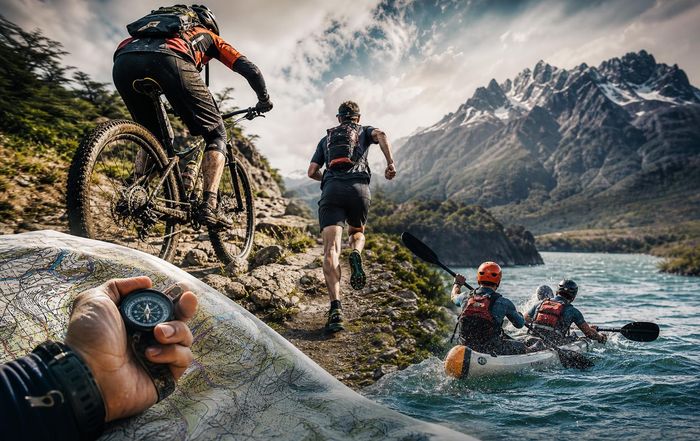
Adventure racing is an umbrella term for multi-discipline, mostly off-road events that combine sports such as trekking, mountain biking, paddling, and rope work with navigation using map and compass. Races range from short "sprint" formats of 3-6 hours to expedition races that can last 5-10 days or longer.
Governing bodies and major organizers such as the Adventure Racing World Series (ARWS) define classic expedition racing as team-based events with no set course markings. Teams of typically four athletes must visit checkpoints in order, navigating with topographic maps and compasses, often with mandatory gear lists and cut-off times. Sleep is optional but time continues to run, which immediately turns the race into a strategic puzzle as well as an endurance test.
The sport has grown in visibility again thanks to events like Eco-Challenge Patagonia and the AR World Championship, and a number of national federations now promote it under their outdoor or multisport umbrellas. For those coming from trail running, cycling, or paddling backgrounds, it offers a way to combine multiple passions into one demanding format that goes far beyond a single-discipline race.
Endurance in Adventure Racing: More Than Just Fitness
Ultra-distance effort across disciplines
Unlike a marathon or Ironman, where the motions are repetitive and predictable, adventure racing spreads workload across different muscle groups and movement patterns. A single long race might include 100-200 km of mountain biking, 50-100 km of trekking, and extended paddling sections, plus climbing or caving. Analyses of expedition races published in journals like the International Journal of Sports Physiology and Performance show total race times often exceeding 100 hours, with continuous movement and minimal sleep.
This multi-modality nature can be slightly kinder on any one joint or muscle group, but it demands a broad base of endurance. Athletes need the aerobic capacity to sustain low-to-moderate effort for days, the muscular endurance to hike with a loaded pack, and the resilience to handle repetitive motion in kayaking or canoeing. Unlike a road ultra, the terrain is rarely smooth; elevation gain, mud, heat, cold, and technical surfaces all compound fatigue.
For readers interested in performance science, the Australian Institute of Sport has profiled ultra-endurance performance demands that map closely onto what adventure racers face, including energy deficits and gastrointestinal challenges over very long efforts.
Sleep deprivation and cognitive endurance
The endurance challenge is not only muscular and cardiovascular; it is neurological. Teams often choose to sleep as little as 1-3 hours per 24-hour period during expedition races, especially in the early stages when competition is tight. Research on adventure racing and ultra-endurance events, including work summarized by Sleep Medicine Reviews, shows that sleep deprivation degrades reaction time, navigation accuracy, and emotional regulation-precisely the capacities racers need to stay safe and efficient.
In practice, this means that "endurance" in adventure racing includes the ability to function under chronic sleep restriction: staying coordinated on a mountain bike at night, reading a map in the rain, or making route choices when the brain is foggy. Teams who manage sleep as an energy resource-using short strategic naps, sharing navigation load, and planning sleep around complex sections-often outperform physically stronger rivals who simply try to push through.
For athletes interested in how sleep affects performance across sports, the U.S. Olympic & Paralympic Committee's sleep and recovery guidance provides accessible science that applies directly to multi-day racing.
Strategy at the Core: Navigation, Route Choice, and Risk
Map-and-compass navigation as a competitive skill
One of the defining features of adventure racing is that GPS navigation is often banned or heavily restricted. Teams must use map and compass to locate checkpoints, sometimes in remote and pathless terrain. This alone makes the sport far more strategic than marked trail races. A single navigational error can cost hours, especially at night or in bad weather.
Organizations such as the International Orienteering Federation provide resources on navigation skills and map reading, and many successful adventure racers cross over from orienteering backgrounds. They bring techniques like attack points, handrails, and contour interpretation into the race context. Teams often designate a primary navigator and a backup; the rest of the team supports by monitoring surroundings, counting paces, and checking features, turning navigation into a collective task rather than a solo burden.
On shorter adventure races, navigation may be simpler, but it still shapes strategy. Teams must decide whether to take a direct but rough line versus a longer, faster trail option, or when to cut across a marshy valley instead of following a winding track. Those decisions add up over hours and can be more decisive than raw speed.
Route selection and time management
Expedition races introduce additional layers of strategy: optional checkpoints, short-course options, dark zones on water sections, and strict cut-off times at transition areas. Teams must constantly weigh risk and reward. Should they chase an optional checkpoint that offers time bonuses but lies across complex terrain? Should they push to clear a section before a dark zone closes, or sleep early and tackle it fresh?
The Adventure Racing World Series rules outline how course design, cut-offs, and penalties interact, and reading them makes clear just how much of the sport is about decision-making. Strong teams build a mental model of the course: where they can move fast, where bottlenecks might occur, and where fatigue will be highest. They then adjust on the fly based on weather, team condition, and competition.
Time management also applies to transitions. Efficient teams treat transitions like pit stops: gear pre-sorted, tasks assigned (one person refills water, another changes bike components, another studies the next map), and minimal idle time. Over a multi-day race, saving 5-10 minutes at each transition can mean hours gained overall.
Team Dynamics: The Strategic Engine You Can't See on the Map
Adventure racing is almost always team-based, which makes group dynamics a central strategic factor. While a strong individual can carry a team for short periods, long races expose weaknesses in communication, conflict management, and mutual support.
Pacing and shared workload
Teams must pace for the slowest member, but that does not mean everyone works equally at all times. Stronger riders may tow weaker teammates on bikes using bungee cords, or carry extra weight in their packs on trekking stages. Paddling pairs are often balanced so that a more powerful paddler sits with a weaker one. These tactics help keep the group moving at a steady, sustainable speed, which is more efficient than surging and waiting.
Studies on team-based endurance events, including research summarized by Frontiers in Sports and Active Living, highlight the importance of pacing strategies in ultra-endurance contexts. Even splits or slight negative splits are rare in adventure racing due to terrain changes, but teams that avoid wild pace swings conserve energy and reduce injury risk.
Communication, leadership, and psychological resilience
Strategy in adventure racing also includes how teams handle stress. Fatigue, hunger, and sleep deprivation magnify minor irritations. Successful teams often have clear roles-navigator, logistics planner, motivator, medic-but flexible leadership. The designated leader may defer to another member's expertise on technical rope work or bike repairs, for example.
Sports psychologists who work with expedition racers emphasize skills such as emotional regulation, constructive feedback, and pre-race agreements about decision-making. The American Psychological Association discusses mental skills for endurance athletes that are directly relevant: reframing negative thoughts, using routines under pressure, and maintaining team cohesion when things go wrong.
This psychological side of strategy is often invisible to spectators but decisive in results. Teams that can calmly reassess a blown navigation leg, adapt to an injury, or reset after a major setback are more likely to finish, and sometimes to win.
Equipment, Safety, and Risk Management as Strategic Choices
Gear selection and weight trade-offs
Adventure race organizers usually publish mandatory gear lists that include items like first-aid kits, emergency shelters, lights, and clothing layers. Teams then decide what additional equipment to carry. Every extra gram increases fatigue, but cutting too much weight can compromise safety or slow progress if weather turns.
Choosing bikes, paddles, footwear, and packs becomes a strategic exercise in risk management. For example, on a course with long, rough bike sections, a slightly heavier but more reliable mountain bike may be faster overall than an ultralight setup prone to mechanical issues. On treks with significant river crossings, some teams favor quick-draining shoes over more cushioned options. These decisions must be made with incomplete information about the course and conditions.
Readers interested in performance gear trade-offs across sports will find useful parallels in the International Trail Running Association's guidelines on mandatory equipment, which echo many adventure race safety considerations.
Safety planning and emergency decision-making
Because races often pass through remote wilderness, safety strategy is not optional. Organizers typically work with local authorities and rescue services, and many events require teams to carry tracking devices or emergency beacons. Still, responsibility on the ground lies heavily with the team.
Risk management includes route choices that avoid unnecessary exposure, conservative decisions in bad weather, and knowing when to slow down or stop. The International Climbing and Mountaineering Federation (UIAA) provides safety standards and guidance that, while developed for climbing, are widely applied to rope sections and fixed lines used in some adventure races.
From a broader perspective, this risk literacy aligns with the emphasis on safety found across adventure and outdoor sports. For readers exploring adventure activities more widely, resources on outdoor safety and incident prevention from national mountaineering councils can complement sport-specific race information.
For those interested in how safety culture intersects with sport and travel more generally, our own coverage of safety and adventure explores related themes across activities and destinations.
Nutrition, Hydration, and the Metabolic Strategy of Going Long
Managing energy over days, not hours
In adventure racing, nutrition is as much a strategic discipline as navigation. Athletes burn thousands of kilocalories per day, but cannot replace all of that energy while moving. The goal is to limit the deficit and avoid catastrophic bonks. Unlike many single-day races that rely heavily on sports gels and drinks, multi-day events often demand more varied, solid foods that athletes can tolerate repeatedly.
Sports nutrition bodies such as the International Society of Sports Nutrition provide position stands on nutritional needs for ultra-endurance athletes, emphasizing carbohydrate intake, adequate protein to limit muscle breakdown, and electrolyte balance. In practice, teams combine commercial sports products with "real food" like tortillas, nuts, dried fruits, and instant meals, pre-packed into stage-specific bags at transitions.
Strategic fueling includes planning what food goes into which gear box, anticipating when appetite will drop, and building redundancy in case of delays. Misjudging this can leave teams out of food in remote sections, forcing them to slow down dramatically or even withdraw.
Hydration and environmental adaptation
Hydration strategy varies with climate and terrain. In hot, humid races, teams must carry enough water between safe refill points and manage electrolyte intake to prevent hyponatremia or heat illness. In cold conditions, the challenge may be to drink enough despite low thirst and to prevent water from freezing.
Guidance from organizations such as the American College of Sports Medicine on exercise and fluid replacement helps frame best practices: drink to thirst, adjust for conditions, and avoid both dehydration and overhydration. Adventure racers then adapt these principles to the realities of river crossings, remote water sources, and limited resupply.
Because many adventure races take place in fragile environments, race rules often include environmental ethics around waste and water sources. Readers curious about the broader ethical dimension of adventure sports can explore Xdzee's coverage of ethics and world issues in outdoor recreation and travel.
Training for the Dual Challenge: Building Endurance and Strategy Together
Physical preparation across disciplines
For athletes considering adventure racing, training must extend beyond a single discipline. A typical preparation plan includes long trail runs or hikes with a pack, mountain bike rides on technical terrain, and paddling sessions to build technique and shoulder endurance. Cross-training is not a supplement; it is the core.
Coaches who specialize in off-road endurance often recommend "back-to-back" long days to simulate cumulative fatigue, as well as night training to practice moving and navigating in the dark. Incorporating strength work-especially for the core, hips, and upper body-helps with pack carrying, bike handling, and paddling.
For those coming from running or cycling backgrounds, resources on performance and sports offer a broader context for adapting existing training habits to multi-sport demands.
Developing navigation and decision-making skills
Strategy training is just as important. Joining local orienteering clubs, taking navigation courses, and practicing with paper maps in local forests or hills builds the skills that will later decide races. The British Orienteering Federation and similar national bodies provide beginner navigation guides that translate well to adventure racing.
Teams can also simulate strategic scenarios: planning routes on unfamiliar maps, practicing transitions with time pressure, or running "micro-adventure" training weekends where they manage their own logistics and sleep. Debriefing after these sessions-what went wrong, which decisions worked, how communication felt-builds a shared mental model that pays off in competition.
For a broader look at innovation and emerging tools in endurance training, including mapping and planning software that can support (but not replace) on-the-ground navigation skills, readers can explore the innovation section.
Where Adventure Racing Fits in the Wider Adventure and Travel Landscape
Adventure racing occupies an interesting space between sport, expedition travel, and outdoor lifestyle. Races often take place in spectacular but less-traveled regions-Patagonia, the Scandinavian fjords, remote parts of New Zealand, or mountain ranges in Eastern Europe and Asia-creating a form of structured exploration. For tourism boards and local communities, hosting a race can showcase landscapes and adventure potential, though it also raises questions about environmental impact and access.
Organizations such as Leave No Trace promote minimum-impact outdoor ethics that many race organizers incorporate into their rules, from waste management to sensitive habitat protection. As the sport grows, balancing the appeal of remote, wild courses with sustainability and local community interests will remain an important strategic question for organizers and participants alike.
For fans drawn to the travel and destination side of the sport, the travel, destination, and lifestyle pages explore how adventure activities intersect with culture, local economies, and modern ways of living and working on the move.
Why Endurance and Strategy Are Inseparable in Adventure Racing
What ultimately sets adventure racing apart is that neither physical endurance nor strategic intelligence alone is enough. A team of elite runners and cyclists can falter if they navigate poorly, mismanage sleep, or fracture under stress. Conversely, a technically savvy, well-organized team with modest athletic ability may still struggle to meet cut-offs if they lack the engine to keep moving.
The sport rewards those who treat their bodies as long-distance engines, their minds as decision-making tools under pressure, and their teams as adaptable systems rather than collections of individuals. For athletes and adventurers who are drawn to challenges that test the whole person-fitness, resilience, judgment, and cooperation-adventure racing offers a demanding but deeply compelling arena.
Whether your interest lies in pushing performance limits, exploring remote landscapes, or understanding how humans function under prolonged stress, the sport provides a rich case study in how endurance and strategy intertwine.