

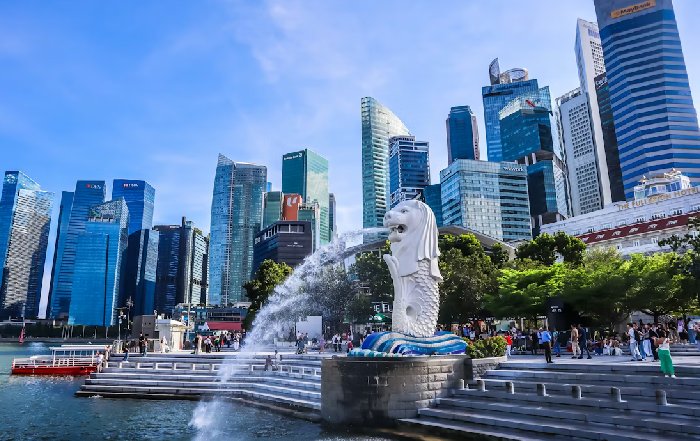
Singapore's Allure: Why the City-State Is a Refuge for Global Capital
A Strategic Haven in a Fractured World
As geopolitical tensions, technological disruption and climate risk reshape the global economy, the search for predictable, rules-based environments has intensified among investors, corporates and high-net-worth individuals. In this context, Singapore has consolidated its position as one of the world's most trusted refuges for global capital, standing out not only as a financial hub, but as a carefully constructed ecosystem of stability, innovation, safety and performance that resonates strongly with the global, mobile audience of xdzee.com. For readers focused on sports, adventure, travel, business, careers and culture across regions from the United States and Europe to Asia, Africa and South America, Singapore offers a compelling case study of how a small city-state can leverage governance, strategy and adaptability to punch far above its weight.
Unlike many financial centers that have ridden cyclical waves of capital inflows, Singapore's ascent has been deliberate and multi-dimensional, underpinned by consistent policy choices, long-term institution building and a deep understanding of how trust is earned in a volatile world. From its world-class financial sector and robust regulatory regime to its lifestyle appeal, safety record and gateway position between East and West, the city-state illustrates how a jurisdiction can become a destination of choice not only for funds, but for talent, brands and ideas. For xdzee.com, which explores how performance, innovation, ethics and culture intersect in global hotspots, Singapore is both a subject and a lens through which the future of global capital can be understood.
Foundations of Trust: Governance, Rule of Law and Policy Consistency
The core of Singapore's allure lies in its governance model, which has been anchored for decades in a strong rule of law, predictable policy frameworks and an institutional culture that prizes competence and integrity. Global investors frequently point to the country's consistently high rankings in indices such as the World Bank's Ease of Doing Business assessments and Transparency International's Corruption Perceptions Index as evidence that contracts will be enforced, regulations applied fairly and corruption risks minimized. In an era when political risk and regulatory unpredictability have become major concerns from North America to Europe and Asia, the premium on such reliability has increased sharply.
The Monetary Authority of Singapore (MAS), which functions as both central bank and integrated financial regulator, plays a pivotal role in reinforcing this trust. Through its measured approach to monetary policy, rigorous supervision of banks, insurers and capital markets, and proactive stance on emerging risks such as digital assets and cyber threats, MAS has cultivated a reputation comparable to leading regulators in the United States and Europe. International observers often study MAS's policy papers and speeches, many of which are accessible via the MAS official website, to understand how Singapore balances innovation with prudence.
For business leaders and entrepreneurs following xdzee.com's coverage of global business trends, Singapore's policy consistency is particularly relevant. Tax incentives are transparent and rules-based, not ad hoc; free trade agreements are negotiated with long-term strategic intent; and public statements by policymakers are generally followed by timely implementation. This combination creates an environment where multinational corporations, family offices and institutional investors can plan multi-year strategies with a degree of confidence that is increasingly rare in many larger economies.
Financial Hub of Asia: Depth, Connectivity and Resilience
Singapore's rise as a refuge for global capital is inseparable from its status as one of the world's leading financial centers. According to the Global Financial Centres Index published by Z/Yen Group, accessible via resources such as Long Finance, Singapore consistently ranks near the top globally, competing with New York, London and Hong Kong for capital markets, asset management and banking activities. Its role as a regional headquarters location for global banks, including JPMorgan Chase, HSBC, UBS and DBS Group, provides the depth and diversity of services that institutional capital demands.
The city-state has become a major hub for foreign exchange trading, with data from the Bank for International Settlements on global FX markets showing Singapore as one of the largest FX centers worldwide, serving counterparties across Asia, Europe and the Americas. Its derivatives and commodities markets, facilitated in part by exchanges such as Singapore Exchange (SGX), support sophisticated hedging and investment strategies, reinforcing the city's role as a regional risk management center. For investors in Germany, the United Kingdom or Canada seeking exposure to Asia without fully committing to onshore markets in China or emerging Southeast Asia, Singapore serves as a convenient and trusted base.
This financial ecosystem has demonstrated remarkable resilience through multiple crises, from the global financial crisis of 2008 to the COVID-19 pandemic and subsequent inflationary shocks. The speed with which Singapore deployed targeted fiscal and monetary support during the pandemic, while maintaining financial stability, drew praise from institutions such as the International Monetary Fund, whose assessments and reports can be explored via the IMF website. Such crisis management capabilities underscore why global capital often flows into Singapore during periods of regional or global turbulence, reinforcing its status as a safe harbor.
Gateway Between East and West: Geography and Geopolitics
Singapore's physical position at the crossroads of major shipping and air routes has long been recognized, but in the 2020s its geopolitical location may matter even more than its geography. As strategic competition between the United States and China intensifies, investors and corporates are increasingly wary of becoming overly exposed to any single jurisdiction. Singapore's carefully calibrated foreign policy, which maintains strong ties with both Washington and Beijing while emphasizing international law and multilateralism, provides a neutral platform that is attractive to capital from all sides.
The city-state's role as a regional headquarters for multinational corporations from Europe, North America and Asia reflects this balancing act. Companies from Germany, France, Japan, South Korea and Australia often base their Asia-Pacific operations in Singapore to access markets across Southeast Asia, India and Greater China, while mitigating geopolitical risk. Organizations such as the World Economic Forum, which regularly discusses supply chain resilience and regional integration on its insights platform, frequently highlight Singapore as a case study in how small states can navigate great-power rivalry through principled pragmatism.
For xdzee.com readers following world affairs and geopolitical developments, Singapore offers a vivid example of how strategic neutrality and diplomatic agility can translate into concrete economic advantages. The city-state hosts high-level summits, defense dialogues such as the Shangri-La Dialogue, and international arbitration proceedings, reinforcing its reputation as a trusted venue for negotiation and dispute resolution. This soft power, rooted in credibility rather than size, further strengthens its appeal as a refuge for global capital seeking not just returns, but predictability.
Lifestyle, Safety and Talent: The Human Dimension of Capital
Capital today is highly mobile, but so are the people who manage, deploy and grow it. For global talent in finance, technology, sports management, media and creative industries, quality of life and personal safety are decisive factors when choosing where to live and work. Singapore's consistently high rankings in indices such as the Mercer Quality of Living Survey and Economist Intelligence Unit's Global Liveability Index highlight its strengths in healthcare, education, infrastructure and public safety. Low crime rates, efficient public transport and a clean urban environment make the city attractive to professionals from the United States, United Kingdom, Switzerland, the Netherlands and beyond.
The city's multicultural fabric, with significant Chinese, Malay, Indian and expatriate communities, creates a cosmopolitan atmosphere that resonates with the global lifestyle interests of xdzee.com readers. Those exploring lifestyle content will recognize in Singapore a place where world-class dining, arts festivals, sports events and urban adventures coexist within a compact, well-organized setting. Major international sporting events, including Formula 1 Singapore Grand Prix night races and top-tier golf tournaments, showcase the city's ability to integrate sports, tourism and business networking in ways that enhance its global profile.
Safety is a critical component of Singapore's value proposition, not only for residents but also for visiting executives and investors. Transparent law enforcement, strict but generally well-communicated regulations and robust infrastructure resilience contribute to a sense of security that is highly prized by family offices and high-net-worth individuals considering relocation. For readers interested in performance and risk management, xdzee.com's coverage of safety and resilience aligns closely with Singapore's approach to managing public health, cyber threats and physical infrastructure, all of which underpin its attractiveness as a base for global capital.
Innovation, Fintech and the Digital Future of Capital
While Singapore's reputation for prudence and order is well established, its success as a refuge for global capital in the 2020s also depends on its ability to innovate. Over the past decade, the city-state has positioned itself as a leading fintech hub, attracting startups and established players in digital payments, wealthtech, insurtech and blockchain-based services. MAS's FinTech Regulatory Sandbox and initiatives described on platforms such as Singapore FinTech Festival illustrate how regulators and industry collaborate to test new ideas while safeguarding financial stability.
International observers frequently compare Singapore's innovation landscape with those of Silicon Valley, London and Shenzhen, noting its unique blend of strong state support, open trade regime and deep integration with global capital markets. Research institutions such as the National University of Singapore (NUS) and Nanyang Technological University (NTU) contribute to a robust talent pipeline, while partnerships with global technology firms foster cutting-edge work in artificial intelligence, cybersecurity and green finance. Additional context on these trends can be found through resources like the OECD's work on digital transformation and innovation.
For xdzee.com readers focused on innovation and performance, Singapore's ecosystem offers lessons in how to align regulatory frameworks, venture capital, corporate demand and research capabilities. The city's support for digital banking licenses, tokenized assets and cross-border payment initiatives positions it at the forefront of the digitalization of capital, while its cautious approach to retail speculation in cryptocurrencies underscores a commitment to investor protection. This balance between experimentation and responsibility enhances its credibility among institutional investors and regulators worldwide.
Ethics, Regulation and the Pursuit of Responsible Capital
In an investment landscape increasingly shaped by environmental, social and governance (ESG) considerations, Singapore has sought to differentiate itself as a hub for responsible and sustainable capital. MAS and other agencies have introduced guidelines on climate-related disclosures, green finance taxonomies and stewardship expectations for institutional investors, aligning the city-state with evolving global standards set by bodies such as the Task Force on Climate-related Financial Disclosures (TCFD) and the International Sustainability Standards Board, whose work can be explored via the IFRS Foundation. These efforts are not merely reputational; they are designed to attract long-term, quality capital that values transparency and ethical conduct.
The emphasis on ethics and compliance is visible in the city's robust anti-money laundering regime, its active participation in the Financial Action Task Force (FATF) and its willingness to impose significant penalties on institutions that fall short of expectations. For investors and corporates seeking to avoid reputational and legal risk, such rigor is a feature, not a bug. It signals that Singapore is committed to being a clean, credible hub rather than a loosely regulated tax haven. This stance resonates strongly with the values highlighted in xdzee.com's coverage of ethics and responsible business, where long-term trust is seen as inseparable from sustainable performance.
The focus on responsible capital extends beyond compliance to include active support for green and transition finance. Singapore has launched initiatives to facilitate sustainable infrastructure financing across Asia, working with multilateral institutions such as the Asian Development Bank, whose sustainable finance programs are profiled on the ADB website. By positioning itself as a center for climate-aligned capital flows, the city-state is not only responding to investor demand, but also reinforcing its role as a problem-solving node in the global financial architecture.
Sports, Adventure and Destination Branding: Soft Power for Capital
At first glance, sports and adventure might seem peripheral to the story of global capital, but in Singapore's case they form an important part of its soft power and destination branding. The city-state has invested heavily in sports infrastructure, from the Singapore Sports Hub to marina facilities and urban adventure spaces, to support both elite competitions and recreational activities. International sporting events draw visitors, media attention and corporate sponsorships, creating an ecosystem where sports, tourism and business intersect in ways that appeal to the global audience of xdzee.com.
For readers exploring sports and performance, Singapore's strategy demonstrates how high-profile events like Formula 1, international football tournaments and world-class marathons can be leveraged to attract brands, investors and talent. The night-race spectacle of the Singapore Grand Prix, for instance, is not just a sporting event; it is a curated experience that showcases the city's skyline, hospitality sector and logistical capabilities to millions of viewers worldwide. This form of destination marketing reinforces Singapore's image as a modern, vibrant and efficient hub where global business and lifestyle converge.
Adventure and travel are similarly integrated into the city's brand. While Singapore is more urban than many traditional adventure destinations, it has cultivated experiences around urban exploration, waterfront activities and regional getaways that appeal to professionals who blend work and leisure travel. Platforms like Visit Singapore, operated by the Singapore Tourism Board and accessible via visitsingapore.com, highlight how the city positions itself as a gateway to broader adventures across Southeast Asia. For xdzee.com readers interested in adventure and travel and global destinations, Singapore serves as both a base camp and a showcase of how lifestyle and capital mobility intersect.
Jobs, Talent Mobility and the War for Skills
Global capital increasingly follows talent, and Singapore's ability to attract and retain highly skilled professionals is central to its continuing appeal. The city-state has developed targeted visa programs for technology experts, financial professionals and entrepreneurs, while also investing in local education and upskilling initiatives to ensure that Singaporeans can compete in a knowledge-driven economy. Reports by organizations such as the World Bank and UNESCO, accessible via unesco.org, often highlight Singapore's education system as a benchmark for other countries seeking to cultivate human capital.
The job market in Singapore reflects this emphasis on high-value sectors, with strong demand in finance, fintech, cybersecurity, biotechnology, logistics and advanced manufacturing. For professionals from the United States, United Kingdom, India, China, Australia and across Europe, Singapore offers competitive compensation, clear career progression pathways and exposure to regional markets. For the xdzee.com audience tracking jobs and career opportunities, Singapore stands out as one of the most attractive global cities to build a cross-border career, particularly for those interested in the intersection of finance and technology.
At the same time, Singapore faces the same demographic and political constraints as other advanced economies, including an aging population and debates over the pace and composition of foreign talent inflows. The government's approach, which combines calibrated immigration with heavy investment in local skills development, will be a crucial determinant of whether the city-state can maintain its edge in the global competition for talent. How successfully it navigates this challenge will directly influence its ability to remain a magnet for global capital over the coming decade.
Challenges, Competition and the Next Phase of Singapore's Story
Despite its many strengths, Singapore's status as a refuge for global capital is not guaranteed. The city-state faces intensifying competition from other financial hubs, including Hong Kong, Dubai, Zurich and emerging centers in China and India, all of which are vying to attract capital, talent and corporate headquarters. Technological shifts such as decentralized finance, digital currencies and remote work may also reduce the importance of physical hubs, enabling capital to move more fluidly across borders without the need for traditional intermediaries.
Moreover, Singapore must navigate complex regional dynamics, including tensions in the South China Sea, shifts in global supply chains and the evolving role of ASEAN as an economic bloc. Its heavy reliance on open trade and global connectivity makes it vulnerable to protectionist trends and fragmentation of the international order. Analysts at institutions like Chatham House, whose research is available via chathamhouse.org, frequently note that small, open economies must constantly adapt their strategies to remain relevant as global rules and power balances change.
Domestically, Singapore will need to manage issues such as housing affordability, social cohesion and environmental sustainability to maintain its attractiveness to both citizens and expatriates. Efforts to decarbonize the economy, enhance urban liveability and maintain inclusive growth are essential to sustaining the trust that underpins its role as a capital hub. For xdzee.com readers following news and evolving trends, these challenges are not signs of weakness, but indicators of the complex, multi-dimensional work required to sustain a high-performance, high-trust ecosystem in a rapidly changing world.
Why Singapore Matters for xdzee.com's Global Audience
For the diverse, globally minded audience of xdzee.com, spanning interests from business and brands to culture, travel and innovation, Singapore offers more than a case study in financial success. It represents a living laboratory where questions about the future of globalization, the ethics of capital, the role of technology and the meaning of performance and safety are being tested in real time. As readers explore brand strategies and positioning, they can observe how Singapore itself functions as a brand, carefully curated through policy, infrastructure and soft power to signal reliability and opportunity.
The city-state's experience speaks directly to professionals and enthusiasts in North America, Europe, Asia, Africa and South America who are navigating an increasingly uncertain world. Whether they are considering where to deploy capital, where to build a career, where to launch a startup or where to experience a high-energy, high-safety urban destination, Singapore emerges as a compelling option. Its blend of governance quality, financial depth, innovation capacity, ethical frameworks and cultural vibrancy aligns closely with the values and interests that xdzee.com covers across travel, business, lifestyle and performance.
Singapore's allure as a refuge for global capital remains strong, but its continued success will depend on its ability to anticipate and adapt to new risks and opportunities. For readers of xdzee.com, following Singapore's trajectory offers not only insights into one of the world's most influential city-states, but also a window into how capital, talent and culture will flow and interact in the decade ahead.