

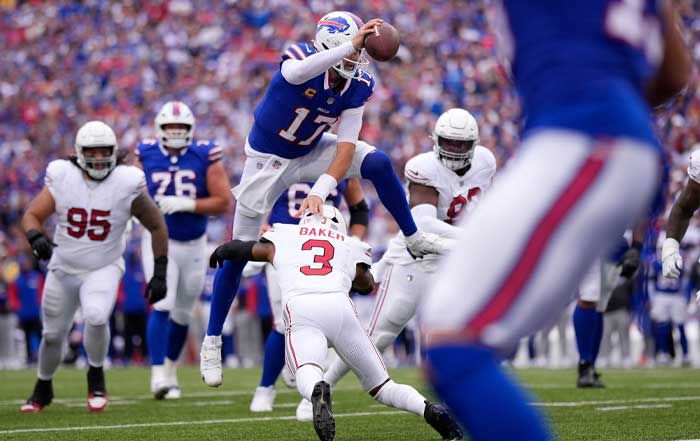
The Greatest NFL Players Ever: How Gridiron Legends Became Global Icons
Why NFL Greatness Matters to a Global Audience in 2026
By 2026, the National Football League (NFL) has evolved from a distinctly American spectacle into a global entertainment and business powerhouse, drawing audiences not only from the United States and Canada but also from the United Kingdom, Germany, Australia, France, Italy, Spain, the Netherlands, Switzerland, China, Japan, South Korea, Brazil, South Africa, and far beyond. For xdzee.com, which lives at the intersection of sports, adventure, travel, culture, and business, the story of the NFL's greatest players is not merely a historical recap; it is a lens through which to understand performance, leadership, innovation, and brand power in a world where sports increasingly shape global culture and commerce.
The league's most iconic figures have transcended their statistics to become symbols of resilience, ambition, and identity. Their journeys echo themes that resonate with xdzee.com's audience: the pursuit of excellence, the thrill of high performance, the challenge of risk and safety, the ethics of leadership, and the cultural narratives that bind fans from New York to London, Berlin, Singapore, and Tokyo. As global fans follow NFL coverage through platforms like xdzee sports, they are not only consuming highlights and scores; they are engaging with stories of human potential that mirror the pressures and possibilities of modern business, travel, and lifestyle.
In this context, revisiting the greatest NFL players ever is a way of mapping how individual brilliance and character can create enduring brands, shift cultural norms, and open new destinations for fans and businesses alike, from London's Wembley Stadium to Munich's Allianz Arena and beyond.
Foundations of Greatness: Early Icons Who Shaped the League
The NFL's early decades, from the 1920s through the 1950s, were defined by rugged conditions, modest commercial structures, and a regional fan base, yet they produced foundational figures whose reputations still inform how greatness is measured. Bronko Nagurski, a dominant force in the 1930s, personified the toughness and versatility of the era, playing both fullback and defensive line for the Chicago Bears. In a period when players routinely took snaps on both offense and defense, Nagurski's relentless style and competitive intensity helped establish professional football as a serious, physically demanding pursuit rather than a sideshow to college athletics. His legend endures as a symbol of the sport's raw origins, a reminder that the league's current global scale was built on the backs of multi-role pioneers.
The post-war period brought a new kind of star in Jim Brown, whose career with the Cleveland Browns from 1957 to 1965 redefined what a running back could be. Brown's combination of size, speed, and vision allowed him to dominate statistically, but his impact extended beyond the field. At a time of profound social change in the United States, his visibility as a Black superstar, coupled with his later activism and work in film, helped bridge sports, culture, and civil rights. For modern readers who follow contemporary debates on athlete activism and ethics, Brown's legacy provides a historical anchor; understanding his role offers perspective when examining current conversations about social responsibility and leadership in sport. Those seeking to connect this history to broader cultural movements can explore related themes through xdzee culture coverage.
These early icons demonstrated that excellence in football could influence public life, shape community identity, and set standards of professionalism. In business terms, they were the first proof that the NFL could generate enduring personal brands, long before branding became a formal discipline in sport.
The 1970s Golden Era: Dynasties, Identity, and Emerging Brands
The 1970s are frequently described by historians at organizations such as the Pro Football Hall of Fame and analysts at outlets like NFL.com as the NFL's golden era, when the league consolidated its popularity through televised games, Super Bowl spectacles, and emerging dynasties. Teams such as the Pittsburgh Steelers, Dallas Cowboys, and Miami Dolphins became household names, and their stars set new benchmarks for leadership, performance, and marketability.
For the Pittsburgh Steelers, quarterback Terry Bradshaw became the face of a franchise that would win four Super Bowls in six seasons. Though his raw statistics do not always match those of later pass-heavy eras, Bradshaw's ability to perform in high-pressure situations, particularly in Super Bowls IX, X, XIII, and XIV, established a template for clutch quarterback play. His rapport with receivers Lynn Swann and John Stallworth, combined with the intimidating "Steel Curtain" defense led by Mean Joe Greene, showed how complementary excellence on offense and defense could solidify a team's long-term identity. That defensive unit, in particular, reminded fans and executives alike that performance and safety are forever intertwined; dominant defenses must balance aggression with evolving rules designed to protect players, a theme still central to modern debates about player welfare and league policy, as covered in xdzee safety features.
Simultaneously, Roger Staubach of the Dallas Cowboys embodied a different kind of leadership. A former U.S. Navy officer, Staubach brought discipline, poise, and athleticism to the quarterback position, guiding the Cowboys to multiple Super Bowl appearances and earning the nickname "Captain America." Under owner Tex Schramm and coach Tom Landry, Dallas cultivated a distinctive brand as "America's Team," leveraging national television exposure and star personalities to build a global fan base. This fusion of performance and marketing foresaw the modern era, where franchises are as much lifestyle and media brands as they are sports teams, a pattern mirrored today by global clubs in soccer and basketball.
The decade also marked the emergence of Walter Payton with the Chicago Bears, whose nickname "Sweetness" belied his punishing running style and relentless work ethic. Payton's eventual status as the league's all-time rushing leader, combined with his charitable legacy and the enduring Walter Payton Man of the Year Award, illustrates how the NFL's greatest players often become pillars of community engagement and ethical leadership, themes that align closely with the values highlighted in xdzee ethics content.
The 1980s: Quarterback Mastery and Strategic Innovation
The 1980s ushered in a new emphasis on the passing game, driven by tactical innovation and a growing appreciation for aerial offense as a driver of entertainment value and television ratings. At the center of this shift was Joe Montana of the San Francisco 49ers, whose calm under pressure and precision passing made him a benchmark for quarterback excellence. Working with visionary head coach Bill Walsh, Montana executed the "West Coast Offense," a system built on timing routes, short passes, and yards after the catch, which reshaped offensive strategy across the league. Analysts at platforms such as ESPN and The Athletic still reference this system when evaluating contemporary offensive schemes.
Montana's partnership with wide receiver Jerry Rice elevated both players to legendary status. Rice, whose career totals in receptions, receiving yards, and touchdowns still tower over the field in 2026, exemplified the fusion of natural talent with extreme discipline. His training regimen, from hill sprints to offseason conditioning, anticipated the performance science now common in elite sport. As business leaders and professionals look for analogies in high performance, Rice's approach offers a compelling case study in sustained excellence, echoed in xdzee performance analysis.
On defense, Lawrence Taylor of the New York Giants revolutionized the role of the outside linebacker. His explosive speed and aggression off the edge forced offensive coordinators to redesign protection schemes and contributed to the rise of left tackles as premium positions, later dramatized in popular culture and business conversations about risk management. Taylor's dominance-culminating in an NFL MVP award in 1986-demonstrated that defensive players could not only anchor championship teams but also become central to the league's marketing and storytelling. For readers interested in how tactical disruption and innovation reshape industries, his career parallels the role of disruptive technologies in modern business, a theme that resonates with xdzee innovation coverage.
The 1990s: Balance, Consistency, and the Rise of the Modern Brand
The 1990s offered a more balanced landscape between offense and defense, with multiple franchises and star players sharing the spotlight. Quarterback Brett Favre, first with the Green Bay Packers, became synonymous with durability and risk-taking, starting an unprecedented streak of consecutive games while playing with an improvisational style that thrilled fans and frustrated coaches in equal measure. His three consecutive MVP awards underscored the league's growing appreciation for high-volume passing and creative playmaking.
Running back Emmitt Smith anchored the Dallas Cowboys dynasty of the decade, ultimately surpassing Walter Payton as the NFL's all-time rushing leader. Together with quarterback Troy Aikman and wide receiver Michael Irvin, Smith formed the core of a team that won three Super Bowls and solidified Dallas as a global sports brand. Their success illustrated how on-field performance, combined with savvy business strategy and media partnerships, could create a franchise identity with international reach-a blueprint that continues to influence how modern clubs in Europe and Asia approach brand building. Readers interested in these intersections of sport and commerce can explore the business of sports through xdzee's dedicated coverage.
On defense, Reggie White, known as the "Minister of Defense," set new standards for pass-rushing excellence. His ability to dominate offensive linemen for both the Philadelphia Eagles and Green Bay Packers made him a central figure in the evolution of defensive line play, while his leadership and faith-based public persona reinforced the idea that character and competitive fire can coexist. His role in the Packers' Super Bowl XXXI victory highlighted how free agency and player mobility-relatively new dynamics at the time-could reshape competitive balance and brand perception across the league.
The New Millennium: Tom Brady, Peyton Manning, and the Era of Precision
The 2000s and early 2010s marked an era of unprecedented quarterback dominance, headlined by Tom Brady and Peyton Manning, whose performances and rivalries helped propel the NFL to new heights of global visibility. Brady, drafted in the sixth round by the New England Patriots, built a career that redefined what long-term excellence looks like in a collision sport. With seven Super Bowl titles and a reputation for obsessive preparation, Brady became an emblem of marginal gains, sports science adoption, and mental resilience. His career longevity into his mid-40s paralleled broader societal trends toward longevity, wellness, and continuous improvement, themes frequently explored in high-performance and lifestyle analysis on xdzee lifestyle pages.
Manning, meanwhile, became the archetype of the cerebral quarterback. His mastery of pre-snap reads, audibles, and game management with the Indianapolis Colts and later the Denver Broncos turned him into a case study in strategic thinking under pressure. Business schools and leadership programs frequently reference his approach to preparation, communication, and in-game adjustment, much as they draw lessons from CEOs and military leaders. His extensive commercial partnerships also illustrated how a player's off-field brand can magnify the reach of the league itself, influencing advertising trends and cross-industry collaborations.
Defensively, Ray Lewis and Ed Reed of the Baltimore Ravens symbolized a different dimension of greatness. Lewis's intensity and vocal leadership, combined with Reed's instinctive ball-hawking at safety, underscored how defensive identity can galvanize a franchise and its fan base. Their success, including a Super Bowl victory under head coach John Harbaugh, reinforced the idea that leadership in sport is as much about culture-building and accountability as it is about individual statistics.
The 2010s and 2020s: Global Expansion and New-Generation Icons
As the NFL expanded its international footprint through regular-season games in London, Mexico City, and, more recently, Germany, a new generation of stars emerged whose appeal extended far beyond North America. Quarterbacks such as Aaron Rodgers and Drew Brees broke passing records while becoming community anchors in Green Bay and New Orleans, respectively. Brees's role in lifting New Orleans' spirits after Hurricane Katrina showed how elite athletes can become symbols of resilience and recovery for entire cities, mirroring the way cultural and business leaders help communities navigate crises.
Wide receivers like Larry Fitzgerald, known for his professionalism and longevity with the Arizona Cardinals, and defensive linemen such as J.J. Watt, celebrated for both on-field dominance and philanthropic work in Houston and beyond, reinforced the notion that the most revered NFL figures increasingly blend performance with visible social impact. Their public initiatives in education, disaster relief, and health have helped shape expectations of what responsibility looks like for high-profile athletes, echoing broader trends in corporate social responsibility and ethical leadership that are central to discussions on xdzee ethics.
Into the 2020s, Patrick Mahomes of the Kansas City Chiefs has emerged as the emblem of the modern NFL superstar. His dynamic style-combining arm strength, creativity, and mobility-aligns with an era of highlight-driven digital consumption, while his presence in international marketing campaigns and games in Europe underscores the league's commitment to positioning its top talents as global ambassadors. Mahomes's early career, already decorated with multiple Super Bowl appearances and victories by mid-decade, has placed him firmly in conversations about all-time greatness, even as his journey continues to unfold.
Cultural Influence: From the Gridiron to Global Lifestyle and Business
The cultural influence of the NFL's greatest players extends far beyond stadiums. Figures such as Colin Kaepernick have shaped global discussions about race, free expression, and corporate positioning, forcing brands, leagues, and media organizations to confront complex ethical questions. Others, including Odell Beckham Jr., have blurred the lines between sport, fashion, and entertainment, collaborating with major apparel and lifestyle brands and influencing trends far from the field. These dynamics reflect a broader reality: modern athletes function as multidimensional influencers, whose decisions and partnerships can affect industries from media to travel and tourism.
For international fans tracking these developments through xdzee news coverage and global perspectives, the NFL's biggest names are touchpoints in a wider conversation about how sports intersect with identity, politics, business strategy, and cultural innovation. Whether it is the growth of NFL-branded experiences in European capitals, the emergence of fan communities in Asia and Africa, or the integration of American football themes into global advertising campaigns, the league's icons are central to a complex ecosystem of narratives and opportunities.
Travel, Destinations, and the Global NFL Experience
For many fans, especially those outside North America, engagement with the NFL has increasingly become a travel and destination experience. Games in London, Frankfurt, and other European cities have turned into multi-day events, drawing visitors from across the continent and beyond. These trips often blend sport with broader cultural exploration, as fans combine game attendance with visits to museums, culinary experiences, and adventure tourism, mirroring the kind of integrated travel narratives that xdzee.com highlights in its travel and destination content and global travel insights.
At the same time, iconic U.S. stadiums-from Lambeau Field in Green Bay to SoFi Stadium in Los Angeles-have become pilgrimage sites for international visitors, much like historic soccer venues in Europe. The stories of the NFL's greatest players are woven into these places: statues, museum exhibits, and guided tours frame their achievements as part of a broader cultural heritage. For business travelers and executives, hosting clients or partners at high-profile NFL games has also become a sophisticated form of relationship-building, leveraging the league's spectacle and hospitality offerings to create memorable shared experiences.
Jobs, Brands, and the Business Ecosystem Around NFL Legends
The impact of NFL legends is also evident in the jobs and industries that have grown around the sport. From sports marketing and data analytics to performance science, facility management, content creation, and global event logistics, the careers connected to American football have multiplied, creating opportunities that reach far beyond the United States. Professionals seeking to align their careers with this expanding ecosystem often track developments through resources like xdzee jobs and business sections and brand-focused coverage, where the strategies of teams, sponsors, and athletes are analyzed through a global business lens.
The personal brands of players like Tom Brady, Peyton Manning, Patrick Mahomes, and others have become case studies in long-term value creation, diversification, and risk management. Their ventures into production companies, wellness brands, technology startups, and media platforms demonstrate how athletic fame, if managed strategically and ethically, can be converted into sustainable enterprises that outlive playing careers. This mirrors broader trends in entrepreneurship, where credibility, authenticity, and trustworthiness are crucial assets, and where missteps in ethics or communication can quickly erode stakeholder confidence.
An Enduring Legacy for a Global, Connected Era
From Bronko Nagurski and Jim Brown to Jerry Rice, Lawrence Taylor, Walter Payton, Tom Brady, Peyton Manning, Emmitt Smith, Reggie White, and the emerging icons of the 2020s, the greatest NFL players have shaped far more than scoreboards and record books. They have influenced how performance is measured, how leadership is understood, how brands are built, and how cultures around the world engage with sport as a shared language of ambition, risk, and reward.
For the global audience of xdzee.com, spread across North America, Europe, Asia, Africa, and South America, these stories resonate because they reflect universal themes: striving for excellence under pressure, balancing innovation with safety, aligning success with ethics, and finding meaning in high-stakes environments. As the NFL continues to expand its international presence and digital footprint, the legacies of its greatest players will serve as touchstones for new generations of fans, professionals, and travelers seeking inspiration at the crossroads of sports, adventure, business, and culture.
In that sense, the best NFL players ever are not only legends of American football; they are enduring symbols of what is possible when talent, discipline, and vision converge-on the field, in the boardroom, and across the global stage that platforms like xdzee.com help illuminate.