

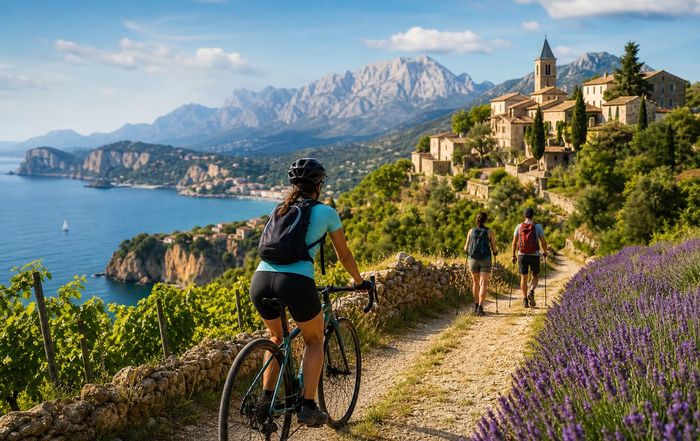
Active Travel Ideas for Exploring France Outdoors
France is often imagined through café terraces and museum queues, but step outside the cities and it becomes one of the most diverse outdoor playgrounds in Europe. From Atlantic surf to Alpine summits, vineyard trails to wild river gorges, the country is built for travellers who want to move, sweat, and earn their views rather than just photograph them.
This guide focuses on practical, active ways to explore France outdoors, balancing adventure with safety, culture, and accessibility. It is written for people who are as interested in the journey as the destination, whether that means long-distance cycling, mountain trekking, trail running, paddling, or winter sports.
For broader ideas on sport and performance, readers can also explore our top coverage of sports, adventure, and performance.
Cycling France: From Canal Paths to Iconic Mountain Passes
Cycling is arguably the most emblematic way to explore France actively, thanks largely to the legacy of the Tour de France. Yet you don't need elite fitness or a race number to enjoy it. The country has developed an extensive network of long-distance cycle routes known as EuroVelo and Véloroutes & Voies Vertes, offering options from relaxed canal rides to legendary mountain climbs. The official French cycle tourism portal, France Vélo Tourisme (in English and French), is a useful starting point for route planning, accommodation, and bike-friendly services.
Leisure cyclists often gravitate toward the Loire à Vélo, a 900 km route along the Loire River that strings together châteaux, vineyards, and historic towns. Much of the path is separated from traffic, making it suitable for families and less experienced riders. Another popular option is the Canal du Midi in the south, where towpaths and quiet lanes link medieval Carcassonne with the Mediterranean. Sections can be ridden as day trips, or combined into multi-day journeys with luggage transfers arranged by local operators.
For more demanding riding, the Alps and Pyrenees offer access to the same cols that feature in the Tour de France, such as the Col du Galibier, Col du Tourmalet, and Alpe d'Huez. These climbs demand strong fitness and careful pacing but reward riders with panoramic views and a sense of connection to cycling history. The Tour de France official site provides profiles and gradients of many famous climbs, which can help with planning. Cyclists should be prepared for rapid weather changes, particularly in early summer and autumn, and should check local forecasts and pass openings.
Urban-based travellers might prefer exploring by bike in and around cities such as Paris, Lyon, or Bordeaux, which have expanding cycle networks and public bike-share systems. Long-distance riders sometimes use these cities as gateways, taking advantage of France's relatively bike-friendly rail system. The national rail operator SNCF details which trains accept bikes and under what conditions, an important consideration if you plan linear rather than loop routes. For those interested in broader travel ideas, Xdzee's travel section offers more destination-oriented context.
Hiking and Trekking: From Coastal Paths to High Alpine Trails
France's hiking possibilities range from gentle coastal walks to multi-week treks through high mountains. The backbone of this network is the Grande Randonnée (GR) system, a series of long-distance footpaths marked by red-and-white blazes and managed by the Fédération Française de la Randonnée Pédestre. Their official site, FFRandonnée, provides route descriptions, safety advice, and updates on closures.
Along the Atlantic coast, the GR34 (Sentier des Douaniers) traces the rugged shoreline of Brittany for more than 2,000 km. It offers cliffs, coves, and constantly shifting light, but without major altitude gain, making it accessible to fit walkers without mountain experience. On the Mediterranean, the Calanques between Marseille and Cassis provide shorter but more technical hikes, with steep sections and exposure above turquoise inlets. The Parc national des Calanques publishes access rules and seasonal restrictions, including closures due to fire risk and heat, which visitors should consult in advance.
For a deeper immersion, the GR20 in Corsica is often described as one of Europe's toughest waymarked trails. It crosses the island's mountainous spine over roughly two weeks, with significant elevation changes, rocky terrain, and sometimes chains or exposed sections. The route is best attempted between June and September, but even then, weather can be volatile. Trekkers should be comfortable with multi-day mountain travel, carrying appropriate gear, and booking refuges ahead of time, especially in peak season. The Parc naturel régional de Corse and Corsica tourism board provide up-to-date information on conditions and regulations.
In the French Alps, the Tour du Mont Blanc (TMB) is a classic multi-day route circling Western Europe's highest peak through France, Italy, and Switzerland. It typically takes 7-11 days and is well served by mountain huts and valley accommodations. While technically moderate, the route involves long days and sustained climbing, so a solid fitness base and prior hiking experience are recommended. Organisations such as Mont Blanc Natural Resort and local tourist offices in Chamonix and Les Houches offer practical guidance on stages, transport, and weather.
Regardless of the region, hikers should pay attention to safety basics: carrying sufficient water, sun protection, a map or GPS, and layers for sudden weather changes. In higher mountains, early summer snowfields, thunderstorms, and rapidly shifting conditions can catch unprepared walkers off guard. For more on risk management in outdoor activities, readers may find Xdzee's safety and destination pages helpful when planning.
Trail Running: France's Growing Off-Road Culture
Trail running has exploded in popularity in France, fuelled by events like the UTMB (Ultra-Trail du Mont-Blanc) and a dense network of marked paths. Many ski resorts now market themselves as summer trail hubs, offering waymarked loops, lift-accessed routes, and events for a range of abilities. Chamonix, Annecy, and the Vercors plateau are particularly active centres, but trail running opportunities exist in most mountain and hill regions.
The UTMB series, profiled on its official site, has helped put French and Alpine trails on the global endurance map. While most visitors will not be attempting 170 km ultra-marathons, the surrounding infrastructure-gear shops, guiding services, and waymarked segments-makes it easy for recreational runners to sample shorter sections. The same is true in regions like the Vosges and Massif Central, where rolling terrain and forested ridges lend themselves to intermediate-level trail outings.
Safety considerations for trail running mirror those for hiking but with added emphasis on hydration, navigation, and pacing. Heatwaves have become more frequent in European summers, so early starts, shaded routes, and careful attention to water sources are increasingly important. The Météo-France website, meteofrance.com, provides detailed forecasts and heat alerts, which are worth checking before committing to a long run. For those looking to connect trail running with broader lifestyle and performance themes, Xdzee's lifestyle and performance sections often explore training, recovery, and gear trends.
Water-Based Adventures: Coasts, Rivers, and Lakes
France's varied coastline and extensive river network make it a strong destination for water sports that balance adrenaline with accessible entry points. On the Atlantic, surfing is concentrated along the south-west coast in areas such as Hossegor, Biarritz, and the Landes beaches. Consistent swells and long sandy stretches make the region attractive to both beginners and experienced surfers. The French Surfing Federation lists accredited surf schools and safety guidelines, including flag systems and rip current awareness.
On the Mediterranean, conditions are often calmer, favouring stand-up paddleboarding (SUP), sea kayaking, and sailing. The Côte d'Azur can be crowded in high season, but quieter options exist in the Var coastline, the Îles d'Hyères, and the Camargue wetlands. Many local outfitters offer half-day or full-day rentals with basic instruction, making it easy to integrate a water session into a broader travel itinerary without committing to a full course.
Inland, canoeing and kayaking on rivers like the Ardèche, Dordogne, and Verdon combine physical activity with dramatic scenery. The Gorges de l'Ardèche, in particular, are renowned for their natural arch at Pont d'Arc and multi-day descents with riverside camping. The Ardèche tourism board sets out seasonal regulations, including mandatory lifejackets and minimum water levels for certain sections. In the Gorges du Verdon, often called Europe's Grand Canyon, paddlers share the water with swimmers and pedal boats, and must respect zoning and safety rules established by the Parc naturel régional du Verdon.
France's large lakes-such as Lac d'Annecy, Lac du Bourget, and Lac de Serre-Ponçon-offer calmer conditions for swimming, SUP, sailing, and beginner windsurfing. Water quality in many lakes is monitored closely; for example, Annecy's long-running clean-up efforts are documented by the Haute-Savoie departmental authorities, which also publish bathing water quality reports in summer. Active travellers should still be mindful of cold water shock in spring and early summer, when snowmelt keeps temperatures low despite warm air.
Climbing, Via Ferrata, and Vertical Exploration
For those drawn to vertical adventure, France offers a spectrum from accessible via ferrata routes to serious alpine climbing. Via ferrata-protected climbing routes equipped with metal rungs and cables-are particularly popular because they allow non-climbers with a head for heights to experience exposed terrain with additional security. Regions such as the Alps, Jura, and Pyrenees host numerous routes graded by difficulty. The French Mountaineering and Climbing Federation, FFME, provides information on climbing and via ferrata sites, safety standards, and training.
In the Alps, areas like the Écrins, Chamonix, and Vanoise offer both rock climbing crags and high-alpine routes. While some climbs are accessible to experienced independent parties, many visitors choose to hire certified guides through organisations such as the Compagnie des Guides de Chamonix. This is particularly prudent for glacier travel, mixed routes, or any objective where crevasse risk, rockfall, or rapidly changing weather are significant factors.
Outside the high mountains, limestone cliffs in regions like the Verdon Gorge and Buoux attract sport climbers from around the world. The Verdon's multi-pitch routes, often starting with a rappel into the gorge before climbing back out, require solid rope skills and route-finding. Local guidebooks and topos, often produced by regional climbing clubs, are essential resources. Beginners are better served at single-pitch crags with well-bolted routes and clear descent paths, ideally with instruction from qualified instructors.
Helmets are strongly recommended for all forms of climbing and via ferrata, and harnesses, lanyards, and appropriate footwear are non-negotiable. Weather awareness is critical: thunderstorms, particularly in summer afternoons, can turn vertical terrain into a dangerous environment. For readers interested in the intersection of risk, ethics, and outdoor culture, Xdzee's ethics and culture pages often address how adventure sports communities manage responsibility and environmental impact.
Winter Sports: Beyond Classic Alpine Ski Holidays
France is one of the world's major winter sports destinations, but active travellers increasingly look beyond traditional resort skiing. While large linked ski areas such as Les Trois Vallées, Paradiski, and Les Portes du Soleil remain popular, there is growing interest in ski touring, snowshoeing, and Nordic skiing, which allow for quieter, more nature-focused experiences. The France Montagnes portal provides overviews of resorts and activities, including non-alpine options.
Ski touring, which involves climbing uphill on skis with skins before descending off-piste, opens up more remote terrain but carries avalanche risk. The Association Nationale pour l'Étude de la Neige et des Avalanches (ANENA), via anena.org, offers avalanche education materials and promotes best practice. Anyone venturing into unpatrolled terrain should carry transceiver, shovel, and probe, know how to use them, and understand local avalanche bulletins issued by Météo-France.
For a lower-risk but still active winter experience, snowshoeing and cross-country skiing in areas like the Jura, Vercors, and Queyras provide marked trails, rental gear, and often guided outings. These sports are accessible to beginners with basic fitness and offer a slower, more contemplative way to experience winter landscapes. Many resorts publish trail maps and difficulty ratings online, and local tourist offices can advise on current snow conditions and open routes.
Climate change is increasingly affecting snow reliability, with lower-altitude resorts facing shorter seasons and more variable conditions. This has accelerated efforts in some areas to diversify into four-season tourism with trail running, mountain biking, and hiking infrastructure. For travellers, it means that flexibility and up-to-date information are more important than ever when planning winter trips.
Balancing Adventure with Safety, Culture, and Sustainability
Active travel in France is not just about physical challenge; it is also an opportunity to engage with local cultures, landscapes, and environmental realities. Many regions have regional natural parks (parcs naturels régionaux) that promote sustainable tourism, encourage low-impact outdoor activities, and protect biodiversity. The umbrella organisation Fédération des Parcs naturels régionaux de France outlines their principles and lists member parks, which can be useful bases for responsible adventure travel.
From a safety perspective, travellers should be aware of how emergency response works. The general European emergency number 112 is valid in France, and mountain regions also use specialised rescue services such as PGHM (Peloton de Gendarmerie de Haute Montagne). Carrying basic first-aid supplies, knowing your approximate location, and having a charged phone (ideally with an offline map app) can make a significant difference in an emergency. For higher-risk activities, considering travel insurance that explicitly covers adventure sports is prudent.
Culturally, many rural and mountain areas depend heavily on seasonal tourism, but they also struggle with overcrowding, trail erosion, and pressure on water resources. Travellers can reduce their impact by visiting outside peak periods, using public transport where feasible, respecting trail closures, and supporting local businesses rather than only large chains. This aligns with a broader shift in adventure and travel culture that the news and editorial team covers across its world, news, and business pages, where sustainability and ethics increasingly shape how destinations develop and market outdoor experiences.
Ultimately, France rewards those who move slowly and pay attention. Whether pedalling along a canal, traversing an alpine ridge, paddling a river gorge, or running a forest trail, the most memorable experiences often come from small encounters: a village market at dawn, a conversation with a hut warden, a sudden view after a steep climb. For travellers willing to trade some comfort for immersion, the country offers almost endless ways to explore outdoors-actively, thoughtfully, and with a sense of connection to the landscapes underfoot.