

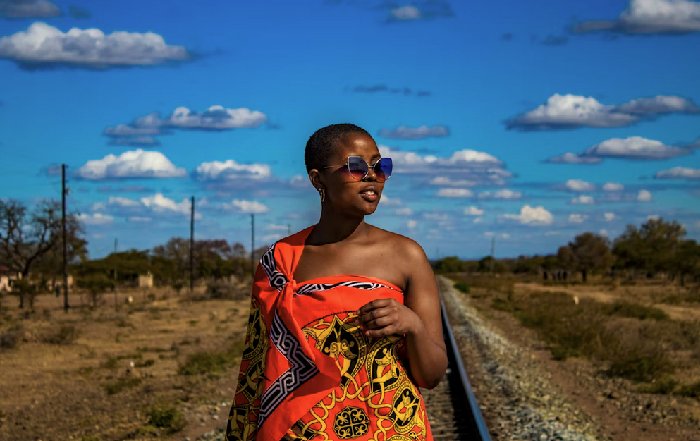
Travel Stories From Africa to South America: A Lens on Experience and Trust
Cross-Continental Journeys as Strategic Intelligence
As global mobility has largely normalized and organizations recalibrate strategies for an era of geopolitical complexity, travel stories that bridge Africa and South America have evolved from personal anecdotes into a form of strategic intelligence that senior leaders, investors, and professionals can no longer afford to ignore. For xdzee.com, which is dedicated to connecting readers with informed perspectives across travel, business, world affairs, lifestyle, and innovation, these journeys offer a uniquely powerful lens through which to evaluate experience, expertise, authoritativeness, and trustworthiness in a world where credibility is increasingly tested in real time and across multiple regions. Africa and South America, once treated as peripheral to mainstream boardroom conversations in New York, London, Berlin, Toronto, Sydney, and Singapore, now sit at the heart of discussions about growth markets, climate resilience, demographic shifts, and cultural influence, and it is the lived observations of travelers moving between them that often reveal the realities behind the data.
Executives and professionals may consult global platforms such as the World Economic Forum at weforum.org or the World Bank at worldbank.org to understand macroeconomic and social indicators, yet those sources gain far greater value when interpreted alongside the granular experiences of travelers who have walked port districts in Lagos and Santos, navigated airport hubs in Johannesburg, or spent time in secondary cities that seldom appear in headline reports. Within the editorial framework of xdzee.com, these accounts are treated not as casual impressions but as field-level evidence that can either validate or challenge prevailing assumptions held in boardrooms from Amsterdam and Zurich to Shanghai, Stockholm, Oslo, Tokyo, and Bangkok, thereby strengthening the platform's role as a trusted intermediary between global data and local reality.
The Strategic Relevance of Africa-South America Routes in 2026
By 2026, the movement of people and ideas between Africa and South America has become strategically relevant for organizations operating in sectors as diverse as commodities, technology, sports, logistics, and creative industries, especially as south-south trade corridors gain prominence and traditional supply chains face recurring disruption. Institutions such as the International Monetary Fund at imf.org and the OECD at oecd.org highlight the rising economic weight of both regions, yet their reports only become actionable when interpreted through the experiences of entrepreneurs, consultants, and analysts who have spent time in markets such as Nairobi, Cape Town, Accra, Buenos Aires. For readers of xdzee.com focused on business, jobs, brands, and performance, such travel narratives provide practical insight into how regulatory environments, infrastructure quality, digital adoption, and consumer expectations actually intersect on the ground, far beyond the abstractions of policy documents.
Travelers who move between African innovation hubs and South American metropolitan regions frequently report a shared sense of momentum driven by youthful demographics, rapid mobile connectivity, and a willingness to experiment with new business models. Analyses from the International Finance Corporation at ifc.org and the United Nations Development Programme at undp.org emphasize how both regions are experimenting with leapfrog technologies in finance, agriculture, and energy, but it is the direct observation of a founder comparing mobile money ecosystems in Kenya and digital banking in Brazil, or a logistics manager contrasting port operations in Durban and Santos, that translates opportunity into operational understanding. xdzee.com increasingly positions these travel-based insights as a bridge between boardroom strategy and field execution, particularly for decision-makers in the United States, the United Kingdom, Germany, Canada, Australia, France, Italy, Spain, the Netherlands, Switzerland, China, Sweden, Norway, Denmark, South Korea, Japan, Thailand, Finland, South Africa, Brazil, Malaysia, and New Zealand who must make high-stakes judgments about where and how to allocate resources.
Sport, Performance, and a Shared Competitive Culture
For many in the xdzee.com community, sports represent more than entertainment; they are a framework for understanding performance, leadership, national identity, and even brand strategy. Travel stories that follow athletes, scouts, performance analysts, and fans between Africa and South America reveal a rich tapestry of shared passion and competitive culture, particularly around football, athletics, rugby, and increasingly e-sports. From academies in Ghana, Nigeria, and Senegal to stadiums in Brazil, Argentina, and Colombia, travelers repeatedly encounter similar scenes of grassroots talent development under constrained resources, where ingenuity and community support compensate for limited infrastructure. Global sports bodies such as FIFA at fifa.com and the International Olympic Committee at olympics.com document participation and investment trends, yet they rarely capture the nuanced reality of a young striker in Johannesburg comparing his training environment to that of a counterpart in Rio de Janeiro, or a coach from Cape Town learning from tactical innovations pioneered in Santiago.
For businesses engaged in sports media, sponsorship, data analytics, or performance technology, the detailed travel experiences of practitioners moving between these regions offer a form of due diligence that cannot be replicated through desk research alone. Observations about fan behavior in local derbies in Luanda and Buenos Aires, or about the commercial ecosystem surrounding youth tournaments in Nairobi and Lima, inform decisions about where to invest, which partnerships to prioritize, and how to localize global brands without diluting authenticity. Within xdzee.com, these stories are contextualized not only as human-interest narratives but as case material that helps readers understand how performance cultures shape broader consumer expectations, influencing sectors from apparel and nutrition to digital content and live event management.
Adventure, Risk, and the Redefinition of Safety
Adventure travel linking Africa and South America has grown into a sophisticated segment that intersects with risk management, environmental awareness, and ethical responsibility. Travelers who move from the dunes of Namibia to the highlands of Peru, or from Kilimanjaro to the Andes, increasingly approach adventure not as reckless escapism but as a carefully planned engagement with challenging environments. Industry bodies like the World Travel & Tourism Council at wttc.org and the International Air Transport Association at iata.org provide overarching frameworks on safety and operational standards, but it is the firsthand accounts of guides, expedition leaders, and seasoned travelers that illuminate how these guidelines are implemented in remote locations, where infrastructure may be fragile and emergency response times extended.
For an audience interested in adventure, destination, and safety, xdzee.com emphasizes travel stories that detail how local expertise and technology intersect to manage risk responsibly. Descriptions of cross-training between guiding teams in Tanzania and Bolivia, or of shared learnings on altitude sickness protocols between operators in Kenya and Chile, provide concrete examples of how safety culture is evolving. Satellite communication devices, digital mapping platforms, and real-time weather analytics, often developed or refined in collaboration with global technology firms highlighted by sources such as NASA at nasa.gov, are increasingly embedded into expedition planning, yet travelers consistently report that the most decisive factor remains the judgment of experienced local professionals. By curating these accounts, xdzee.com reinforces the notion that responsible adventure is inseparable from respect for local knowledge and from transparent communication around risk.
Climate, Sustainability, and Ethical Travel Choices
As climate impacts intensify across Africa, South America, and other vulnerable regions, travel stories that cross the Atlantic increasingly foreground questions of sustainability, ethics, and long-term resilience. Coastal cities from Lagos and Cape Town to Recife, as well as agricultural zones from Kenya's Rift Valley to Brazil's Cerrado, face converging pressures related to rising temperatures, shifting rainfall, and biodiversity loss. Scientific assessments from the Intergovernmental Panel on Climate Change at ipcc.ch and the United Nations Environment Programme at unep.org provide a sobering macro context, yet travelers' observations of parched landscapes, altered growing seasons, and stressed communities translate these trends into tangible realities that influence how conscientious individuals and organizations approach mobility.
For the xdzee.com readership, which increasingly integrates sustainability into lifestyle and investment decisions, travel narratives serve as practical guides to more responsible behavior. Accounts of choosing airlines with transparent emissions strategies, staying in lodges that adhere to credible environmental standards, and supporting community-led conservation projects echo the principles promoted by organizations such as the Global Sustainable Tourism Council at gstcouncil.org and the UN World Tourism Organization at unwto.org. When a traveler describes moving from a community conservancy in Botswana to a reforestation initiative in Colombia, and comparing governance structures, benefit-sharing mechanisms, and visitor education programs, the resulting narrative becomes a reference point for what authentic responsible travel looks like. xdzee.com uses such stories to reinforce expectations around ethics, encouraging both travelers and brands to align claims with verifiable practices rather than aspirational messaging.
Trade, Investment, and Emerging Corridors of Opportunity
The economic relationship between Africa and South America, long overshadowed by ties to North America, Europe, and Asia, has entered a phase of cautious acceleration, and travelers who traverse these corridors are often among the first to perceive where genuine opportunity lies. Data from the World Trade Organization at wto.org and the African Development Bank at afdb.org documents growing trade flows in agriculture, energy, mining, and services, while the Inter-American Development Bank at iadb.org highlights complementary development priorities in Latin America. Yet, it is the experience of a logistics specialist visiting free trade zones in Nigeria and Brazil, or of an agritech entrepreneur comparing irrigation solutions in Mozambique and Paraguay, that reveals which opportunities are operationally viable and which remain theoretical.
For readers following world and news coverage on xdzee.com, travel-based business narratives help decode how policy announcements translate into day-to-day operations. Travelers frequently describe how African agribusiness leaders visit Brazilian farms to learn about mechanization and biofuel integration, while South American fintech founders travel to Kenya and South Africa to study mobile money ecosystems that have inspired global interest, including from organizations like The Bill & Melinda Gates Foundation at gatesfoundation.org. These exchanges demonstrate that south-south collaboration is no longer a rhetorical aspiration but a practical reality, especially in sectors where both regions face similar structural challenges. By presenting these stories with analytical commentary, xdzee.com supports executives and investors seeking to design partnerships that respect local contexts, manage regulatory risk, and build long-term value rather than opportunistic gains.
Culture, Identity, and Deep Historical Connections
Any serious examination of travel between Africa and South America must acknowledge the deep historical currents that tie these regions together, particularly through the legacy of the transatlantic slave trade and the enduring presence of African diasporas in countries such as Brazil, Colombia, Cuba, and others across the Caribbean and South America. Cultural institutions including UNESCO at unesco.org have documented these connections, yet it is contemporary travel that often makes them emotionally immediate for individuals who move between cities like Salvador, Rio de Janeiro, Cartagena, Luanda, and Lagos. Travelers frequently describe how music, cuisine, religion, and language in Afro-Latin communities echo traditions encountered in West and Central Africa, while African urban centers increasingly embrace Afro-Latin influences in fashion, dance, and popular culture.
For readers of xdzee.com interested in culture, such travel stories provide more than historical reflection; they offer a framework for understanding how identity and memory shape present-day social dynamics, political discourse, and even consumer behavior. Descriptions of capoeira rodas in Bahia that preserve martial and spiritual lineages, or of religious ceremonies that trace their origins to Yoruba and Bantu traditions, illustrate how heritage informs contemporary values and community structures. These experiences deepen an understanding of how narratives of resilience, resistance, and creativity influence how people in both regions relate to brands, institutions, and global trends. Within xdzee.com, this cultural dimension is integrated into broader discussions of business, ethics, and leadership, underscoring that effective engagement in any market requires sensitivity to the historical and emotional contexts that shape local perspectives.
Innovation, Technology, and the Digital Bridge
Contrary to outdated stereotypes that portray Africa and South America as peripheral to global innovation, travel stories from 2026 increasingly reveal both regions as laboratories for practical, inclusive technological solutions. Organizations such as GSMA at gsma.com and McKinsey & Company at mckinsey.com have documented the rapid expansion of mobile connectivity, digital payments, and e-commerce, but it is the itineraries of founders, developers, and investors moving between Lagos, Accra, Mexico City, and Buenos Aires that show how ideas are adapted across contexts. Travelers describe coworking spaces and accelerator programs where African and South American innovators co-develop solutions to shared challenges, from financial inclusion and supply-chain transparency to telemedicine and climate resilience, often drawing on open-source tools and cloud platforms provided by global technology leaders such as Microsoft at microsoft.com and Google at google.com.
For the xdzee.com audience focused on innovation and high performance, these stories highlight how constraints in capital, infrastructure, and regulation can catalyze creativity rather than suppress it. An entrepreneur comparing digital identity solutions in Kenya and Chile, or a health-tech founder examining telemedicine pilots in rural South Africa and Peru, gains insights that are directly relevant to product design and market entry strategies in more mature economies. These narratives also underline the centrality of trust, as cross-continental partnerships depend on reputational capital and transparent communication to overcome distance, currency volatility, and shifting policy environments. By featuring such accounts, xdzee.com reinforces its role as a platform where readers can assess not only technological potential but also the human relationships that underpin sustainable innovation.
Careers, Mobility, and the Future of Work
The evolution of work in 2026 is defined by cross-border careers, remote collaboration, and portfolio professional identities, and Africa-South America travel sits at the center of many emerging trajectories. Professionals in renewable energy, healthcare, sports management, logistics, finance, and creative industries are increasingly building careers that involve extended assignments, frequent travel, or permanent relocation between cities such as Johannesburg, Cape Town, Lagos, and Santiago. Platforms like LinkedIn at linkedin.com and research from the International Labour Organization at ilo.org outline global labor trends, yet it is the detailed experiences of individuals navigating visas, taxation, regulatory recognition of qualifications, and cultural adaptation that provide actionable guidance for those considering similar paths.
For readers of xdzee.com who follow jobs and career-focused content, travel stories serve as case studies in building credible cross-continental profiles. Professionals describe how working in both Africa and South America sharpens their ability to operate in complex environments, manage diverse teams, and communicate across cultural and linguistic boundaries-skills that are increasingly valued by employers headquartered in North America, Europe, and Asia. Narratives of relocation also delve into personal dimensions, including family transitions, language acquisition, and integration into local communities, which are often decisive factors in the success or failure of international assignments. By presenting these experiences through a structured, analytical lens, xdzee.com helps readers understand that global careers are not simply about mobility but about developing the resilience, empathy, and interdisciplinary perspective that modern leadership demands.
Brands, Trust, and Authentic Storytelling
In an era of heightened skepticism toward corporate messaging, brands that engage with Africa and South America are under pressure to demonstrate authenticity, and travel stories have become an important mechanism for building or losing trust. Organizations that send executives, product teams, or independent auditors to spend time in cocoa cooperatives in Ghana, coffee farms in Colombia and Brazil, or mining communities in Chile and South Africa, and then communicate those experiences transparently, are increasingly differentiated from those that rely solely on polished sustainability reports. Global frameworks such as the UN Global Compact at unglobalcompact.org and the OECD Guidelines for Multinational Enterprises at oecd.org/investment/mne provide reference points, but stakeholders often look to concrete travel-based narratives to evaluate whether a brand's commitments are reflected in actual practice.
For the xdzee.com audience interested in brands, business, and news, such narratives are treated as evidence rather than marketing content. Detailed accounts of site visits that describe working conditions, environmental safeguards, local community engagement, and supplier relationships help readers assess whether a company's claims about sustainability, ethics, and social impact are credible. When combined with independent reporting and contextual analysis, these travel stories contribute to a richer understanding of corporate behavior in complex markets, enabling investors, consumers, and employees to make more informed decisions. In this way, xdzee.com leverages cross-continental travel experiences as a core component of its commitment to authoritativeness and trustworthiness.
Why These Journeys Matter for xdzee.com in 2026
By 2026, travel stories from Africa to South America have become far more than inspirational narratives; they are a critical resource for anyone seeking to understand how global forces are reshaping markets, societies, and individual lives. For xdzee.com, whose coverage spans sports, adventure, travel, business, world affairs, lifestyle, innovation, ethics, and culture, these cross-continental journeys serve as a unifying thread that connects performance, safety, opportunity, and responsibility. They demonstrate that experience is not merely a credential listed on a CV but a record of engagement across diverse contexts; that expertise is deepened by exposure to multiple systems and perspectives; that authoritativeness is earned by consistently aligning observation with evidence; and that trustworthiness arises when organizations and individuals are transparent about where they have been, what they have seen, and how those insights shape their decisions.
As readers across Global regions-from North America, Europe, and Asia to Africa, South America, and Oceania-navigate an environment defined by uncertainty and accelerated change, the Africa-South America travel stories curated and analyzed by xdzee.com offer a distinctive advantage. They invite leaders, professionals, and curious travelers to look beyond familiar circuits and engage with the routes that increasingly define the future of growth, culture, and innovation. In doing so, they affirm that travel, when approached with curiosity, rigor, and respect, remains one of the most effective ways to build the informed, ethical, and globally fluent leadership that the coming decade will require, and they position xdzee.com as a trusted companion in that ongoing journey.