

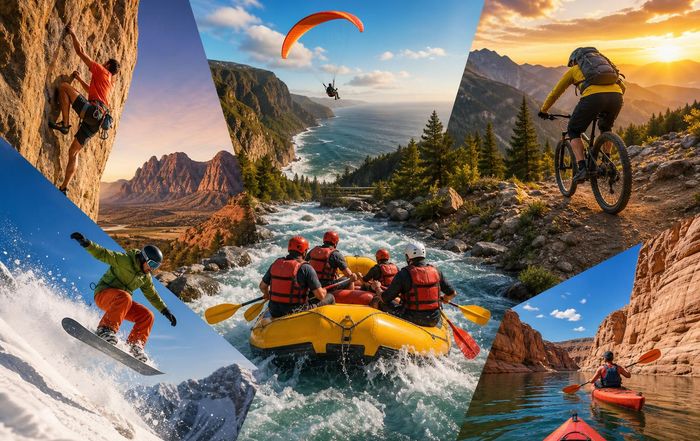
Best Adventure Sports to Try in the United States
From high alpine ridges to warm coastal waters and vast desert canyons, the United States is built for adventure. For travelers and athletes who want more than a scenic viewpoint, it offers a huge range of sports that combine physical challenge, technical skill, and immersion in wild landscapes. This original guide focuses on some of the most compelling adventure sports to try across the U.S., what makes each one special, where they're particularly good, and the safety and preparation considerations that matter before you jump in.
Rock Climbing and Bouldering: Vertical Playgrounds
Few sports capture the spirit of modern adventure like climbing. The U.S. has become a global hub, with destinations that attract everyone from beginners to elite athletes.
Traditional and sport climbing flourish in areas such as Yosemite Valley in California, Red River Gorge in Kentucky, and Eldorado Canyon in Colorado. Yosemite's big walls, including El Capitan, are legendary, while Red River Gorge is known for steep, pocketed sandstone that has helped define American sport climbing. For bouldering, Bishop in California and Hueco Tanks in Texas are among the world's best-known venues.
Indoor climbing gyms have exploded in popularity over the last decade, giving newcomers a controlled environment to learn movement and belaying skills before heading outdoors. The American Alpine Club and Access Fund provide guidance on responsible outdoor climbing and access issues, including how to minimize impact on crags and local communities. Their resources are especially useful for visitors who want to understand local ethics and closures.
Beyond technique, safety is central. The American Mountain Guides Association (AMGA) sets standards for professional instruction and certification; working with an AMGA-certified guide is a strong option for first outdoor experiences or more serious objectives. Helmets, proper belay techniques, and clear communication are non-negotiable, and climbers must understand objective hazards like rockfall and weather.
For athletes drawn to performance and progression, climbing offers a lifetime learning curve. For travelers focused on destination and culture, climbing towns from Boulder to Bend often have vibrant communities, cafés, and gear shops that turn a climbing trip into a broader lifestyle experience. Active individuals exploring more outdoor performance topics can also find related top reporting in the performance section and sports hub on xdzee.
Whitewater Rafting and Kayaking: Reading the River
Whitewater sports blend adrenaline with river ecology and navigation. In the U.S., whitewater rafting is widely accessible, with commercial outfitters operating on rivers from Maine to California. Classic multi-day trips include the Colorado River through the Grand Canyon, the Salmon and Snake Rivers in Idaho, and the Rogue River in Oregon, while day trips on the Gauley in West Virginia or Arkansas River in Colorado offer intense rapids in shorter bursts.
The American Whitewater organization maintains a detailed database of river runs, flow information, and access notes, making it a key planning resource. For those paddling independently, the American Canoe Association (ACA) offers training standards and safety courses in whitewater kayaking, canoeing, and rafting guide skills.
While rafting with a reputable outfitter is relatively beginner-friendly, whitewater environments are dynamic and potentially dangerous. Cold water, strainers (fallen trees), undercut rocks, and changing flows all magnify risk. The National Park Service and U.S. Forest Service regularly publish safety advisories for popular rivers, and checking these before a trip is wise.
For travelers, whitewater trips can become immersive journeys through remote canyon landscapes, combining camping, wildlife viewing, and river culture. Many outfitters now emphasize Leave No Trace practices, including pack-it-out waste systems and minimal campsite impact. Those interested in broader safety themes can explore xdzee's safety coverage and destination features for context on river towns and national park gateways.
Backcountry Skiing and Splitboarding: Earning the Turns
Backcountry skiing and splitboarding have grown rapidly as lift-access resorts become more crowded and expensive. In regions like the Rocky Mountains, Sierra Nevada, and Wasatch Range, touring into untracked snow offers solitude and a powerful sense of exploration. Areas near Jackson Hole, Salt Lake City, Lake Tahoe, and Colorado's Front Range are particularly active hubs.
Unlike resort skiing, backcountry travel means leaving avalanche-controlled terrain. That shifts the sport from pure recreation into risk management. In the U.S., the American Institute for Avalanche Research and Education (AIARE) is a leading provider of avalanche safety training, while regional avalanche centers, such as the Colorado Avalanche Information Center, publish daily forecasts and incident reports. Checking these forecasts and understanding their terminology is essential.
Standard equipment extends well beyond skis or a splitboard. An avalanche transceiver, shovel, and probe are considered mandatory; many backcountry travelers also carry an airbag pack, satellite communicator, and first-aid kit. Fitness, navigation skills, and group decision-making matter as much as technical skiing ability.
Climate change is reshaping backcountry seasons, snowpack stability, and travel windows. Warmer winters and more volatile storms can increase avalanche complexity in some regions, a trend documented in research summarized by organizations like the National Snow and Ice Data Center and various avalanche centers. For adventure travelers, that means more emphasis on timing, local knowledge, and flexible plans.
Those looking to combine snow sports with broader travel itineraries can often link resort days with guided backcountry outings. Many mountain towns also support summer adventure-from mountain biking to trail running-making them year-round destinations that tie directly into themes covered in xdzee's adventure and travel sections.
Mountain Biking: Singletrack Across States
Mountain biking in the U.S. has matured from a fringe activity into a major outdoor sport, with communities investing heavily in trail systems and bike parks. Destinations like Moab (Utah), Bentonville (Arkansas), Pisgah National Forest (North Carolina), and Sun Valley (Idaho) offer varied terrain, from slickrock slabs and desert mesas to dense forests and alpine ridgelines.
The nonprofit International Mountain Bicycling Association (IMBA) works with land managers across the country to design and maintain sustainable trail networks. Many of the most celebrated trails in the U.S.-including IMBA-designated "Epic" rides-reflect a deliberate balance between flow, technical challenge, and environmental impact. Local trail alliances often publish up-to-date conditions and closures, which are important to check, especially during wet seasons when riding can cause severe damage.
Injury risk in mountain biking is significant, particularly on technical trails and at bike parks with jumps and drops. Protective gear such as helmets, gloves, and knee pads is standard, while full-face helmets and body armor are common in downhill settings. The American College of Sports Medicine and other sports-medicine organizations have highlighted rising mountain bike participation and associated injury patterns, reinforcing the value of skill progression and realistic trail choices.
Culturally, mountain biking often overlaps with craft beer, local food, and trail-centric town planning. Cities like Brevard (North Carolina) or Fruita (Colorado) have oriented part of their identity around bike tourism, blending sport with lifestyle and local business development. Readers interested in the business and innovation side of trail economies can explore xdzee's business and innovation coverage for a wider look at how outdoor recreation shapes regional growth.
Surfing and Kitesurfing: Coasts and Wind
The U.S. coastline offers a surprising range of surf conditions, from the powerful Pacific breaks of California and Hawaii to the warm Atlantic swells of Florida and the Outer Banks of North Carolina. Cold-water surfing in the Pacific Northwest and New England attracts dedicated communities willing to endure frigid temperatures for uncrowded waves.
Surf forecasting has become increasingly sophisticated, with platforms like Surfline and Magicseaweed combining buoy data, meteorological models, and local reporting. For travelers, these tools help align trips with likely swell windows and suitable conditions for their skill level. International bodies such as the International Surfing Association (ISA) and World Surf League (WSL) offer additional resources on competition, training, and surf culture.
Kitesurfing (or kiteboarding) adds another dimension, harnessing wind as much as waves. U.S. hotspots include Hood River in Oregon's Columbia River Gorge, South Padre Island in Texas, and Miami and the Florida Keys, where consistent winds and wide launch areas are common. Because kites can generate significant power, professional instruction is strongly recommended; organizations like the International Kiteboarding Association (IKA) and various accredited schools outline lesson structures and safety norms.
Both surfing and kitesurfing involve environmental and ethical considerations. The Surfrider Foundation and similar groups advocate for clean water, beach access, and coastal ecosystem protection, highlighting issues like plastic pollution and shoreline development. Travelers can support these efforts by choosing operators and accommodations that prioritize sustainability and by following simple habits like packing out trash and using reef-safe sunscreen.
Canyoneering: Slot Canyons and Desert Labyrinths
Canyoneering-descending canyons using a mix of hiking, scrambling, rappelling, and sometimes swimming-has deep roots in the American Southwest. National parks and public lands in Utah and Arizona host some of the world's most iconic slot canyons, from the technical routes of Zion National Park to the sculpted sandstone corridors of the Grand Staircase-Escalante region.
Because canyons can be narrow and flash-flood prone, understanding weather is critical. The National Weather Service and local park alerts provide storm and flood warnings; in many slot canyons, even distant rainfall can create life-threatening conditions. The National Park Service offers detailed route descriptions, permit requirements, and safety guidance for popular canyoneering areas like Zion, where visitor numbers and fragile environments make regulation essential.
Technical canyoneering requires rope skills, anchor building, and specialized gear such as static ropes, harnesses, descending devices, and often wetsuits or drysuits for cold pools. Many accidents stem from anchor failures, poor route-finding, or underestimating water levels and obstacles. For those new to the sport, guided trips or formal training courses are strongly advised.
Ethically, canyoneering communities emphasize minimal impact in delicate desert environments. That includes avoiding the creation of unnecessary anchors, respecting archaeological sites, and traveling in small groups. For adventure travelers who value both adrenaline and quiet immersion, canyoneering offers a distinctive mix of exploration, problem-solving, and solitude that ties closely to themes explored in xdzee's adventure and world sections.
Skydiving and Paragliding: Airborne Perspectives
For many, skydiving is the quintessential "bucket list" adventure. The U.S. has hundreds of drop zones, with scenic favorites in places like California's Central Coast, Arizona's desert, and Hawaii's North Shore, where jumps combine freefall with dramatic views. The United States Parachute Association (USPA) sets national training and safety standards, and its website lists affiliated drop zones, incident statistics, and recommended progression pathways from tandem jumps to solo licenses.
Tandem skydives are designed for first-timers, with an experienced instructor controlling equipment and procedures. While the sport's risk is higher than many ground-based activities, USPA data over the past decade show a relatively low fatality rate compared to the huge number of annual jumps, reflecting improvements in equipment, training, and regulation. Still, prospective jumpers should review a drop zone's safety record, aircraft maintenance practices, and instructor qualifications.
Paragliding offers a slower, more meditative aerial experience, using fabric wings to soar on thermals and ridge lift. U.S. sites range from coastal cliffs in California and Oregon to mountain launches in Utah, Colorado, and Washington. The United States Hang Gliding and Paragliding Association (USHPA) administers pilot ratings, site guidelines, and instructor certifications, making it the primary reference for safe participation.
Weather knowledge is central in both sports. Wind speed, direction, turbulence, and cloud development can make the difference between a smooth flight and a dangerous one. Many incidents involve judgment errors rather than equipment failures, underlining the importance of conservative decision-making and ongoing training even after certification.
Trail Running and Fastpacking: Human-Powered Range
Trail running has evolved from a niche pursuit into a mainstream sport, with U.S. events like the Western States Endurance Run, Hardrock 100, and Leadville Trail 100 attracting international attention. But the real essence of trail running for many participants lies outside of races: moving efficiently through mountains, deserts, and forests with minimal gear.
Fastpacking-multi-day, lightweight backpacking at a running or fast-hiking pace-extends this idea, enabling long traverses such as sections of the Appalachian Trail, Pacific Crest Trail, or Colorado Trail. Organizations like the American Hiking Society and Appalachian Trail Conservancy provide guidance on permits, camping regulations, and seasonal considerations, all of which become more complex as distances grow.
Physically, trail running places different stresses on the body than road running. Uneven terrain demands ankle stability, proprioception, and careful pacing on descents. Sports science research, including work published in journals accessible via platforms like PubMed, has examined injury patterns unique to trail runners, emphasizing gradual progression, strength training, and attention to footwear.
From a safety perspective, navigation and self-sufficiency matter. Even on popular trails, weather changes, dehydration, and navigation errors can escalate quickly. Carrying a map or GPS, emergency layer, and basic first-aid kit is advisable, especially on remote routes. For those interested in how performance, safety, and wilderness ethics intersect, our safety, performance, and lifestyle content provides broader context.
Choosing the Right Adventure Sport for You
With so many options, the "best" adventure sport in the United States is highly personal. A few guiding questions can help narrow the field.
First, consider your comfort with objective risk and exposure. If heights are a major barrier, rock climbing or skydiving might feel more stressful than rewarding, whereas whitewater rafting with a professional guide or trail running on well-marked routes may be more accessible. Second, think about how much time and money you can commit. Sports like backcountry skiing, kitesurfing, and paragliding often require significant gear investments and ongoing training, while trail running and basic mountain biking can be more budget-friendly.
Third, reflect on what kind of environment you want to immerse yourself in. Desert canyons, alpine snowfields, coastal waves, and forest singletrack each offer distinct cultural and ecological experiences. Many travelers build trips around these landscapes, combining adventure sports with local food, music, and community events-threads that connect directly to the cultural and ethical dimensions explored in the culture and ethics pages.
Finally, prioritize safety and sustainability. Seek instruction from certified guides and schools, respect local regulations and closures, and adopt low-impact travel habits-principles championed by organizations like Leave No Trace, the National Park Service, and sport-specific bodies from the USPA to IMBA. Adventure sports can be transformative, but the most meaningful experiences are often those where challenge, preparation, and respect for place are in balance.
For many visitors and residents alike, the United States offers not just individual adventure sports, but an entire spectrum of ways to engage with wild and semi-wild spaces. Whether you start with a single guided rafting trip or commit to a multi-year climbing progression, the key is to approach each new discipline with curiosity, humility, and a willingness to learn from both the landscape and the communities that call it home.