

Global Fan Culture and the Future of Sports
The New Geography of Fandom
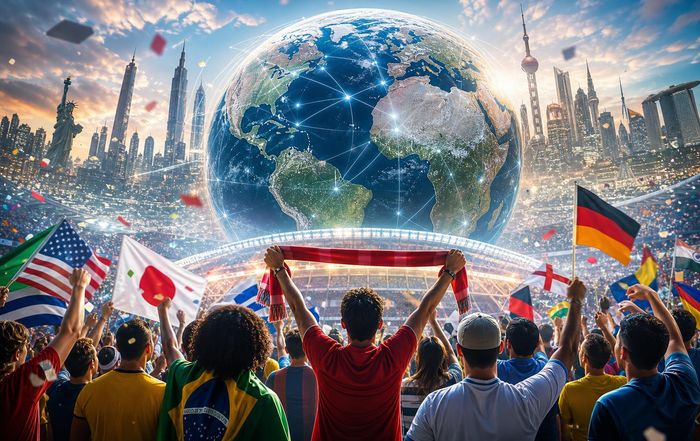
By 2026, global fan culture has evolved into a complex, borderless ecosystem in which allegiance to a team, athlete, or league is no longer constrained by geography, language, or time zone, and this transformation is reshaping how sports are watched, monetized, and experienced in every major market. From the packed stadiums of the English Premier League to late-night NBA viewing parties in Berlin and Singapore, fans now participate in a shared, always-on conversation that flows across continents, powered by digital platforms, data-driven engagement, and a rising expectation that sport must deliver not only competition but also community, values, and immersive entertainment. On xdzee.com, where audiences converge around sports, adventure, travel, and culture, this global shift is not an abstract trend but a daily reality, reflected in how readers from the United States, Europe, Asia, Africa, and South America consume content, follow stories, and define what it means to be a fan in the twenty-first century.
The traditional model of fandom, in which loyalty was largely inherited from family or defined by local identity, has been supplemented and sometimes displaced by what analysts at McKinsey & Company describe as "value-driven, digital-first communities" that form around narratives, personalities, and shared causes rather than postal codes alone, and as leagues look to global growth strategies they increasingly design products and schedules for international audiences who may never visit a home stadium yet demand the same emotional intensity and sense of belonging as legacy supporters. This new geography of fandom has profound implications for performance, safety, innovation, ethics, and business, the core pillars that frame coverage on xdzee.com, and it is forcing rights holders, brands, and policymakers to reimagine the future of sports as a truly global cultural infrastructure.
Digital Platforms and the Always-On Fan
The central engine of this transformation is the convergence of streaming technology, social media, and mobile connectivity, which has given rise to an "always-on" fan for whom the match itself is only one node in a continuous cycle of content, conversation, and commerce. Research from Deloitte's Sports Business Group highlights that younger fans in markets such as the United States, United Kingdom, Germany, and Japan increasingly consume sports through short-form highlights, creator-led commentary, and interactive formats rather than full live broadcasts, and this shift is accelerating as platforms like YouTube, TikTok, and Twitch build dedicated sports ecosystems. For global fans of football, basketball, cricket, and esports, the primary arena is now as much the smartphone screen as the stadium, and the most influential voices may be independent analysts, former athletes, or fan creators who build trust through authenticity and proximity rather than institutional authority.
At the same time, the major rights holders have moved aggressively into direct-to-consumer streaming, with services such as ESPN+, DAZN, and Amazon Prime Video investing heavily in exclusive rights and interactive features that enable multi-angle viewing, real-time statistics, and personalized alerts, thereby deepening engagement while collecting vast datasets on fan behavior. Analysts at PwC note that this data is increasingly used to tailor content, pricing, and marketing to specific regions, from late-night NBA tip-offs optimized for European viewers to localized commentary and graphics for audiences in China, India, and Brazil, and this personalization reinforces the sense that global fans are not passive recipients but co-authors of the sports narrative. For a platform like xdzee.com/news.html, which serves readers seeking both breaking developments and deeper context, this always-on environment creates opportunities to integrate live coverage, analysis, and lifestyle perspectives that reflect how fans actually experience sport across devices and time zones.
Experience as the New Competitive Advantage
As sports competes with gaming, streaming entertainment, and social media for attention, experience has become the decisive competitive advantage, and organizations that succeed are those that treat every touchpoint-from ticket purchase to post-game content-as part of a coherent, emotionally resonant journey. In leading markets such as the United States, United Kingdom, Germany, and Australia, clubs and leagues have invested in advanced venue technologies, including 5G connectivity, in-seat ordering, and augmented reality overlays that allow fans to access statistics, replays, and historical context in real time, turning the stadium into a living interface. Reports from Accenture on digital fan experience show that spectators increasingly expect seamless integration between physical and digital environments, with loyalty programs, personalized offers, and social features that continue long after the final whistle.
For global fans who may never attend in person, virtual experiences are filling the gap, ranging from VR broadcasts developed by organizations such as Meta to interactive watch parties hosted on platforms like Discord, where communities across Europe, Asia, and North America gather to comment, analyze, and share reactions in real time. Travel and destination experiences are also being redefined, as fans from Canada, France, Italy, Spain, and South Korea plan entire trips around marquee events, combining matches with cultural itineraries, culinary exploration, and adventure activities, a trend reflected in the way xdzee.com/destination.html and xdzee.com/lifestyle.html frame sports not just as competition but as a catalyst for broader life experiences. This emphasis on holistic experience underscores the importance of trust, safety, and inclusivity, as fans increasingly evaluate not only the quality of play but also the values and practices of the organizations they support.
The Economics of Global Fan Communities
The economic impact of global fan culture is immense and still expanding, with the sports industry projected by Statista and Grand View Research to reach well over a trillion dollars in combined direct and indirect value when accounting for media rights, sponsorship, merchandising, betting, tourism, and adjacent sectors such as fitness and wellness. As leagues extend their reach into emerging markets across Asia, Africa, and South America, they are forced to rethink revenue models that historically depended heavily on domestic broadcasting deals and matchday income, developing diversified portfolios that include international tours, localized sponsorships, and digital products tailored to specific demographics. The NBA's long-term investment in China, Africa, and Europe, the NFL's expansion into London and Frankfurt, and Formula 1's strategic growth in the United States, Middle East, and Southeast Asia illustrate how sports properties now view the world as a mosaic of interconnected fan communities rather than a series of isolated national markets.
For brands, this global mosaic presents both opportunity and complexity, as partnerships must resonate across cultures while maintaining authenticity with local supporters, and leading marketers increasingly rely on insights from organizations such as Nielsen Sports to understand how fan sentiment, media consumption, and purchasing behavior vary between, for example, fans in the Netherlands, Switzerland, Singapore, and Brazil. On xdzee.com/brands.html, where readers track how global and regional brands align with sports properties, there is growing interest in sponsorships that are not merely logo placements but integrated stories about innovation, sustainability, and social impact, especially among younger fans who expect companies to articulate clear values. This convergence of economic strategy and cultural storytelling reinforces the need for rigorous governance, transparent reporting, and ethical frameworks that protect both fans and athletes while enabling sustainable growth.
Performance, Data, and the Quantified Athlete
The same data revolution that has transformed fan engagement is reshaping performance, as clubs, national teams, and federations across Europe, North America, and Asia invest in advanced analytics, wearable technologies, and AI-driven coaching tools to gain marginal advantages in elite competition. Organizations such as FIFA, UEFA, and the International Olympic Committee have embraced performance analytics not only to improve play but also to enhance fairness and integrity, implementing systems that monitor workload, biomechanics, and injury risk while feeding anonymized insights into broader research on athlete health. Leading research centers, including the Aspetar Orthopaedic and Sports Medicine Hospital and the Australian Institute of Sport, continue to publish findings on training load management, recovery protocols, and mental resilience, shaping best practices that are increasingly adopted from professional leagues down to youth academies.
For fans, this quantification of performance has become part of the entertainment and education experience, with advanced statistics, tracking visualizations, and tactical breakdowns now integrated into broadcasts, club apps, and independent analysis platforms, allowing supporters in Japan, Sweden, South Africa, and Canada to engage with the game at a deeper, more analytical level. On xdzee.com/performance.html, this intersection of science, technology, and sport is treated as central to understanding how champions are made and how competitive balance can be maintained in an era where financial and technological disparities between clubs and federations are widening. Yet the rise of the quantified athlete also raises ethical questions about data ownership, privacy, and consent, especially as biometric and psychological data becomes more granular and potentially valuable to third parties.
Safety, Integrity, and the Duty of Care
As global fan culture expands, so too does the responsibility of sports organizations to ensure the safety and integrity of both participants and spectators, a duty of care that extends from stadium infrastructure to digital platforms. Governing bodies such as FIFA, the IOC, and the World Anti-Doping Agency (WADA) have strengthened protocols around athlete protection, anti-doping, and match integrity, recognizing that trust is the foundation of fandom and that any perception of manipulation or exploitation can quickly erode support in a hyperconnected world. At the same time, agencies like Interpol and Europol have intensified efforts to combat match-fixing and illegal betting networks, working with leagues and data companies to monitor suspicious patterns and enforce sanctions.
Fan safety has also taken on new dimensions, from crowd management and transport planning at mega-events to cybersecurity and protection against online abuse, with organizations such as FIFA and UEFA collaborating with technology partners to develop tools that identify and mitigate hate speech and threats on social media. The importance of robust safety frameworks is particularly evident in coverage on xdzee.com/safety.html, where readers expect nuanced analysis of how events in regions such as Europe, Asia, and South America manage risk while preserving the spontaneity and passion that define live sport. As virtual and augmented reality experiences become more prevalent, regulators and industry leaders must also consider new forms of psychological and digital safety, ensuring that immersive environments do not expose fans, especially younger ones, to harmful content or predatory behavior.
Innovation and the Convergence of Sports and Technology
Innovation sits at the heart of the future of sports, driving new formats, revenue streams, and fan experiences that blur the boundaries between physical and digital, competitive and participatory, local and global. The rapid ascent of esports and competitive gaming, led by organizations such as Riot Games and Valve, has demonstrated that sports-like fan cultures can emerge around entirely digital competitions, with global audiences rivaling those of traditional leagues and events, and this has prompted many clubs and federations to explore hybrid models that incorporate gaming, simulation, and interactive storytelling. The International Olympic Committee's exploration of virtual and simulated sports, along with initiatives like FIFAe, underscores how governing bodies are adapting to a generation for whom digital competition is as legitimate and emotionally resonant as physical contests.
In parallel, advances in AI, computer vision, and extended reality are enabling new forms of coaching, officiating, and broadcast presentation, from semi-automated offside technology in football to AI-generated highlight reels that can be personalized for fans in different regions and languages. Technology companies such as Microsoft, Google, and Sony are investing heavily in sports-related platforms and partnerships, recognizing that the sector offers a powerful testbed for innovations in edge computing, real-time analytics, and immersive media. On xdzee.com/innovation.html, these developments are contextualized not as isolated gadgets but as part of a broader transformation in how society understands competition, achievement, and shared experience, with particular attention to how innovation can support inclusivity, accessibility, and environmental sustainability.
Ethics, Values, and the Social Contract of Sport
Perhaps the most significant change in global fan culture over the past decade has been the growing expectation that sports organizations, athletes, and brands align their actions with clear ethical principles and social values, ranging from human rights and labor standards to environmental sustainability and diversity. Investigations by organizations such as Amnesty International and Human Rights Watch into the conditions surrounding major events have heightened awareness among fans in markets such as the United Kingdom, Germany, Norway, and the Netherlands, many of whom now scrutinize where tournaments are hosted, how infrastructure is built, and whether workers and local communities are treated fairly. Climate-focused initiatives like the UN Sports for Climate Action Framework have also pushed leagues and clubs to measure and reduce their environmental footprint, from travel emissions to stadium energy use, and to communicate transparently about progress.
Athletes themselves, from the United States to South Africa and Brazil, have become influential voices on issues such as racial justice, gender equality, and LGBTQ+ rights, leveraging their platforms to advocate for change and sometimes challenging the very organizations that employ them. This dynamic has reshaped the relationship between fans and heroes, as supporters increasingly evaluate not only on-field performance but also off-field integrity and courage, and it has created new expectations for media platforms such as xdzee.com/ethics.html to provide thoughtful, balanced coverage that neither sensationalizes nor minimizes complex ethical debates. The evolution of this social contract suggests that the legitimacy of sport in the coming decades will depend as much on governance and values as on spectacle and success.
Careers, Skills, and the Future of Sports Jobs
As the sports industry globalizes and digitizes, the nature of work within it is changing profoundly, creating new career paths while requiring fresh skills and interdisciplinary expertise. Beyond traditional roles in coaching, scouting, and event operations, there is rising demand for professionals in data science, digital marketing, cybersecurity, sustainability, and fan experience design, as clubs, leagues, and agencies seek to engage global audiences and manage complex technological infrastructures. Universities and business schools in the United States, United Kingdom, France, Spain, and Singapore have expanded their sports management and analytics programs, often in partnership with major organizations, to prepare graduates for roles that blend business acumen with technical literacy and cultural awareness.
Remote and hybrid work models have further opened the sector to talent from diverse regions, allowing analysts in India or South Africa to support European clubs, or content creators in Canada and Australia to serve global fanbases through digital channels. On xdzee.com/jobs.html, this evolving landscape is reflected in coverage of emerging roles, required competencies, and the broader employment trends that connect sports to adjacent industries such as media, technology, and tourism. As automation and AI take on more routine tasks, the most valuable skills are likely to be those that combine data interpretation, creative storytelling, ethical judgment, and cross-cultural communication, reinforcing the idea that sports is not an isolated entertainment vertical but a dynamic, knowledge-intensive global business.
Travel, Culture, and the Global Rituals of Fandom
Beyond economics and technology, global fan culture is fundamentally about shared rituals and narratives that connect people across borders, and travel plays a central role in sustaining these bonds. Fans from Italy, Japan, the United States, and Brazil routinely cross continents to attend World Cups, Olympics, Grand Slams, and iconic derbies, turning cities like London, Munich, Barcelona, and Melbourne into temporary capitals of global fandom where languages, cuisines, and traditions intermingle. Tourism boards and city authorities increasingly recognize the strategic value of hosting major events, not only for short-term economic impact but also for long-term brand building, and organizations such as the World Tourism Organization (UNWTO) provide guidance on how to integrate sports into broader destination strategies.
This interweaving of sport, culture, and travel is mirrored in how platforms like xdzee.com/travel.html and xdzee.com/world.html curate stories that move fluidly between match reports, city guides, and cultural analysis, acknowledging that for many readers in Europe, Asia, and North America, following a team is inseparable from discovering new places, meeting fellow fans, and exploring local customs. As remote and hybrid work arrangements give people more flexibility to travel, and as digital communities make it easier to coordinate meetups and shared experiences, the future of global fan culture is likely to be even more nomadic, with fans constructing personal maps of meaning that link stadiums, neighborhoods, and memories across continents.
The Role of xdzee.com in a Connected Sports Future
In this rapidly evolving landscape, xdzee.com occupies a distinctive position as a platform that connects sports with adventure, lifestyle, business, ethics, and innovation, serving an audience that spans continents and seeks not only information but also insight, context, and trustworthy guidance. By integrating coverage across sports, business, culture, and innovation, the site acknowledges that global fan culture cannot be understood in isolation from broader trends in technology, geopolitics, and consumer behavior, and that readers in markets from the United States and United Kingdom to Singapore and South Africa expect a holistic view of how sports intersects with their professional and personal lives. The editorial commitment to experience, expertise, authoritativeness, and trustworthiness is not merely a slogan but a response to an environment in which misinformation, hype, and superficial coverage can easily distort complex realities.
Looking ahead to the next decade, the future of sports will be shaped by how effectively stakeholders harness technology without losing the human essence of competition, how they expand globally while respecting local cultures and rights, and how they balance commercial ambition with ethical responsibility. Global fan culture, with its diverse voices and distributed power, will be both a driver and a watchdog in this process, rewarding organizations that deliver authentic, inclusive, and meaningful experiences while challenging those that fall short. In this context, platforms like xdzee.com will play a crucial role as interpreters and conveners, helping fans, professionals, and decision-makers navigate a world where the boundaries between stadium and screen, local and global, spectator and participant are increasingly porous, and where the future of sports is inseparable from the future of society itself.