

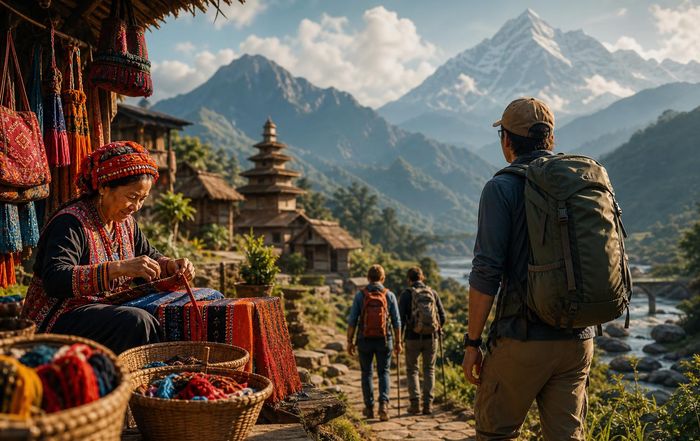
How Local Culture Shapes Adventure Experiences in 2026
Introduction: Adventure Beyond the Adrenaline
In 2026, adventure is no longer defined solely by altitude gained, distances covered, or records broken; instead, it is increasingly measured by the depth of cultural connection, ethical awareness, and personal transformation that travelers experience when they enter unfamiliar environments. For the global audience of xdzee.com, whose interests span sports, adventure, travel, lifestyle, culture, performance, safety, innovation, ethics, business, and jobs, the most meaningful journeys are those in which local culture is not a backdrop but a co-creator of the experience. From backcountry skiing in Switzerland to surf culture in Australia, from trekking in Nepal to urban exploration in New York or Tokyo, culture shapes how adventure is imagined, regulated, marketed, and remembered.
As adventure tourism becomes one of the fastest-growing segments of global travel, with organizations such as the World Travel & Tourism Council emphasizing its economic and social impact, the question is no longer whether culture influences adventure, but how deeply it determines what is possible, what is acceptable, and what is sustainable. Learn more about how tourism reshapes economies and communities on the World Travel & Tourism Council website. For xdzee.com, which connects readers to curated perspectives on travel, adventure, destination, and culture, this intersection of local identity and global exploration is not simply a topic; it is the lens through which modern adventure is understood.
The Cultural DNA of Adventure
Adventure does not exist in a vacuum; it is always framed by local narratives, historical memory, and social norms. What counts as daring, spiritual, or even appropriate can differ dramatically between a mountaineering community in the Alps, a surfing village in Indonesia, or a desert tribe in Namibia. Cultural anthropologists at institutions such as National Geographic have long documented how rituals, myths, and traditional knowledge systems inform the way communities interact with their landscapes, from sacred peaks to forbidden forests, and readers can explore these perspectives further via National Geographic.
In the United States and Canada, for example, outdoor adventure has been heavily shaped by a frontier ethos that prizes self-reliance, individual achievement, and technical innovation. This has influenced everything from the design of high-performance gear to the popularity of solo expeditions and ultramarathons, aligning closely with the performance-oriented stories often highlighted in xdzee.com's sports and performance coverage. By contrast, in Japan, the cultural concept of "satoyama" emphasizes a harmonious coexistence between human communities and nature, which shapes hiking, forest bathing, and mountain pilgrimages as contemplative, community-oriented practices rather than purely athletic challenges.
In Europe, particularly in countries such as Switzerland, Norway, and Germany, a strong culture of public access to nature, supported by legal frameworks and social expectations, has created a deeply ingrained outdoor lifestyle. Organizations such as the European Environment Agency highlight how access rights and conservation policies interact to shape everyday recreation and more extreme pursuits, and additional insights can be found through the European Environment Agency. In these societies, adventure is often normalized as a part of life from an early age, making it less of an exceptional event and more of a continuous relationship with the environment.
Storytelling, Myth, and the Meaning of Risk
Every adventure is a story, and local culture provides the narrative language with which risk, reward, and transformation are understood. In many Indigenous cultures across North America, Australia, and Scandinavia, landscapes are imbued with stories that define safe routes, sacred areas, and seasonal behaviors, shaping not only where adventure can occur but also how it is morally framed. Organizations such as the United Nations Educational, Scientific and Cultural Organization (UNESCO) have documented how intangible cultural heritage, from oral traditions to ritual practices, influences human interaction with nature, and these themes are explored further at UNESCO.
In the United Kingdom, the long tradition of mountaineering and hillwalking has produced a distinct storytelling culture, from the romanticism of the Lake District to the lore of Scottish bothies. These narratives influence how local guides, brands, and destinations market their experiences to both domestic and international visitors, a dynamic increasingly visible in the way European destinations position themselves on global platforms and in business-focused analyses such as those found on xdzee.com/business. Risk, in these contexts, is often framed as a test of character and resilience, with strong cultural approval for those who prepare thoroughly and respect the environment.
In contrast, in many parts of Asia, including Thailand, Japan, and South Korea, there is a strong cultural emphasis on group harmony and collective safety, which shapes guided experiences, group tours, and the way risk is managed and communicated. The adventure may still be intense, whether diving off the coast of Thailand or hiking in South Korea's national parks, but the shared experience and duty of care within the group are often emphasized more than individual heroics. This cultural framing has implications not only for traveler expectations but also for safety protocols and regulatory frameworks, topics that matter deeply for readers interested in safety and ethics on xdzee.com.
Local Knowledge as a Strategic Advantage
In the age of satellite maps, real-time weather data, and AI-driven route planning, it might be tempting to assume that local knowledge is becoming less critical. Yet the opposite is true: in complex, climate-stressed environments, the nuanced, place-specific expertise held by local communities, guides, and operators is more valuable than ever. Organizations such as the International Union for Conservation of Nature (IUCN) have highlighted how Indigenous and local knowledge contributes to climate adaptation and resilience, and further reading is available through the IUCN.
In mountain regions from the Alps to the Andes and the Himalayas, local guides bring not only technical skills but also an understanding of cultural protocols, land rights, and seasonal patterns that cannot be fully captured in digital tools. In Nepal, for example, Sherpa communities have shaped high-altitude mountaineering for decades, and their cultural values around community, spirituality, and respect for the mountains influence route decisions, risk tolerance, and client expectations. In Switzerland and France, local guiding traditions are closely linked to professional standards overseen by national and regional associations, reflecting a European culture that formalizes expertise and safety in highly structured ways.
For adventure businesses and global brands, recognizing and integrating this local knowledge is not simply a matter of operational efficiency; it is central to building trust and long-term relationships with both communities and customers. Resources such as the Adventure Travel Trade Association provide frameworks for integrating local voices into product design and destination management, and industry stakeholders can explore these approaches in depth at the Adventure Travel Trade Association. On xdzee.com, where brands and innovation intersect with adventure storytelling, there is a growing emphasis on showcasing companies that elevate local expertise rather than merely extracting it.
Culture, Regulation, and the Ethics of Access
Access to adventure spaces is never purely a logistical issue; it is shaped by legal systems, cultural norms, and ethical debates about who has the right to use land, water, and airspace, and under what conditions. In New Zealand, for example, a strong outdoor culture is balanced by robust conservation policies and an evolving recognition of Māori rights and perspectives, influencing how trails, rivers, and coastal areas are managed. In the United States, public lands policies and debates over access for climbing, off-road vehicles, and backcountry skiing reflect a complex interplay between recreation, conservation, Indigenous rights, and commercial interests, often covered in depth by organizations like the Outdoor Industry Association, which offers policy perspectives and market data at the Outdoor Industry Association.
In Europe, the concept of "freedom to roam" in countries such as Norway, Sweden, and Finland reflects a cultural and legal commitment to shared access, but this freedom is intertwined with responsibilities that are deeply culturally embedded, including leave-no-trace principles and seasonal restrictions to protect wildlife and fragile ecosystems. The Norwegian Environment Agency and similar bodies publish guidelines that articulate these shared responsibilities, and more information on environmental governance can be explored through the Norwegian Environment Agency and other national portals.
As adventure tourism continues to grow in regions such as Africa, South America, and Southeast Asia, questions of ethics and equity become more pressing. Who benefits from the influx of global travelers seeking "authentic" experiences, and how are cultural and environmental costs accounted for? Organizations such as the Global Sustainable Tourism Council have developed criteria for responsible tourism that include cultural heritage protection and community benefit, and businesses can learn more about sustainable business practices through their guidelines. For xdzee.com readers who follow world and news coverage, these ethical dimensions are not abstract; they shape consumer choices, brand reputations, and even career paths in the adventure and travel industries.
The Business of Culture-Driven Adventure
Adventure experiences are increasingly designed, packaged, and sold through a cultural lens, with destinations and brands differentiating themselves by emphasizing local identity, craftsmanship, and storytelling. In markets such as the United Kingdom, Germany, Canada, and Australia, travelers are seeking trips that combine physical challenge with culinary, artistic, or historical immersion, creating opportunities for cross-sector collaboration between outdoor operators, cultural institutions, and hospitality businesses. The World Tourism Organization (UNWTO) tracks these trends and provides data on cultural and adventure tourism growth, which can be examined at the UNWTO.
For global brands, integrating local culture into product design and marketing has become a strategic imperative. Whether it is a European sportswear company collaborating with Indigenous artists in Canada, or an Asian adventure operator partnering with local communities in Thailand to create community-based trekking routes, the most successful initiatives tend to be those that prioritize co-creation over appropriation. The Harvard Business Review has analyzed how authenticity and cultural sensitivity influence brand equity in travel and lifestyle sectors, and executives can explore these insights further via Harvard Business Review.
On xdzee.com, where lifestyle, business, and brands content converge, there is a growing emphasis on how companies operating in adventure, sports, and travel can integrate cultural intelligence into their strategies. This involves not only marketing and product development but also hiring practices, training programs, and partnerships that reflect local realities in the United States, Europe, Asia, Africa, and South America. For professionals seeking roles in this evolving landscape, the cultural dimension of adventure is becoming a core competency rather than a niche specialization, a shift that is increasingly reflected in the opportunities and trends featured on xdzee.com/jobs.
Safety, Technology, and Cultural Perceptions of Risk
Safety in adventure contexts is shaped as much by cultural attitudes toward risk and responsibility as by equipment or regulations. In Germany and Switzerland, for example, there is a strong engineering and standards culture that influences everything from via ferrata infrastructure to avalanche forecasting systems, creating an environment in which technological solutions are trusted and widely adopted. Organizations such as the International Commission for Alpine Rescue (ICAR) share best practices across borders, and their work can be further explored through the ICAR platform.
In the United States and Canada, a combination of litigation risk, insurance frameworks, and a culture of personal responsibility has shaped the way waivers, certifications, and safety briefings are structured. Meanwhile, in parts of Asia and South America, rapid growth in adventure tourism has sometimes outpaced regulatory frameworks, leading to a patchwork of standards that can vary widely between destinations and operators. The World Health Organization (WHO) and related agencies have increasingly highlighted the importance of safety standards and emergency preparedness in tourism and outdoor recreation, and additional guidance is accessible via the WHO.
Technology, from satellite communication devices to AI-driven risk assessment tools, is being adopted differently across cultures, reflecting varying levels of trust in digital solutions and different attitudes toward autonomy versus guided experiences. For the xdzee.com audience, particularly those interested in innovation and safety, understanding these cultural differences is essential when evaluating destinations, operators, and gear. In Japan and South Korea, for instance, there is a strong appetite for technology-enabled safety solutions integrated into group-based adventures, while in parts of Europe and North America, there remains a subculture that values minimalism and analog skills, even as emergency services increasingly rely on advanced tracking and communication systems.
Culture, Performance, and the Psychology of Adventure
Performance in adventure sports is not purely physiological; it is deeply intertwined with cultural expectations, role models, and narratives of success. In the United States and the United Kingdom, media coverage and sponsorship structures have elevated individual athletes to celebrity status, shaping youth aspirations and the commercialization of sports from climbing to trail running. The International Olympic Committee (IOC), particularly since the inclusion of sports such as climbing, surfing, and skateboarding, has played a significant role in legitimizing and globalizing once-fringe activities, and further information on these sports' evolution can be found at the IOC.
In countries such as Norway, Sweden, and Finland, there is often a stronger cultural emphasis on lifelong participation and outdoor competence rather than elite performance alone, which influences how adventure sports are integrated into education and community life. In China and South Korea, rapid growth in middle-class participation has led to a surge in indoor training facilities, guided experiences, and structured programs that blend performance goals with social status and group identity. These cultural differences affect not only how athletes train and compete but also how destinations and brands design experiences for different markets, a dynamic that xdzee.com explores through its sports and performance sections.
Psychologically, the meaning of adventure varies across cultures. For some, it is a path to self-discovery and mental resilience; for others, it is a form of social belonging or a statement of identity. Research institutions such as the American Psychological Association (APA) have examined how nature-based experiences influence mental health, stress reduction, and personal growth, and interested readers can explore these findings via the APA. As organizations and destinations design culturally informed adventure experiences, they increasingly consider these psychological dimensions, aligning offerings with the values and aspirations of travelers from North America, Europe, Asia, and beyond.
Toward a More Responsible and Culturally Intelligent Future
Looking ahead to the second half of the 2020s, the interplay between local culture and adventure experiences is likely to become even more complex and consequential. Climate change is altering landscapes and seasons, forcing communities in regions such as the Alps, the Rockies, the Himalayas, and coastal zones worldwide to rethink traditional activities and adapt long-held practices. Global institutions such as the Intergovernmental Panel on Climate Change (IPCC) have documented these shifts and their implications for tourism and outdoor recreation, and more detailed assessments can be found at the IPCC.
At the same time, social movements around equity, decolonization, and cultural preservation are reshaping how adventure is discussed and practiced. Travelers from the United States, Canada, the United Kingdom, Germany, France, Italy, Spain, the Netherlands, Switzerland, China, Japan, South Korea, Brazil, South Africa, and beyond are increasingly aware of the ethical implications of their choices, from carbon footprints to cultural sensitivity. Platforms like xdzee.com, with its integrated focus on world, ethics, culture, and travel, are becoming essential intermediaries that help readers navigate this evolving landscape with better information, greater empathy, and a clearer sense of responsibility.
For businesses, policymakers, and professionals operating in adventure, sports, travel, and related sectors, developing cultural intelligence is no longer optional. It requires sustained engagement with local communities, ongoing learning about regional histories and contemporary realities, and a commitment to transparent, ethical practices that prioritize long-term relationships over short-term gains. For travelers, it means approaching every destination not as a playground but as a living, evolving community with its own values, constraints, and aspirations.
In this context, xdzee.com serves as both a guide and a mirror, reflecting how adventure is changing across continents while helping readers discover experiences that align with their personal values, performance goals, and curiosity about the world. Whether exploring remote trails, urban cultural districts, or emerging adventure hubs in Asia, Africa, and South America, the most rewarding journeys in 2026 are those in which local culture is not only respected but embraced as the defining element of the experience.