

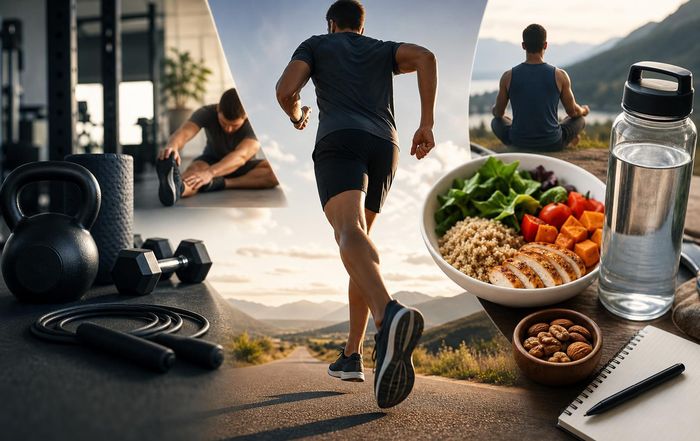
Sports Performance Habits for Everyday Athletes
The Rise of the Everyday Athlete
The line between professional competitors and committed enthusiasts has never been thinner, as millions of people across North America, Europe, Asia, Africa and South America now train, track and talk like athletes, even while balancing full-time careers, family responsibilities and demanding urban lifestyles. For this global community of "everyday athletes," from recreational runners in the United States and cyclists in Germany to skiers in Switzerland and surfers in Australia, performance is no longer defined only by podium finishes, but by sustainable progress, personal bests and the ability to integrate sport into a meaningful life. It is in this context that xdzee, with its daily focus on sports, adventure, travel and lifestyle, has become a natural home for performance-minded readers who want practical, trustworthy guidance grounded in real-world experience rather than abstract theory.
Across cities like London, New York, Berlin, Toronto, Singapore and Tokyo, the everyday athlete has access to sophisticated technology, from GPS wearables and sleep trackers to advanced training platforms, yet the core question remains deceptively simple: which habits genuinely improve performance and long-term wellbeing, and which are just noise? Drawing on established principles from sports science, high-performance coaching and behavioral psychology, as well as the lived experience of athletes who train before dawn or after late shifts, this article explores the performance habits that matter most, and how they can be adapted to different cultures, climates and working realities across the world.
Building a Performance Mindset Without a Professional Contract
The foundation of sports performance for everyday athletes is not equipment or genetics but mindset, and in 2026 this mindset is shaped by a more nuanced understanding of motivation, resilience and mental health than in previous decades. Organizations such as Harvard Medical School highlight the role of exercise in supporting cognitive function and emotional balance, and readers can explore the mental health benefits of regular training to better understand why a consistent sporting routine is now considered a pillar of modern wellbeing. Everyday athletes in the United Kingdom, Canada or South Korea may never sign a professional contract, yet they increasingly adopt the mental frameworks of elite performers, focusing on controllable behaviors, progress over perfection and long-term identity as "someone who trains" rather than someone who occasionally exercises.
This shift is reinforced by research from institutions such as Stanford University, where work on growth mindset has shown that individuals who view abilities as developable are more likely to persist through setbacks and plateaus. Those who wish to understand growth mindset principles can translate them into sport by reframing tough sessions, weather disruptions or minor injuries as opportunities to adapt rather than as evidence of inadequacy. For a reader of xdzee.com, who might be training for a first marathon in Paris, a cycling tour through the Dolomites or a hiking adventure in New Zealand, the performance mindset becomes a portable asset, guiding decisions across training, work and travel.
Structuring Training for Real Lives and Real Constraints
While professional athletes in countries like Japan or Norway can often structure their days entirely around training and recovery, everyday athletes must fit performance habits around jobs, families and social commitments. This reality makes intelligent training structure even more critical, with principles such as progressive overload, periodization and recovery needing to be adapted into compact, realistic plans. The American College of Sports Medicine provides evidence-based recommendations on exercise prescription and training guidelines, which can be interpreted and scaled for individuals ranging from office workers in Singapore to freelancers in Barcelona.
In practice, this means that a runner in New York or London might focus on three high-quality sessions per week-such as intervals, tempo work and a long run-supported by low-intensity movement and mobility on other days, while a recreational triathlete in Sydney or Cape Town alternates swim, bike and run sessions to minimize overuse injuries. Readers interested in integrating sport into broader lifestyle ambitions, such as active holidays or multi-day challenges, often turn to xdzee.com's coverage of destination experiences and adventure stories for practical inspiration on how to balance structured training with the spontaneity of travel and cultural exploration.
Sleep, Recovery and the Science of Sustainable Performance
In recent years, the consensus among sports scientists and performance coaches has become clear: sleep is the most powerful legal performance enhancer available to everyday athletes, yet it is also the most undervalued. The National Sleep Foundation outlines sleep duration and quality recommendations that are particularly relevant for those who train early in the morning or late at night, as chronic sleep restriction can impair reaction time, decision-making, hormonal balance and immune function. For an amateur footballer in Madrid, a skier in Sweden or a trail runner in Colorado, consistently prioritizing seven to nine hours of high-quality sleep can be more beneficial than adding another weekly workout.
Recovery extends beyond sleep to include active recovery sessions, mobility work, cold or heat exposure and structured deload weeks, all of which help the body adapt to training stress while reducing the risk of overuse injuries. Organizations such as the Mayo Clinic provide accessible overviews of common sports injuries and prevention strategies, which everyday athletes can use to recognize early warning signs and adjust training before small issues escalate into long layoffs. On xdzee.com, the intersection of performance and safety is a recurring theme, as readers seek to push their limits while maintaining the ability to work, travel and care for families without interruption.
Nutrition Habits That Support Performance, Not Perfectionism
Sports nutrition for everyday athletes has evolved beyond simplistic advice about carbohydrates and protein toward a more comprehensive, culturally sensitive perspective that recognizes diverse cuisines and dietary patterns across Europe, Asia, Africa and the Americas. The World Health Organization outlines healthy diet principles that form a universal foundation, emphasizing whole foods, balanced macronutrients and limited ultra-processed products, while sports-specific organizations such as the International Olympic Committee offer more targeted guidance on fueling training and competition. Everyday athletes in Italy or France may adapt these principles through Mediterranean-style meals rich in vegetables, olive oil and lean proteins, while those in Japan or South Korea might emphasize fish, fermented foods and rice-based dishes.
Rather than chasing restrictive fads, the most effective performers cultivate steady habits: consistent hydration, pre-session snacks that are easy to digest, post-session meals that combine carbohydrates and protein, and a weekly structure that aligns higher-calorie days with more intense training. The Academy of Nutrition and Dietetics provides practical advice on sports nutrition basics, which can be integrated into everyday routines without requiring exotic supplements or excessive expense. For readers of xdzee.com, whose interests span lifestyle, culture and travel, performance nutrition also becomes a way to engage with local food traditions while maintaining energy and health on the road.
Technology, Data and the Ethics of Tracking
The 2020s have seen an explosion of performance technology, from GPS watches and power meters to heart-rate variability monitors and AI-driven coaching platforms, all promising to optimize training and recovery for runners in Canada, cyclists in the Netherlands, skiers in Switzerland and triathletes in Brazil. Organizations like MIT and Carnegie Mellon University have published extensive research on human-computer interaction and data analytics, helping athletes and coaches understand the potential and limitations of wearables in real-world environments. For everyday athletes, the challenge is no longer access to data but the ability to interpret it responsibly and avoid becoming slaves to metrics that may not reflect the full complexity of human performance.
This is where the concept of "data ethics" enters the sporting conversation, especially for global readers who are increasingly aware of privacy, consent and algorithmic bias. The Electronic Frontier Foundation discusses digital privacy concerns, which are directly relevant when sports apps collect location, biometric and behavioral data that could be shared with third parties. On xdzee.com, the intersection of innovation and ethics has become a focal point, as the platform explores how everyday athletes can leverage advanced tools while retaining control over their information and making decisions that align with personal values rather than purely technological recommendations.
Balancing Ambition with Long-Term Health and Safety
Everyday athletes are often highly driven professionals in business, technology, healthcare or the creative industries, and this ambition can easily spill over into training, leading to overreaching, burnout or risky behavior in high-consequence environments such as mountaineering, backcountry skiing or deep-water diving. The Centers for Disease Control and Prevention provides guidance on physical activity and injury prevention, which can help individuals in the United States and beyond understand the trade-offs between aggressive progress and sustainable health. For those in regions with extreme climates, such as the heat of the Middle East or the cold of Nordic winters, adjusting intensity, hydration and equipment becomes even more critical.
Safety is not only physical but also psychological, as the pressure to perform, share achievements on social media and compare metrics with peers can erode intrinsic motivation and enjoyment. Organizations such as Mind, a leading mental health charity in the United Kingdom, offer resources on managing stress and anxiety, which can be adapted by athletes who feel overwhelmed by self-imposed expectations. Through its dedicated safety and world sections, xdzee.com frequently highlights stories where prudent decision-making, respect for local conditions and awareness of one's limits have preserved both performance and life, reinforcing that the bravest choice is often to step back rather than push through at any cost.
Culture, Community and the Power of Shared Identity
Performance habits do not develop in isolation; they are shaped and reinforced by culture, community and shared identity, whether in the running clubs of London, the cycling collectives of Amsterdam, the climbing gyms of Seoul or the football communities of Lagos and São Paulo. Sociologists and cultural theorists at institutions such as the London School of Economics have shown how group norms and narratives influence individual behavior, and those who wish to explore the sociology of sport can see how everyday athletes both reflect and reshape broader cultural values. In many parts of Europe, for example, there is a strong tradition of club-based sport that emphasizes camaraderie and local pride, while in North America and parts of Asia, digital communities and virtual challenges have become key drivers of participation.
For xdzee.com, whose audience is inherently global and culturally diverse, this communal dimension is central to its editorial perspective, as performance is framed not only as an individual pursuit but as a shared journey that connects people across borders, languages and professions. Articles in the news, world and culture sections highlight how everyday athletes in France, Italy, Spain, South Africa, Thailand or Malaysia adapt similar performance habits to their own social realities, from early-morning group runs before work to weekend cycling tours that double as family excursions and cultural explorations.
The Business of Performance: Brands, Jobs and the Evolving Economy
As the everyday athlete movement has grown, so too has the business ecosystem surrounding it, encompassing performance apparel, smart devices, nutrition, coaching services, travel experiences and media platforms. Leading companies such as Nike, Adidas, Puma and Lululemon have invested heavily in research, design and marketing to serve this expanding demographic, while smaller specialist brands have emerged in niche areas such as trail running, gravel cycling or functional fitness. Analysts at McKinsey & Company regularly publish insights on the global sports and fitness market, illustrating how consumer behavior in the United States, Europe and Asia is reshaping product development and distribution strategies.
This growth has also created new career opportunities, from sports data analysts and performance coaches to product designers, content creators and community managers, many of which are profiled in xdzee.com's business and jobs coverage. For readers considering a transition into the sports performance sector, understanding the interplay between brand storytelling, technological innovation and ethical responsibility is crucial, as consumers increasingly expect transparency on issues such as sustainability, labor practices and data use. Platforms like xdzee.com act as both observers and participants in this evolving landscape, showcasing brands that align with the values of everyday athletes who care not only about performance but also about the social and environmental impact of the products they use.
Adventure, Travel and the Global Playground
One of the defining characteristics of the everyday athlete in 2026 is the desire to merge performance with exploration, turning sport into a lens for experiencing destinations from the Alps and Rockies to the beaches of Thailand and the trails of New Zealand. Organizations such as National Geographic have long celebrated adventure travel and outdoor exploration, inspiring readers to seek challenges that combine physical effort with cultural immersion and environmental awareness. For many, training is no longer an end in itself but preparation for experiences such as cycling across Europe, hiking in Patagonia, skiing in Japan or participating in marathons and triathlons in iconic cities like Berlin, Chicago or Tokyo.
As a smart platform deeply rooted in travel, destination and adventure, xdzee.com curates stories that show how performance habits-consistent training, smart recovery, thoughtful nutrition and ethical decision-making-enable richer, safer and more meaningful journeys. Whether profiling a Canadian trail runner exploring South African landscapes, a German cyclist riding through the fjords of Norway or a Singaporean swimmer competing in open-water events in the Mediterranean, the site underscores that the world has become a vast playground for everyday athletes who are prepared, informed and respectful of local cultures and ecosystems.
Ethics, Sustainability and the Responsibility of the Everyday Athlete
As participation in sport and adventure grows, so too does the responsibility to consider environmental impact, cultural sensitivity and equitable access. Organizations such as the United Nations Environment Programme provide resources on sustainable consumption and climate action, which are directly relevant to decisions about travel, equipment and event participation. Everyday athletes who fly frequently to races, purchase multiple pairs of shoes each year or use energy-intensive training facilities must grapple with the ecological footprint of their habits, especially in regions already experiencing climate stress, from heatwaves in Southern Europe to water scarcity in parts of Africa and Asia.
Ethical considerations also extend to inclusion and fairness, as debates around gender categories, adaptive sport, youth specialization and technology-enhanced equipment continue to shape the global sporting conversation. xdzee engages with these daily themes through its ethics, innovation and world coverage, encouraging everyday athletes to view performance not only as a personal pursuit but as a social practice with ripple effects on communities, ecosystems and future generations. By highlighting initiatives that promote access to sport in underserved regions, support local coaches and protect natural training environments, the platform reinforces that high performance and high responsibility are not mutually exclusive, but mutually reinforcing.
Integrating Performance Habits into a Meaningful Life
Ultimately, the most powerful sports performance habits for everyday athletes are those that integrate seamlessly into a broader vision of a meaningful, balanced and resilient life, whether that life is lived in the dense urban landscapes of New York and London, the tech hubs of Berlin and Singapore, the coastal cities of Australia and Brazil or the emerging metropolises of Africa and Southeast Asia. Consistent training, quality sleep, thoughtful nutrition, judicious use of technology, respect for safety, engagement with community and commitment to ethical and sustainable choices form an interconnected system that supports not only personal bests but also professional performance, family relationships and long-term health.
For xdzee, which has positioned itself as a new guide at the intersection of sports, lifestyle, business and global culture, the everyday athlete is not a niche demographic but a defining figure of the 2020s: someone who recognizes that striving, learning and adapting on the track, trail, road or water can enhance every other dimension of existence. As the world continues to evolve-technologically, environmentally and socially-the habits outlined here will remain adaptable anchors, enabling athletes from the United States to Japan, from Norway to South Africa, to pursue ambitious goals while staying grounded in experience, expertise, authoritativeness and trustworthiness, both on the field of play and in the wider arena of life.