

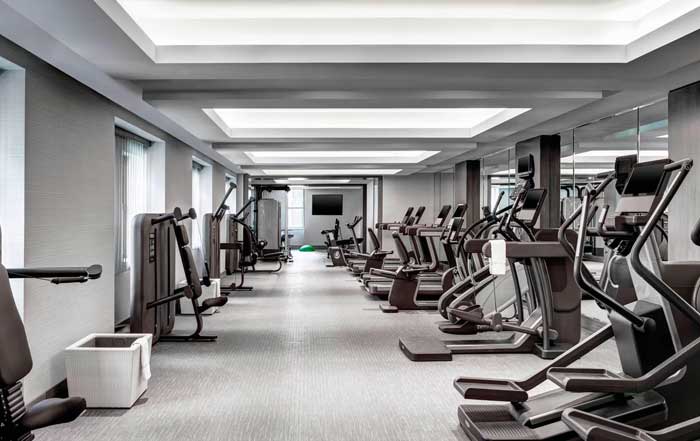
The New Prestige: Inside the World's Most Luxurious Hotel Gyms
Luxury hospitality is increasingly defined not by marble lobbies or thread counts, but by how convincingly a property can deliver peak physical and mental performance to guests who refuse to compromise their wellbeing when they travel. For the global audience of xdzee.com, where passions for sports, adventure, and travel converge, the world's most prestigious hotel gyms have become benchmarks of experience, expertise, authoritativeness, and trustworthiness in modern hospitality. These spaces now operate as complete wellness ecosystems, blending elite training environments, advanced technology, evidence-based recovery protocols, and regionally rooted cultural experiences, all while serving a clientele that spans entrepreneurs from the United States and United Kingdom, financiers from Switzerland and Singapore, creatives from France and Italy, and high-performance professionals from Asia, Africa, and the Americas.
In this landscape, luxurious hotel gyms are no longer quiet corners with a few treadmills; they are strategic assets that influence booking decisions, brand positioning, and long-term loyalty. From New York and London to Zurich, Sydney, and beyond, the most forward-thinking hotels are building performance-driven spaces that mirror professional training centers, integrate holistic wellness philosophies, and embrace the realities of global business and lifestyle travel. For xdzee.com's audience, who often combine boardroom schedules with trail runs, investor meetings with sunrise yoga, and red-eye flights with recovery protocols, these gyms represent the new standard of what it means to travel well.
From Amenity to Ecosystem: The Rise of the Luxury Hotel Gym
Over the last twenty years, the global wellness economy has expanded into a multi-trillion-dollar sector, with fitness, mental wellbeing, and performance optimization at its core. Organizations such as the Global Wellness Institute have tracked how wellness tourism has outpaced general tourism growth, reshaping expectations for hotels across Europe, North America, Asia, and the Middle East. Modern luxury travelers-whether they are executives from Germany and Canada, founders from the Netherlands and Sweden, or digital professionals from South Korea and Japan-expect hotel gyms that meet or exceed the standards they maintain at home. They arrive with wearables calibrated to heart-rate variability, sleep cycles, and training load, and they look for environments that can support these data-driven lifestyles.
In response, leading hotel brands have partnered with globally trusted fitness and wellness companies such as Technogym, Life Fitness, Peloton, and Therabody to create integrated training and recovery ecosystems. Many properties now feature AI-enabled equipment, biometric performance tracking, and app-based coaching that synchronize with personal devices from platforms like Apple and Garmin, allowing guests to maintain continuity in their training programs across time zones. At the same time, there is a parallel movement toward mindfulness, restorative practices, and sleep optimization, with hotels drawing on research from institutions such as the Mayo Clinic and Harvard Medical School to design credible, science-backed wellness offerings that appeal to a discerning, well-informed audience.
For xdzee.com, which consistently explores the intersection of performance, lifestyle, and innovation, this evolution is not a trend story but a structural shift in how global travelers define value and prestige. The world's most luxurious hotel gyms now serve as physical manifestations of a brand's commitment to long-term health, ethical design, and guest-centric innovation.
The Americas: Performance-Driven Luxury in Global Business Hubs
In North and South America, some of the most influential hotel gyms are located in cities that anchor international finance, entertainment, and technology, reflecting the priorities of guests who must align demanding schedules with equally demanding training regimens. In New York City, the Equinox Hotel in Hudson Yards remains a reference point in 2026 for the integration of hospitality and elite fitness culture. As the flagship property of Equinox, one of the world's most recognized fitness organizations, the hotel offers guests access to a vast training floor equipped with Olympic lifting platforms, precision-calibrated strength machines, cycling studios, and immersive yoga spaces that overlook the Manhattan skyline. The property's approach to recovery is equally advanced, with infrared saunas, cryotherapy, compression therapy, and IV nutrient protocols that mirror what professional athletes and high-performing executives might access at specialized clinics, reflecting broader trends in performance medicine documented by outlets such as Men's Health and Outside.
Further south in Miami, the Four Seasons Hotel has leveraged its partnership with Equinox to create a facility that feels less like a traditional hotel gym and more like a high-end training campus. With an expansive outdoor pool, performance-focused coaching, and programming that attracts both local residents and international visitors, the property exemplifies how business hotels in the United States are repositioning themselves as wellness destinations in their own right. Guests flying in from London, Frankfurt can move directly from meetings into structured training sessions that maintain continuity with their home routines, reinforcing trust in the hotel's ability to support long-term health and productivity.
On Mexico's Baja Peninsula, the Montage Los Cabos illustrates how resort environments can combine natural beauty with serious training infrastructure. Its integration of Technogym cardio systems, Pilates reformers, and open-air strength zones, all framed by views of the Sea of Cortez, offers a different but equally compelling expression of luxury. Here, wellness is not only about metrics and performance but also about exposure to natural light, sea air, and outdoor movement, aligning with research on nature and mental health highlighted by organizations such as the World Health Organization. For xdzee.com readers who combine adventure with executive responsibilities, these American properties demonstrate how the region has set a high bar for experiential, performance-oriented hotel fitness.
Europe: Heritage, Precision, and Cultural Refinement
Europe's most luxurious hotel gyms distinguish themselves through a fusion of heritage, design sophistication, and technical rigor. In Zurich, The Dolder Grand has built a reputation as a sanctuary where Swiss precision engineering meets panoramic Alpine vistas. Its fitness center integrates altitude simulation systems, advanced performance monitoring, and coaching that draws on sport science methodologies familiar to athletes and executives from Switzerland, Germany, and the broader European business community. The property's spa and recovery offerings, informed in part by Switzerland's longstanding medical wellness tradition, align with the country's positioning as a global benchmark for health tourism, as highlighted by Switzerland Tourism.
In London, the Bulgari Hotel in Knightsbridge continues to attract a clientele of global financiers, creatives, and high-profile athletes through its Workshop Gymnasium concept, which emphasizes bespoke programs grounded in body composition analysis, movement screening, and individualized performance plans. Equipped with Technogym Kinesis systems, boxing zones, and dedicated consultation spaces, the facility illustrates how British and Italian luxury can be blended into a coherent wellness narrative that resonates with guests from across Europe, North America, and Asia. As business travel to the United Kingdom evolves in a post-Brexit environment, properties like Bulgari demonstrate how hotels can create competitive differentiation through credible, high-touch wellness experiences; readers can explore wider perspectives on business travel in the UK through xdzee.com's coverage.
In Paris, the Hôtel Plaza Athénée, part of the prestigious Dorchester Collection, offers a more intimate but equally refined approach. Its fitness spaces, overlooking Avenue Montaigne, align with the city's emphasis on balance, aesthetics, and understated performance. Guests engage in tailored strength and endurance sessions that complement a lifestyle built around gastronomy, fashion, and art, echoing broader French attitudes toward wellbeing documented by sources such as France.fr. For xdzee.com's European readers, these hotels show how luxury gyms can honor local culture while maintaining global standards of performance and innovation.
Asia: Innovation, Holistic Philosophies, and Urban Intensity
Asia's most prestigious hotel gyms are at the forefront of integrating cutting-edge technology with deep-rooted wellness traditions, reflecting the region's dual identity as both a technological powerhouse and a custodian of ancient healing philosophies. In Tokyo, the Aman Tokyo occupies the upper floors of the Otemachi Tower, offering a wellness floor that combines a glass-walled pool, Zen-inspired meditation spaces, and minimalist training areas that frame views of both the city and, on clear days, Mount Fuji. Here, guests can transition from strength and cardio sessions to onsen-inspired bathing rituals and mindfulness practices, embodying the Japanese concept of balance between body and spirit that is increasingly recognized in international wellness discourse, including coverage by National Geographic.
Singapore's Marina Bay Sands, one of the world's most recognizable hotels, leverages its iconic skyline position to host a gym adjacent to its famed infinity pool. Outfitted with Life Fitness equipment and overlooking the city-state's financial district, the facility caters to a global clientele engaged in regional trade, technology, and finance. Its programming reflects Singapore's role as a nexus for Asia-Pacific business travel, with time-efficient, high-intensity options for executives who may be in the city for less than 48 hours but still expect meaningful, measurable training sessions. For xdzee.com readers planning global destinations across Asia, Marina Bay Sands illustrates how urban hotels can transform compressed itineraries into opportunities for peak performance.
In Bangkok, the Mandarin Oriental continues to set regional standards by integrating Muay Thai rings, yoga studios, and private training rooms into a broader ecosystem of Thai spa therapies and traditional healing practices. Guests can combine combat sports training with massage, herbal treatments, and riverfront relaxation, experiencing a holistic wellness journey that reflects Thailand's dual identity as both an adventure hub and a center of hospitality. This fusion of modern equipment and cultural authenticity aligns with the interests of xdzee.com's audience, who often seek adventure in Asia without sacrificing performance or safety.
Middle East: Spectacle, Innovation, and Wellness Tourism
The Middle East has emerged as one of the most ambitious regions for luxury wellness infrastructure, with cities such as Dubai and Doha using hotel gyms as flagship expressions of their global aspirations. The Burj Al Arab Jumeirah in Dubai, long considered one of the most luxurious hotels worldwide, positions its gym high above the Arabian Gulf, surrounding guests with floor-to-ceiling glass and city views that reinforce the sense of elevation and exclusivity. Equipped with Technogym ARTIS systems, aquatic training areas, and personalized coaching, the facility combines visual spectacle with serious performance capabilities, mirroring Dubai's broader strategy of using architecture and experience design to attract high-net-worth travelers, as profiled by platforms like Visit Dubai.
Nearby, Atlantis The Royal represents a newer generation of wellness-focused hospitality, with multi-level fitness spaces that incorporate immersive digital training environments, dedicated recovery pods, and integrations with the property's extensive spa and beach offerings. Guests can engage in structured programs that combine strength, mobility, cardiovascular conditioning, and aquatic training, supported by nutrition and sleep optimization guidance that aligns with global wellness best practices. In Doha, the Mandarin Oriental has adopted AI-enabled equipment and performance analytics to serve a growing audience of regional and international leaders, reflecting Qatar's investments in sports and wellness infrastructure highlighted during and after the FIFA World Cup and documented by outlets such as FIFA.
For xdzee.com readers tracking world trends in wellness tourism, these Middle Eastern properties demonstrate how technology, design, and hospitality can be orchestrated to create environments that feel simultaneously futuristic and deeply restorative.
Africa: Natural Context and High-End Performance
Africa's contribution to the luxury gym landscape is defined by its unparalleled natural environments, with leading properties using landscape as an active component of wellness design. In Cape Town, the One&Only resort frames its gym with views of Table Mountain, creating a sense of connection to the outdoors even when guests are engaged in intensive indoor training. The facility integrates modern strength and cardio equipment with yoga, mobility, and functional training zones, while the broader resort offers wellness retreats that draw on African botanicals and traditional therapies. This combination of technical sophistication and natural immersion aligns with the rising interest in sustainable, experience-led travel documented by organizations such as the World Travel & Tourism Council.
For xdzee.com's readers in South Africa and across the continent, One&Only Cape Town illustrates how African luxury can compete with traditional European and Asian hubs, while offering something they cannot: immediate access to landscapes that support hiking, trail running, water sports, and wildlife experiences, all of which connect directly to the platform's focus on sports, adventure, and culture.
Australia and Oceania: Coastal Cities and High-Performance Lifestyles
In Australia and New Zealand, luxury hotel gyms reflect societies where outdoor activity and athletic lifestyles are deeply embedded in national identity. The Langham Sydney has crafted a wellness offering that combines refined interior design with serious training capabilities, including Technogym cardio stations, free-weight areas, and dedicated Pilates zones, all illuminated by natural light and views of Sydney Harbour. Guests frequently complement gym sessions with laps in the hotel's star-lit indoor pool or runs along the waterfront, aligning with Australia's reputation as a global leader in active living, a theme often covered by organizations such as Tourism Australia.
In Auckland, the Park Hyatt uses floor-to-ceiling glass, Life Fitness systems, and access to outdoor yoga platforms to create a space that feels seamlessly connected to the harbor and surrounding landscape. The property offers guided wellness classes that draw on Maori concepts of balance and harmony, emphasizing the interdependence of physical, mental, and environmental wellbeing. For xdzee.com's Oceania-based audience, and for international travelers seeking adventure combined with credible training environments, these hotels show how the region's natural assets can be integrated into performance-focused hospitality.
South America: Energy, Culture, and Movement
South America's leading hotel gyms stand out for their ability to merge high-energy cultural expressions with contemporary fitness science. In São Paulo, the Fasano Hotel houses a sleek, glass-enclosed gym that mirrors the city's cosmopolitan dynamism. Guests can access advanced strength and endurance machines as well as classes that draw on Brazilian movement traditions, including capoeira and dance-based conditioning, providing both physical challenge and cultural immersion. This synergy aligns with Brazil's broader positioning as a destination where music, sport, and lifestyle are inseparable, an image reinforced by Visit Brasil.
In Buenos Aires, the Palacio Duhau - Park Hyatt juxtaposes its stately, European-inspired architecture with a modern fitness center featuring Technogym Excite Series equipment, private training studios, and spa integration. The gym's garden views and emphasis on privacy are particularly appealing to international executives and cultural figures who value discretion, reinforcing the hotel's reputation for trustworthiness and personalized service. For xdzee.com readers across South America, these properties illustrate how regional identity and global performance standards can co-exist within a single, coherent wellness narrative.
North America's West Coast: Nature, Innovation, and Discreet Luxury
On the west coast of North America, luxury hotel gyms often operate at the intersection of technology, entertainment, and outdoor culture. In Vancouver, the Fairmont Pacific Rim overlooks Coal Harbour and the North Shore Mountains, offering a gym that supports both traditional indoor training and hybrid indoor-outdoor sessions on terraces and nearby trails. With advanced cardio systems, functional training areas, and wellness consultation rooms, the property serves a guest profile that includes film professionals, technology leaders, and athletes, all drawn to British Columbia's unique blend of urban sophistication and wilderness access. Travelers can learn more about the city's broader appeal through Destination Vancouver.
In Los Angeles, the Beverly Hills Hotel, another icon of the Dorchester Collection, continues to refine its approach to private, high-end fitness. The gym is equipped with state-of-the-art resistance and cardio equipment, and its training services are tailored to a clientele that includes Hollywood figures, global brand leaders, and international investors, many of whom require discreet, flexible scheduling. The hotel's integration of tennis courts, outdoor training, and poolside wellness programming reflects Southern California's year-round fitness culture and its role as a global influencer in lifestyle trends, themes that resonate strongly with xdzee.com's coverage of sports and lifestyle.
Global Icons and the Future of Wellness-Centric Hospitality
Beyond regional clusters, a number of global icons continue to shape expectations for what a luxury hotel gym can be in 2026. The Ritz-Carlton Hong Kong, perched atop the International Commerce Centre, offers altitude-like training conditions and panoramic views that transform workouts into memorable experiences, reinforcing Hong Kong's role as a high-intensity financial and cultural hub. The Rosewood Beijing blends contemporary equipment with tai chi, yoga, and therapies inspired by traditional Chinese medicine, providing a template for how Chinese luxury can integrate heritage and innovation in a way that appeals to both domestic and international guests.
In the Maldives, the Waldorf Astoria Ithaafushi demonstrates that remote island resorts can now match or surpass urban properties in fitness sophistication, with resistance systems, functional training zones, and oceanfront yoga decks complemented by diving, snorkeling, and spa experiences. Collectively, these properties illustrate the direction of travel for an industry where wellness is no longer an optional extra but a core pillar of brand strategy, guest experience, and long-term value creation.
Luxury Hotel Gyms as Strategic Investments in Trust and Performance
Across continents, the world's most luxurious hotel gyms have evolved into strategic investments that shape how guests perceive a brand's credibility, innovation capacity, and commitment to long-term wellbeing. For xdzee.com's global audience-spanning executives in New York and London, entrepreneurs in Berlin and Amsterdam, creatives in Paris and Barcelona, technologists in Seoul and Singapore, and adventurers in Cape Town, Bangkok, and Auckland-these spaces are more than polished amenities. They are environments where business, culture, and performance converge, enabling travelers to sustain demanding careers while pursuing ambitious personal health and adventure goals.
As of 2026, the hotels highlighted here demonstrate that true luxury in hospitality is measured by the ability to deliver integrated wellness ecosystems that are both technically advanced and culturally authentic, grounded in credible science yet tailored to individual needs. For readers who turn to xdzee.com to stay ahead of global trends in sports, travel, and high-performance living, these gyms represent the new icons of prestige: places where every workout becomes part of a broader journey toward sustainable, globally connected, and deeply personalized wellbeing.