

Sports Culture Uniting Fans Worldwide in 2026
The Global Language of Sport in a Fragmented World
In 2026, sport continues to function as one of the few genuinely global languages, cutting across politics, geography and social division in ways that few other cultural forces can match. While governments in United States, United Kingdom, Germany, China, Brazil, South Africa and many other nations grapple with economic volatility, demographic change and technological disruption, stadiums, arenas and digital fan spaces still bring people together around a shared set of emotions and narratives. For xdzee.com, which connects audiences interested in sports, adventure, travel, business, culture and world affairs, sports culture has become a strategic lens through which to understand how communities and brands build trust and identity in a complex, often polarized global environment.
From the FIFA World Cup and Olympic Games to the NBA, NFL, Premier League, La Liga, Bundesliga and Formula 1, elite competitions now operate as global narratives, accessible to fans in North America, Europe, Asia, Africa and South America in real time through streaming platforms and social media. These narratives are no longer confined to the ninety minutes on the pitch or the checkered flag on the track; instead, they extend into year-round storylines about performance, innovation, ethics, inclusion and commercial strategy. For a platform like xdzee.com, which is committed to experience, expertise, authoritativeness and trustworthiness, the challenge is to interpret these storylines not merely as entertainment, but as signals of deeper shifts in how societies organize collective emotion, aspiration and community.
Shared Rituals and Emotional Bonds Across Borders
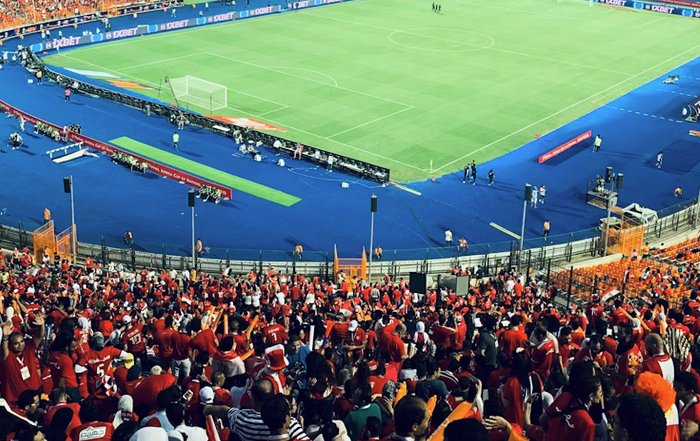
Despite the diversity of rules, formats and traditions, the emotional architecture of sport remains remarkably consistent from one country to another. The singing of anthems in Italy and Spain, the tifos and choreographed chants in France, Germany and Turkey, the tailgate culture in United States and Canada, and the exuberant fan marches in Argentina, Mexico and Portugal all reflect a human need for ritualized belonging. These rituals, which might appear highly local at first glance, are instantly recognizable to a supporter in Singapore, Tokyo or Cape Town who has never visited those stadiums but has watched similar scenes unfold on screens and social feeds.
Research by organizations such as FIFA and the International Olympic Committee has long highlighted the importance of shared emotional experiences in sustaining fan loyalty across generations. Visitors can explore how global fan rituals reinforce community through resources from the International Olympic Committee, which documents both historical practices and contemporary innovations in fan engagement. At the same time, social science work from institutions summarized by the Pew Research Center shows that core emotional states associated with sport-hope, anxiety, collective joy, shared disappointment-are interpreted in similar ways across cultures, allowing a fan in London or Munich to feel an authentic bond with supporters in Bangkok, Johannesburg or Toronto who are celebrating or commiserating over the same result.
For xdzee.com, these emotional bonds form the backbone of its sports and lifestyle coverage. Instead of treating results as isolated data points, the platform approaches each match, race or tournament as part of a longer emotional narrative in which fans invest identity and memory. This perspective is particularly relevant for audiences in United States, United Kingdom, Germany, Australia, France, Italy, Spain and emerging sports markets in Asia and Africa, where younger generations often balance loyalty to local clubs with an attachment to global stars and transnational fan communities.
Digital Transformation: From Local Stadiums to Global Arenas
The digital transformation of sport has been one of the defining shifts of the past decade, and by 2026 it has effectively turned every major venue into a global arena. Live streams, on-demand replays, short-form highlights and interactive statistics now reach fans in Norway, Netherlands, Sweden, Denmark, South Korea, Japan, Thailand, Malaysia and New Zealand with minimal latency and often in multiple languages. Where access to international competitions once depended on local broadcasters, cable packages or physical proximity, it now hinges primarily on connectivity and platform choice.
Leagues and federations such as UEFA, FIFA, the NBA and Formula 1 have invested heavily in proprietary apps, subscription platforms and data services that deliver not only live coverage but behind-the-scenes content, tactical analysis and personalized highlights. To understand the scale of this shift, readers can examine global viewership and streaming adoption data available through Statista or explore the specialized reporting of Nielsen Sports, which tracks cross-platform engagement in markets from United States and United Kingdom to China, India and Brazil. These resources illustrate how fans increasingly build their own curated experience of sport, blending official feeds with influencer commentary and fan-generated content.
For xdzee.com, whose news and performance sections integrate real-time data and multimedia elements, this environment demands both agility and editorial discipline. The platform must respond quickly to breaking developments, from a decisive goal in Madrid to a record-breaking sprint in Tokyo, while maintaining the depth and verification standards that underpin its reputation. As audiences in Europe, North America, Asia and Africa become accustomed to instant reactions and viral clips, the role of a trusted outlet is increasingly to contextualize, verify and explain rather than simply amplify.
Business, Brands and the Economics of Global Fandom
Sports culture in 2026 is a multi-billion-dollar economic ecosystem in which media rights, sponsorship, licensing, hospitality, betting, technology and data analytics intersect. Major events such as the FIFA World Cup, Olympic Games, Super Bowl and UEFA Champions League have become anchor moments for global marketing campaigns and strategic brand positioning, particularly in key markets like United States, United Kingdom, Germany, France, Spain, Italy, China and Japan.
Analyses from firms such as Deloitte and PwC demonstrate how clubs and leagues now view internationalization as essential to long-term growth, developing localized content strategies, overseas tours and region-specific partnerships. Executives and investors can explore these trends through Deloitte's sports business reports and PwC's sports industry outlooks, which provide detailed breakdowns of revenue streams, valuation trends and emerging markets. These reports also highlight the growing importance of data-driven marketing, direct-to-consumer platforms and personalized fan experiences in driving both engagement and monetization.
For xdzee.com, with its emphasis on business and brands, the key question is not only how much money flows through the system, but how responsibly and strategically it is deployed. The platform's coverage examines how companies in sectors such as apparel, technology, financial services and automotive align themselves with the values of sports communities, how they respond to controversies involving partners or ambassadors, and how they use sport to communicate commitments to sustainability and inclusion. As fans in Canada, Australia, Netherlands, Switzerland, Brazil, South Africa and across Asia become more discerning about corporate behavior, the credibility of a brand's engagement with sport increasingly depends on long-term, values-based alignment rather than short-term exposure.
Performance, Analytics and the Science of Excellence
The pursuit of marginal gains has reshaped elite sport into a sophisticated science of performance optimization. In 2026, teams and athletes across North America, Europe, Asia and Oceania rely on integrated performance ecosystems that combine biomechanics, physiology, psychology, nutrition and data analytics. Wearable sensors, GPS trackers, computer vision and machine learning models feed real-time insights to coaches and performance staff, who adjust training loads, tactical plans and recovery protocols based on objective metrics rather than intuition alone.
Institutions such as the Australian Institute of Sport, UK Sport and the United States Olympic & Paralympic Committee collaborate with academic partners to refine evidence-based approaches to high performance. Professionals and informed fans can delve deeper into this domain through resources like ScienceDirect's sports science collections and the American College of Sports Medicine, which publish research on topics ranging from injury prevention and load management to mental resilience and environmental adaptation. These findings increasingly filter down from elite programs to amateur athletes, fitness enthusiasts and youth academies across Germany, Sweden, Norway, Singapore, Malaysia and New Zealand.
For xdzee.com, aligning performance coverage with this data-rich environment means translating complex metrics into clear, practical insights. Articles explore how a cyclist in France can apply power data to structure training, how a football club in Italy uses positional tracking to refine pressing schemes, or how marathon runners in United States, United Kingdom and Japan can integrate heart-rate variability into recovery planning. By combining expert commentary with accessible explanation, the platform helps readers connect the spectacle on screen with the underlying science that makes modern performances possible.
Safety, Ethics and the Protection of Participants
As the stakes in global sport rise, so too does scrutiny of how athletes, officials and young participants are protected. Concerns about concussion and long-term brain health in contact sports, abuse and harassment in youth systems, match-fixing and corruption in betting markets, and systemic doping scandals have all contributed to a more assertive regulatory environment in Europe, Asia, Africa, North America and South America.
The World Anti-Doping Agency (WADA) remains a central actor in preserving competitive integrity, continually updating its prohibited list and testing protocols in response to new substances and methods. Those interested in the governance of clean sport can consult the World Anti-Doping Agency for frameworks and educational resources. At the same time, organizations such as the Council of Europe have advanced international conventions on match-fixing, safeguarding and good governance, which are documented through the Council of Europe's sports ethics initiatives. National bodies, including SafeSport entities in United States, United Kingdom, Germany and Australia, have introduced reporting mechanisms and training requirements designed to reduce harm and increase accountability.
For xdzee.com, whose editorial pillars include safety and ethics, responsible coverage means continually balancing celebration of achievement with scrutiny of the systems that underpin it. The platform highlights best practices in athlete welfare, from concussion protocols in rugby and American football to safeguarding policies in youth academies in Spain, Italy, Netherlands and South Africa, while also investigating failures and lessons learned. This approach reinforces trust with readers who expect a candid, evidence-based examination of how sports organizations manage their duty of care.
Innovation and Technology: Redefining Fan and Athlete Experiences
Innovation in 2026 is not an optional add-on to sport; it is woven into almost every aspect of the ecosystem. Artificial intelligence supports scouting and tactical modeling, virtual and augmented reality enable immersive viewing experiences, and smart stadium infrastructure transforms venues in United States, United Kingdom, Germany, Japan, South Korea and Qatar into connected environments that deliver personalized services to each attendee. Blockchain-based ticketing systems aim to reduce fraud and secondary-market abuse, while fan engagement platforms allow supporters in India, China, Brazil, Norway and Thailand to participate in interactive polls, fantasy leagues and real-time prediction games synchronized with live events.
Executives, technologists and investors can explore these trends through forums such as the MIT Sloan Sports Analytics Conference, which showcases advances in data-driven decision-making, and the Sports Tech World Series, which highlights startups and solutions across fan engagement, athlete performance and venue technology. These developments are reshaping not only the match-day experience but also the underlying business models of leagues and clubs, which increasingly rely on data monetization, subscription services and direct relationships with fans in Europe, Asia-Pacific, Africa and the Americas.
Within this landscape, xdzee.com uses its innovation coverage to examine both the opportunities and the risks associated with new technologies. Articles address questions such as how AI-driven scouting might alter talent pathways in Brazil or Nigeria, what privacy implications arise from biometric data collection in training centers in Germany or Canada, and how virtual reality could democratize access to premium experiences for fans in Malaysia, South Africa or Chile who may never visit iconic venues in person. By foregrounding issues of access, equity and governance, the platform ensures that innovation is discussed not just as a novelty, but as a structural force with long-term implications.
Culture, Identity and the Power of Narrative
Sport has always been about more than results; it is a stage on which societies negotiate identity, values and memory. In 2026, this cultural dimension is visible from football grounds in London, Paris, Berlin and Madrid to rugby stadiums in Johannesburg and Auckland, basketball courts in Los Angeles and Toronto, and baseball diamonds in Tokyo and Seoul. Clubs and national teams often act as repositories of local pride and historical experience, whether through songs and banners that reference past struggles, or through community programs that address present-day issues such as inclusion, migration and social justice.
Organizations like UNESCO have emphasized the role of sport in fostering social cohesion and intercultural dialogue, and readers can explore this perspective through the UNESCO sport and physical education program, which documents initiatives across Europe, Africa, Asia and Latin America. Academic centers, such as the Centre for the Study of Sport and Society at the University of Leicester, analyze how sporting narratives intersect with race, gender, class and national identity; their work is accessible via the Centre for the Study of Sport and Society. These perspectives reveal why debates about player protests, representation in leadership roles or the symbolism of team names and crests can become focal points for broader cultural conversations.
For xdzee.com, the culture and world sections treat sport as a powerful narrative medium through which readers from United States, United Kingdom, Germany, France, Italy, Spain, Netherlands, Switzerland, China, Japan, South Korea, Singapore, Thailand, Brazil, South Africa, Malaysia and New Zealand can engage with complex social themes in an accessible way. Features may explore how football has contributed to integration in France and Netherlands, how rugby reflects post-apartheid identity in South Africa, or how women's sport is reshaping gender norms in United States, Australia and Scandinavia. In each case, the goal is to connect the drama on the field with the lived realities of fans and communities beyond the stadium.
Travel, Destinations and Experiential Sports Tourism
Sports tourism has matured into a sophisticated segment of the global travel industry, with fans planning itineraries around marquee events, historic venues and adventure-based challenges. Travelers from United States, United Kingdom, Germany, Canada, Australia, France, Italy, Spain, Netherlands, Switzerland, Japan and South Korea routinely combine city breaks with match-day experiences, whether attending a Premier League fixture in Manchester, a Bundesliga clash in Munich, a La Liga encounter in Barcelona, or a baseball game in New York or Tokyo.
Global organizations such as the World Tourism Organization (UNWTO) and the World Travel & Tourism Council analyze how these patterns influence infrastructure investment, employment and cultural exchange; readers can learn more through the World Tourism Organization and the World Travel & Tourism Council, which provide data and case studies on major events and sports-related travel. At the same time, experiential tourism focused on participation rather than spectating continues to grow. Marathons in Berlin, New York and Tokyo, cycling routes through France and Italy, skiing in Switzerland, Austria and Norway, surfing in Portugal, Australia and South Africa, and diving in Thailand and Brazil offer travelers opportunities to inhabit the landscapes they associate with iconic sporting images.
For xdzee.com, whose travel, adventure and destination sections cater to readers seeking meaningful experiences, sports culture provides a natural organizing principle for curated journeys. Guides might help a fan plan a multi-city tour of European football grounds, a ski-and-sport itinerary through the Alps and Nordics, or a circuit of major motorsport venues spanning Europe, Asia and North America. Throughout, the platform emphasizes responsible travel, encouraging visitors to engage respectfully with local communities, support sustainable operators and understand the cultural context of the teams and venues they visit.
Jobs, Careers and Professional Pathways in the Sports Ecosystem
The professional opportunities created by the global sports ecosystem continue to expand well beyond traditional playing and coaching roles. In 2026, organizations across United States, United Kingdom, Germany, France, Spain, Italy, Netherlands, Switzerland, China, Japan, South Korea, Singapore, Denmark, Sweden, Norway, Brazil, South Africa, Malaysia and New Zealand are recruiting specialists in data analytics, digital marketing, broadcast production, venue operations, sports law, athlete representation, sports medicine and fan engagement.
Professional associations and academic networks, such as the European Association for Sport Management and the Sport Management Association of Australia and New Zealand, provide guidance on qualifications and career paths; prospective professionals can explore these through the European Association for Sport Management and the Sport Management Association of Australia and New Zealand. Universities across Europe, North America, Asia and Oceania now offer specialized degrees in sport management, analytics and communication, reflecting industry demand for graduates who combine domain knowledge with cross-functional skills including digital literacy, foreign languages and ethical decision-making.
Within this context, xdzee.com uses its jobs and business coverage to map the evolving labor market of sport. Features examine how clubs in Germany or England are building analytics departments, how leagues in Asia are professionalizing their commercial operations, or how event organizers in Africa and South America are cultivating local talent for logistics, security and media production. By profiling professionals at different stages of their careers and across diverse regions, the platform offers readers both insight and inspiration for entering or advancing within this dynamic sector.
Trust, Transparency and the Role of Responsible Media
In an information environment characterized by speed, fragmentation and occasional misinformation, the way sports stories are told has a significant impact on public trust. Fans in United States, United Kingdom, Germany, Canada, Australia, France, Italy, Spain, Netherlands, Switzerland, Japan, South Korea, Singapore, Brazil, South Africa and beyond expect coverage that is accurate, contextualized and ethically grounded. They also increasingly recognize the influence that media framing has on debates about governance, athlete behavior, commercial decisions and social issues.
Standards for responsible sports journalism are articulated by organizations such as the International Sports Press Association (AIPS) and the Ethical Journalism Network, which outline principles of fairness, independence and respect for human dignity; interested readers can learn more through the International Sports Press Association and the Ethical Journalism Network. These standards emphasize verification, transparency about sources, separation of editorial and commercial interests, and sensitivity to the welfare of individuals, particularly in cases involving minors or vulnerable groups.
For xdzee.com, whose identity is built on experience, expertise, authoritativeness and trustworthiness, adherence to such principles is central to its role in the sports media ecosystem. The platform integrates perspectives from news, business, culture, innovation and ethics to provide readers with multi-dimensional analysis rather than isolated hot takes. This means interrogating the governance decisions of federations, explaining the financial logic behind club strategies, scrutinizing the social impact of mega-events, and giving space to athlete voices on issues ranging from mental health to social justice. By doing so, xdzee.com positions itself as a reliable guide for a global audience that values depth over sensationalism.
Looking Ahead: Sports Culture as a Blueprint for Connection
As 2026 progresses, sport continues to demonstrate its capacity to unite people across borders that often seem intractable in other domains. Fans in United States, United Kingdom, Germany, France, Italy, Spain, Netherlands, Switzerland, China, Japan, South Korea, Singapore, Thailand, Finland, Norway, Sweden, Denmark, Brazil, South Africa, Malaysia and New Zealand share reference points that transcend language and ideology: a decisive goal, a photo-finish, a comeback victory, a moment of fair play that becomes emblematic of sportsmanship. These shared experiences create a common vocabulary that can coexist with, and sometimes soften, the sharper edges of political or cultural disagreement.
For xdzee.com, whose mission extends across sports, adventure, travel, business, lifestyle, innovation and culture, sports culture is therefore more than just a coverage category; it is a framework for understanding how individuals and societies search for meaning, aspiration and connection. By continuing to invest in expert-led analysis, rigorous reporting and contextual storytelling, the platform aims to help readers navigate the evolving landscape of global sport with clarity and confidence.
The unifying power of sports culture is not an abstract aspiration but a daily reality visible in stadiums, fan zones, community pitches and digital spaces across the world. Whether a reader is following a local derby in Manchester, a national team in Tokyo, a rising prospect in Cape Town or a global icon competing in Los Angeles, the stories and structures that support these experiences reveal important truths about resilience, cooperation, ambition and fairness. For those who engage with xdzee.com, these insights are woven throughout every article and feature, reflecting a belief that understanding how sport unites fans worldwide can also illuminate how to build stronger, more inclusive communities beyond the arena.
Readers seeking to explore these themes across disciplines and regions can continue their journey throughout xdzee.com, where sports culture is consistently contextualized as a central thread in the broader tapestry of global life in 2026.