

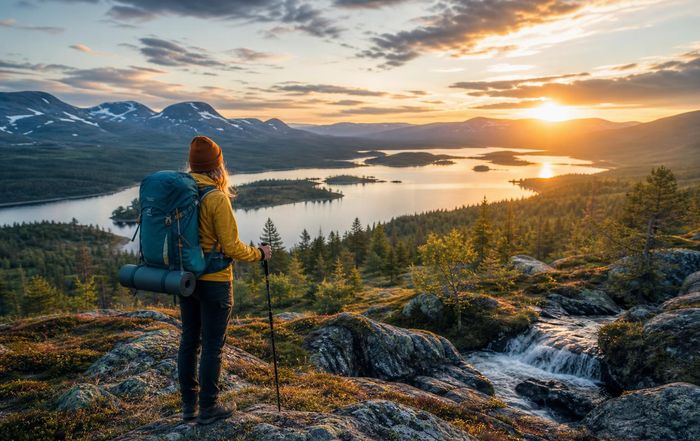
Adventure Travel Through Sweden for Outdoor Enthusiasts
Sweden is often reduced to clichés of minimalist design and fika, but away from its cities lies one of Europe's most varied and accessible adventure playgrounds. From Arctic tundra and high fells to thousands of forested lakes and a coastline riddled with islands, the country offers serious wilderness with a level of safety, infrastructure, and public access that is hard to match. For outdoor enthusiasts planning an adventure-focused journey, Sweden rewards those who look beyond Stockholm's streets and treat the entire country as a long, north-south expedition corridor.
This new document explores how to structure an adventure trip through Sweden, the key regions and activities to consider, and the practical safety, performance, and cultural details that make or break a multi-week journey.
Why Sweden Works So Well for Adventure Travel
Sweden's geography stretches more than 1,500 kilometers from the temperate south to the Arctic north, and that length translates directly into seasonal and environmental variety. In a single extended trip, it is possible to move from sea-kayaking among leafy archipelagos to hiking above the treeline in Lapland, or from trail running in pine forests to ski touring under the aurora.
A major reason this works in practice is the Right of Public Access (Allemansrätten), a principle embedded in Swedish law and culture that allows people to walk, cycle, paddle, and camp on most uncultivated land as long as they show respect for nature and private property. Sweden's environmental agency, Naturvårdsverket, offers clear guidance on what is and is not allowed, including rules around campfires, distances from houses, and behavior in nature reserves. The system gives travelers an unusual freedom to improvise routes and overnight stops compared with many other European countries.
At the same time, Sweden has a strong tradition of organized outdoor recreation. Long-distance trails such as Kungsleden, dense networks of ski tracks around towns, and well-marked canoe routes reflect decades of investment by local authorities and clubs. The Swedish Tourist Association (STF) maintains mountain huts and hostels across the country, allowing hikers, ski tourers, and cyclists to string together multi-day itineraries without needing to carry expedition-level loads. Combined with reliable public transport, this infrastructure means that serious adventure does not require renting a car or hiring a guide, though both remain options for more remote or technical objectives.
For readers interested in performance, safety, and the intersection of lifestyle and adventure, Sweden's model of low-impact, high-access outdoor culture offers a compelling case study that resonates with broader themes of sustainable travel and ethical recreation. Those planning a multi-country itinerary in Scandinavia will also find Sweden's mix of wilderness and infrastructure relatively budget-friendly compared with some neighboring destinations.
Planning a North-South Adventure Route
Most visitors arrive via Stockholm, Gothenburg, or Malmö, and the country's rail network makes it straightforward to build a linear route that moves from one region to another. A common pattern is to start with coastal or archipelago activities in the south or east, then work north into the mountains, finishing in Lapland if time and season allow.
For a two- to three-week itinerary, a logical progression might look like this: a few days of sea kayaking and cycling around the Stockholm archipelago, followed by forest hiking and lake paddling in central Sweden's Dalarna region, then a sleeper train to the far north for hut-to-hut trekking on Kungsleden. Travelers who prefer a more urban-outdoor blend can swap in time in Gothenburg with day trips to the Bohuslän coast, then head inland to Värmland or Jämtland for trail running or bikepacking.
Adventure-focused travelers may want to cross-reference such an itinerary with broader destination and travel inspiration, and Sweden fits naturally alongside other European outdoor hubs frequently covered in destination-focused and travel reporting. Those interested in how adventure shapes lifestyle and work can also explore related lifestyle and performance coverage for ideas on training and recovery on the road.
Seasonality is crucial. Summer (June-August) offers the widest range of activities, long daylight hours, and generally stable conditions in the mountains, though mosquitoes can be intense in forested and boggy areas. Late August and September bring cooler temperatures, fewer insects, and autumn colors, but also a higher chance of storms and early snow in the north. Winter transforms the country into a cross-country skiing and snowshoeing arena, particularly in regions like Jämtland and Lapland, while spring shoulder seasons can be wet, slushy, and less predictable for backcountry travel.
Lapland and the High North: Trekking, Ski Touring, and Arctic Light
For many outdoor enthusiasts, Swedish Lapland is the main draw. The region combines Arctic landscapes with a relatively gentle topography compared with the Alps, making it attractive for long-distance trekking and ski touring rather than technical mountaineering. National parks such as Abisko, Sarek, and Padjelanta form one of Europe's largest contiguous wilderness areas, with minimal road access and a strong emphasis on conservation.
The Kungsleden (King's Trail) is the backbone of non-technical mountain travel in the north. Stretching roughly 440 kilometers between Abisko and Hemavan, it can be broken into sections served by STF huts, which are spaced a day's hike or ski apart. In summer, hikers carry light packs and can buy basic supplies at some huts; in winter, ski tourers pull pulks and rely on hut stoves and bunk beds to avoid camping in deep snow. The STF's official Kungsleden information provides route descriptions, opening dates, and hut details, and should be a primary planning tool.
Beyond Kungsleden, Sarek National Park is often described as one of Europe's last true wildernesses. There are no marked trails, bridges, or huts inside the park, and river crossings can be serious. The Swedish Environmental Protection Agency's Sarek pages emphasize that Sarek is only suitable for experienced parties with strong navigation skills and a solid understanding of Arctic weather. For those with the necessary competence, multi-day traverses here offer a level of remoteness rare in Europe.
Winter transforms Lapland into an arena for ski touring, Nordic skiing, and dog sledding. Abisko is a popular base, with a combination of lift-accessed terrain at Nuolja and extensive backcountry options. The region is also one of the world's better-known places to see the aurora borealis, with organizations such as the Swedish Institute of Space Physics and international agencies like NOAA's Space Weather Prediction Center publishing forecasts that can help travelers time their night outings.
Safety in Lapland hinges on understanding weather, water, and remoteness. The Swedish Meteorological and Hydrological Institute (SMHI) provides detailed mountain weather forecasts, including wind, precipitation, and avalanche risk information for key ranges. The Swedish Avalanche Center (Lavinfaran) publishes regional avalanche bulletins in winter, and should be checked daily by anyone venturing into steeper snow terrain. For those new to Arctic travel, guided trips or skills courses, often run from hubs like Kiruna or Abisko, can be a smart stepping stone before independent expeditions.
Forests, Lakes, and Classic Swedish "Friluftsliv" in Central Sweden
Moving south from the Arctic, central Sweden offers a different style of adventure: dense forests, rolling hills, and an almost endless supply of lakes and rivers. Regions such as Dalarna, Värmland, and Jämtland are ideal for hiking, trail running, canoe touring, and bikepacking, and they showcase everyday Swedish outdoor culture-known as friluftsliv-as much as big wilderness.
Dalarna, often seen as a symbol of traditional Swedish identity, is home to long-distance trails like the Bergslagsleden and numerous shorter routes that connect villages, lakes, and viewpoints. The Visit Dalarna tourism site provides detailed maps and route suggestions for hiking, cycling, and paddling. In winter, the region becomes a cross-country skiing hub, hosting events such as the Vasaloppet, one of the world's oldest and largest ski races. While racing may not be on every traveler's agenda, the groomed track network that supports such events is open to visitors, making it easy to integrate endurance training into a longer trip.
Värmland and neighboring counties are particularly strong for canoe and kayak touring. Slow-moving rivers like the Klarälven, plus interconnected lakes, allow for multi-day journeys with wild camping under the Right of Public Access. Organizations such as Visit Värmland highlight established canoe routes, suggested itineraries, and logistics like rental providers and shuttle options. For those drawn to a slower, more meditative style of travel, paddling between forested islands and camping on small headlands can be a compelling alternative to mountain trekking.
Central Sweden is also a natural laboratory for lightweight adventure travel. The combination of good maps, frequent shelters, and proximity to towns means that hikers and bikepackers can experiment with minimalist setups while maintaining a safety margin. This aligns well with a broader trend in performance-focused outdoor travel, where athletes and enthusiasts seek to balance speed, endurance, and recovery on multi-day journeys. Readers interested in optimizing gear, training, and recovery routines in such environments will find useful parallels in performance and safety coverage that explore how to stay efficient without compromising resilience.
Coastlines and Archipelagos: Sea Kayaking, Sailing, and Coastal Hiking
Sweden's coast is as much a playground as its mountains, especially in summer. The Stockholm archipelago alone contains around 30,000 islands and skerries, creating a sheltered environment for sea kayaking, sailing, and SUP touring. Many islands have basic campsites or shelters, and ferries connect the larger ones, allowing travelers to mix paddling with public transport and occasional nights in guesthouses.
The Stockholm Archipelago Foundation manages many of the protected areas and provides maps, camping rules, and information on fire restrictions and nature reserves. Their guidance is important because, while Allemansrätten applies on most islands, there are additional regulations in bird sanctuaries and sensitive coastal habitats. Sea kayakers should also be aware of shipping lanes and changing weather; even in sheltered waters, wind and waves can build quickly.
On the west coast, the Bohuslän archipelago north of Gothenburg offers a more rugged granite landscape, with narrow channels, smooth rock slabs, and fishing villages. The West Sweden tourism site highlights multi-day kayaking routes, sailing opportunities, and hiking trails like the Kuststigen (Coastal Path), which link coastal scenery with cultural stops in small towns. Climbers will find traditional and sport routes on coastal cliffs, though many crags are sensitive environments where seasonal bird nesting restrictions apply.
Coastal adventures bring their own safety and environmental considerations. The Swedish Maritime Administration publishes nautical charts and warnings, and paddlers should carry at least a basic chart or digital equivalent, plus PFDs and communication devices. While tidal ranges are small compared with many ocean coasts, water temperature can be cold even in early summer, making immersion protection an important part of risk management.
For travelers interested in how innovation intersects with water-based adventure-such as the rise of packrafts, folding kayaks, or electric-assist sailboats-Sweden's coastal regions are a natural testing ground. Broader coverage of innovation and brands frequently touches on Scandinavian outdoor gear companies, many of which design equipment with these specific environments in mind.
Winter Adventures: Skiing, Snowshoeing, and Ice Travel
While Lapland often dominates winter imagery, much of Sweden becomes a snow-based adventure arena from December through March. Cross-country skiing is deeply embedded in Swedish culture, and even mid-sized towns groom extensive track systems. Resorts like Åre in Jämtland offer alpine skiing and freeride terrain, while surrounding mountains support ski touring and snowshoeing.
The Swedish Ski Association and regional tourism boards provide information on trail networks and events, while the Åre tourism site outlines options for lift-served and backcountry skiing. For multi-day winter journeys, the same STF hut network that supports summer trekking comes into play, particularly along Kungsleden and in Jämtland's mountains. Skiers can link huts in loops or traverses, pulling pulks with camping gear for additional flexibility.
Safety in winter requires particular attention. The Swedish Avalanche Center is the primary source for avalanche forecasts, education materials, and incident reports, and its advice is widely respected by local guides and clubs. Travelers should consider avalanche safety training, beacon-shovel-probe kits, and conservative route choices, especially if they are less familiar with Scandinavian snowpacks, which can differ from those in the Alps or Rockies.
Frozen lakes and rivers offer opportunities for Nordic skating and over-ice travel, but also present serious hazards. The Swedish Civil Contingencies Agency (MSB) publishes guidance on ice safety, including recommended ice thicknesses for walking, skating, and vehicles, as well as rescue techniques. Local knowledge is invaluable; joining organized tours or outings with Swedish clubs can provide a safer introduction to reading ice conditions than going alone.
Safety, Access, and Responsible Travel
Sweden's combination of accessible wilderness and strong safety culture makes it tempting to assume that nothing can go badly wrong. In reality, the same elements that make adventures memorable-remoteness, cold water, rapid weather changes-can quickly turn small mistakes into emergencies.
For medical and rescue support, Sweden uses the common European emergency number 112, which connects to police, fire, and ambulance services. In mountain areas, rescue operations are typically coordinated by police and may involve specialized mountain rescue teams. Travelers should carry at least a basic first-aid kit, navigation tools that do not rely solely on smartphone batteries, and enough clothing and shelter to handle an unplanned night out.
The Right of Public Access also carries responsibilities. Naturvårdsverket's official Allemansrätten guidance emphasizes leaving no trace, respecting wildlife, and avoiding disturbance to landowners. Open fires are often restricted in dry periods, and local municipalities may impose additional rules during high-risk seasons. In national parks and nature reserves, regulations can be stricter, with designated camping zones and bans on certain activities to protect sensitive habitats.
Travelers interested in the ethics of adventure tourism-its impact on local communities, wildlife, and climate-will find Sweden a useful case study. The country's environmental policies, outdoor education in schools, and emphasis on low-impact recreation intersect with broader debates covered in ethics, world, and business reporting, from sustainable destination management to the carbon footprint of long-haul travel.
Insurance is another practical consideration. Comprehensive travel and adventure sports coverage that includes backcountry skiing, sea kayaking, and remote trekking is advisable, as standard policies may exclude higher-risk activities. Some European alpine clubs offer reciprocal rescue coverage or insurance products that can apply in Scandinavia; checking the fine print before departure is important.
Culture, Lifestyle, and the Rhythm of Swedish Outdoor Life
Adventure travel in Sweden is not just about landscapes and sports; it is also an opportunity to experience how outdoor activity is woven into everyday life. The concept of friluftsliv-roughly, "open-air life"-captures a cultural norm in which time outdoors is seen as essential to well-being rather than an occasional hobby. This manifests in everything from after-work runs on forest trails to families picnicking on rocky outcrops and retirees skiing gentle tracks in winter.
For visitors, this ethos can reshape how a trip is structured. Instead of treating a trek or paddle as an isolated "expedition," travelers might integrate lower-key days of walking, swimming, or berry picking, aligning more closely with local rhythms. Public bathing areas on lakes, communal saunas, and open-access shelters blur the line between recreation and daily life in ways that many find refreshing compared with more commercialized outdoor destinations.
Urban centers like Stockholm, Gothenburg, and Malmö provide gateways into this lifestyle, with easy public transport access to forests, lakes, and coastal paths. For those balancing remote adventures with work or digital commitments, Sweden's strong connectivity and co-working culture make it possible to interleave intensive outdoor segments with short periods of urban recovery and productivity.
Adventure travelers who are also curious about wider cultural trends-from design and food to tech and innovation-will find Sweden's outdoor culture reflected in many other aspects of life. Coverage of culture and innovation often highlights how Scandinavian countries integrate sustainability, wellness, and nature into urban planning, product design, and even workplace norms.
Building Your Own Swedish Adventure!
Designing an adventure-focused journey through Sweden is less about ticking off a fixed set of sights and more about choosing a few core environments-mountains, forests and lakes, or coastlines-and linking them in a way that matches your skills, interests, and available time. A trek on Kungsleden combined with sea kayaking in the Stockholm archipelago offers a very different experience from a winter ski traverse in Jämtland followed by spring cycling along the west coast, yet both are authentically Swedish in their own ways.
The country's infrastructure, public access rights, and safety systems make it possible for independent travelers to tackle ambitious routes without excessive bureaucracy, but they do not remove the need for careful planning, realistic self-assessment, and respect for local regulations. Official resources such as the Swedish Tourist Association, Naturvårdsverket, SMHI, and regional tourism boards are essential starting points, while broader reporting on sports and adventure can help refine training, gear choices, and risk management strategies.
For outdoor enthusiasts willing to embrace variable weather, long summer days or polar nights, and the quiet satisfaction of moving self-powered through big landscapes, Sweden offers a rare combination of wildness and welcome. The country's trails, islands, and frozen lakes are not just backdrops for individual achievements; they are part of a living culture that values time outside as a basic component of a good life.