

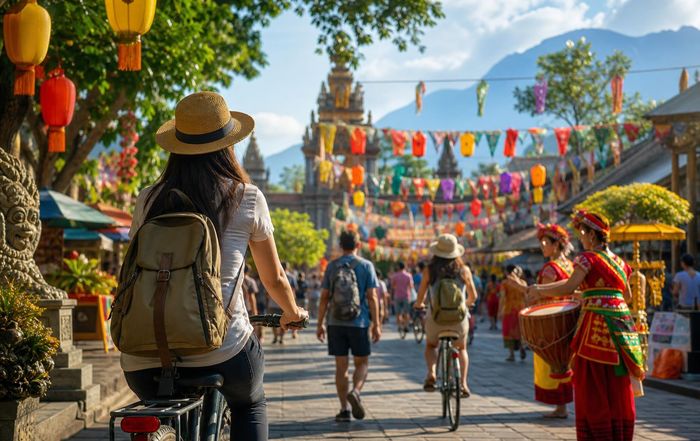
Cultural Festivals That Inspire Active Travel in 2026
Active Travel Meets Cultural Celebration
In 2026, cultural festivals have become powerful catalysts for a new style of global exploration in which movement, participation, and immersion replace passive sightseeing, and this evolution is reshaping how travelers, brands, and destinations interact across continents. As audiences from the United States, the United Kingdom, Germany, Canada, Australia, and an increasingly connected Asia, Africa, and South America look for experiences that combine physical activity with authentic cultural engagement, active travel is emerging as a defining trend, and xdzee.com is positioning itself at the intersection of sports, adventure, travel, lifestyle, and culture to interpret and amplify this shift for a discerning business and consumer readership.
Active travel, broadly understood as journeys that integrate physical activity such as walking, cycling, hiking, paddling, or dancing into the core of the travel experience, has long been associated with adventure tourism, yet the fusion of active itineraries with major cultural festivals-from urban marathons threaded through heritage districts to mountain pilgrimages, music gatherings, and food celebrations-has created a distinct, high-value niche that appeals to travelers seeking performance, safety, and meaning in equal measure. Organizations such as the World Tourism Organization (UNWTO) emphasize that cultural and creative tourism are among the fastest-growing segments of the sector, and those trends are now converging with what many analysts describe as the global "movement economy," in which wellness, sport, and outdoor recreation are central drivers of consumer choice; readers can explore broader tourism trends through the official resources of the UNWTO to understand how cultural events are reshaping destinations.
For xdzee.com, whose audience tracks developments in travel, sports, adventure, and destination strategy, cultural festivals now provide a lens through which to examine innovation, ethics, and performance in the global experience economy. The platform's coverage increasingly reflects how festivals influence brand partnerships, job creation, urban planning, and community storytelling, making them a strategic topic not only for travelers but also for executives, policymakers, and investors.
Why Cultural Festivals Drive the Growth of Active Travel
The connection between cultural festivals and active travel is rooted in a set of overlapping motivations that have intensified over the past decade, especially as travelers have become more conscious of health, sustainability, and authenticity. According to research from the World Travel & Tourism Council (WTTC), wellness-oriented and experience-driven tourism continues to outpace traditional leisure segments, and festivals provide a structured, time-bound reason to move with purpose through cities, landscapes, and communities; those interested in the macroeconomic context can review the latest sector outlooks from the WTTC to see how experience-led travel contributes to GDP and employment.
At the individual level, cultural festivals offer a narrative frame that transforms physical effort into a story worth telling, whether that is running a marathon through historic boroughs in London or New York, cycling between vineyards during harvest season in France or Italy, or hiking to remote temples in Japan during a seasonal celebration. This narrative dimension resonates strongly with younger travelers from Europe, North America, and Asia who see travel not as a break from daily life but as an extension of personal identity, performance, and lifestyle choices, a trend reflected in the growing popularity of platforms and communities that celebrate active living and global mobility; readers can learn more about the broader context of sustainable and experience-led tourism through resources provided by the OECD on tourism and sustainable growth.
For destinations, festivals that encourage active participation rather than passive attendance help distribute visitor flows more evenly across neighborhoods and seasons, which can support local businesses, reduce overtourism pressure on iconic sites, and stimulate investment in pedestrian- and cyclist-friendly infrastructure. Organizations such as UNESCO highlight the importance of safeguarding intangible cultural heritage while enabling responsible visitation, and many festival organizers now work closely with cultural authorities to ensure that rituals, performances, and community spaces are respected even as they become part of active travel itineraries; background on the protection of living traditions is available through UNESCO's cultural heritage portal.
Iconic Festivals That Blend Culture, Sport, and Movement
Around the world, a growing number of festivals have become synonymous with active participation, drawing travelers who want to move, sweat, and celebrate within a richly textured cultural environment. In North America, events such as the New York City Marathon and the Boston Marathon have evolved beyond elite sporting competitions into city-wide cultural festivals that showcase local music, food, and neighborhood identity, and they attract runners and supporters from the United States, Canada, Europe, and Asia who plan extended trips around race weekends. The New York Road Runners and other organizers collaborate with city agencies and sponsors like Nike and Adidas to design experiences that highlight both performance and place, and those interested in the global running movement can explore insights from the World Athletics federation.
In Europe, cultural festivals with deep historical roots are increasingly aligning with active travel opportunities. Spain's La Tomatina and San Fermín in Pamplona have long drawn adventurous travelers, but newer initiatives emphasize guided walking tours, regional cycling routes, and culinary experiences that contextualize the festivities within broader Basque and Navarrese culture, encouraging visitors from Germany, the Netherlands, the United Kingdom, and beyond to engage more thoughtfully with local traditions. Across the continent, events like the Edinburgh Festival Fringe in Scotland and Germany's Oktoberfest in Munich are complemented by city-sponsored running events, urban hiking routes, and bike-sharing schemes that turn festival periods into extended active travel seasons; urban planners and tourism boards often reference standards and case studies from organizations such as ICLEI - Local Governments for Sustainability, whose resources on sustainable urban mobility are widely consulted.
In Asia, cultural festivals are powerful drivers of both domestic and international active travel. Japan's cherry blossom season combines hanami gatherings with long-distance walking routes through Kyoto, Tokyo, and regional towns, while South Korea's Boryeong Mud Festival and Thailand's Songkran water festival have become multi-day celebrations that encourage physical play, street processions, and exploration of local heritage sites. China's traditional festivals, including Lunar New Year and the Mid-Autumn Festival, increasingly intersect with adventure tourism in regions such as Yunnan, Sichuan, and Guangxi, where hiking, cycling, and river tours are promoted alongside temple visits and cultural performances, and travelers can consult the China National Tourism Administration and regional tourism boards for updated guidance on cultural and eco-tourism products.
In the Southern Hemisphere, events like Brazil's Carnival and South Africa's Cape Town International Jazz Festival have become focal points for active travel itineraries that combine dance, music, and street culture with beach sports, trail running, and mountain hiking. Organizations such as Embratur in Brazil and South African Tourism are investing in marketing campaigns that highlight the fusion of culture and physical activity, appealing to visitors from Europe, North America, and Asia who want to connect festival experiences with broader explorations of landscapes and communities; those seeking a deeper understanding of global cultural policy frameworks can refer to the Council of Europe resources on cultural routes and heritage.
The Business of Active Cultural Festivals
From a business perspective, the intersection of cultural festivals and active travel represents a high-margin, resilient segment of the global tourism economy, attracting travelers who are willing to invest in premium experiences, performance gear, ethical brands, and curated itineraries. Major sportswear companies such as Nike, Adidas, Puma, and Asics have expanded their festival-related activations, sponsoring races, pop-up training sessions, and community runs that coincide with cultural events in cities like London, Berlin, Tokyo, and Sydney, while hospitality groups and airlines design package deals that bundle festival access with wellness amenities and adventure excursions. Executives tracking these developments can review sector analyses from McKinsey & Company, whose insights on travel, transport, and logistics frequently highlight the growing importance of experience-led offerings.
For destinations and local authorities, the economic case is equally compelling. Cultural festivals that integrate active components typically extend average length of stay, increase visitor spending on accommodation, food, equipment, and guided experiences, and stimulate job creation across sectors ranging from event management to outdoor guiding and creative industries. Cities such as London, New York, Berlin, and Singapore have established dedicated event and festival offices that coordinate with tourism boards, sports councils, and cultural institutions to maximize the economic and reputational benefits of major gatherings, often using data-driven tools and performance metrics to measure impact; the World Economic Forum offers broader context on the future of travel and urban economies through its reports on mobility and tourism.
On xdzee.com, the business implications of these trends are explored in the business and brands sections, where analysts examine how global and local brands can align with cultural festivals in ways that enhance authenticity, support community goals, and maintain high standards of safety and ethics. The platform's coverage often highlights successful collaborations between municipalities, cultural organizations, and private partners, as well as cautionary tales where over-commercialization or inadequate planning has undermined community trust or visitor experience.
Safety, Ethics, and Trust in Festival-Based Active Travel
As cultural festivals draw larger numbers of active travelers from across the world, questions of safety, ethics, and trust have become central to responsible planning and participation. High-profile incidents at overcrowded events have prompted authorities and organizers to strengthen crowd management, emergency response, and health protocols, and organizations such as the World Health Organization (WHO) provide technical guidance on mass gatherings and public health, which many host cities now integrate into their risk management frameworks. For festivals that involve physically demanding activities such as long-distance runs, mountain hikes, or water-based sports, there is growing emphasis on pre-event training, medical screening, and clear communication of risks to participants.
Ethically, festival-based active travel raises complex questions about cultural appropriation, environmental impact, and community consent. Many indigenous and local communities in regions such as Australia, New Zealand, Canada, and the Nordic countries are increasingly asserting control over how their traditions and lands are represented in tourism experiences, insisting on co-design, fair compensation, and capacity limits that protect both cultural integrity and natural ecosystems. Organizations such as Tourism New Zealand and Destination Canada have developed frameworks for working with Māori and First Nations partners, and these models are often cited in international discussions on indigenous tourism and cultural respect hosted by industry associations.
For xdzee.com, whose editorial pillars include ethics, safety, and innovation, the trustworthiness of festival-based active travel is a recurring theme. Coverage emphasizes transparent communication from organizers about crowd capacity, environmental policies, and cultural guidelines, as well as scrutiny of how sponsors and brands behave on the ground. Travelers are encouraged to choose operators that align with international best practices, such as those promoted by the Global Sustainable Tourism Council (GSTC), whose criteria on sustainable tourism management are increasingly referenced by destinations in Europe, Asia, and the Americas.
Innovation and Technology in the Festival Travel Ecosystem
The rapid evolution of technology has transformed how cultural festivals are discovered, booked, and experienced, and active travelers now rely on a sophisticated ecosystem of digital tools, wearables, and platforms to plan and optimize their journeys. Mobile applications integrate festival schedules with navigation, public transport, and real-time safety alerts, while fitness trackers and smartwatches from companies like Garmin, Apple, and Samsung allow participants to monitor performance, recovery, and health indicators before, during, and after demanding events. The International Association of Athletics Federations, now operating as World Athletics, and other governing bodies provide technical standards for timing, course measurement, and athlete welfare, which underpin the reliability of many festival-linked races and endurance events; further details on these standards can be explored through the World Athletics competition rules.
Digital innovation also extends to storytelling and cultural interpretation. Augmented reality experiences, immersive audio guides, and multilingual content platforms enable travelers from countries as diverse as Germany, France, China, and Brazil to engage with local history, art, and folklore while cycling through heritage districts or hiking along pilgrimage routes. Museums and cultural institutions, including many supported by the Smithsonian Institution and the British Museum, are experimenting with open-access digital collections and geolocated content that can be integrated into active itineraries; those interested in these developments can explore how major institutions are expanding digital engagement through resources such as the Smithsonian Open Access initiative.
Within this evolving ecosystem, xdzee.com plays a curatorial role, highlighting innovations that genuinely enhance traveler experience and community benefit while maintaining a critical stance toward technologies that may compromise privacy, equity, or cultural sensitivity. Articles in the performance and lifestyle sections often explore how wearables, apps, and data analytics are changing the way athletes, adventurers, and everyday travelers prepare for and participate in cultural festivals worldwide.
Jobs, Skills, and Careers in Festival-Driven Active Travel
The rise of cultural festivals as anchors of active travel has created a broad spectrum of employment opportunities that blend hospitality, event management, sports science, cultural mediation, and digital expertise. Event organizers require professionals who can design inclusive race routes and activity programs, coordinate with local communities and authorities, manage safety and logistics, and develop marketing campaigns that resonate across the United States, Europe, Asia, and beyond. Outdoor and adventure operators seek guides, instructors, and coaches with strong cultural literacy and language skills, while brands need strategists and storytellers who can authentically connect products to place-based experiences.
Educational institutions and training providers are responding with new programs that combine tourism management, cultural studies, and sport or outdoor leadership, often in partnership with industry organizations and cities that host major festivals. Prospective students and professionals can explore the evolving landscape of tourism and hospitality careers through resources from the World Tourism Organization and national education portals, while specialized organizations such as Adventure Travel Trade Association (ATTA) publish guidance on skills and standards in adventure tourism. For readers of xdzee.com, the jobs section tracks how these emerging roles intersect with broader labor market trends, remote work patterns, and the growth of purpose-driven careers in travel, culture, and sport.
Importantly, the demand for skills is not limited to traditional tourism hubs. Smaller cities and rural regions in countries like Norway, Finland, New Zealand, and South Africa are investing in festival-based active travel as a way to diversify local economies, retain young talent, and attract international visitors, and this creates opportunities for entrepreneurs, creatives, and community leaders who can design experiences that are both economically viable and culturally grounded. International organizations such as the International Labour Organization (ILO) offer frameworks on decent work in tourism, which are increasingly relevant as festival-driven economies expand.
Positioning xdzee.com in the Global Conversation
As cultural festivals continue to inspire active travel across continents, xdzee.com is evolving into a trusted hub for analysis, storytelling, and strategic insight at the intersection of sports, adventure, travel, brands, and culture. The platform's editorial approach emphasizes experience, expertise, authoritativeness, and trustworthiness, drawing on contributions from seasoned travelers, industry professionals, and analysts who understand both the thrill of participation and the complexity of the systems that make these experiences possible. Coverage in sections such as world, news, and culture situates festival-based active travel within broader geopolitical, economic, and social contexts, ensuring that readers see beyond the highlight reels to the underlying dynamics that shape destinations and communities.
For business leaders, tourism boards, and brand strategists, xdzee.com offers a vantage point from which to observe how consumers from the United States, United Kingdom, Germany, Canada, Australia, France, Italy, Spain, the Netherlands, Switzerland, China, Sweden, Norway, Singapore, South Korea, Japan, Thailand, Brazil, South Africa, Malaysia, and New Zealand are redefining value in travel and lifestyle. For travelers and enthusiasts, it provides guidance on how to engage with cultural festivals in ways that prioritize safety, respect, and personal growth, while embracing the joy of movement and discovery. As the global conversation around cultural festivals and active travel grows more sophisticated, xdzee.com is committed to deepening its coverage, expanding its network of expert voices, and reinforcing its role as a reliable, forward-looking companion for those who see the world as a place to move through, not just to observe.
In 2026 and beyond, cultural festivals will continue to inspire journeys that are as demanding as they are rewarding, inviting participants to run, ride, dance, and walk their way into the stories of communities around the globe. By documenting these journeys and interrogating the forces that shape them, xdzee.com is not only reporting on a trend but also helping to define what active, ethical, and culturally engaged travel can become in a world that increasingly values connection, resilience, and shared experience. Readers who wish to follow this evolution more closely can explore the full range of coverage at xdzee.com, where sports, adventure, travel, business, and culture converge in a continually updated portrait of the global movement economy.