

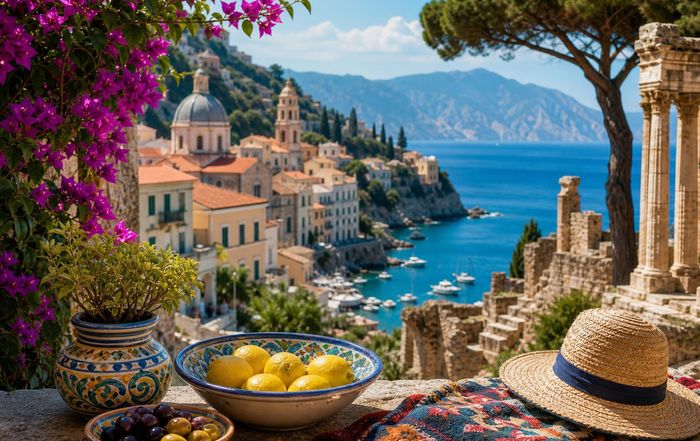
Cultural Travel Experiences Across the Mediterranean
The Mediterranean in 2026: A Crossroads of Culture, Commerce, and Curiosity
The Mediterranean region stands at a pivotal moment where cultural heritage, sustainable tourism, and digital innovation converge, creating unprecedented opportunities for travelers, businesses, and brands. For the global sport loving audience of xdzee.com, whose interests span sports, adventure, travel, lifestyle, performance, innovation, ethics, and business, the Mediterranean has become more than a holiday destination; it is a living laboratory for how cultures interact, economies evolve, and experiences are designed, curated, and consumed. From the sun-soaked coasts of Spain and Italy to the historic ports of Greece and Turkey, from the creative hubs of France and the United Kingdom to the rising cultural scenes in North Africa and the Middle East, the region offers a complex and compelling narrative that reflects broader trends shaping travel and culture worldwide.
As international tourism recovers and transforms following the disruptions of the early 2020s, organizations such as the UN World Tourism Organization and the OECD have highlighted the Mediterranean as both a beneficiary and a driver of new travel patterns, including longer stays, work-and-travel lifestyles, and a growing appetite for authentic, community-based cultural experiences. The region's cities and coastal communities are responding with renewed emphasis on cultural programming, heritage preservation, and responsible destination management, aligning closely with the values and expectations of the digitally connected and ethically aware travelers who form a core part of the xdzee.com readership.
Heritage, History, and Living Culture Along the Coast
The Mediterranean's appeal has always rested on its layered history, where Roman amphitheaters, Byzantine churches, Islamic architecture, and modern cultural districts coexist within walking distance. In 2026, this historical depth is being reinterpreted through immersive cultural travel experiences that go far beyond museum visits and guided tours. In cities such as Rome, Athens, Barcelona, and Marseille, travelers can now combine traditional sightseeing with curated neighborhood walks, culinary workshops, and encounters with local artisans, musicians, and entrepreneurs, allowing them to experience living culture rather than static heritage. Those interested in the broader context of cultural policy and heritage preservation can explore resources from UNESCO, which continues to support World Heritage sites across the Mediterranean with a focus on climate resilience and community engagement.
For readers of xdzee.com who prioritize meaningful cultural immersion, destinations across Europe, North Africa, and the Levant are broadening their offerings to include language learning retreats, intergenerational storytelling projects, and collaborations between local communities and international creative organizations. Cities such as Barcelona and Valencia in Spain, Florence and Naples in Italy, and Thessaloniki in Greece are particularly active in promoting cultural districts that balance tourism with local life. Travelers planning multi-country itineraries that connect cultural hubs across the region can benefit from the practical insights and destination overviews available on xdzee.com/travel, where Mediterranean stories are increasingly central to a global travel perspective.
From Adventure to Performance: Active Cultural Journeys
Cultural travel in the Mediterranean is no longer confined to galleries and historic sites; it increasingly intersects with sports, adventure, and performance-oriented experiences that appeal to active travelers from the United States, United Kingdom, Germany, Canada, Australia, and beyond. Coastal hiking routes in Spain's Costa Brava, Italy's Cinque Terre, and France's Calanques, as well as long-distance trails like the Camino de Santiago, now integrate cultural interpretation, local food experiences, and community-led storytelling. These experiences create a bridge between physical performance and cultural understanding, aligning with the interests of readers who follow performance-focused content on xdzee.com/performance and xdzee.com/sports.
Sailing regattas, open-water swims, and cycling tours in regions such as the Balearic Islands, the French Riviera, and the Greek archipelago increasingly incorporate cultural programming, from onboard lectures on maritime history to visits to small coastal villages that preserve traditional crafts and cuisines. Organizations like SailGP and major cycling events in Italy, France, and Spain demonstrate how elite sports can be embedded in local cultural narratives, while grassroots initiatives encourage visitors to engage with local clubs and community sports facilities. As adventure tourism expands in Mediterranean destinations such as Croatia, Montenegro, and Turkey, platforms like Adventure Travel Trade Association offer guidance on best practices that respect both natural environments and cultural communities, helping travelers align their choices with performance and sustainability goals.
Innovation, Digital Culture, and the New Mediterranean Brand
The Mediterranean of 2026 is not only about tradition; it is also a space where digital innovation, creative industries, and technology-driven services are reshaping the visitor experience and redefining regional branding. Tech-forward cities such as Barcelona, Lisbon (on the Atlantic but culturally connected to the Mediterranean discourse), Tel Aviv, and Marseille are fostering start-up ecosystems that intersect with tourism, culture, and mobility, creating new platforms for booking, storytelling, and community-based experiences. The World Economic Forum and innovation-focused organizations across Europe and Asia have noted the rise of "smart destinations" that leverage data, digital infrastructure, and AI to manage visitor flows, preserve heritage, and enhance cultural access.
For the audience of xdzee.com, which frequently engages with innovation stories on xdzee.com/innovation, the Mediterranean offers case studies in how destinations can use technology to support both visitor satisfaction and local well-being. Augmented reality experiences in archaeological sites, digital passes that bundle museums and public transport, and multilingual cultural apps that highlight underrepresented narratives demonstrate how digital tools can enrich cultural travel. At the same time, the region's brands, from luxury fashion houses in Italy and France to emerging lifestyle labels in Spain, Greece, and Turkey, are experimenting with hybrid physical-digital experiences, pop-up events, and influencer collaborations that position the Mediterranean as a global lifestyle brand. Those interested in how brands are leveraging cultural narratives can explore related analyses on xdzee.com/brands, where Mediterranean case studies illustrate broader shifts in global marketing and consumer engagement.
Ethics, Sustainability, and the Future of Responsible Travel
The rapid growth of tourism in Mediterranean hotspots has intensified debates around over-tourism, housing affordability, cultural commodification, and environmental stress. Cities such as Barcelona, Venice, Dubrovnik, and Santorini have become emblematic of both the economic benefits and social strains associated with mass tourism, prompting local authorities, residents, and global organizations to seek more ethical and sustainable models. Initiatives promoted by the World Travel & Tourism Council and the Global Sustainable Tourism Council are increasingly influential in guiding policy and business decisions, while travelers themselves are becoming more discerning in their expectations around sustainability, authenticity, and respect for local communities.
For business leaders, travel companies, and culturally engaged professionals reading xdzee.com, this shift underscores the importance of embedding ethics into every aspect of the travel value chain, from supply partnerships and employment practices to marketing narratives and on-the-ground experiences. Mediterranean destinations are experimenting with visitor caps, dynamic pricing, and incentives for off-season travel, as well as promoting lesser-known regions and inland communities to distribute economic benefits more evenly. Those interested in the ethical dimensions of these strategies can follow detailed discussions on xdzee.com/ethics, where Mediterranean examples are analyzed alongside global case studies to highlight best practices and emerging standards in responsible travel.
Lifestyle, Gastronomy, and the Art of Mediterranean Living
The Mediterranean lifestyle, often idealized for its emphasis on social connection, outdoor living, and balanced nutrition, continues to inspire travelers, brands, and wellness-focused professionals worldwide. In 2026, culinary travel has become one of the most powerful gateways into Mediterranean culture, as visitors from North America, Europe, and Asia seek immersive food experiences that connect them to local producers, traditional recipes, and contemporary culinary innovation. From tapas bars in Barcelona and pintxos in San Sebastián to trattorias in Rome and Naples, from Provençal markets in France to coastal seafood tavernas in Greece and Turkey, gastronomy acts as both a cultural archive and a creative frontier. Those interested in the health and lifestyle aspects of Mediterranean cuisine can explore research from organizations such as the Harvard T.H. Chan School of Public Health, which continues to highlight the benefits of Mediterranean dietary patterns for long-term well-being.
For the lifestyle-oriented readers of xdzee.com/lifestyle, Mediterranean destinations offer curated experiences that blend wellness, design, and culture, including yoga and mindfulness retreats in coastal regions, design-focused boutique hotels in cities like Barcelona, Athens, and Nice, and slow-travel itineraries that prioritize local markets, family-run accommodations, and community-led workshops. The rise of remote work and "work-from-anywhere" cultures has further strengthened the appeal of Mediterranean cities for professionals from Germany, the Netherlands, Scandinavia, the United States, and Canada, who seek environments that combine cultural richness, outdoor lifestyles, and reliable digital infrastructure. As a result, the Mediterranean lifestyle is evolving from a vacation ideal into a year-round, lived experience for a growing global community of mobile professionals and entrepreneurs.
Culture, Identity, and Creative Industries in a Changing Region
Cultural travel across the Mediterranean in 2026 is deeply intertwined with questions of identity, migration, and creative expression. The region's cities host a dense calendar of festivals, biennales, and cultural events that explore themes such as diaspora, postcolonial narratives, climate change, and digital futures. Events like the Venice Biennale, film festivals in Cannes and Berlin, and music festivals across Spain, Italy, Greece, and Croatia serve as international stages where Mediterranean and global voices intersect. These cultural platforms not only attract visitors but also shape how the region is perceived and how it perceives itself, feeding into broader debates about Europe, the Middle East, and North Africa in a rapidly changing geopolitical landscape.
For readers following cultural insights on xdzee.com/culture and xdzee.com/world, the Mediterranean offers a lens through which to examine how creative industries contribute to social cohesion, economic development, and international reputation. Cities like Marseille, Palermo, and Thessaloniki are positioning themselves as cultural laboratories, where street art, independent music scenes, and grassroots cultural centers coexist with established institutions such as national theaters and major museums. International organizations including UNESCO's Creative Cities Network highlight several Mediterranean cities as models for how creativity can drive inclusive urban development, offering valuable insights for policymakers, investors, and cultural entrepreneurs who look to the region for inspiration and partnership opportunities.
Business, Jobs, and the Economics of Mediterranean Tourism
Behind every memorable cultural travel experience lies a complex ecosystem of businesses, jobs, and public-private partnerships that shape the economic fabric of Mediterranean destinations. In 2026, the tourism and hospitality sector continues to be a major employer across Southern Europe, North Africa, and the Eastern Mediterranean, with significant contributions to GDP in countries such as Spain, Italy, Greece, Turkey, and Croatia. Reports from the European Commission and the International Labour Organization emphasize both the opportunities and vulnerabilities inherent in tourism-dependent economies, particularly in the face of climate risks, geopolitical tensions, and shifting consumer preferences.
For the business-focused audience of xdzee.com/business and career-minded readers exploring xdzee.com/jobs, the Mediterranean presents a dynamic labor market where new roles are emerging at the intersection of hospitality, technology, culture, and sustainability. Destination management organizations, cultural institutions, and travel-tech start-ups are seeking professionals with expertise in data analytics, digital marketing, experience design, and ESG (environmental, social, and governance) strategy, while local communities look to tourism as a vehicle for entrepreneurship and skills development. At the same time, there is growing scrutiny of job quality, seasonal employment, and the need for inclusive workforce policies that ensure local residents benefit from tourism-led growth. Business leaders and investors who engage with Mediterranean destinations are increasingly expected to demonstrate long-term commitment, ethical practices, and collaborative approaches that align with the principles discussed on xdzee.com across its various verticals.
Safety, Resilience, and Trust in Mediterranean Destinations
Trust is a central component of cultural travel, and in 2026, Mediterranean destinations are investing heavily in safety, resilience, and risk management to reassure travelers and local communities alike. From health and hygiene protocols in hotels and cruise ports to climate adaptation strategies in coastal areas and historic city centers, the region is responding to an evolving risk landscape that includes extreme weather events, infrastructure stress, and digital security concerns. Organizations such as the World Health Organization and the European Environment Agency provide frameworks and data that inform national and local strategies, while industry bodies develop standards and certifications that signal trustworthiness to international travelers.
For readers who follow safety-related content on xdzee.com/safety, the Mediterranean offers instructive examples of how destinations can communicate transparently about risks, emergency preparedness, and sustainability efforts without undermining their appeal. Cities and regions are increasingly integrating safety messaging into their branding and visitor information, emphasizing well-maintained infrastructure, reliable public transport, and accessible healthcare systems, particularly in countries such as Spain, Italy, France, and Greece that attract large numbers of visitors from the United Kingdom, Germany, Scandinavia, North America, and Asia. As travelers become more sophisticated in assessing destination risk profiles, trust is emerging as a core differentiator, reinforcing the importance of credible information, ethical conduct, and long-term resilience planning.
Destinations and Experiences: Designing the Mediterranean Journey
The art of designing a Mediterranean cultural journey in 2026 lies in balancing iconic highlights with lesser-known experiences, coastal relaxation with urban exploration, and personal interests with broader regional narratives. Travelers seeking inspiration for such journeys can draw on curated destination features and thematic itineraries on xdzee.com/destination, where Mediterranean cities, islands, and rural regions are presented not as isolated attractions but as interconnected nodes within a wider cultural and economic ecosystem. This holistic approach resonates with readers from Europe, North America, Asia, and beyond who increasingly view travel as a form of lifelong learning, professional enrichment, and personal transformation.
Multi-country routes that combine Spain and France with Italy and Greece, or that link Southern Europe with North African destinations such as Morocco and Tunisia, allow travelers to experience the Mediterranean as a shared but diverse cultural zone, shaped by centuries of trade, migration, and artistic exchange. Understanding current developments in regional connectivity, such as rail improvements, ferry networks, and aviation trends, can be supported by resources from organizations like Eurostat and IATA, which provide data-driven insights into mobility patterns and infrastructure. For xdzee.com readers, these perspectives reinforce the idea that a Mediterranean journey is not only a sequence of places but also a narrative about how cultures meet, collaborate, and evolve.
The Mediterranean and xdzee.com: A Shared Horizon
As cultural travel across the Mediterranean continues to evolve, xdzee.com is uniquely positioned to interpret, contextualize, and amplify the region's stories for a global audience that values experience, expertise, authoritativeness, and trustworthiness. By connecting insights from travel, sports, adventure, lifestyle, business, culture, innovation, ethics, safety, and performance, the platform can help readers from the United States, United Kingdom, Germany, Canada, Australia, France, Italy, Spain, the Netherlands, Switzerland, China, Scandinavia, Singapore, South Korea, Japan, Thailand, South Africa, Brazil, Malaysia, New Zealand, and beyond to navigate the Mediterranean with greater awareness and intention.
In the years ahead, the Mediterranean will remain a testing ground for new models of sustainable tourism, creative collaboration, and cross-cultural dialogue, offering rich material for coverage on xdzee.com/news and across all its thematic and rather awesome adventure sport related sections. Whether exploring how coastal cities adapt to climate change, how local entrepreneurs build resilient tourism businesses, or how travelers seek deeper, more ethical engagement with the places they visit, the stories that emerge from the Mediterranean will continue to shape global conversations about travel, culture, and the future of destinations. For the readers and partners of xdzee.com, engaging with these Mediterranean narratives is not only an invitation to discover remarkable places but also an opportunity to participate in a broader dialogue about how to travel, do business, and live more thoughtfully in an interconnected world.