

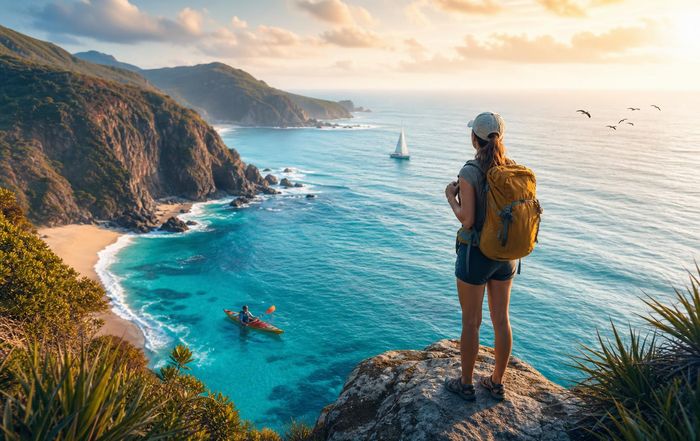
Adventure Travel Ideas for Coastal Explorers
Coastal Exploration in a Changing World Waiting to Welcome You!
Coastal adventure travel has evolved from a niche pursuit into a defining expression of how modern professionals seek balance, meaning, and performance in their lives, and nowhere is this shift more visible than in the editorial focus of xdzee.com, where sports, adventure, travel, lifestyle, culture, and business intersect along the world's shorelines. As climate pressures, digital transformation, and changing work patterns reshape how people move and experience the planet, coastlines from the United States and Europe to Asia, Africa, and South America have become living laboratories for new forms of exploration that combine physical challenge, environmental responsibility, and cultural depth.
Coastal explorers in 2026 are not simply chasing postcard beaches; they are looking for destinations and experiences that test endurance, respect local communities, and align with the rising expectations around safety, ethics, and sustainability. Organizations such as UNEP and UNESCO continue to highlight the importance of oceans and coastal ecosystems, and travelers increasingly seek to align their adventures with these global priorities, whether they are learning about marine conservation initiatives through resources like the United Nations Environment Programme or exploring responsible tourism guidance from the UN World Tourism Organization. For xdzee.com, this moment represents an opportunity to guide readers toward coastal adventures that are not only exhilarating, but also grounded in expertise, trust, and a long-term view of the world's shorelines.
The New Coastal Mindset: Performance, Safety, and Ethics
The modern coastal explorer approaches travel with a mindset shaped by performance metrics, risk management, and an ethical framework that would once have seemed more at home in corporate boardrooms than on remote beaches. From the rugged coasts of Norway and Scotland to the subtropical shores of Thailand and Brazil, travelers are now applying the same analytical rigor they bring to business decisions when planning multi-day sea kayaking expeditions, long-distance coastal treks, or open-water swims. This shift has been reinforced by data-rich resources such as the World Bank's ocean economy insights and the OECD's work on the ocean economy, which underscore both the opportunities and the vulnerabilities that define coastal regions in the twenty-first century.
At the same time, safety has become a central pillar of adventure planning, not as a constraint on excitement but as an enabler of more ambitious goals. Coastal explorers now routinely consult professional-grade weather and ocean condition platforms such as NOAA in the United States or Met Office in the United Kingdom before committing to open-water crossings, cliffside hikes, or surf expeditions. For readers navigating the diverse content of xdzee.com, this emphasis on safety aligns naturally with dedicated coverage areas such as performance and safety, which help frame adventure not as a reckless pursuit but as a disciplined practice informed by expertise and continuous learning.
Ethics are no longer a footnote in this equation. Travelers concerned with their impact on coastal communities and ecosystems increasingly turn to organizations like WWF and IUCN to better understand marine protected areas, endangered species, and best practices for responsible wildlife encounters, often starting with accessible overviews from the World Wildlife Fund or the International Union for Conservation of Nature. For a platform like xdzee.com, which maintains a focus on ethics alongside adventure and innovation, these considerations are central to how coastal experiences are curated and presented to a global audience.
Global Hotspots for Coastal Adventure
Around the world, specific coastal regions have emerged as standout destinations for explorers seeking a blend of physical challenge, cultural immersion, and environmental significance. In North America, the Pacific Northwest coastline of the United States and Canada has become a favorite among sea kayakers and hikers who combine multi-day paddling routes with coastal trail segments, moving between wild beaches, temperate rainforests, and small coastal communities that are increasingly engaged in sustainable tourism practices. Resources such as Parks Canada and the U.S. National Park Service offer detailed guidance on marine parks, intertidal zones, and backcountry coastal routes, helping travelers plan responsibly while respecting local regulations and indigenous stewardship.
Across Europe, the rugged coasts of Norway, Scotland, Ireland, and the Mediterranean continue to attract explorers from Germany, France, Italy, Spain, the Netherlands, Switzerland, and beyond. Long-distance coastal trails in the United Kingdom, for instance, have been transformed by improved infrastructure and digital mapping tools, enabling hikers to plan multi-week journeys that combine cliff walks, historic ports, and encounters with coastal wildlife. Information from organizations such as VisitBritain and the European Commission's environment pages helps ensure that these experiences are aligned with conservation goals and regional sustainability standards, reinforcing the sense that adventure and environmental responsibility must advance together.
In the Asia-Pacific region, coastal adventure is increasingly defined by diversity. Japan's island-dotted coastlines, South Korea's peninsulas, Thailand's limestone karst formations, and New Zealand's remote bays offer distinct experiences that range from technical sea kayaking to cultural homestays in fishing villages adapting to changing marine conditions. Travelers often begin their research with national tourism portals and then deepen their understanding through global knowledge hubs such as UNESCO's Ocean Decade resources, which highlight scientific and community-based initiatives designed to protect coastal and marine environments. For readers of xdzee.com, which covers world and travel stories with an eye to regional nuance, this global diversity is an invitation to explore coastlines not just as scenic backdrops, but as complex social and ecological systems.
Adventure on the Water: Sea Kayaking, Sailing, and Surf Expeditions
Among coastal explorers, water-based adventures remain a central attraction, with sea kayaking, sailing, and surf expeditions offering different combinations of endurance, technique, and environmental immersion. Sea kayaking has grown particularly popular among professionals from the United States, United Kingdom, Germany, Canada, and Australia who value its blend of physical challenge and meditative rhythm, allowing them to navigate fjords, archipelagos, and estuaries at a human scale. International training standards from organizations like the British Canoeing and the American Canoe Association have helped raise safety and skills awareness globally, while digital navigation tools and satellite communication devices have made multi-day journeys more accessible to well-prepared amateurs.
Sailing, whether through structured flotilla experiences in the Mediterranean or expedition-style voyages in regions like Scandinavia and the South Pacific, appeals to travelers interested in both technical mastery and collaborative problem-solving. Many coastal explorers now combine sailing with scientific or conservation objectives, partnering with citizen science platforms and marine research initiatives that invite volunteers to collect data on water quality, marine life, and plastic pollution. Resources such as the Ocean Conservancy provide accessible frameworks for understanding and contributing to these efforts, aligning adventure with a broader sense of purpose that resonates strongly with the business-oriented readership of xdzee.com.
Surf expeditions, meanwhile, have expanded far beyond traditional hotspots, as improved forecasting, remote work, and more flexible careers enable enthusiasts from Europe, Asia, and the Americas to pursue seasonal "wave migrations" that follow optimal swell patterns. Professional surfers and performance coaches increasingly share training methodologies grounded in sports science and analytics, often drawing on research from institutions like the Australian Institute of Sport and sports medicine organizations worldwide. This scientific approach to performance echoes the broader emphasis on measurable outcomes and continuous improvement that characterizes both elite sport and high-level business practice, themes that are consistently explored in the sports and performance content on xdzee.com.
Land-Based Coastal Adventures: Trekking, Climbing, and Multi-Sport Journeys
While the sea itself is a powerful draw, many coastal explorers in 2026 are equally captivated by the land-based adventures that unfold along shorelines, where cliffs, dunes, forests, and cultural landscapes converge. Long-distance coastal trekking routes in countries such as Spain, Portugal, Italy, and France offer a compelling blend of physical exertion and cultural immersion, as travelers move between traditional villages, historic lighthouses, and contemporary coastal cities that are reimagining their relationship with the sea in light of climate change and economic transition. Planning tools and mapping resources from organizations like AllTrails or national hiking federations help adventurers assess elevation profiles, trail conditions, and seasonal weather patterns, enabling them to craft itineraries that match their fitness and risk tolerance.
Coastal climbing, including sea cliff climbing and deep-water soloing, has also gained prominence, particularly in regions like the Mediterranean, Southeast Asia, and parts of North America. Here, safety and technical expertise are paramount, and climbers often rely on local guides and training centers that adhere to international standards promoted by bodies such as the International Climbing and Mountaineering Federation (UIAA). By combining climbing with kayaking or coastal hiking, many explorers create multi-sport journeys that test a range of skills and foster a more holistic connection to the coastal environment. This multi-disciplinary approach mirrors broader trends in high-performance culture, where cross-training, adaptability, and resilience are valued in both athletic and professional contexts.
For readers of xdzee.com, where adventure and destination coverage is framed through the lens of lifestyle, culture, and performance, these land-based experiences offer a compelling complement to water-focused adventures. They also highlight the importance of understanding local regulations, land access rights, and cultural sensitivities, particularly in regions where indigenous communities have longstanding ties to coastal landscapes and may play a central role in shaping responsible tourism practices.
Innovation and Technology at the Coastline
Innovation has become an integral part of coastal adventure travel, reshaping how explorers plan, navigate, and document their journeys. Advanced weather modeling, satellite imagery, and coastal hazard mapping enable travelers to make more informed decisions about when and where to go, while wearable technology provides real-time data on heart rate, exertion, and recovery that can guide training and on-trip decision-making. Companies in the outdoor and technology sectors, including major brands in North America, Europe, and Asia, are investing heavily in gear designed specifically for coastal conditions, from salt-resistant electronics to technical apparel optimized for rapid transitions between water and land.
Digital platforms now allow coastal explorers to access localized safety information, tide charts, and marine traffic data, often integrating feeds from authoritative sources like NOAA's marine forecasts or the European Maritime Safety Agency. At the same time, virtual reality and augmented reality tools are beginning to play a role in pre-trip planning and skills training, allowing adventurers to simulate complex scenarios such as surf landings, navigation in fog, or emergency responses before they ever reach the shoreline. These developments align closely with the innovation and business coverage on xdzee.com, where coastal adventure is increasingly discussed not only as a leisure pursuit but also as a driver of product development, service design, and new business models in the global outdoor economy.
However, the integration of technology into coastal exploration also raises questions about data privacy, digital dependency, and the potential erosion of traditional skills such as map reading, celestial navigation, and local knowledge. Thought leaders in both adventure and technology circles have begun to argue for a balanced approach that leverages innovation to enhance safety and access while preserving the core experiential and human dimensions of exploration. For a platform committed to trustworthiness and ethical reflection, these debates offer fertile ground for ongoing analysis and commentary that connect coastal adventure to broader societal questions about how humans engage with technology and the natural world.
Sustainability, Culture, and the Future of Coastal Destinations
As sea levels rise and coastal communities face increasing pressure from climate change, overtourism, and economic volatility, the future of adventure travel along the world's shorelines depends on a more integrated approach to sustainability that considers environmental, social, and economic dimensions together. Reports from bodies such as the Intergovernmental Panel on Climate Change (IPCC) and the Intergovernmental Panel on Climate Change have made it clear that many beloved coastal destinations are entering a period of profound transformation, with implications for infrastructure, ecosystems, and local livelihoods. In this context, coastal explorers are being challenged to think of themselves not only as visitors, but as stakeholders in the long-term resilience of the places they love.
Cultural engagement is central to this more holistic vision of coastal adventure. Travelers are increasingly seeking experiences that allow them to learn from local communities, understand traditional maritime practices, and support businesses that prioritize fair employment, cultural preservation, and environmental stewardship. Platforms such as the Global Sustainable Tourism Council provide frameworks for identifying and supporting responsible operators, while initiatives in countries from South Africa and Brazil to Norway and Japan demonstrate how community-led tourism can create meaningful, high-quality experiences that distribute benefits more equitably. For xdzee.com, which explores culture, brands, and lifestyle alongside news and analysis, these developments highlight the importance of storytelling that foregrounds local voices and long-term perspectives.
In parallel, businesses across the outdoor, hospitality, and transportation sectors are investing in lower-impact technologies and practices, from electric boat propulsion and sustainable marine fuels to circular economy approaches for gear manufacturing and waste reduction. Readers interested in how these shifts intersect with corporate strategy and career opportunities can explore resources such as the World Economic Forum's ocean initiatives or learn more about sustainable business practices through leading management insights from platforms like the Harvard Business Review. As coastal adventure continues to grow, the alignment between environmental responsibility, brand reputation, and long-term profitability is likely to become even more pronounced, creating new expectations and opportunities for professionals who wish to integrate their passion for the coast with their career trajectories.
Careers, Skills, and the Professionalization of Coastal Adventure
The professional landscape around coastal adventure has expanded significantly by 2026, creating new roles and career paths in guiding, conservation, research, product design, media, and destination management. Universities and training institutions in countries such as the United States, United Kingdom, Canada, Australia, and New Zealand now offer specialized programs in outdoor leadership, marine conservation, and sustainable tourism, often in partnership with coastal communities and private-sector partners. Job seekers interested in aligning their work with their passion for coastal exploration can monitor emerging opportunities through dedicated career platforms and through the jobs coverage on xdzee.com, where trends in outdoor employment, remote work, and cross-border mobility are closely tracked.
At the same time, the skills required to operate safely and responsibly in coastal environments are being codified and standardized across borders, with professional certifications for guides, instructors, and operators becoming increasingly important. Organizations such as PADI in the diving sector, RYA in sailing, and national mountain and guide associations are collaborating to ensure that training reflects not only technical competence, but also strong ethical and environmental foundations. For business leaders and entrepreneurs, this professionalization of coastal adventure presents both challenges and opportunities, as customer expectations rise and regulatory frameworks evolve to address safety, liability, and environmental impact.
Media platforms like xdzee.com play a critical role in this ecosystem by providing authoritative, experience-based insights that help readers navigate the complex intersections of adventure, safety, innovation, ethics, and employment. By highlighting best practices, showcasing exemplary organizations, and critically examining emerging trends, such platforms contribute to a culture of informed exploration that benefits both travelers and the coastal communities that host them.
How We Connects Coastal Sport Adventure Explorers to a Global Conversation
As coastal adventure travel continues to shift, xdzee.com occupies a distinctive position at the intersection of sports, travel, business, lifestyle, and global affairs, offering readers a curated, trustworthy lens on how shorelines are shaping and being shaped by contemporary life. Through its coverage of news, world developments, and sector-specific insights into innovation, ethics, and performance, the platform connects individual experiences on beaches, cliffs, and bays to broader patterns in geopolitics, climate policy, economic transformation, and cultural change.
For coastal explorers from the United States and Europe to Asia, Africa, and South America, this integrated perspective is increasingly valuable. It enables them to see their personal adventures not as isolated escapes, but as part of a global conversation about how humans inhabit and care for the planet's most dynamic and vulnerable regions. Whether readers are planning a sea kayaking expedition in Scandinavia, a surf and culture journey in South Africa, a sailing and culinary tour in the Mediterranean, or a multi-sport exploration of the Pacific coasts of North and South America, they can turn to xdzee.com and its travel, adventure, and lifestyle coverage as a trusted companion in designing experiences that are challenging, enriching, and responsible.
In the years ahead, the demand for thoughtful, experience-driven, and authoritative guidance on coastal exploration will only grow, as more people seek to align their pursuit of adventure with their professional ambitions, ethical values, and concern for the future of the world's oceans and shorelines. By continuing to invest in expertise, rigorous analysis, and a global outlook, xdzee.com is well positioned to remain a leading voice in this evolving landscape, helping coastal explorers navigate not only the physical contours of the world's coasts, but also the complex currents of change that define adventure travel in 2026 and beyond.