

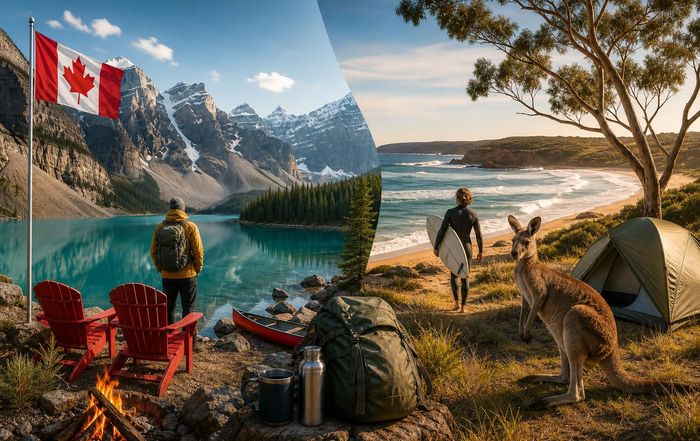
Outdoor Lifestyle Trends in Canada and Australia
The New Global Geography of the Outdoors
Outdoor lifestyles in Canada and Australia have moved from niche passions to exciting central pillars of how people in both countries define wellbeing, identity, and community, and this transformation is increasingly visible in the data that global brands, policymakers, and investors follow to understand where culture and commerce are heading. In an era when work is more flexible, climate impacts are more visible, and digital technology has blurred the boundaries between physical and virtual experience, the way Canadians and Australians hike, camp, surf, ski, and travel outdoors has become a lens through which broader economic, social, and ethical shifts can be read, and it is precisely this intersection of lived experience and strategic insight that xdzee.com is positioning itself to interpret for a worldwide audience.
The outdoor economies of both nations now sit at the crossroads of tourism, sports, sustainability, and advanced manufacturing, with governments and companies tracking participation rates, gear innovation cycles, and destination competitiveness through sources such as Statistics Canada and the Australian Bureau of Statistics, while international organizations like the OECD and the World Economic Forum frame these trends within broader debates about green growth, inclusive jobs, and resilient communities. For readers across North America, Europe, and Asia who follow outdoor sports, adventure travel, performance gear, and ethical brands, xdzee.com is increasingly curating this awesome emerging landscape, connecting local stories from Vancouver, Whistler, Banff, Melbourne, Sydney, and Tasmania to global movements in sustainability, innovation, and lifestyle design.
Canada: From Wilderness Myth to Everyday Outdoor Culture
Canada's longstanding mythos as a land of lakes, forests, and mountains has in 2026 evolved into a more practical and inclusive outdoor culture, visible not only in iconic destinations like Banff and Jasper but also in urban waterfronts, suburban trail networks, and community sport programs that make the outdoors part of daily life for a diverse population. Data from Parks Canada show that national park visitation has rebounded strongly from the disruptions of the early 2020s, with a noticeable shift toward shoulder-season and winter activities as Canadians embrace four-season outdoor living, from backcountry skiing and snowshoeing to fat biking and winter camping.
At the same time, the influence of Indigenous leadership and knowledge on Canadian outdoor practices has become more prominent, with many provincial and local initiatives incorporating Indigenous stewardship principles, co-management of protected areas, and cultural tourism experiences that emphasize respect for land, water, and wildlife. Readers who follow the evolving relationship between culture and landscape can explore more of these narratives through the perspectives curated by xdzee.com in its focus on culture and identity in outdoor spaces, where Canadian examples of reconciliation and shared guardianship are increasingly relevant to global debates.
Urban outdoor culture has also matured significantly, with cities like Vancouver, Calgary, Toronto, and Montréal investing in waterfront parks, multi-use paths, and active transport infrastructure that support running, cycling, paddle sports, and outdoor fitness as integral components of public health strategies. Organizations such as the World Health Organization have long documented the mental and physical benefits of green space and active lifestyles, and Canadian municipal leaders have responded by framing outdoor recreation not merely as leisure but as preventative healthcare and social cohesion, a framing that aligns closely with the lifestyle and wellness themes xdzee.com explores in its lifestyle coverage.
Australia: Coastal Nation, Outdoor Laboratory
Australia's outdoor identity in 2026 remains anchored in its coasts and oceans, yet it has broadened into a more diverse and technologically sophisticated culture that extends from the Great Barrier Reef to the deserts of the Red Centre and the forests of Tasmania. Surfing, open-water swimming, sailing, and coastal trail running continue to define the lifestyles of many Australians, but there is a parallel surge in inland adventure tourism, with regions like the Blue Mountains, Grampians, and Flinders Ranges developing new experiences that blend hiking, climbing, cultural interpretation, and conservation-focused tourism. The Australian Trade and Investment Commission has highlighted outdoor tourism as a strategic export sector, particularly as international visitors from Europe, North America, and Asia seek longer, more immersive trips that combine sport, nature, and local culture.
Climate and environmental pressures have, however, forced a more reflective and adaptive approach to outdoor life in Australia, as bushfires, coral bleaching, and heatwaves reshape how and when people engage with nature. Agencies like the Bureau of Meteorology and the Commonwealth Scientific and Industrial Research Organisation (CSIRO) provide increasingly granular data on weather and climate risks, which outdoor event organizers, tour operators, and gear manufacturers now integrate into their planning and product design. For global readers interested in how outdoor lifestyles intersect with risk management and safety, xdzee.com's emphasis on safety and performance offers a window into how Australian innovators are responding to more volatile conditions with better forecasting, equipment standards, and emergency protocols.
The Australian outdoor scene has also become a testbed for hybrid physical-digital experiences, with trail apps, surf forecasting platforms, and connected fitness devices creating new communities and data streams that brands and destinations can analyze to refine products and services. This fusion of adventure, technology, and community is increasingly central to xdzee.com's coverage of innovation in outdoor sports and travel, where Australian case studies illustrate how digital tools can enhance, rather than replace, authentic engagement with natural environments.
Adventure Sports and Performance: A Shared Obsession
Both Canada and Australia have, by 2026, embraced adventure sports not just as recreational activities but as performance disciplines that shape national identities and global reputations, with athletes, brands, and destinations collaborating to push boundaries in skiing, snowboarding, mountain biking, trail running, surfing, kitesurfing, and climbing. In Canada, resorts like Whistler Blackcomb, Revelstoke, and Mont-Tremblant have evolved into year-round performance hubs, attracting elite athletes, coaches, and gear developers who test equipment and training methodologies under demanding conditions, while organizations such as Own the Podium and Canadian Olympic Committee continue to invest in high-performance pathways that connect grassroots participation to international competition.
Australia, for its part, has consolidated its status as a powerhouse in surfing, open-water sports, and endurance events, with the Australian Institute of Sport and national federations working closely with universities and private labs to optimize training, recovery, and injury prevention for athletes who compete in some of the world's most challenging ocean and coastal conditions. This performance culture has commercial spillovers, as consumers across Europe, North America, and Asia increasingly seek gear and apparel that reflect the standards and aesthetics of Canadian and Australian professionals, a trend that xdzee.com tracks closely in its performance-focused reporting on equipment, training, and elite events.
The intersection of sports science, data analytics, and outdoor experience is also visible in the way both countries approach youth development and community participation, with sport academies, local clubs, and schools integrating GPS tracking, heart-rate monitoring, and movement analysis into their programs. Research from institutions like the Canadian Sport Institute and University of Sydney underscores that outdoor sports, when supported by evidence-based coaching and safety standards, can improve not only physical performance but also resilience, teamwork, and mental health, themes that resonate strongly with xdzee.com readers who see sport as a foundation for broader life and career skills.
Travel, Destination Branding, and the New Outdoor Tourist
Outdoor lifestyle trends in Canada and Australia cannot be separated from the evolution of global travel and destination branding, particularly as international tourists from the United States, United Kingdom, Germany, France, China, Japan, and other markets prioritize experiences that combine nature, culture, and sustainability. Organizations like the UN World Tourism Organization have documented the rise of adventure and nature-based tourism worldwide, and both countries have responded by refining their destination narratives to emphasize authenticity, safety, and environmental stewardship over mass tourism and volume-based metrics.
Canadian provinces such as British Columbia, Alberta, Quebec, and Newfoundland and Labrador now position themselves as distinct outdoor ecosystems, each with curated itineraries that blend hiking, paddling, wildlife viewing, and cultural immersion, while national and regional organizations work to disperse visitors beyond iconic hotspots to reduce pressure on fragile environments. For travelers planning multi-activity trips, platforms like xdzee.com offer integrated perspectives on travel itineraries and destinations, connecting the appeal of Canadian wilderness with practical considerations around seasonality, accessibility, and local community impact.
In Australia, state tourism bodies and destination marketers have embraced storytelling that foregrounds Indigenous heritage, marine conservation, and regenerative tourism, particularly in regions like Queensland, Western Australia, and Tasmania where ecosystems are both unique and vulnerable. Reports from the Great Barrier Reef Marine Park Authority and conservation organizations such as the World Wide Fund for Nature highlight the need to balance visitor experiences with strict environmental protections, and outdoor travelers are increasingly willing to pay premiums for trips that are demonstrably low-impact and community-benefiting. This shift aligns with the expectations of xdzee.com's global audience, who follow travel and world news to identify destinations that reflect their values as much as their aesthetic preferences.
Brands, Sustainability, and Ethical Outdoor Economies
The outdoor lifestyle boom in Canada and Australia has reshaped not only how people spend their time but also how they spend their money, with outdoor apparel, equipment, and experience brands competing on sustainability, ethics, and transparency as much as on design and performance. Internationally recognized companies such as Patagonia, Arc'teryx, Lululemon, and Rip Curl, alongside a growing ecosystem of niche Canadian and Australian labels, have adopted more rigorous standards for materials, supply chains, and circularity, often informed by frameworks from organizations like the Ellen MacArthur Foundation and multi-stakeholder initiatives highlighted by the United Nations Environment Programme.
In Canada, the influence of outdoor brands headquartered in British Columbia and Quebec is particularly notable, as they not only outfit local communities but also shape global perceptions of technical performance and mountain culture, while in Australia, surf and coastal lifestyle brands have evolved from youth-oriented fashion houses into more mature companies that invest in reef protection, beach cleanups, and community education. For readers tracking the convergence of brand strategy, sustainability, and lifestyle, xdzee.com's coverage of brands and business and broader business trends offers analysis of how Canadian and Australian companies are differentiating themselves in crowded global markets.
Ethical concerns now extend beyond environmental impact to include labor practices, Indigenous partnerships, and truthful marketing, with consumers and watchdogs scrutinizing claims of "eco-friendly" or "carbon neutral" through independent sources such as Consumer Reports and certifications like B Corp. This heightened attention to ethics is reflected in xdzee.com's own editorial priorities, especially in its dedicated focus on ethics in sport, travel, and lifestyle, where Canadian and Australian case studies often illustrate both best practices and ongoing challenges in aligning outdoor enjoyment with responsible business conduct.
Safety, Risk, and the Professionalization of Adventure
As outdoor activities in Canada and Australia become more diverse and technically demanding, safety has emerged as a central concern for participants, regulators, and insurers, leading to a gradual professionalization of guiding, instruction, and risk management across both countries. Mountain rescue organizations, surf lifesaving clubs, avalanche centers, and backcountry associations have all reported higher participation and training demand, while also confronting more complex risk profiles driven by climate variability, increased visitor numbers, and the influence of social media on decision-making in remote environments. In Canada, the work of organizations such as Avalanche Canada and provincial search and rescue bodies has expanded into education campaigns that target both domestic and international visitors, emphasizing route planning, equipment standards, and real-time condition monitoring.
Australia faces its own particular safety challenges in coastal and marine environments, where surf conditions, rips, marine life, and heat stress require specialized knowledge and infrastructure, and entities like Surf Life Saving Australia have become critical partners for tourism authorities, event organizers, and local governments. For business and policy audiences, the professionalization of safety frameworks has implications for liability, training standards, and insurance, all of which are increasingly relevant to xdzee.com readers who follow safety, regulation, and performance as integral components of the outdoor economy.
The integration of digital tools into safety protocols has also accelerated, with satellite communication devices, GPS trackers, and smartphone apps providing new layers of redundancy and situational awareness, and with emergency services and outdoor platforms leveraging data to identify hotspots and educate users. Research from the International Federation of Red Cross and Red Crescent Societies underscores that technology alone is insufficient without training and local knowledge, and Canadian and Australian communities are responding by pairing digital innovation with traditional skills, mentorship, and community-based education programs.
Jobs, Skills, and the Outdoor Workforce of the Future
The expansion of outdoor lifestyles in Canada and Australia has created a more complex and diverse labor market that spans tourism, hospitality, guiding, coaching, gear design, retail, conservation, media, and digital services, offering new career pathways for young people and mid-career professionals who wish to align their work with their passion for nature and movement. Government labor market analyses from Employment and Social Development Canada and Australian Government Jobs and Skills Australia have identified outdoor-related roles as growth areas, particularly in regional communities seeking to diversify their economies beyond resource extraction and traditional manufacturing.
This shift has implications for education and training systems, as colleges, universities, and specialized academies in both countries expand programs in outdoor leadership, adventure tourism management, environmental science, product design, sports science, and digital media, often in partnership with industry and community organizations. For readers exploring career transitions or new opportunities connected to outdoor lifestyles, xdzee.com increasingly highlights these developments in its jobs and careers coverage, connecting Canadian and Australian examples to broader global trends in purpose-driven work and skills for a green and experience-based economy.
The outdoor workforce is also at the forefront of debates about fair work, seasonality, and resilience, as many roles remain subject to fluctuating demand, weather dependence, and regional cost-of-living pressures, requiring innovative models of employment, housing, and social protection. Organizations such as the International Labour Organization emphasize the importance of decent work standards in tourism and recreation, and both Canada and Australia are experimenting with policies and partnerships that seek to stabilize and professionalize outdoor employment, making it a more viable long-term career choice rather than a short-term passion project.
Culture, Identity, and the Meaning of the Outdoors
Beyond economics and policy, outdoor lifestyle trends in Canada and Australia are reshaping how people in both countries think about identity, belonging, and community, and these cultural dimensions resonate powerfully with international audiences who see the outdoors as a shared global language. In Canada, the interplay between multicultural urban populations, Indigenous nations, and long-established rural communities has produced a more pluralistic understanding of who the outdoors is for and how it should be used, with initiatives aimed at reducing barriers related to cost, transportation, cultural familiarity, and representation. Cultural organizations, community groups, and influencers work together to ensure that newcomers to Canada, as well as historically marginalized groups, can access parks, trails, and outdoor sports in ways that feel safe, welcoming, and relevant to their own traditions.
Australia is undergoing a parallel cultural evolution, as national conversations about reconciliation, land rights, and historical memory intersect with the practical realities of who participates in surfing, hiking, camping, and coastal leisure, and how those activities intersect with sacred sites and traditional custodianship. Cultural institutions and media outlets, including public broadcasters and independent platforms, have increasingly highlighted Indigenous voices and perspectives on land and sea, helping both domestic and international audiences understand that outdoor experiences in Australia are inseparable from deep, millennia-long relationships between people and place. For readers looking to understand these complex cultural dynamics, xdzee.com's exploration of culture, lifestyle, and identity offers narratives that situate outdoor trends within broader questions of history, equity, and shared futures.
Both countries are also exporting their outdoor cultures through media, film, photography, and digital storytelling, with Canadian mountain films, Australian surf documentaries, and social media creators reaching audiences across Europe, Asia, Africa, and the Americas, inspiring new forms of adventure and travel. Platforms like YouTube and Instagram have become powerful amplifiers of these visual narratives, yet discerning audiences increasingly turn to curated sources such as xdzee.com for context, analysis, and ethical framing that go beyond aspirational imagery to address the responsibilities that come with outdoor privilege.
Where We Want to Be in a Healthy and Connected Outdoor Future
As outdoor lifestyles in Canada and Australia continue to evolve in response to environmental, technological, and cultural forces, xdzee.com is positioning itself as a trusted guide for global readers who seek more than surface-level inspiration, offering instead a synthesis of experience, expertise, authoritativeness, and trustworthiness across sports, adventure, travel, brands, lifestyle, culture, destinations, news, performance, safety, innovation, ethics, business, and jobs. By drawing on data from respected organizations, insights from practitioners and communities, and on-the-ground reporting from key regions, the platform connects the specificities of Canadian wilderness and Australian coasts to universal questions about how people worldwide can live more active, meaningful, and responsible lives outdoors.
For businesses and policymakers, xdzee.com provides a window into emerging markets and expectations, highlighting how consumers in Europe, North America, Asia, and beyond are reshaping demand for outdoor products and experiences that reflect higher standards of sustainability, safety, and cultural sensitivity. For individuals, whether they are planning a backcountry ski trip in British Columbia, a surf and hike journey along the New South Wales coast, or a career move into the outdoor sector, the site's integrated coverage across sports, adventure, travel, world developments, and core business dynamics offers both inspiration and practical guidance.
As Canada and Australia continue to serve as laboratories for outdoor innovation and culture in the years ahead, the stories that emerge from their mountains, forests, deserts, and coasts will carry lessons for cities and communities around the world, from the United States and United Kingdom to Germany, Japan, Brazil, South Africa, and beyond. In curating and interpreting these stories, xdzee.com is not merely documenting trends; it is helping shape a global conversation about how humanity can reconnect with nature in ways that are adventurous yet safe, ambitious yet ethical, and ultimately sustainable for both people and planet. Go outdoors and have some adventurous fun! Take care in your sports activities and look forward to welcoming you back here tomorrow.