

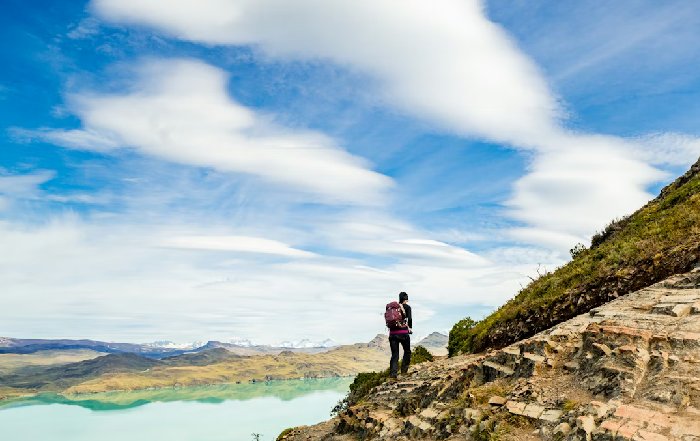
Patagonian Peaks and Luxury Retreats: Adventure Without the Tent
Redefining Adventure Travel for a High-Performance World
Adventure travel has matured into a sophisticated global industry that serves executives, entrepreneurs, high-performing professionals, and affluent families who seek intense, authentic experiences without sacrificing safety, comfort, or productivity. Nowhere is this evolution more visible than in Patagonia, a vast region spanning southern Chile and Argentina, where jagged granite spires rise above turquoise lakes and windswept steppe, and where luxury lodges and curated expeditions have transformed the notion of "roughing it" into something far more strategic and intentional. For the audience of xdzee.com, whose interests span sports, adventure, travel, business, performance, safety, and culture, Patagonia has become a benchmark case study in how destinations can align high-end hospitality with environmental responsibility and human performance.
The global adventure tourism market, according to data from organizations such as the World Travel & Tourism Council and UN Tourism, has increasingly shifted away from mass, low-cost experiences toward highly personalized, small-group journeys that combine physical challenge with mental restoration. Executives from the United States, United Kingdom, Germany, Canada, Australia, and across Europe and Asia now look to Patagonian itineraries that deliver demanding day hikes, glacier traverses, or kayaking expeditions, followed by evenings in architect-designed lodges where wellness, nutrition, and digital connectivity are carefully curated to support performance rather than undermine it. In this context, luxury is no longer defined solely by marble bathrooms or wine lists; it is defined by expertise, safety, environmental ethics, and the capacity to deliver transformative experiences without unnecessary friction.
For xdzee.com, which tracks global trends in travel, adventure, business, and performance, Patagonia's evolution is particularly significant because it illustrates how destinations can move up the value chain, attracting discerning travelers from North America, Europe, and Asia-Pacific who are willing to invest in depth, quality, and responsible impact rather than volume and speed.
Patagonia's Geographies of Challenge and Comfort
Patagonia is a region of extremes: wind-scoured plains in Argentina's Santa Cruz and Chubut provinces; the soaring towers and glacial lakes of Chile's Torres del Paine National Park; the fjords and islands of the Aysén and Magallanes regions; and the Andean corridor that links iconic hubs such as El Calafate, El Chaltén, Bariloche, and Ushuaia. Its landscapes have long attracted mountaineers and expedition teams, yet the infrastructure historically favored self-sufficient travelers comfortable with tents, shared refugios, and unpredictable logistics. Over the past decade, however, a new generation of operators and investors has turned Patagonia into a laboratory for high-end, low-density tourism.
Luxury lodges and eco-retreats, inspired partly by the sustainable design principles promoted by organizations such as the International Living Future Institute and the regenerative tourism frameworks discussed by Conservation International, now offer a level of comfort that appeals to senior leaders and global professionals. These properties, many of which integrate local materials, renewable energy, and advanced water treatment systems, are designed to blend into the landscape while still providing heated floors, private hot tubs, and curated tasting menus built around Patagonian lamb, king crab, and regional wines. Guests can spend the day trekking beneath the Torres del Paine massif or exploring the Perito Moreno Glacier, and then return to a setting that supports recovery, reflection, and strategic thinking.
This integration of challenge and comfort is particularly relevant to xdzee.com's audience in sectors such as finance, technology, sports, and high-growth entrepreneurship, where time is scarce and the opportunity cost of a poorly planned trip is substantial. A Patagonian itinerary that combines demanding physical activity with structured downtime in a luxury setting can function as an offsite leadership retreat, a high-performance reset, or even an innovation lab, especially when paired with guided conversations around sustainability, local culture, and long-term risk.
Adventure Without the Tent: The New Definition of Luxury
Traditional luxury tourism often centered on passive consumption: lounging by pools, visiting iconic landmarks in chauffeured vehicles, and indulging in spa treatments disconnected from place. Patagonia's high-end retreats invert that model by positioning physical engagement with the landscape as the central value proposition, while ensuring that guests are not required to compromise on sleep quality, nutrition, or safety. This shift aligns with broader trends in wellness and performance documented by organizations such as the Global Wellness Institute and the Harvard T.H. Chan School of Public Health, which emphasize the interplay between movement, recovery, and cognitive function.
In practice, "adventure without the tent" often means guided hikes along the W Circuit in Torres del Paine, glacier trekking on the Southern Patagonian Ice Field, or multi-day horseback journeys across estancias, with guests returning each night to a base that provides hot showers, fine dining, and stable high-speed connectivity. For executives from Singapore, Japan, South Korea, and China, as well as from France, Italy, Spain, the Netherlands, and Switzerland, this model reduces the friction and uncertainty historically associated with remote travel, while still delivering the sense of accomplishment and perspective that comes from being in one of the world's wildest regions.
The key distinction is that luxury in Patagonia is increasingly anchored in expertise and trustworthiness rather than conspicuous consumption. Properties that invest in experienced mountain guides, avalanche training, medical readiness, and robust environmental management systems are more likely to attract discerning travelers who evaluate destinations through the lens of risk management and long-term value. For xdzee.com's readers who prioritize safety and ethics alongside comfort, this is a powerful realignment of incentives.
Safety, Risk Management, and Professionalism in Remote Environments
Patagonia's remoteness is part of its appeal, but it also raises questions of safety, logistics, and risk management that are non-negotiable for corporate leaders, families, and high-profile individuals. Weather systems can change rapidly; winds can reach extreme speeds; and medical facilities may be hours away. In response, the region's leading luxury operators have professionalized their safety protocols, drawing on best practices from organizations such as the International Federation of Mountain Guides Associations and wilderness medicine frameworks promoted by the Wilderness Medical Society.
This professionalization includes detailed pre-trip briefings, mandatory equipment checks, GPS tracking, satellite communication devices, and carefully designed evacuation plans. Many lodges now work closely with local authorities and private medical providers to ensure that response times are minimized and that guests understand the risks and responsibilities associated with each activity. For travelers from Norway, Sweden, Finland, and Denmark, where outdoor culture is deeply embedded but safety standards are high, this combination of adventure and rigor is particularly attractive.
For business audiences, the risk management strategies applied in Patagonian expeditions offer useful analogies to corporate governance and operational resilience. Leaders who are accustomed to stress-testing supply chains and cybersecurity protocols quickly recognize the value of redundancy, scenario planning, and expert guidance in the backcountry. In this sense, a carefully planned Patagonian journey can function as a live case study in applied risk management, reinforcing skills and mindsets that are directly transferable to boardrooms and investment committees.
Sustainability, Ethics, and the Business Case for Regenerative Travel
As climate change accelerates and public scrutiny of corporate travel intensifies, the ethical dimensions of long-haul tourism have become impossible to ignore. Patagonia, with its retreating glaciers, sensitive ecosystems, and sparse human population, sits at the frontlines of these debates. Responsible operators in the region increasingly align their practices with the sustainability frameworks articulated by bodies such as the Intergovernmental Panel on Climate Change and the World Wildlife Fund, adopting measures that range from renewable energy and water conservation to strict waste management and habitat restoration.
From a business perspective, this shift is not merely a branding exercise; it is a strategic response to evolving expectations among investors, regulators, and consumers. Executives tracking trends in environmental, social, and governance (ESG) performance through resources like the OECD and World Economic Forum recognize that high-end travel products which prioritize regenerative outcomes-such as reforestation, wildlife conservation, and local economic empowerment-are better positioned to withstand reputational and regulatory shocks. Patagonia's leading luxury retreats increasingly integrate carbon accounting, community partnerships, and transparent reporting into their operations, making them credible partners for corporations committed to responsible travel policies.
For xdzee.com, whose coverage of world and news topics often intersects with climate, ethics, and global risk, Patagonia provides a compelling narrative of how destinations can future-proof their tourism economies while delivering high-value experiences. Travelers from South Africa, Brazil, Malaysia, and New Zealand, as well as from more established markets, can use their purchasing power to support operators who treat sustainability as a core business discipline rather than a peripheral marketing claim.
Local Communities, Culture, and the Human Dimension of Luxury
While Patagonia's landscapes often dominate marketing imagery, the region's long-term success depends equally on its people: the gauchos who manage estancias, the guides who interpret geology and wildlife, the chefs who reinterpret traditional recipes, and the artisans who keep regional crafts alive. Ethical luxury travel in Patagonia recognizes that authentic cultural engagement is inseparable from economic inclusion and respect for local identities. Organizations such as the UNESCO World Heritage Centre and the International Labour Organization have emphasized the importance of fair labor practices, cultural preservation, and community participation in tourism development, and many Patagonian operators are beginning to align with these principles.
High-end retreats now frequently partner with local schools, cooperatives, and conservation groups, providing training, stable employment, and opportunities for entrepreneurship. Guests may visit small-scale vineyards, attend storytelling sessions about indigenous histories, or participate in conservation projects, gaining a more nuanced understanding of how global forces-from commodity markets to climate policy-shape life at the southern edge of the Americas. For readers of xdzee.com who are attuned to culture, brands, and lifestyle trends, these encounters underscore that meaningful luxury is as much about human connection and shared values as it is about amenities.
This human-centered approach also resonates with the growing interest among younger professionals in purpose-driven careers and impact-oriented business models. As the global workforce rethinks its relationship with work, travel, and identity, destinations like Patagonia that embed social responsibility into the guest experience are likely to gain a competitive edge, not only as holiday choices but as venues for leadership programs, corporate retreats, and cross-cultural innovation labs.
Digital Nomads, Remote Work, and the High-Performance Retreat
The rise of remote and hybrid work, accelerated by the early 2020s and now normalized by 2026, has created a new category of traveler: the high-performance digital nomad and the corporate professional who blends work and travel across continents. Patagonia's luxury retreats are increasingly adapting to this reality by offering robust connectivity, ergonomic workspaces, and flexible scheduling that allows guests to alternate between video conferences and mountain trails. Resources such as McKinsey & Company's research on the future of work and the World Bank analysis on digital infrastructure underscore how critical reliable connectivity has become for global competitiveness, and Patagonia's leading properties have taken note.
For executives from the United States, United Kingdom, and Asia-Pacific hubs like Singapore and Seoul, the ability to maintain operational oversight while physically located in a remote, restorative environment is increasingly non-negotiable. Luxury lodges that combine soundproof meeting rooms, high-bandwidth internet, and on-demand translation or concierge business services with immediate access to trails, lakes, and viewpoints effectively reframe Patagonia as a high-performance retreat rather than a disconnected escape. This aligns closely with the interests of xdzee.com's audience in jobs, productivity, and performance optimization.
At the same time, responsible operators in Patagonia are careful to manage the potential downsides of constant connectivity, encouraging guests to adopt intentional digital boundaries and to use their time in the region as an opportunity to reset habits that may undermine long-term wellbeing. Structured programs that combine guided outdoor activity, mindfulness practices, and facilitated reflection are increasingly popular among leadership teams seeking to recalibrate in the face of burnout, volatility, and information overload.
The Business of Luxury Adventure: Investment, Innovation, and Brand Positioning
Behind the scenes, the transformation of Patagonia into a hub for high-end adventure is also a story of capital allocation, regulatory frameworks, and brand strategy. Investors and developers, often based in North America, Europe, and Asia, have recognized that the region's scarcity of suitable land, stringent environmental regulations, and logistical challenges create high barriers to entry, which can protect long-term asset values if managed responsibly. Reports from organizations such as the International Finance Corporation and PwC on sustainable infrastructure and hospitality investment highlight the growing interest in projects that combine financial returns with measurable social and environmental outcomes.
Innovation in Patagonia's luxury segment extends beyond architecture and energy systems to include data-driven guest personalization, dynamic pricing models, and partnerships with global brands in outdoor gear, wellness, and technology. For example, lodges may collaborate with performance apparel companies to test cutting-edge gear in extreme conditions, or with biotech and sports science firms to monitor guest recovery and adaptation during physically demanding programs. These collaborations, which sit at the intersection of innovation, sports, and hospitality, offer rich storytelling opportunities for platforms like xdzee.com that track how brands and sectors converge in pursuit of new value propositions.
From a branding perspective, Patagonia's luxury retreats must navigate a delicate balance: maintaining the region's aura of remoteness and authenticity while signaling reliability, sophistication, and alignment with global ESG expectations. Successful operators tend to foreground their environmental credentials, community partnerships, and safety record, positioning themselves not simply as hotels but as stewards of a fragile ecosystem and facilitators of personal transformation. This positioning resonates with high-net-worth individuals and corporate decision-makers who seek experiences that reinforce their own narratives of responsibility, leadership, and long-term thinking.
Strategic Itineraries: Designing Transformative Journeys
For decision-makers considering Patagonia as a destination for personal, family, or corporate travel, the key to maximizing value lies in strategic itinerary design. Rather than attempting to cover vast distances in a short period, savvy travelers now focus on depth within a particular sub-region, such as Torres del Paine and its surrounding estancias, the Lake District around Bariloche, or the fjords and channels of Chilean Patagonia. This approach reduces transit fatigue, lowers emissions, and allows for more meaningful engagement with local guides, communities, and ecosystems.
In practice, a well-designed itinerary might combine several days of moderate to challenging hikes with targeted rest days that include spa treatments, guided cultural experiences, and structured reflection sessions. For leadership teams, facilitators may incorporate frameworks from management thinkers and institutions such as MIT Sloan Management Review to connect lessons from the mountains-such as resilience, teamwork, and decision-making under uncertainty-to organizational challenges. For families, educators and child specialists can design age-appropriate activities that introduce younger travelers to concepts of conservation, climate science, and cultural diversity in ways that are both engaging and grounded in local realities.
The diversity of Patagonia's landscapes and microclimates also allows for specialization based on interest: trail running and endurance training near El Chaltén; fly-fishing and kayaking in the Lake District; wildlife observation in the Valdés Peninsula; or glaciology-focused journeys in the Southern Ice Field. For the global audience of xdzee.com, which spans adventure enthusiasts, corporate leaders, and lifestyle connoisseurs across multiple continents, this flexibility means that Patagonia can be tailored to different performance profiles, risk tolerances, and strategic objectives.
Patagonia as a Mirror for Global Travel Futures
Patagonia stands as more than a destination; it is a mirror reflecting how the global travel industry is evolving under the combined pressures of climate change, digitalization, demographic shifts, and changing expectations around work, wellbeing, and ethics. Luxury retreats in the region demonstrate that it is possible to deliver high-comfort, high-safety experiences in remote environments without defaulting to mass tourism or environmental degradation, provided that investment, regulation, and local partnerships are aligned.
For readers of xdzee.com, who navigate complex intersections of business, world affairs, lifestyle, and destination choices, Patagonia offers a compelling blueprint for what "adventure without the tent" can mean in a world where time, reputation, and planetary boundaries are all under pressure. The region's leading operators have shown that experience, expertise, authoritativeness, and trustworthiness are not abstract marketing terms but operational imperatives that shape everything from guide training and safety protocols to carbon accounting and community engagement.
As travelers from the United States, United Kingdom, Germany, Canada, Australia, France, Italy, Spain, Netherlands, Switzerland, China, Japan, Thailand, Brazil, South Africa, and beyond continue to seek destinations that align with their values and performance goals, Patagonia's peaks and luxury retreats will remain at the forefront of conversation. The challenge and opportunity for the industry, and for platforms like xdzee.com, is to ensure that the stories told about this remarkable region continue to drive not only bookings and brand equity but also deeper commitments to environmental stewardship, cultural respect, and human flourishing.
In that sense, adventure without the tent is not a retreat from complexity but an invitation to engage with it more consciously, using the Patagonian landscape as both a testing ground and a sanctuary for the leaders, teams, and families who will shape the next chapter of global business and culture.