

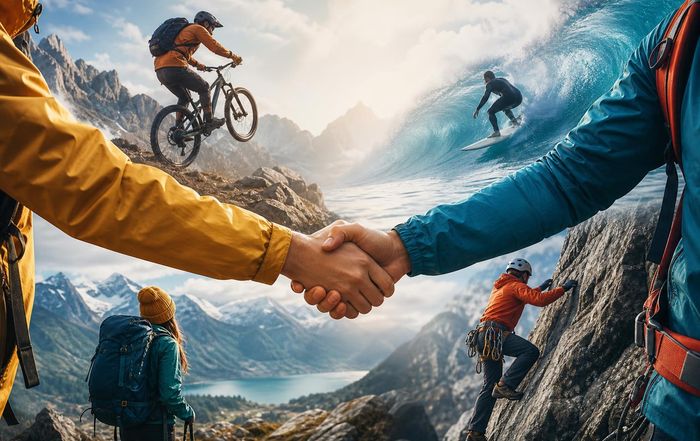
Brand Partnerships in Sports and Adventure Travel: Trust, Performance and Purpose
The New Era of Experiential Brand Strategy
Brand partnerships in sports and adventure travel have evolved from tactical sponsorships into complex, long-term ecosystems where performance, safety, culture, and ethics intersect with global consumer expectations. Across North America, Europe, Asia, Africa and South America, audiences are no longer satisfied with logos on jerseys or banners on event websites; they expect brands to demonstrate measurable impact on athlete wellbeing, destination resilience, and local communities, while offering authentic experiences that align with personal values and aspirations. Within this shifting landscape, XDZEE positions itself as a platform that connects sports, adventure, travel and lifestyle narratives into a coherent, trusted lens for readers who want to understand not only where the market is going, but which organizations are shaping it responsibly.
Global brands have recognized that the convergence of sports and adventure travel offers a uniquely powerful arena for emotional engagement, data-rich personalization, and storytelling at scale. As organizations such as Nike, Adidas, Red Bull, Patagonia and The North Face intensify their presence in high-performance and adventure environments, they are compelled to demonstrate verifiable commitments to safety standards, environmental stewardship and ethical labor practices. Industry guidance from bodies like the World Travel & Tourism Council shows how the sector is rebuilding post-pandemic with a heightened focus on resilience and sustainable growth, and brands that fail to adapt to this reality lose credibility rapidly in an era of real-time social scrutiny. For readers of XDZEE, this means that understanding brand partnerships is no longer a marketing curiosity; it is a prerequisite for making informed decisions about where to spend time, money and attention.
From Sponsorship to Integrated Ecosystems
Traditional sports sponsorships-jersey logos in the English Premier League, trackside banners at Formula 1 circuits, or static branding at major marathons-have been supplanted by integrated partnerships that combine media rights, content creation, data sharing, product development and destination marketing. In football, for example, the evolution of multi-layered partnerships is visible in the way Manchester City, FC Barcelona and Bayern Munich collaborate with technology, finance and consumer brands to create immersive digital and physical experiences that extend far beyond matchday, often linking fan travel packages, performance analytics and exclusive adventure experiences in host cities. Readers following global developments through XDZEE World see that this model is spreading across continents as leagues in the United States, United Kingdom, Germany and beyond seek to capture both local loyalty and international tourism flows.
Adventure travel has undergone a similar transformation, moving from specialist niche to mainstream aspiration for affluent travelers in markets such as the United States, Canada, Australia, Germany and Japan. Reports from the Adventure Travel Trade Association highlight a steady increase in demand for experiences such as trail running camps in the Alps, surf and work retreats in Portugal, ski touring in Japan, and multi-sport expeditions in South America and Africa, all of which attract brands looking to associate with resilience, exploration and high performance. As these partnerships mature, they are no longer limited to equipment or apparel; they involve co-created itineraries, branded training content, embedded safety protocols and long-term destination development plans, all of which demand higher levels of expertise and accountability from the companies involved.
Performance, Data and the Athlete-Traveler Hybrid
In 2026, the line between athlete and traveler has blurred, especially among younger demographics in Europe, North America and Asia who see performance not as an elite pursuit but as an integral part of their lifestyle. The rise of connected fitness ecosystems from companies like Garmin, Strava, Whoop and Apple has given brands unprecedented insight into how people move, train and recover across cities, mountains, oceans and deserts. This data-rich environment has enabled more precise, performance-oriented partnerships, where training camps, adventure itineraries and sports events are designed around real-world behavior rather than generic audience segments. For readers of XDZEE Performance, this integration of analytics and experience is redefining what it means to travel for sport or adventure.
Professional and semi-professional athletes increasingly function as curators of destination and brand choices, using their platforms to highlight specific trails in Norway, surf breaks in Indonesia, cycling routes in Spain or climbing areas in South Africa, often in collaboration with tourism boards and gear manufacturers. Organizations such as Ironman, UTMB World Series, World Surf League and major cycling tours have expanded their calendars and destination portfolios, often working closely with national and regional tourism authorities to position events as gateways to broader adventure ecosystems. Resources like World Athletics and the International Olympic Committee provide a macro view of how global sports calendars interact with host cities and countries, underscoring the strategic value of aligning event-based travel with long-term brand narratives around performance and wellbeing.
Safety and Risk Management as Strategic Differentiators
As adventure travel and extreme sports have moved into the mainstream, safety has become a central pillar of brand partnerships, especially in destinations where infrastructure and emergency response systems are still developing. Organizations including the International Climbing and Mountaineering Federation and the International Ski Federation have strengthened guidelines on risk management, equipment standards and athlete education, which in turn influence how brands design and market their products and experiences. When companies collaborate with local operators in regions such as the Himalayas, the Andes or remote parts of Scandinavia, they are increasingly expected to demonstrate not only compliance with international standards but proactive investment in training, rescue infrastructure and environmental monitoring.
For a platform like XDZEE Safety, this shift is particularly significant because it reshapes how readers assess the credibility of experiences marketed under the banners of adventure and performance. Travel advisories from governments such as the U.S. Department of State, the UK Foreign, Commonwealth & Development Office and the Government of Canada now frequently reference outdoor and sports-related risks, from avalanche danger in alpine regions to heat waves affecting marathons and cycling events. Brands that position themselves as leaders in safety-through transparent incident reporting, third-party certifications and partnerships with reputable local guides-gain a durable competitive advantage, especially among travelers from risk-aware markets like Germany, Switzerland, the Netherlands and the Nordic countries.
Sustainability, Ethics and the New Contract with Travelers
Sustainability and ethics have moved from peripheral talking points to central decision factors for both brands and consumers, particularly in Europe, North America and parts of Asia where regulatory frameworks and public expectations have tightened. Guidance from the United Nations World Tourism Organization and the OECD on sustainable tourism underscores the need for businesses to reduce carbon emissions, protect biodiversity, and ensure fair working conditions throughout their value chains, from factory floors in Asia to guiding teams in Africa and South America. This is especially relevant in sports and adventure travel, where the natural environment is both the stage and the product, and where reputational damage from environmental mismanagement can be swift and severe.
Leading companies in outdoor and sports sectors increasingly align their practices with frameworks such as B Corp certification, the Science Based Targets initiative, and the UN Global Compact, signaling a willingness to subject themselves to external scrutiny. At the same time, watchdog journalism from organizations like Human Rights Watch and Amnesty International has exposed labor abuses, land rights violations and community displacement linked to major sporting events and tourism developments, prompting more rigorous due diligence from brands that wish to avoid association with such controversies. For readers exploring responsible choices through XDZEE Ethics, this context is critical in evaluating whether a partnership between a global brand and a destination is genuinely beneficial or primarily extractive.
Destination Branding Through Sports and Adventure
Destination marketing organizations across the world have embraced sports and adventure partnerships as strategic tools to differentiate themselves in a crowded global marketplace. Countries such as New Zealand, Norway, Switzerland and Canada have long leveraged their natural landscapes to attract skiers, hikers, climbers and water sports enthusiasts, but in 2026, the sophistication of these campaigns has increased significantly. National tourism boards work closely with brands, event organizers and media platforms to create multi-year narratives that highlight not only iconic landscapes but also local culture, culinary experiences and creative industries, thereby broadening the appeal beyond a narrow segment of hardcore adventurers.
In emerging markets across Asia, Africa and South America, sports-based destination branding has become a catalyst for infrastructure investment and international visibility. For instance, the growth of trail running and mountain biking in countries like South Africa, Brazil and Thailand has encouraged partnerships between local operators, global gear brands and regional airlines, creating integrated packages that combine competition entries, guided exploration and cultural immersion. Data and insight from the World Economic Forum on travel and tourism competitiveness help governments and businesses understand how investments in safety, connectivity and sustainability can amplify the impact of such partnerships. For travelers and professionals following XDZEE Destination, these developments offer a lens into how countries position themselves in the global hierarchy of adventure and sports hubs.
Media, Storytelling and the Power of Narrative
In the current media environment, brand partnerships in sports and adventure travel are sustained not only by contracts and events but by continuous storytelling that bridges on-site experiences and digital engagement. Streaming platforms, social networks and specialized publishers have created a 24/7 content cycle where athletes, travelers, journalists and influencers co-create narratives that shape public perceptions of destinations and brands. Organizations such as ESPN, Sky Sports, DAZN and Discovery Sports have expanded their coverage of niche and adventure sports, often integrating branded content that highlights specific locations, training methodologies and lifestyle dimensions. Simultaneously, editorially independent platforms and regional outlets provide critical perspectives that help audiences distinguish between authentic stories and pure marketing.
For XDZEE, this environment underscores the importance of editorial integrity and depth in covering sports, adventure and travel. Sections such as XDZEE Sports, XDZEE Travel and XDZEE Culture are positioned to analyze not only events and destinations but also the underlying relationships between brands, communities and ecosystems. As generative AI tools become more prevalent in marketing and content creation, the demand for trustworthy, human-curated analysis grows, and audiences gravitate toward platforms that clearly differentiate between sponsored content and independent reporting, while maintaining a consistent commitment to accuracy, context and fairness.
Innovation, Technology and Immersive Experiences
Technological innovation is reshaping how brand partnerships are conceived and experienced, particularly in markets where digital infrastructure is robust and consumer expectations are high. Virtual and augmented reality platforms allow fans in the United States, Europe and Asia to experience mountain stages of cycling races, ski descents in the Alps or surf sessions in Australia from their homes, often as part of branded experiences that encourage future travel. Companies like Meta, Sony and HTC collaborate with sports organizations and tourism boards to create immersive environments that blend real-world data with creative storytelling, offering new revenue streams and engagement models.
In parallel, advances in wearable technology, geospatial analytics and environmental monitoring enable brands and destinations to design safer and more personalized adventure experiences, from avalanche-aware ski itineraries to heat-adapted marathon training programs. Insights from organizations such as McKinsey & Company and Deloitte on digital transformation in sports and travel industries highlight how data-driven decision-making enhances both customer satisfaction and operational efficiency. For readers tracking these developments through XDZEE Innovation, the key question is not whether technology will shape the future of sports and adventure travel, but how brands will balance innovation with privacy, inclusivity and environmental responsibility.
Employment, Skills and the Future of Work in Sports and Adventure
The expansion of brand partnerships in sports and adventure travel has significant implications for employment and skills development across regions, particularly in destinations that depend heavily on tourism and events. New roles have emerged at the intersection of performance coaching, digital marketing, sustainability management and experience design, creating opportunities for professionals in countries such as the United Kingdom, Germany, France, Italy, Spain, Singapore and South Africa. Organizations like the World Tourism Organization and the International Labour Organization emphasize the need for upskilling and fair labor practices as the sector becomes more complex and technologically sophisticated.
Platforms focusing on careers and professional development, such as LinkedIn and specialized sports and tourism job boards, show growing demand for expertise in areas like ESG reporting, risk management, data analytics and cross-cultural communication. Within this landscape, XDZEE Jobs provides a vantage point for understanding how individuals can build careers that align with their passion for sports, adventure and travel while contributing to more ethical and resilient industry practices. As brands and destinations compete for talent, their reputation for responsible partnerships and authentic community engagement becomes as important as salary or benefits in attracting skilled professionals.
Brand Strategy for a Fragmented, Global Audience
The global audience for sports and adventure travel is highly fragmented, with distinct preferences across regions such as North America, Europe, Asia-Pacific and Africa, yet connected by digital platforms and shared cultural references. In the United States and Canada, consumers may prioritize convenience, safety and high-quality infrastructure, while audiences in Germany, Switzerland and the Nordic countries often focus on environmental impact and minimalist, nature-centric experiences. In markets such as China, South Korea and Japan, technological sophistication and integration with super-app ecosystems are critical, whereas in Brazil, South Africa and parts of Southeast Asia, affordability and local community benefits can be decisive factors.
For brands designing partnerships that span multiple continents, this heterogeneity demands nuanced strategies that respect local cultures while maintaining global consistency. Insights from institutions like the Harvard Business School and the London Business School on global brand management underscore the importance of building flexible frameworks that allow for regional adaptation without diluting core values. As a global-facing platform, XDZEE Business is uniquely positioned to analyze how leading organizations navigate these challenges, highlighting best practices and lessons learned from both successful and failed partnerships across sports, adventure and travel sectors.
The Role of Independent Platforms in Building Trust
In a marketplace saturated with branded content, influencer endorsements and performance claims, independent platforms play a crucial role in helping audiences distinguish between meaningful partnerships and superficial alignments. XDZEE operates in this space as a curator and analyst, drawing on its coverage of sports, adventure, travel, lifestyle and business to provide a holistic perspective on how brand collaborations affect real people and places. Through sections such as XDZEE News, XDZEE Lifestyle and XDZEE Brands, the platform connects high-level strategic trends with on-the-ground experiences, giving readers a nuanced understanding of how partnerships shape their options as fans, travelers and professionals.
Trustworthiness in 2026 requires more than accurate reporting; it demands consistency, transparency and a willingness to confront uncomfortable questions about power, equity and long-term impact. As regulators in the European Union, the United States and other jurisdictions strengthen rules around greenwashing, data protection and advertising disclosure, platforms that maintain clear standards for sponsorship, editorial independence and fact-checking become vital intermediaries between brands and audiences. By situating its analysis within this evolving regulatory and cultural context, XDZEE reinforces its role as a reliable companion for those navigating the increasingly complex world of sports and adventure travel partnerships.
Wandering Ahead for Purpose, Partnership and Shared Responsibility
The trajectory of brand partnerships in sports and adventure travel points toward deeper integration, higher expectations and greater scrutiny. As climate change intensifies, geopolitical tensions fluctuate and economic conditions shift across regions, the resilience of these partnerships will depend on their ability to deliver tangible benefits to athletes, travelers, workers and local communities, not just to corporate balance sheets. Organizations that approach partnerships as long-term commitments grounded in performance, safety, ethics and innovation will be better positioned to thrive, while those that treat them as short-term marketing tactics will struggle to maintain credibility.
For global audiences-from the United States and United Kingdom to Germany, Canada, Australia, France, Italy, Spain, the Netherlands, Switzerland, China, Sweden, Norway, Singapore, Denmark, South Korea, Japan, Thailand, Finland, South Africa, Brazil, Malaysia and New Zealand-the stakes are both personal and collective. The choices they make about which brands to support, which destinations to visit and which stories to believe will shape not only their own experiences but the future of the landscapes and communities that host their adventures. In this context, XDZEE commits to providing rigorous well researched, context-rich recent coverage that helps adventurous sports readers understand the evolving dynamics of brand partnerships, empowering them to participate in a global ecosystem where sports, adventure and travel are guided not only by excitement and ambition, but by responsibility and shared purpose.