

How Climate Shapes Sports and Adventure Travel Choices
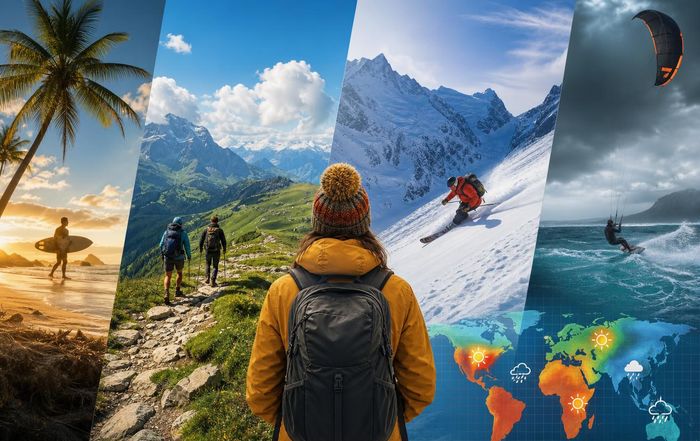
Climate has always influenced where people live and how they move, but in the last decade it has become a decisive factor in where they play. From skiers chasing dwindling snow to surfers tracking changing swell patterns, climate and weather are no longer just background conditions for sport and adventure travel; they are now central to planning, safety, and even ethics. For travelers who build trips around movement-whether that means climbing in Spain, trail running in Colorado, or kiteboarding in South Africa-understanding how climate shapes opportunities and risks is becoming as important as knowing the local currency or visa rules. This new feature explores how long-term climate patterns and near-term weather realities are reshaping sports and adventure travel, and what that means for performance, safety, destination choices, and the future of outdoor culture.
From Seasons to "Shoulder Seasons": How Climate Is Rewriting the Adventure Calendar
For decades, adventure travelers could rely on relatively stable "seasons": ski in winter, trek in spring and autumn, climb in summer, surf year-round in a few equatorial zones. Those broad rules still apply, but climate change is pushing the edges of what's predictable.
According to the Intergovernmental Panel on Climate Change (IPCC), global surface temperature has already risen by about 1.1°C above pre-industrial levels, with associated shifts in precipitation, snowpack, and extreme weather events across continents (IPCC AR6). In practical terms, that means warmer winters, more erratic monsoons, longer heatwaves, and a higher frequency of storms and wildfires. For sports travelers, the result is a growing gap between "climatological averages" and what actually happens in a given season.
Skiers and snowboarders now talk about "snow windows" instead of "snow seasons," waiting for cold snaps or storm cycles rather than assuming that January through March will be reliable. Climbers and hikers in places like the Alps or the Rockies increasingly target shoulder seasons to avoid both heat and wildfire smoke. Cyclists and runners in desert destinations such as the American Southwest or parts of Australia may shift long-distance efforts to early spring or late autumn, as summer daytime highs become unsafe for sustained exertion.
For anyone planning a trip around sport, this means the old rule of checking "average temperature and rainfall" is no longer enough. Travelers must now pay attention to trends, extremes, and variability-how often conditions are dangerously hot or stormy, how quickly snow melts, and how frequently smoke or haze disrupts visibility and air quality.
For readers looking to align trips with safer, more predictable conditions, destination-focused pages such as Destination and Travel resources can help frame these shifting windows in practical terms.
Snow Sports: Chasing a Shrinking Winter
Few sports illustrate climate's influence as clearly as skiing, snowboarding, and other snow-dependent activities. Research published in Nature Climate Change and other journals indicates that many low-elevation ski areas in Europe and North America have already seen significant reductions in natural snow cover duration, with projections of further decline under most warming scenarios (European Environment Agency overview).
In the Alps, organizations such as the OECD and Swiss Federal Institute for Forest, Snow and Landscape Research (WSL) have documented that ski resorts below roughly 1,500-1,800 meters are particularly vulnerable to poor snow years, even with snowmaking (OECD ski tourism and climate report). In the northeastern United States, the U.S. National Oceanic and Atmospheric Administration (NOAA) has reported long-term declines in snow season length and snow depth at many monitoring sites (NOAA climate indicators).
For winter sports travelers, this translates into several practical shifts:
Longer-term planning increasingly favors higher-elevation, glaciated, or more northerly destinations where snow reliability remains higher. Backcountry enthusiasts must adapt not only to thinner snowpacks but also to more complex avalanche conditions, as warmer storms and rain-on-snow events alter snow stability. The Colorado Avalanche Information Center and similar organizations in Europe and Japan have noted changing avalanche patterns linked to temperature and precipitation variability (CAIC climate and avalanche discussion). That makes up-to-date avalanche education and local forecast literacy critical components of trip planning.
On the safety side, warmer winters can create deceptively pleasant conditions at resort base areas while leaving higher elevations exposed to wind, ice, or unstable snow. Adventure travelers who used to rely on "it's winter, so it's cold and snowy" need to become comfortable with more nuanced risk assessment, using detailed local bulletins and tools like avalanche-focused safety resources rather than generic weather apps alone.
At the same time, the snow-sports industry is experimenting with adaptation, from snow-farming and high-efficiency snowmaking to shifting business models toward four-season tourism. Travelers who value the long-term viability of mountain environments are increasingly weighing the climate policies and sustainability practices of resorts and operators-an area where Ethics and Business coverage intersect directly with trip choices.
Heat, Hydration, and Performance: Endurance Sports in a Warming World
Endurance sports-marathons, ultra-running, long-distance cycling, triathlon, multi-day trekking-are especially sensitive to heat and humidity. The World Health Organization and sports medicine bodies like the American College of Sports Medicine (ACSM) warn that rising temperatures significantly increase the risk of heat exhaustion, heat stroke, and cardiovascular strain during prolonged exertion, particularly when humidity is high (WHO heat and health guidance, ACSM position stand on heat and exercise).
Major marathons and cycling events have already adjusted start times, added cooling stations, or modified routes in response to extreme heat. The Tokyo 2020 Olympic Games, held in 2021, moved the marathon and race-walking events to Sapporo, hundreds of kilometers north, to reduce heat risk-an explicit acknowledgment that climate and weather can dictate where and when elite sport is possible (IOC report on Tokyo heat measures).
For recreational adventure travelers, the implications are clear:
It is becoming riskier to schedule ambitious endurance trips-such as desert ultramarathons, high-intensity cycling tours, or long fast-packing routes-during traditional summer windows in many regions. Heat acclimatization, hydration strategies, and realistic pacing are no longer optional add-ons but core components of trip design. Travelers may prioritize cooler destinations, higher altitudes, or early-morning and evening activity windows, especially in regions prone to heatwaves.
Performance expectations also need recalibration. Laboratory and field studies show that endurance performance typically declines as wet-bulb globe temperature (a measure accounting for heat, humidity, and radiant heat) rises, even for trained athletes. The U.S. National Weather Service and other agencies provide heat index and wet-bulb guidance, which can be more informative for athletes than simple air temperature (NWS heat safety resources).
From a travel-planning perspective, this means that "it's only 30°C" is no longer a sufficient metric. Humidity, solar exposure, and route shade become important variables. Platforms that focus on Performance increasingly integrate climate-aware training advice, while adventure tour operators are under pressure to redesign itineraries and contingency plans for hot-weather scenarios.
Water, Waves, and Wind: Climate Signals for Surfers, Sailors, and Paddlers
Water-based sports live at the intersection of atmospheric and oceanic change. Surfers, sailors, kitesurfers, and paddlers have always been amateur meteorologists, tracking swell charts, wind forecasts, and currents. Climate change adds another layer of complexity, influencing sea-surface temperatures, storm tracks, and even the shape of coastlines.
The Intergovernmental Oceanographic Commission of UNESCO reports that global mean sea level is rising, with regional variations due to currents and land subsidence (UNESCO sea level fact sheet). For surf destinations, sea-level rise can alter how waves break over reefs and sandbars, sometimes enhancing specific breaks but often eroding beaches or disrupting the delicate balance that creates classic waves. Coastal erosion and more powerful storms can also damage access infrastructure, from piers and marinas to simple beach paths.
Ocean warming affects marine ecosystems and, indirectly, water sports. Marine heatwaves have contributed to coral bleaching on iconic reefs such as Australia's Great Barrier Reef, documented by the Great Barrier Reef Marine Park Authority and research institutions (GBRMPA coral bleaching updates). For divers and snorkelers, this changes the visual and ecological experience; for surfers and paddlers, shifting marine life patterns can influence everything from jellyfish blooms to shark presence.
Wind-driven sports like sailing, kitesurfing, and windsurfing are also affected by changes in seasonal wind patterns. While global climate models show complex regional differences, some traditional trade-wind and monsoon regimes are becoming less predictable, complicating long-range planning for liveaboard sailing trips or wind-sports camps. Specialist forecast providers, drawing on datasets from agencies like ECMWF and NOAA, are increasingly vital tools for both safety and enjoyment.
Adventure travelers who prioritize ocean sports may find themselves choosing destinations not just for swell consistency or water temperature, but also for coastal resilience, local marine conservation efforts, and the quality of safety infrastructure-a natural bridge between Adventure, Safety, and Innovation coverage.
Wildfire, Storms, and Sudden Hazards: Safety in an Era of Extremes
One of the most visible ways climate influences adventure travel is through extreme events: wildfires, hurricanes and typhoons, flash floods, and powerful storms. While no single event can be attributed solely to climate change, attribution studies from groups such as World Weather Attribution consistently show that many recent extremes have been made more likely or more intense by human-driven warming (World Weather Attribution case studies).
Wildfire seasons in regions such as western North America, the Mediterranean, and parts of Australia have lengthened and intensified, as documented by the European Forest Fire Information System (EFFIS) and the U.S. Forest Service (EFFIS wildfire reports). For hikers, climbers, and mountain bikers, this means increased trip cancellations, smoke-related health risks, and sudden trail or park closures. Even when fires are distant, smoke can degrade air quality hundreds or thousands of kilometers away, affecting lung function and visibility.
Storm-related risks are equally significant. Tropical cyclones are not necessarily more frequent globally, but there is evidence of an increase in the proportion of high-intensity storms and of heavier rainfall associated with these systems, according to the World Meteorological Organization (WMO) (WMO tropical cyclone guidance). For adventure travelers, that raises the stakes for activities in coastal and mountainous regions, where flash floods, landslides, and storm surges can turn routine outings into emergencies.
The practical response is a more robust safety culture. Travel planners and guides increasingly integrate:
Real-time monitoring of fire, flood, and storm alerts from national meteorological and emergency services.
Conservative go/no-go criteria for trips in exposed terrain.
Backup itineraries in less vulnerable regions or at lower elevations.
Independent travelers are wise to adopt similar habits, using official resources like the U.S. National Park Service alerts or the UK Met Office severe weather warnings, alongside regional equivalents. For those building trips around high-commitment objectives-big-wall climbs, multi-day backcountry traverses, remote river expeditions-engaging with specialized Safety and World information is now part of responsible preparation rather than an optional extra.
Choosing Destinations: Climate as a Core Travel Filter
As climate realities become more visible, many adventure travelers are beginning to treat climate not just as a risk factor but as a primary filter in destination choice. This plays out in several ways.
Some travelers seek climate resilience: destinations where natural geography, infrastructure, and governance combine to offer relatively stable conditions and strong emergency response. Mountain regions with higher average elevations and robust rescue services, coastal areas with good storm monitoring and evacuation plans, or countries with strong environmental regulation can feel like safer bets for complex trips.
Others are drawn to "last chance" experiences-seeing retreating glaciers, visiting low-lying atolls, or skiing on iconic but shrinking snowfields. Glaciologists and organizations such as NASA and the World Glacier Monitoring Service have documented significant glacier mass loss in many mountain ranges, including the Alps, Andes, and Himalayas (WGMS glacier change data). While this motivates some travelers, it also raises ethical questions about contributing to pressure on fragile environments already under climate stress.
Local communities and tourism businesses are responding unevenly. Some destinations are actively repositioning themselves, developing shoulder-season trail running or gravel-biking networks where snow reliability is fading, or promoting cooler-season cultural and Lifestyle experiences alongside outdoor sport. Others are slow to adapt, leaving visitors to navigate climate-related disruptions without clear guidance.
For travelers, building climate into destination choice now means looking beyond glossy images to ask:
How is this place already experiencing climate impacts?
What are the typical extremes-not just the averages?
How does local infrastructure handle heat, storms, or fire?
Is there a realistic plan B if conditions deteriorate?
Resources on Travel, Destination, and News increasingly highlight these questions, helping visitors choose trips that are both memorable and resilient.
Technology and Innovation: Climate-Smart Planning Tools
Innovation is quietly transforming how athletes and adventure travelers respond to climate. Instead of relying solely on static guidebooks and historical patterns, they can now access a suite of digital tools and services designed for a more volatile world.
High-resolution weather and climate services-from apps built on ECMWF, NOAA, or Met Office data to specialized avalanche and marine forecasts-allow travelers to track not just daily weather but medium-range trends and risk indicators. Some platforms integrate satellite-derived wildfire, snow, and sea-ice data, offering maps that would have been the preserve of meteorological agencies a decade ago.
Sports-specific planning tools are also evolving. Trail platforms may flag routes as seasonally exposed to heat or snow. Training apps can adjust workload recommendations based on local heat index or air-quality data, drawing on sources such as IQAir or government pollution monitors. Surf forecasting services now routinely incorporate long-period swell and wind-chill metrics, allowing more precise matching of conditions to skill level.
Adventure operators are experimenting with climate-adaptive itineraries, where routes and activity intensities are dynamically adjusted according to evolving forecasts. Insurance products are starting to include climate-related trip disruption coverage, reflecting the reality that fire, flood, or heatwave cancellations are no longer rare.
All of this sits squarely in the realm of Innovation and Business, but for individual travelers the key questions remain practical: which tools are trustworthy, how to interpret their outputs, and how to avoid overconfidence. Technology can improve decision-making, but it does not remove the need for local knowledge, conservative judgment, and respect for changing natural systems.
Culture, Ethics, and the Changing Meaning of Adventure
Climate does more than reshape itineraries; it also reshapes the culture and ethics of sport and adventure travel. As the links between emissions, travel, and climate impacts become clearer, many athletes and enthusiasts are re-evaluating how, where, and how often they travel for their passions.
Organizations such as Protect Our Winters (POW) and Surfers Against Sewage have emerged as influential voices connecting outdoor sports communities with climate advocacy (Protect Our Winters global network, Surfers Against Sewage climate campaigns). They encourage athletes to consider their carbon footprints, support policy changes, and amplify local environmental struggles in destinations they visit.
This has led to a growing interest in "low-carbon adventure": taking trains instead of flights in parts of Europe, choosing closer-to-home expeditions, or extending trips to reduce the ratio of travel emissions to time spent in a place. Some event organizers now offer incentives for participants who arrive by low-carbon transport, while brands experiment with gear rental and repair schemes to reduce consumption.
At the same time, communities in highly climate-exposed regions-small island states, high mountain villages, drought-prone rural areas-must balance tourism's economic benefits against the stress of hosting visitors as local conditions deteriorate. Ethical travelers increasingly ask whether their presence supports adaptation and resilience or amplifies vulnerability, a debate that intersects with Ethics, Culture, and World perspectives.
Adventure itself may be subtly redefined. Instead of chasing ever more remote or fragile environments, some athletes are embracing depth over distance: exploring their local mountains or coastlines in greater detail, engaging with local environmental projects, or experimenting with new sports that align better with changing climates. Others focus on skill development-navigation, safety, technical proficiency-that allows them to move more responsibly through landscapes under stress.
Navigating the Next Decade of Climate-Shaped Adventure
Climate will not make sport and adventure travel disappear, but it will continue to change who goes where, when, and under what conditions. For many enthusiasts, the coming years will reward those who:
Treat climate and weather literacy as core skills, on par with navigation or fitness.
Build flexibility into travel plans, with backup routes, dates, or destinations.
Prioritize safety by integrating official forecasts, hazard bulletins, and local guidance.
Choose destinations and providers that take climate adaptation and environmental responsibility seriously.
Reflect on the cultural and ethical dimensions of traveling for sport in a warming world.
For some, this may feel like a constraint; for others, it becomes part of the challenge, adding layers of strategy and awareness to the pursuit of performance and adventure. Either way, climate is no longer a distant backdrop. It is an active player in every decision about where to seek snow, surf, rock, or trail. Understanding that reality-and planning with it rather than against it-may be the most important piece of gear any traveler carries into the next phase of global sport and adventure.