

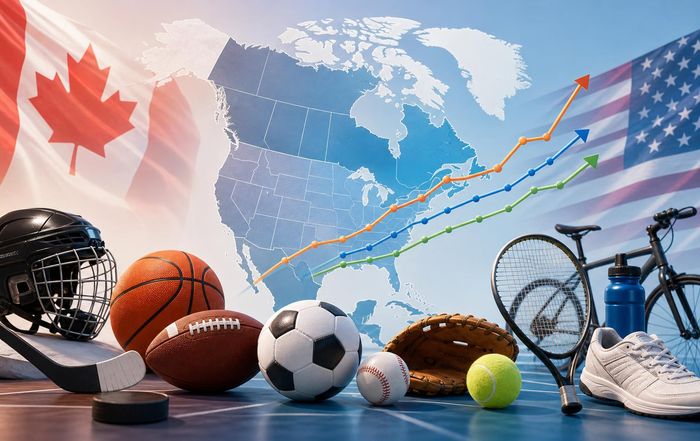
New Sports Participation Trends Across North America
Checkout The New Landscape of North American Sport
Recently sports participation across North America has become a revealing mirror of wider social, economic, and technological change, reflecting shifting priorities in health, work, identity, and community. From youth leagues in small-town Canada to fitness-focused professionals in major United States metros and increasingly active recreational communities in Mexico, participation patterns are being reshaped by digital platforms, new business models, and evolving cultural expectations about performance, safety, and inclusion. For xdzee.com, whose hyper energetic audience tracks developments in sports, adventure, travel, lifestyle, brands, innovation, and business across the world, understanding these trends is not simply a matter of counting participants; it is about interpreting how sport now intersects with careers, wellbeing, travel choices, ethical concerns, and the search for meaningful experiences.
While traditional team sports remain powerful cultural anchors in North America, the ecosystem around them has diversified dramatically. Participation is no longer confined to fixed seasons and local clubs; it increasingly spans hybrid physical-digital experiences, destination-based adventures, and year-round personal performance programs. Organizations such as USA Hockey, Basketball Canada, and Major League Soccer have adapted to this reality, while digital-first fitness and sport-tech companies have accelerated the transformation of how people train, compete, and connect. Against this backdrop, the role of trusted platforms like xdzee.com is to curate, interpret, and contextualize these developments for a global readership that wants to understand not just what is happening, but why it matters for business, jobs, and culture.
Health, Lifestyle, and the Demand for Everyday Performance
One of the most important drivers of sports participation growth in North America has been the redefinition of health and lifestyle priorities after the disruptions of the early 2020s. Public health agencies such as the U.S. Centers for Disease Control and Prevention now emphasize the link between regular physical activity and resilience against chronic disease, and many employers in the United States and Canada have integrated wellness incentives into benefits strategies, recognizing that active employees tend to be more productive and engaged over the long term. Learn more about the evolving connection between physical activity and public health through resources from the World Health Organization.
For many North Americans, especially in urban centers like New York, Toronto, Vancouver, Los Angeles, and Mexico City, sport has become less about competitive achievement and more about sustaining an active lifestyle that supports mental health, work performance, and social connection. This is evident in the expansion of running clubs, cycling groups, and recreational leagues that blend social experiences with structured training. The rise of hybrid work has also given people more flexibility to schedule mid-day workouts or early morning training sessions, feeding demand for flexible membership models and on-demand coaching. On xdzee.com, coverage of lifestyle and performance increasingly explores how these trends reshape daily routines, brand choices, and long-term wellbeing strategies for professionals across industries.
Digital Platforms, Data, and the Personalization of Training
Technology has fundamentally altered the way North Americans approach sport, with connected devices, apps, and platforms now embedded into the training routines of everyone from casual joggers to elite competitors. Wearables from companies like Apple, Garmin, and Fitbit, along with training platforms such as Strava and Zwift, have normalized data-driven decision-making in personal fitness, making metrics like heart rate variability, sleep quality, and recovery scores central to how people plan workouts and manage stress. To understand the broader implications of this shift toward quantified training, readers can explore analyses from the American College of Sports Medicine on technology-driven fitness trends.
The personalization enabled by these platforms has lowered barriers to entry for individuals who might previously have felt intimidated by traditional sports clubs or gyms, offering structured programs, virtual coaching, and community support regardless of location. At the same time, it has created new expectations for transparency and evidence-based practices in sports training, with participants increasingly skeptical of generic advice and more inclined to seek proven methods. For xdzee.com, this convergence of sport, innovation, and data is a recurring theme in its innovation and business coverage, as it examines how established brands and emerging startups compete to build trust and loyalty in a crowded, information-rich marketplace.
Youth Sports: Opportunity, Pressure, and Inequality
Youth sports remain a defining feature of North American culture, particularly in the United States and Canada, where participation in soccer, basketball, baseball, ice hockey, and emerging sports like flag football forms a central part of childhood and adolescence. However, the structure of youth sports has become increasingly commercialized, with year-round travel teams, specialized coaching, and showcase tournaments shaping the trajectories of young athletes. Research from organizations such as the Aspen Institute's Project Play has highlighted both the benefits and the risks of this model, drawing attention to rising costs, early specialization, and burnout. Learn more about youth sports reform efforts and inclusive access initiatives through the Aspen Institute Project Play.
In North America, families with higher incomes are often able to invest in private coaching, elite clubs, and extensive travel, while lower-income households face greater barriers to participation, especially in equipment-intensive sports like ice hockey and lacrosse. This inequality has prompted school districts, municipal governments, and non-profit organizations to experiment with community-based models that emphasize access, multi-sport participation, and long-term athlete development. For readers of xdzee.com, these dynamics intersect with broader concerns about ethics and culture, raising questions about how to balance aspiration, safety, and enjoyment in youth sport, and how to ensure that the benefits of participation are distributed more equitably across North American society.
Women's Sports and the Expansion of Opportunity
A defining trend in North American sports participation over the past decade has been the rapid growth of women's and girls' involvement across a wide range of disciplines, driven by increased media coverage, stronger professional pathways, and evolving social norms around gender and sport. The success of organizations such as the National Women's Soccer League in the United States and the expansion of professional women's hockey and basketball have created new role models and aspirational narratives for young athletes. Insights into the global momentum behind women's sport can be found through resources from UN Women, which explores how sport supports gender equality; readers can delve deeper via UN Women's sport and gender equality initiatives.
Participation among women in recreational running, cycling, triathlon, and strength training has also surged, supported by brands and fitness communities that prioritize inclusion, safety, and flexible training formats. Universities across North America have strengthened their women's programs, investing in facilities, coaching, and sports science to attract and develop talent. For xdzee.com, the rise of women's sport is not only a participation story but also a business and branding story, as sponsors, broadcasters, and leagues compete to align with a fast-growing, highly engaged audience segment. The platform's sports and brands sections increasingly feature case studies of companies that have built authentic, long-term partnerships with women's teams and athletes.
Adventure, Outdoor Recreation, and Destination Sport
North America's diverse geography-from the Rockies and the Appalachians to the Great Lakes, Pacific coastline, and vast national park systems-has supported a powerful surge in adventure and outdoor sports participation. Hiking, trail running, mountain biking, climbing, backcountry skiing, paddling, and surfing have all seen sustained growth, particularly among younger adults and professionals seeking experiences that combine physical challenge with connection to nature. Organizations like the National Park Service in the United States provide extensive resources for planning outdoor activities and understanding conservation issues; those interested in protected areas and sustainable recreation can explore more through the National Park Service.
This growth in outdoor participation has important implications for travel and destination choices, with many North Americans now planning vacations around trail networks, ski resorts, surf breaks, and climbing areas rather than traditional resort stays. For xdzee.com, this intersection of adventure, travel, and destination content is central, as readers increasingly seek guidance on how to combine sport, exploration, and responsible tourism in North America and beyond. The platform's coverage often emphasizes not only the appeal of these activities but also the importance of safety training, environmental stewardship, and respect for local communities.
Safety, Risk Management, and the Ethics of Participation
As sports participation diversifies and expands into more adventurous and extreme domains, safety and risk management have come to the forefront of public and industry attention. Concerns about concussion in contact sports such as American football, ice hockey, and rugby have driven rule changes, equipment innovation, and new protocols at every level from youth leagues to professional organizations. The National Institutes of Health and other research bodies continue to study the long-term effects of repetitive head impacts, informing guidelines and educational initiatives; readers can learn more about current research directions through the National Institutes of Health.
In adventure and outdoor sports, risk management is equally important, as more participants enter environments that demand specialized skills, equipment, and decision-making. Avalanche education, wilderness first aid, and navigation training are now widely promoted by outdoor organizations and guiding companies across North America, while digital tools such as GPS apps and real-time weather platforms support safer planning. For xdzee.com, these developments underscore the importance of reliable information and expert guidance in its safety and world coverage, as readers increasingly expect nuanced discussions of both the rewards and the risks associated with different sports and environments.
The Business of Sport: Investment, Media, and Brand Strategy
The business ecosystem surrounding sports participation in North America has grown more complex and sophisticated, reflecting the convergence of media, technology, apparel, equipment, and hospitality. Traditional sports organizations such as Major League Baseball, the National Basketball Association, and the National Football League continue to command significant attention, but much of the innovation in participation-oriented business models is occurring in fitness technology, boutique training concepts, and community-based leagues. Industry analyses from groups like Deloitte's Sports Business Group provide insight into revenue trends, investment flows, and emerging opportunities; those interested in strategic perspectives can explore more through Deloitte's sports industry outlook.
Brands in apparel, footwear, and equipment have responded to the evolving participation landscape by emphasizing performance materials, sustainability, and inclusive design, while also investing heavily in digital engagement and community building. Streaming platforms and social media have created new avenues for niche sports and grassroots competitions to reach wide audiences, blurring the line between participant and spectator. For xdzee.com, whose readership follows business and news developments across multiple regions, the sports sector provides a vivid case study of how consumer behavior, technology, and culture interact to reshape entire industries.
Jobs, Careers, and the Professionalization of Support Roles
Sports participation growth in North America has also fueled a parallel expansion in career opportunities, both on and off the field. Beyond professional athletes and coaches, there is rising demand for sports scientists, performance analysts, physiotherapists, nutritionists, mental performance consultants, event managers, and digital content specialists who understand the language of sport and the expectations of active communities. Academic institutions and professional organizations such as the National Strength and Conditioning Association have developed advanced certification pathways and research programs to support this ecosystem; readers can explore professional standards and educational resources through the National Strength and Conditioning Association.
At the same time, the gig economy has intersected with sport, with many trainers, guides, referees, and content creators operating as independent professionals who build their own brands and client bases through digital platforms. For xdzee.com, which dedicates coverage to jobs and career development, the sports sector represents a dynamic labor market where skills in coaching, communication, technology, and entrepreneurship converge. The platform's analysis often emphasizes how professionals can navigate this environment ethically and sustainably, balancing commercial opportunity with the responsibility to protect participant wellbeing and uphold best practices.
Global Influences and Cross-Border Participation Patterns
While this article focuses on North America, participation trends in the region cannot be understood in isolation from global developments in sport and physical activity. International events, from the Olympic Games to world championships in football, rugby, and athletics, shape aspirational pathways and inspire new waves of participation across age groups, with North American audiences closely following competitions in Europe, Asia, Africa, and South America. The International Olympic Committee provides extensive data and analysis on global sports participation and development; those seeking a broader international perspective can learn more via the International Olympic Committee.
Cross-border travel for sport has also grown, with North Americans increasingly visiting Europe for cycling and skiing, Asia for martial arts and outdoor adventures, and South America and Africa for trekking, surfing, and wildlife-focused expeditions. This exchange is reciprocal, as athletes and enthusiasts from regions such as the United Kingdom, Germany, France, Australia, Japan, and Brazil travel to North America to experience its unique mix of urban sports culture and wilderness access. Within this global context, xdzee.com serves as a bridge between world developments and regional participation patterns, helping readers understand how international trends influence local choices in the United States, Canada, and Mexico.
Ethics, Inclusion, and the Future of Participation
As participation in sports continues to expand and diversify across North America, ethical questions have moved to the center of public debate. Issues such as fair access, gender identity and inclusion, the commercialization of youth sport, data privacy in fitness technology, and environmental impacts of major events are now central to how organizations and brands are evaluated by participants and observers. Bodies such as the Centre for Sport and Human Rights and the World Anti-Doping Agency contribute to the development of frameworks and standards designed to protect athletes and uphold integrity; readers interested in these dimensions of sport can explore guidance from the World Anti-Doping Agency.
For xdzee.com, this ethical landscape is integral to its mission, informing coverage in areas such as ethics, culture, and safety. The platform's analysis recognizes that trust is now a defining asset in the sports ecosystem: participants increasingly choose leagues, clubs, brands, and destinations based not only on performance and price, but also on demonstrated commitments to transparency, inclusivity, and sustainability. As North America looks ahead to future mega-events, technological breakthroughs, and demographic shifts, the long-term health of sports participation will depend on how effectively its leaders respond to these ethical challenges and align their strategies with the expectations of a more informed, connected, and values-driven public.
Conclusion: Experience, Expertise, and Trust in a Changing Sports Era
So now sports participation across North America is more varied, data-informed, and globally connected than at any time in the past, encompassing traditional team sports, outdoor adventures, digital fitness ecosystems, and emerging hybrid formats that blur the boundaries between competition, recreation, and lifestyle. The forces shaping this landscape-health priorities, technological innovation, business investment, cultural change, and ethical scrutiny-are complex and interdependent, requiring nuanced interpretation rather than simple narratives of growth or decline. For individuals, families, businesses, and policymakers, the central challenge is to harness the benefits of this vibrant participation culture while addressing issues of safety, access, and integrity.
Within this evolving context, xdzee.com positions itself as a trusted and new content guide, combining global perspective with regional insight to help readers navigate the intersections of sport, adventure, travel, brands, lifestyle, performance, innovation, and ethics. By emphasizing experience, expertise, authoritativeness, and trustworthiness, the platform aims to provide the depth and clarity that decision-makers and enthusiasts across North America and around the world now demand, as they choose how, where, and why to participate in sport in an era defined by both unprecedented opportunity and heightened responsibility.
Go on, click the bookmark and subscribe buttons, we promised to deliver more hyper entertaining new sports adventure content tomorrow!