

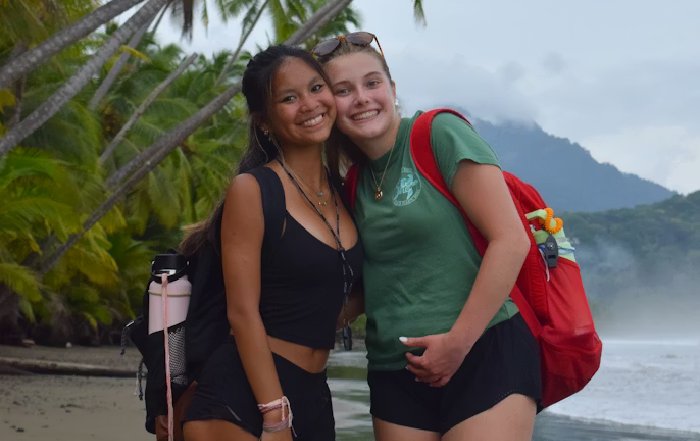
From Sea to Sea: Trekking the New Costa Rica Camino
A New Transcontinental Journey for the Global Explorer
The emergence of the new Costa Rica Camino has quietly but decisively reshaped how serious travelers, performance-driven adventurers, and globally minded business leaders think about long-distance journeys, sustainable tourism, and cross-cultural connection. Stretching from the Caribbean Sea to the Pacific Ocean, this multi-week trekking route is more than a scenic trail; it is a living corridor of ecosystems, communities, and ideas that reflects many of the priorities that define the audience of xdzee.com: sport and endurance, adventure, travel, global news and business, lifestyle and performance, safety and innovation, ethics and culture, and a deep fascination with destinations that tell a bigger story about the world.
Unlike the more established Camino de Santiago routes across Europe, which have centuries of religious and cultural momentum behind them, the Costa Rica Camino has been purpose-built for the twenty-first century. It has been designed at the intersection of environmental stewardship, local economic development, and high-performance outdoor experience, and it is already attracting trekkers from the United States, the United Kingdom, Germany, Canada, Australia, France, Italy, Spain, the Netherlands, Switzerland, China, Sweden, Norway, Singapore, Denmark, South Korea, Japan, Thailand, Finland, South Africa, Brazil, Malaysia, New Zealand, and beyond. For a platform like xdzee.com, which sits at the confluence of global lifestyle and performance-driven exploration, the Camino is not only a compelling travel story; it is an evolving case study in how a destination can align ethics, innovation, and long-term brand value.
The Route: From Caribbean Humidity to Pacific Horizons
The Costa Rica Camino, as it has taken shape by 2026, typically begins on the Caribbean coast near the lowland rainforests and Afro-Caribbean communities that define the eastern edge of the country, then rises gradually through agricultural valleys and cloud forests, before descending again toward the Pacific beaches that have long attracted surfers, wellness travelers, and ecotourists. While specific variants of the route are still being refined by local organizations and trail alliances, the core idea is consistent: a continuous, human-powered crossing that connects sea to sea in roughly three to four weeks of sustained walking.
For trekkers who have previously tackled long-distance routes such as the Pacific Crest Trail in North America or the Via Alpina in Europe, the Costa Rica Camino presents a very different climatic and cultural palette. Instead of snowfields and high-altitude passes, they encounter tropical humidity, intense biodiversity, and an almost continuous exposure to living rural communities, from smallholder farms to indigenous territories. Those who want to understand the broader context of Costa Rica's geography and biodiversity often begin their planning by exploring resources from the National Geographic Society and the United Nations Environment Programme, which provide a macro-level view of the ecosystems they will be traversing and the climate dynamics that shape them.
For xdzee.com readers who follow destination-focused coverage, the Camino's east-to-west narrative is particularly resonant. It is a journey that compresses many of Costa Rica's best-known destination archetypes-rainforest, volcano, coffee country, cloud forest, surf town-into a single, coherent storyline, making it a natural focal point for travelers who want to move beyond fragmented, resort-based experiences and instead inhabit the country as a continuous, lived landscape.
Sport, Performance, and the Endurance Mindset
From a sports and performance perspective, the Costa Rica Camino is not an ultra-technical mountaineering challenge, but it is demanding in ways that appeal to disciplined endurance athletes, trail runners, and serious hikers. Daily stages often involve prolonged climbs in high humidity, unpredictable rainfall, and terrain that ranges from well-maintained paths to rough farm tracks and muddy jungle trails. For athletes used to training with data-driven precision, consulting guidance from organizations such as the American College of Sports Medicine or the UK National Health Service on heat management, hydration, and recovery is an essential part of preparation, particularly for those coming from cooler climates in Northern Europe or North America.
The Camino is also becoming a proving ground for performance-oriented gear and wearable technology. Brands that specialize in moisture-management fabrics, trail footwear, and ultralight shelters see the route as an ideal environment to test their latest innovations under real-world stress. Readers of xdzee.com who follow performance-focused content will recognize how the Camino sits at the intersection of endurance sport and applied technology: GPS-enabled route tracking, heart-rate variability monitoring, and AI-supported training plans are increasingly being deployed by trekkers who want to treat the crossing not just as a holiday, but as a structured performance project with clear metrics and progression.
For those interested in the broader science of endurance, resources like the U.S. National Institutes of Health and the Australian Institute of Sport offer detailed insights into acclimatization, overtraining risks, and the psychological aspects of multi-week exertion. When those research-driven perspectives are combined with the on-the-ground experience of local Costa Rican guides and outfitters, the result is a powerful blend of evidence-based preparation and context-specific wisdom that enhances both safety and achievement.
Adventure with a Safety-First Ethic
Adventure is at the core of the Costa Rica Camino, yet by 2026 the route is increasingly framed around a sophisticated safety ethic that reflects global best practices in risk management and responsible adventure travel. While the trail passes through remote areas with limited infrastructure, local stakeholders and international partners have invested in basic waymarking, emergency access points, and community-based support systems that allow trekkers to balance a sense of remoteness with a realistic safety net.
Organizations such as the International Federation of Red Cross and Red Crescent Societies and the World Health Organization provide widely recognized guidance on wilderness first aid, water sanitation, and vector-borne disease prevention, all of which are relevant to a multi-week trek in tropical conditions. For xdzee.com readers who follow safety-oriented reporting, the Camino's evolving protocols offer a practical example of how adventure travel can mature without losing its sense of authenticity and challenge.
In parallel, the route has become a platform for discussions about risk communication and traveler responsibility. Governments in key source markets such as the United States, the United Kingdom, Germany, Canada, and Australia maintain regularly updated travel advisories through bodies like the U.S. Department of State and the UK Foreign, Commonwealth & Development Office, and serious trekkers have learned to integrate these official resources into their planning without succumbing to alarmism. The result is a more nuanced adventure culture, in which personal agency, informed decision-making, and respect for local conditions are seen as integral parts of the journey rather than afterthoughts.
Travel, Lifestyle, and the New Long-Form Journey
The Costa Rica Camino is also part of a broader shift in travel behavior that has accelerated in the mid-2020s: the move from short, fragmented trips toward slower, more immersive journeys that align with evolving lifestyle values and work patterns. As remote and hybrid work models have stabilized in many industries across North America, Europe, and Asia, a growing segment of professionals now have the flexibility to dedicate several weeks to a physically demanding but mentally restorative trek, often integrating periods of remote work before or after the crossing.
For readers who follow travel coverage on xdzee.com and track lifestyle trends through its lifestyle-focused reporting, the Camino illustrates how travel is increasingly viewed as a form of long-term personal development rather than a temporary escape. The route provides extended time away from screens, an enforced deceleration of daily pace, and a structured encounter with unfamiliar cultures and environments, all of which align with the mental-health and well-being priorities highlighted by organizations such as the World Economic Forum and the Mayo Clinic.
In parallel, the Camino is attracting a diverse demographic that includes not only younger backpackers but also mid-career professionals, early retirees, and even corporate leaders who see the trek as a form of experiential leadership training. Immersing oneself in a physically demanding, culturally rich journey, where outcomes are shaped by weather, terrain, and human relationships rather than corporate hierarchies, can provide powerful perspective on decision-making, resilience, and empathy-qualities that are increasingly prized in global business environments.
Business, Brands, and the Economics of a Trail
Beyond the individual experience, the Costa Rica Camino is a business story. For a platform like xdzee.com, with its dedicated business section and its coverage of global brands, the route offers a compelling lens on how tourism infrastructure, destination branding, and local entrepreneurship intersect in real time. The Camino is generating demand for accommodation, guiding services, transport, gear, and food along its length, and local communities are rapidly adapting, in some cases forming cooperatives or social enterprises to manage the influx sustainably.
International organizations such as the World Tourism Organization (UNWTO) and the World Bank have long emphasized the potential of sustainable tourism to drive inclusive economic growth in developing regions, provided that benefits are distributed fairly and environmental impacts are managed. The Camino is now a tangible test of these principles: small towns and rural villages along the route are exploring how to create value from the flow of trekkers without becoming overly dependent on a single industry or sacrificing their cultural integrity.
From the perspective of global outdoor and travel brands, the Camino is also a reputational opportunity. Companies that can demonstrate authentic partnerships with local communities, transparent supply chains, and credible sustainability commitments are better positioned to earn the trust of a discerning international audience. Those interested in the broader ESG (environmental, social, and governance) context often refer to frameworks from the OECD and the Global Reporting Initiative, which help investors and consumers evaluate whether corporate narratives around responsible adventure and eco-tourism are backed by measurable action.
Innovation and the Future of Trail Design
Innovation is one of the most striking aspects of the Costa Rica Camino, and it is an area where xdzee.com, through its innovation-focused coverage, has a natural vantage point. Unlike older pilgrimage routes that evolved organically over centuries, the Camino has been deliberately planned with digital mapping, satellite imagery, and environmental impact assessments from the outset. Local trail designers have drawn on open-data platforms, GIS tools, and best practices documented by organizations such as the International Union for Conservation of Nature to route the trail in ways that minimize habitat fragmentation, avoid sensitive wildlife corridors, and respect indigenous territories.
Technology is also reshaping the on-trail experience. Navigation apps with offline topographic maps, real-time weather overlays, and emergency communication features have become standard tools for trekkers, while local operators experiment with digital booking platforms, cashless payments, and data-driven capacity management to smooth seasonal peaks and distribute visitor flows more evenly. Those who want to understand the broader technological context often look to analyses from institutions like the Massachusetts Institute of Technology and the European Commission, which explore how digital infrastructure can enhance sustainability and resilience in tourism ecosystems.
At the same time, the Camino's innovators are careful to avoid over-engineering the experience. There is a conscious effort to preserve a sense of discovery, uncertainty, and analog connection with the landscape, recognizing that many trekkers are drawn precisely by the opportunity to step away from incessant digital mediation. Balancing high-tech support with low-tech authenticity is emerging as one of the defining design challenges for the route in the coming years.
Ethics, Culture, and the Responsibility of the Trekker
Any long-distance trail that passes through living communities raises ethical questions, and the Costa Rica Camino is no exception. As the route gains international visibility, local leaders, NGOs, and government agencies are engaged in ongoing dialogue about cultural preservation, land rights, and the social impacts of increased visitor traffic. For xdzee.com readers who follow ethics-focused coverage and cultural reporting, the Camino provides a concrete context in which to examine how principles of responsible travel are applied on the ground.
Organizations such as UNESCO and Amnesty International offer broader frameworks for understanding cultural rights and the responsibilities of visitors in contexts where indigenous communities and marginalized groups are present. On the Camino, these issues manifest in everyday decisions: whether trekkers seek permission before photographing people or sacred sites, how they engage with locally produced crafts and services, and whether they take the time to understand the historical narratives that shape the regions they walk through.
Ethical considerations also extend to environmental behavior. The Leave No Trace Center for Outdoor Ethics has become a reference point for many trekking organizations in Costa Rica, informing guidelines on waste management, campsite selection, and wildlife interaction. As climate change intensifies weather volatility in Central America, a growing number of trekkers are also reflecting on the carbon implications of their long-haul flights from Europe, North America, or Asia, sometimes choosing to offset emissions through verified schemes or to combine the Camino with longer regional stays that distribute the environmental cost over a more substantial experience.
Global Context: A Trail in a Changing World
By 2026, the Costa Rica Camino exists within a complex global backdrop of climate uncertainty, geopolitical tension, and shifting labor markets, all of which are closely followed by readers of world news and jobs and careers content on xdzee.com. Climate models from bodies like the Intergovernmental Panel on Climate Change (IPCC) highlight Central America as a region particularly vulnerable to changing precipitation patterns and extreme weather events, which in turn influence trail conditions, agricultural livelihoods, and the long-term viability of certain segments of the route.
At the same time, the Camino is emerging as a microcosm of global labor and skills trends in the outdoor and tourism sectors. Local guides, hospitality workers, and conservation professionals are building expertise that is increasingly recognized and portable, connecting rural Costa Rican communities to broader networks of practice and employment across Latin America, North America, and Europe. Institutions such as the International Labour Organization and the World Economic Forum have emphasized the importance of such skills ecosystems in supporting resilient, future-ready economies, and the Camino is becoming a tangible example of how a single, well-designed trail can catalyze new forms of work and knowledge exchange.
For travelers from key origin markets-whether they are professionals from Germany's tech sector, financial executives from the United Kingdom, creatives from France and Italy, or entrepreneurs from Singapore and South Korea-the Camino offers a grounded counterpoint to an increasingly virtual and automated world. Walking from sea to sea, they are reminded that physical effort, human hospitality, and unmediated contact with landscapes remain essential components of a balanced global lifestyle.
Positioning the Camino Within xdzee.com's Global Lens
For xdzee.com, which brings together news, business insight, lifestyle reporting, and destination storytelling under one digital roof, the Costa Rica Camino is more than a compelling travel narrative; it is a thematic nexus that touches almost every area of audience interest. Readers who arrive through sports and adventure coverage discover a route that challenges their endurance and skill. Those drawn by global news and business analysis encounter a live case study in sustainable development, brand strategy, and community-level entrepreneurship. Visitors exploring the home page for inspiration across categories find in the Camino a single journey that encapsulates performance, safety, innovation, ethics, culture, and destination in one coherent story.
As the route matures, xdzee.com is well positioned to provide ongoing, experience-driven coverage that combines on-the-ground reporting with expert analysis from fields as diverse as sports science, environmental policy, cultural anthropology, and corporate strategy. By highlighting the voices of local Costa Rican leaders, international trekkers, and global brands engaged with the trail, the platform can offer its audience a nuanced, trustworthy, and forward-looking view of how the Camino is evolving and what it represents for the future of travel and adventure.
In an era when many global experiences are increasingly mediated through screens and algorithms, the Costa Rica Camino stands out as a reminder that some of the most meaningful insights still emerge at walking pace, under changing skies, in conversations with strangers, and in the quiet discipline of putting one foot in front of the other from one sea to another. For the globally curious, performance-oriented, and ethically engaged audience that defines xdzee.com, this new Camino is not only a destination to consider; it is a living laboratory for the kind of connected, responsible, and ambitious world they want to help shape.