

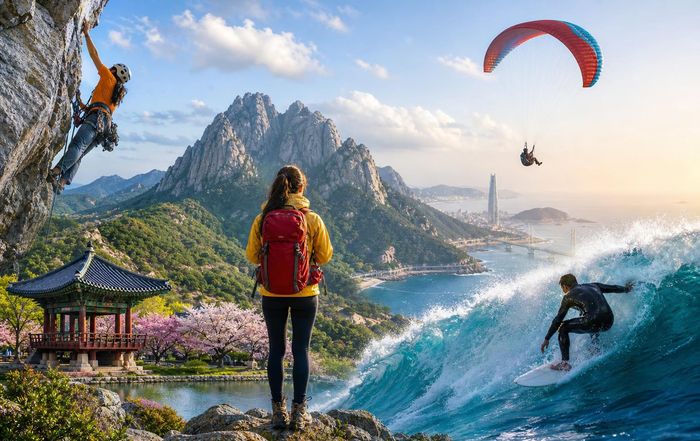
Adventure Sports and Travel Experiences in South Korea
South Korea has quietly become one of Asia's most compelling adventure playgrounds. Beyond K-pop, skincare, and neon cityscapes, the country offers steep granite peaks, rugged coastlines, island archipelagos, winter sports resorts, and a dense network of national parks that are easy to reach on public transport. For travelers who want to combine adrenaline with culture, food, and modern convenience, it is an unusually accessible destination.
This exciting guide explores the core adventure sports and travel experiences across South Korea, how to approach them safely, and how they fit into a broader journey that might also include city life, history, and contemporary Korean culture.
Hiking and Peak-Bagging in Korea's National Parks
Hiking is arguably South Korea's national pastime. On weekends, trails fill with everyone from ultra-fit seniors in technical gear to young couples and trail runners. The country's 22 national parks cover roughly 6.7% of its land area, and many are within a few hours of Seoul or Busan.
The Korea National Park Service maintains detailed information on routes, seasonal closures, and safety notices for parks such as Seoraksan, Jirisan, and Bukhansan on its official site (KNPS). Seoraksan, in the northeast near Sokcho, offers some of the country's most dramatic granite spires and autumn foliage. Popular routes include the Ulsanbawi Rock trail, which climbs steep metal staircases to a panoramic ridge, and longer routes to Daecheongbong, one of Korea's highest summits. Jirisan in the south is known for multi-day ridge hikes and shelters where advance reservations are required.
Even close to Seoul, Bukhansan National Park provides steep, rocky ascents with city views and is often cited as one of the most visited urban national parks in the world. Trails are well-marked, but gradients can be surprisingly demanding. Visitors used to more remote trekking regions may be struck by how structured Korean hiking culture is: clear signage, frequent ranger stations, and a strong emphasis on staying on designated trails. For travelers interested in performance and outdoor conditioning, these parks can double as challenging training grounds; readers can also explore broader performance perspectives on how altitude gain, temperature, and terrain affect endurance.
Rock Climbing, Via Ferrata, and Scrambling
South Korea's geology lends itself to rock sports. Traditional roped climbing areas exist across the country, with well-known crags at Insubong in Bukhansan, as well as areas near Chuncheon and Danyang. The Korean Alpine Federation and local climbing gyms often serve as entry points for visiting climbers who want to connect with local partners or hire guides, though most formal information is in Korean.
A more accessible option for many travelers is the growing number of via ferrata-style routes and protected scrambles. While not as extensive as in the Alps, some parks feature metal stairs, chains, and fixed rails that turn steep rock faces into secure, though still exposed, routes. Seoraksan's Ulsanbawi, for instance, blends hiking with scrambling and manufactured steps. These routes are not "technical climbing" in the strict sense, but they demand good fitness, a head for heights, and attention to weather, particularly in winter when ice can form on metal stairs.
Climbers should be aware that regulations in national parks can be strict, particularly around off-route scrambling and bolting. Checking current rules via KNPS safety guidelines and, where necessary, contacting local climbing clubs is essential. Those prioritizing risk management can also draw on broader safety advice to evaluate exposure, equipment, and emergency planning.
Cycling and Bikepacking: Rivers, Coasts, and Islands
South Korea has invested heavily in long-distance cycling infrastructure. The Four Rivers Bike Path network, overseen by Korea Water Resources Corporation (K-water), allows cyclists to ride from Seoul to Busan largely on dedicated riverside paths. K-water provides English-language information on the network and its certification system on its Four Rivers cycling pages (details often shift, so checking the latest routes and stamp locations is important).
The Han River paths in Seoul are a good starting point, with rental bikes, convenience stores, and night views of the city. Multi-day riders often follow the Nakdong River towards Busan, staying in inexpensive motels or "jjimjilbang" (public bathhouses with sleeping areas). The terrain is mostly gentle, making it suitable for a wide range of fitness levels, though summer humidity and monsoon rains can be challenging.
Cyclists looking for more rugged scenery are increasingly drawn to the east coast near Gangneung and Sokcho or to island-hopping routes around Jeju Island. Jeju's 234-kilometer coastal bike loop, promoted by the Jeju Tourism Organization, offers lava cliffs, beaches, and views of Hallasan volcano. The JTO's official site (Visit Jeju) publishes route maps and seasonal advisories. Combining these routes with broader travel and destination planning allows visitors to mix cycling days with rest days focused on food, culture, or diving.
Surfing, Diving, and Coastal Adventures
South Korea's coastline offers more than it is often given credit for. Surfing has grown rapidly, especially on the east coast. Yangyang in Gangwon Province has emerged as a major surf hub, with multiple surf schools and board rentals along Hajodae and Ingu beaches. Local operators typically monitor swell forecasts from agencies such as the Korea Meteorological Administration (KMA), which also provides marine weather warnings useful for independent surfers.
Jeju Island and parts of the south coast host surfable waves in typhoon season, though conditions can be unpredictable and sometimes dangerous. For most visitors, staying within lifeguarded zones and using licensed surf schools is the safest approach. Wetsuits are recommended outside peak summer due to relatively cool water temperatures.
Diving is concentrated around Jeju and the southern coast, where volcanic rock and relatively clear water create good visibility. Jeju is also home to the haenyeo, female free divers recognized by UNESCO as an element of Intangible Cultural Heritage. While tourist dives are typically scuba-based and run by modern operators, the presence of the haenyeo adds a cultural dimension to underwater exploration. Responsible operators increasingly emphasize reef protection, avoiding contact with marine life, and adherence to local conservation rules, aligning with broader discussions about ethics in adventure tourism.
Winter Sports: Skiing and Snowboarding
South Korea's mountains are not as high as those in the Alps or Rockies, but they are snowy enough to support a cluster of ski resorts that are easy to reach from major cities. Resorts such as Yongpyong, Alpensia, and Phoenix Pyeongchang-all in Gangwon Province-gained international attention during the PyeongChang 2018 Winter Olympics. Official information on facilities and seasonal operations is available via the PyeongChang County and individual resort websites.
Most Korean resorts cater strongly to beginners and intermediates, with extensive grooming and night skiing. Snow quality can be variable, with heavy reliance on artificial snow, but the infrastructure is modern and family-friendly. For travelers based in Seoul, resorts like Vivaldi Park or Konjiam can be visited as day trips, often via shuttle buses.
Safety standards are generally comparable to those in other developed ski markets, but slopes can become crowded on weekends and holidays. Wearing helmets, understanding local slope etiquette, and checking live crowd information where available are important. For those interested in the business and infrastructure side of winter sports, Korea's rapid resort development provides a case study in how business and tourism policy intersect with sport.
Trail Running, Ultra Events, and Fitness Culture
The same mountains that support hiking have also fueled a growing trail running and ultra-endurance scene. Events like the TransJeju ultra trail race (part of the UTMB World Series in recent years) attract international runners to Jeju's volcanic trails. The race's official site and UTMB's world series calendar provide details on distances, qualification standards, and environmental guidelines.
Around Seoul and Busan, informal trail running groups often organize social runs in parks like Bukhansan or Geumjeongsan. Korean fitness culture emphasizes performance tracking and data, with widespread use of apps such as Strava and local platforms. This aligns with a broader interest in measurable performance improvement, from VO₂ max to recovery protocols.
Visitors should be aware that Korean trails can be steeper and more technical than their distance might suggest, with frequent stairs and rocky sections. Hydration can be a challenge in humid summers, while winter runs may encounter ice and snow. Checking route conditions via local clubs or online communities before committing to long efforts is advisable.
Urban Adventures: Beyond the Backcountry
Adventure in South Korea is not confined to remote areas. Cities like Seoul, Busan, and Incheon offer urban experiences that appeal to travelers who enjoy movement, exploration, and cultural immersion as much as traditional sport.
In Seoul, extensive riverside parks along the Han River host running tracks, bike paths, outdoor gyms, and paddleboard rentals. Nighttime cycling or jogging under illuminated bridges provides a distinctive atmosphere, blending city lights with open space. Busan's Haeundae and Gwangalli beaches support stand-up paddleboarding, kayaking, and coastal walks that combine sea views with skyscraper skylines.
Urban hiking is also a distinct phenomenon. Routes such as the Seoul City Wall Trail, promoted by the Seoul Metropolitan Government (Visit Seoul), traverse historic fortifications and forested ridges with views over downtown. These hikes often end in neighborhoods dense with restaurants and cafés, making it easy to blend physical activity with culinary exploration and nightlife, themes that connect naturally with broader lifestyle interests.
Safety, Regulations, and Seasonal Considerations
South Korea is generally considered a safe country for travelers, with low violent crime rates and well-developed infrastructure. However, adventure activities carry inherent risks, and some local conditions require specific attention. The Korean Ministry of Foreign Affairs and many foreign embassies publish up-to-date travel advisories; checking both your home country's advisory and Korean authorities' information is sensible, especially regarding weather and natural hazards.
Weather can change quickly in the mountains, particularly during the summer monsoon (roughly late June to late July) and typhoon season (late summer to early autumn). The Korea Meteorological Administration provides real-time weather, typhoon tracks, and heat or cold wave advisories. In winter, cold snaps can push temperatures well below freezing, with wind chill on exposed ridges. Appropriate layering, traction devices (like microspikes), and gloves are essential for high-altitude hikes from late autumn through early spring.
Regulations in national parks are strictly enforced. Wild camping is generally prohibited; designated shelters and campsites must be used, often with advance booking. Drones are restricted in many areas, and open fires are tightly controlled due to wildfire risk. Rangers may close trails during high fire danger or after heavy rain, and ignoring closures can result in fines. For travelers used to more permissive backcountry norms, familiarizing themselves with Korean park rules through KNPS visitor guidelines is crucial and aligns with responsible adventure practice.
Culture, Etiquette, and the Social Side of Adventure
Adventure sports in South Korea are tightly interwoven with social rituals and local culture. Post-hike meals featuring "samgyeopsal" (grilled pork belly), "makgeolli" (milky rice wine), or hearty stews are almost as important as the hike itself. On busy trails, it is common to see groups sharing snacks and greeting others with a simple "annyeonghaseyo" as they pass.
Respect for nature and shared spaces is emphasized, though crowding can lead to environmental pressure on popular routes. Participating in local norms-packing out trash, staying on marked trails, and keeping noise reasonable-supports both conservation and good relations with other users. The Korea Tourism Organization (Visit Korea) offers practical etiquette tips, from public bathhouse behavior to dining customs, which can help visitors navigate social situations smoothly.
Language can be a barrier in rural areas, but signage in major parks and transport hubs increasingly includes English. Translation apps are widely used, and many younger Koreans have at least basic English skills. Joining guided tours or local clubs, where available, can deepen cultural understanding and provide context that goes beyond the physical challenge of an activity.
Planning an Adventure-Focused Itinerary
For many international visitors, the challenge is not finding adventure in South Korea but choosing among options. A balanced itinerary might combine a few days in Seoul with a national park excursion, a coastal or island segment, and perhaps a winter sports or cycling component depending on the season.
One common pattern is to begin in Seoul, using the city as a base for day hikes in Bukhansan or short cycling sessions along the Han River. From there, travelers can move east to Gangwon Province for higher mountains, surfing, or skiing, or south to Jeonju and Jirisan for longer treks. Jeju Island often anchors the end of a trip, offering a slower pace with coastal walking, diving, and volcanic landscapes. Those with a strong interest in global sports and world travel trends may also time their visit to coincide with local marathons, trail races, or surf festivals.
Transport is straightforward: Korea's KTX high-speed rail connects major cities, while buses reach smaller towns and park gateways. The Korea Rail Pass offered by KORAIL (official site) can be cost-effective for intensive rail use. Domestic flights link Seoul with Jeju and other regional airports, though environmental considerations may lead some travelers to favor rail and ferry combinations.
South Korea's appeal as an adventure destination lies in its contrasts: steep mountains rising behind dense cities, surf beaches within reach of high-speed trains, and high-tech infrastructure coexisting with centuries-old cultural practices. For travelers who want to move, test themselves, and still enjoy good food, reliable transport, and a rich cultural backdrop, it offers a compact but varied stage. With thoughtful planning, attention to local regulations, and respect for both nature and culture, it is possible to craft journeys that are physically demanding, culturally engaging, and memorable long after the gear is packed away.