

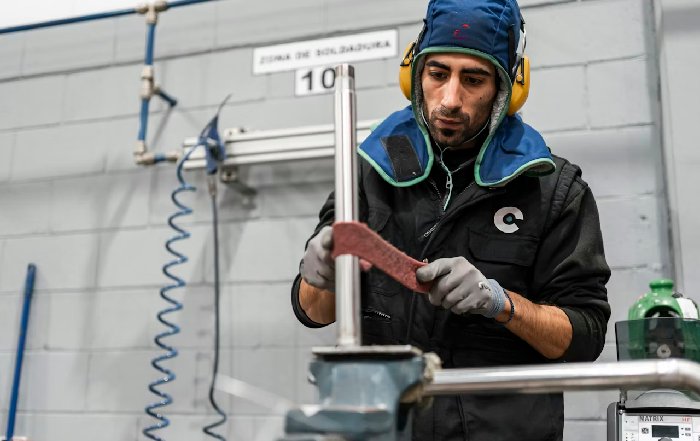
Noise as a Hazard: The Overlooked Health Crisis in Manufacturing
A New Industrial Health Imperative
Ok so the global manufacturing sector has completed its transition from a largely mechanical, analog ecosystem to an increasingly digital, automated and data-driven environment, yet one of the oldest industrial hazards remains stubbornly under-managed: noise. While executives and plant managers across the United States, Europe, Asia and other regions have invested heavily in robotics, artificial intelligence and advanced analytics to drive productivity and resilience, the pervasive impact of excessive noise on worker health, safety, performance and long-term organizational value is still too often treated as a compliance checkbox rather than a strategic risk. On xdzee.com, where audiences follow developments across business, performance, innovation and safety, noise emerges as a critical and deeply underappreciated theme that cuts across these domains and shapes the future of work in manufacturing.
The issue is not limited to heavy industry in emerging markets; it is equally relevant to advanced manufacturing clusters in the United States, Germany, Japan, South Korea and Singapore, where high-speed automation, compressed air systems, metal fabrication, packaging and logistics operations generate sound levels that regularly exceed thresholds recommended by authorities such as the World Health Organization. As global supply chains become more complex and competitive, the health costs of chronic noise exposure, from irreversible hearing loss to stress-related cardiovascular disease, are becoming a hidden drag on productivity, talent retention and brand reputation. Understanding this hazard in a modern context, and reframing it as a strategic business issue rather than a narrow occupational concern, is central to how xdzee.com approaches coverage at the intersection of world trends, industrial strategy and human wellbeing.
The Science of Industrial Noise and Its Health Impacts
Noise in manufacturing is not merely an unpleasant by-product of production; it is a measurable physical agent with well-documented physiological and psychological consequences. Industrial noise is typically characterized by its intensity, measured in decibels (dB), its frequency spectrum, and its temporal pattern, including continuous, intermittent or impulsive exposures. Organizations such as the U.S. Occupational Safety and Health Administration and the European Agency for Safety and Health at Work provide regulatory frameworks and technical guidance on acceptable exposure levels, yet a significant proportion of factories worldwide still routinely expose workers to levels above those recommended by the World Health Organization for occupational environments. Learn more about global environmental noise guidelines on the WHO website.
The primary and most recognized consequence of chronic excessive noise is noise-induced hearing loss (NIHL), a permanent and irreversible condition resulting from damage to the hair cells of the inner ear. According to analyses from institutions such as the U.S. Centers for Disease Control and Prevention, millions of workers in manufacturing, construction and related industries remain at risk of NIHL, despite decades of awareness campaigns and the availability of relatively low-cost hearing protection. However, modern epidemiological research, including work published by the National Institutes of Health, has broadened the understanding of noise as a systemic health hazard, linking long-term exposure not only to hearing damage but also to elevated blood pressure, increased risk of ischemic heart disease, sleep disturbances, cognitive impairment and mental health challenges such as anxiety and depression. Readers can explore the evolving science of occupational noise and cardiovascular risk through resources provided by the NIH.
These effects are not uniform across populations or regions. Studies from European research bodies, including the European Environment Agency, indicate that workers in densely industrialized regions of Germany, Italy, Spain and the Netherlands may experience cumulative exposure due to overlapping industrial, urban and transportation noise. At the same time, rapid industrialization in parts of Asia, notably China, Thailand, Malaysia and South Korea, has led to a surge in manufacturing employment in environments where noise controls have not always kept pace with production growth. As global audiences on xdzee.com follow news about supply chain shifts and industrial policy, it is essential to understand that the health implications of noise are not a localized issue but a global public health concern that spans continents and production models.
The Business Case: Productivity, Quality and Talent in a Noisy World
For business leaders, investors and policy makers, the most compelling argument for addressing noise as a core strategic issue in manufacturing is not only moral or regulatory, but economic. Excessive noise undermines nearly every dimension of performance that modern factories rely on to remain competitive in a volatile global market. Research compiled by organizations such as the International Labour Organization has demonstrated that high noise levels impair concentration, slow reaction times, increase error rates and elevate accident risks, all of which translate directly into lost productivity, higher rework rates and increased downtime. Learn more about the relationship between workplace conditions and productivity through the ILO's resources.
In advanced manufacturing environments in the United States, United Kingdom, Canada and Australia, where automation and lean production techniques are widely deployed, process reliability and quality depend heavily on operators' ability to detect anomalies, respond swiftly to alarms and collaborate effectively in dynamic settings. Excessive noise interferes with verbal communication, reduces situational awareness and can mask auditory cues that signal equipment malfunction, leading to delayed interventions and more severe failures. Studies cited by the U.S. National Institute for Occupational Safety and Health have linked noisy workplaces to higher rates of occupational injuries, reinforcing the argument that noise control is integral to both safety and operational excellence. Readers can examine these findings in greater detail on the NIOSH website.
From a talent perspective, the manufacturing sector is already facing severe skills shortages in many regions, particularly in high-cost economies such as Germany, Switzerland, Japan and the Nordic countries, where demographic trends and the attractiveness of alternative career paths have made recruitment and retention a strategic priority. Younger workers, especially in Europe, North America and Asia-Pacific, increasingly evaluate employers based on working conditions, wellbeing policies and perceived respect for employee health. Excessive noise, even when partially mitigated by personal protective equipment, sends a powerful negative signal about workplace culture and management priorities. As xdzee.com explores in its jobs and lifestyle coverage, the next generation of industrial talent expects environments that are not only safe but also psychologically supportive and conducive to long-term career development.
Noise also intersects with brand and reputation risk, particularly for multinational manufacturers and consumer-facing companies whose supply chains span regions such as South Africa, Brazil, India, China and Southeast Asia. Stakeholders, including institutional investors guided by frameworks such as those developed by the Sustainability Accounting Standards Board and the Global Reporting Initiative, increasingly scrutinize occupational health metrics as part of environmental, social and governance (ESG) evaluations. Learn more about how occupational health factors into ESG reporting through the GRI's standards. Repeated incidents of hearing loss, worker protests over noise levels, or investigative reporting on unsafe sound environments can erode trust, disrupt operations and damage brand equity, particularly in sectors such as automotive, electronics and branded industrial equipment where long-term customer relationships are critical.
Regional and Global Regulatory Landscapes
The regulatory context for noise in manufacturing is evolving unevenly across jurisdictions, but the overall trend is toward stricter standards, more sophisticated measurement requirements and greater integration of noise into broader occupational health and ESG frameworks. In the United States, the Occupational Safety and Health Administration sets permissible exposure limits and mandates hearing conservation programs for employers whose workers are exposed to certain noise thresholds. These programs typically require regular audiometric testing, provision of hearing protection and employee training, yet compliance and enforcement remain variable, particularly among smaller manufacturers and subcontractors. Business leaders can review current U.S. regulatory expectations on the OSHA noise topic page.
In the European Union, directives on physical agents, including noise, have driven member states such as Germany, France, Italy, Spain, Netherlands, Sweden, Norway, Denmark and Finland to adopt more harmonized approaches to risk assessment, exposure control and worker consultation. The European Agency for Safety and Health at Work provides extensive guidance, case studies and tools to support employers in implementing noise management strategies that go beyond minimum compliance and aim for continuous improvement. Learn more about EU-level guidance on the EU-OSHA website. In United Kingdom, post-Brexit regulatory frameworks still largely align with prior EU directives, but there is increasing emphasis on integrating noise control into broader initiatives around mental health, wellbeing and sustainable productivity.
In Asia-Pacific, regulatory regimes vary widely. Countries such as Japan, South Korea and Singapore have relatively mature occupational health systems with clear noise standards and active enforcement, while rapidly industrializing economies such as Thailand, Malaysia and some parts of China continue to strengthen their frameworks amid fast-moving industrial growth. The International Organization for Standardization has contributed to a more coherent global approach through standards such as ISO 45001 on occupational health and safety management systems, which encourage organizations to treat noise as part of a holistic risk management process rather than as an isolated hazard. Businesses seeking to align with international best practice can explore ISO's work on occupational safety on the ISO website.
In emerging markets across Africa and South America, including South Africa and Brazil, the challenge often lies not in the absence of regulations but in limited enforcement capacity, resource constraints and competing development priorities. Here, multinational companies and global brands play a particularly important role in setting higher internal standards for their facilities and suppliers, leveraging their purchasing power to encourage investments in noise control and worker health. As xdzee.com continues to expand its world and business reporting, the interplay between local regulation, global standards and corporate responsibility in managing noise will remain a critical area of analysis.
Technology, Innovation and the Quiet Factory
While noise is an old problem, the tools available to address it are increasingly modern, data-driven and aligned with the broader digital transformation of manufacturing. Advances in sensor technology, edge computing and industrial Internet of Things platforms have made it possible to monitor sound levels in real time across complex facilities, identify hotspots, correlate noise patterns with machine states and integrate noise data into predictive maintenance systems. Organizations such as Siemens, Bosch, ABB and other leading industrial technology providers have begun to embed acoustic analytics into their solutions, enabling manufacturers to detect emerging mechanical issues before they escalate into failures, while simultaneously managing noise exposure. Readers interested in the intersection of digitalization and industrial safety can explore resources from the World Economic Forum, which has profiled "lighthouse" factories using advanced technologies for health and safety, via its manufacturing insights.
Acoustic engineering itself has evolved, with greater emphasis on source control, path control and receiver protection designed into equipment and facilities from the outset. Machine manufacturers in Germany, Japan and Italy now routinely market low-noise variants of compressors, presses and cutting tools, recognizing that sound performance is a differentiating factor in procurement decisions. Architectural and industrial design practices increasingly incorporate sound-absorbing materials, optimized layouts and enclosure systems that reduce reverberation and isolate noisy processes, drawing on research from institutions such as the Acoustical Society of America. Learn more about emerging acoustic design solutions through the ASA's publications.
Personal protective equipment has also improved, moving beyond basic earplugs and earmuffs to smart hearing protection devices that integrate communication systems, selective attenuation and connectivity to plant networks. In advanced facilities in Canada, Australia, Netherlands and Switzerland, workers can now use intelligent headsets that allow clear communication at safe volumes while automatically reducing harmful peaks, thereby addressing the longstanding tension between hearing protection and operational communication. These innovations align closely with themes explored on xdzee.com under performance, innovation and safety, where the focus is on solutions that enhance both human capability and protection.
Importantly, the rise of automation and robotics presents both challenges and opportunities. High-speed robotic systems, automated material handling and autonomous mobile robots can reduce the need for human presence near the loudest processes, enabling remote monitoring and supervision from quieter control rooms. At the same time, some automated systems introduce new noise sources, such as high-frequency whines or impact sounds, that require careful design and mitigation. Thoughtful integration of automation, acoustics and ergonomics is therefore essential to realizing the vision of a "quiet factory" that is not only efficient but also genuinely health-promoting.
Ethics, Culture and Leadership: Beyond Compliance
Treating noise purely as a technical or regulatory issue misses its deeper ethical and cultural dimensions. At its core, chronic exposure to harmful noise reflects decisions about whose comfort, health and long-term wellbeing are prioritized in the design and operation of industrial systems. When noise is normalized as "part of the job," it signals that worker experience is secondary to throughput, reinforcing a culture in which other hazards and psychosocial risks may also be minimized or ignored. For a platform like xdzee.com, which dedicates coverage to ethics and culture, this raises fundamental questions about what responsible manufacturing leadership looks like in 2026.
Ethical frameworks articulated by organizations such as the United Nations Global Compact and the OECD emphasize the duty of companies to prevent harm, respect human rights and provide safe, healthy working conditions across their operations and supply chains. Learn more about responsible business conduct through the UN Global Compact. Chronic noise exposure that predictably leads to hearing loss and other health problems over time can be understood as a form of preventable harm, particularly when cost-effective mitigation measures are available but not implemented. Leaders who choose to invest in noise control, even beyond regulatory requirements, are not only reducing legal and financial risk but also affirming a commitment to dignity and respect for their workforce.
Culture plays a decisive role in whether noise is effectively managed. In organizations where employees feel empowered to speak up about excessive noise, raise concerns and participate in problem solving, hazards are more likely to be identified early and addressed collaboratively. Conversely, in environments where complaints are dismissed or where production pressures override safety, workers may resign themselves to dangerous conditions or resort to informal workarounds that undermine both safety and efficiency. Case studies compiled by the Chartered Institute of Personnel and Development and similar bodies illustrate how inclusive safety cultures, in which frontline workers are actively engaged in designing solutions, can significantly improve both health outcomes and operational performance. Readers can explore the link between employee voice and workplace safety on the CIPD website.
Leadership visibility is critical. When senior executives and plant managers routinely visit shop floors, wear appropriate hearing protection, ask detailed questions about noise levels and support investments in engineering controls, they send a clear signal that noise is a strategic priority. Integrating noise metrics into key performance indicators, executive dashboards and sustainability reports further reinforces this message and aligns noise control with broader corporate objectives. On xdzee.com, where business and brands coverage often highlights leaders who align values with operations, examples of companies that have transformed noisy, hazardous plants into quieter, high-engagement workplaces are likely to resonate strongly with readers across North America, Europe, Asia, Africa and South America.
Integrating Noise into the Future of Work in Manufacturing
As manufacturing continues to evolve, with trends such as reshoring, nearshoring, smart factories and sustainable production reshaping global industrial geography, noise must be integrated into broader conversations about the future of work, industrial strategy and societal wellbeing. For regions seeking to attract advanced manufacturing investment, such as parts of Eastern Europe, Southeast Asia and Africa, the ability to offer not only cost-competitive but also safe, health-promoting workplaces will be a key differentiator. For established industrial powers in United States, Germany, Japan and the Nordic countries, upgrading legacy facilities to reduce noise exposure is both a modernization imperative and a signal of long-term commitment to workers.
The intersection of noise with other thematic areas that interest xdzee.com's audience-sports, adventure, travel and destination-may seem indirect at first glance, yet there are meaningful parallels. High-performance athletes and explorers understand that marginal gains in performance often come from attention to seemingly small environmental factors, including sound, focus and recovery. Similarly, cities and regions positioning themselves as attractive destinations for tourism, talent and investment increasingly recognize that soundscapes matter; excessive urban and industrial noise detracts from quality of life and long-term sustainability. Urban planning resources from organizations like UN-Habitat highlight noise management as a key component of livable cities, which readers can explore through UN-Habitat's urban environment materials.
In this broader context, manufacturing noise is not an isolated technical issue but part of a continuum of sound management that spans workplaces, communities and natural environments. Companies that lead in creating quieter factories contribute not only to the health of their employees but also to the wellbeing of surrounding neighborhoods, reducing complaints, strengthening community relations and aligning with global goals such as the UN Sustainable Development Goals, particularly those related to health, decent work and sustainable cities. Learn more about how occupational health aligns with the SDGs on the United Nations SDG portal.
For xdzee.com, headquartered in a digital space that connects readers from United States and Canada to Europe, Asia-Pacific, Africa and Latin America, the story of noise as an overlooked health crisis in manufacturing is also a story about the kind of industrial future societies choose to build. It is about whether technological progress and efficiency gains are pursued at the expense of human wellbeing, or whether innovation, ethics and culture can be aligned to create workplaces where people can thrive over long careers without sacrificing their hearing, cardiovascular health or mental resilience.
As manufacturers, policymakers, investors and workers navigate this transition, the role of rigorous, experience-driven and trustworthy information becomes essential. By examining noise not only as a hazard but as a lens on leadership, strategy and culture, xdzee.com aims to support a more informed global conversation-one that recognizes that the quiet factory is not merely a technical aspiration, but a symbol of a more humane and sustainable industrial age. Readers exploring business, innovation, ethics and culture on xdzee.com will find that noise, once treated as background, is in fact central to how manufacturing will define its legacy in the decades ahead.