

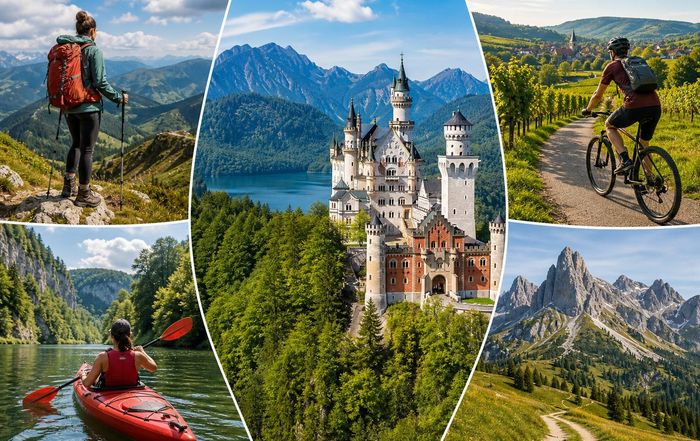
Destination Ideas for Active Trips in Germany
Germany has entered 2026 as one of Europe's most compelling destinations for active travel, combining world-class infrastructure, diverse landscapes and a strong culture of outdoor recreation with a mature commitment to safety, sustainability and innovation. For adventure sport lovers and readers of xdzee.com, whose interests usually cover sport, adventure, travel, lifestyle, performance and business, Germany offers a rich portfolio of destinations that can support high-intensity training, family-friendly activity holidays, corporate retreats and culture-infused weekend escapes. From alpine ascents and long-distance cycling to urban running routes and water sports, the country's regions present a mosaic of opportunities for active trips that align with modern expectations of experience, expertise, authoritativeness and trustworthiness in travel planning.
Why Germany Has Become a Benchmark for Active Travel
In recent years Germany has systematically invested in outdoor infrastructure, sustainable mobility and visitor safety, positioning itself as a benchmark for active tourism in Europe and beyond. The national tourism organization Deutsche Zentrale für Tourismus has consistently promoted cycling, hiking and wellness as pillars of the country's visitor economy, while federal and state authorities have reinforced this strategy with integrated public transport, clearly signposted trails and robust emergency services. Travelers from the United States, the United Kingdom, Canada, Australia and across Europe have found that Germany's combination of reliability, high-quality facilities and varied terrain makes it an attractive alternative or complement to more traditional alpine or Mediterranean destinations.
For active travelers who also follow global trends in performance and safety, Germany's reputation for engineering excellence and regulatory rigor provides an additional layer of reassurance. Those seeking to understand how active travel intersects with broader business and lifestyle shifts can explore related insights on xdzee business and xdzee lifestyle, where the evolution of sports tourism, wellness travel and outdoor brands is examined in a global context.
Bavaria and the German Alps: High-Performance Adventures in the South
No discussion of active trips in Germany can begin anywhere other than Bavaria and the German Alps, where dramatic peaks, pristine lakes and meticulously maintained infrastructure come together to create a playground for mountaineers, trail runners, cyclists and winter sports enthusiasts. The region around Garmisch-Partenkirchen, home to Germany's highest peak, the Zugspitze, offers demanding alpine routes, via ferrata climbs and ski touring options that attract serious athletes from Germany, Switzerland, Italy and beyond, while still providing accessible cable cars and marked trails for less experienced visitors.
Around Berchtesgaden National Park, travelers encounter one of Germany's most visually striking landscapes, where the Watzmann massif, Lake Königssee and dense forests provide a setting for multi-day hiking, mountain biking and trail running. Those seeking deeper background on protected alpine environments can consult UNESCO's World Heritage overview, which contextualizes the role of such regions in global conservation and sustainable tourism. For xdzee.com's audience, this area illustrates how performance and safety can coexist, as local authorities enforce strict regulations on trail use, avalanche risk management and wildlife protection while still encouraging ambitious outdoor challenges.
The Bavarian Alps are also a case study in how active travel intersects with lifestyle and culture. Traditional mountain huts serve locally sourced food, and alpine towns host seasonal festivals that connect visitors with regional customs. Readers interested in how such cultural dimensions shape destination appeal can find complementary coverage on xdzee culture and xdzee destination, where the interplay of heritage, branding and visitor experience is explored in depth.
The Black Forest: Trail Networks, Wellness and Multi-Sport Experiences
The Black Forest (Schwarzwald) in southwestern Germany has long been associated with dense forests and spa culture, but in 2026 it has fully matured into a sophisticated active travel destination that caters to hikers, cyclists, trail runners and wellness travelers. Extensive networks of waymarked trails such as the Westweg and Schluchtensteig offer multi-day itineraries through varied terrain, from deep gorges to panoramic ridge lines, supported by a dense infrastructure of guesthouses, mountain inns and wellness hotels.
For cyclists and mountain bikers, the region's dedicated routes and bike parks provide both endurance-oriented and technical challenges, while e-bike infrastructure makes longer distances accessible to a broader range of visitors. Those seeking to understand best practices in sustainable trail management can review the work of Outdooractive, a platform widely used in Germany for digital mapping, route planning and safety information, which has become integral to how visitors and local authorities coordinate responsible use of natural areas.
The Black Forest also exemplifies how Germany integrates wellness and health into active travel. Spa towns such as Baden-Baden and Bad Wildbad combine thermal baths, medical expertise and outdoor activities in a way that appeals to health-conscious travelers from the United States, the United Kingdom and across Asia. Readers interested in the business and jobs dimension of this wellness-driven tourism model can turn to xdzee jobs, where the growth of health tourism and its impact on local labor markets and service innovation is analyzed.
The North Sea and Baltic Coasts: Wind, Water and Long-Distance Trails
Germany's northern coastline, stretching along the North Sea and Baltic Sea, has emerged as a prime destination for travelers seeking active experiences that combine water sports, coastal cycling and nature observation. The Wadden Sea, shared with the Netherlands and Denmark, is recognized as a unique tidal ecosystem and a UNESCO World Heritage Site, offering guided mudflat hikes, birdwatching and educational excursions that emphasize environmental stewardship. Those wishing to deepen their understanding of this ecosystem's significance can explore resources from WWF Germany, which highlight conservation efforts and visitor guidelines.
Along the Baltic Sea, islands such as Rügen and Usedom have invested heavily in cycling paths, running routes and water sports infrastructure, including kite surfing and stand-up paddling. Long-distance routes like the Baltic Sea Cycle Route connect coastal towns and beaches, allowing travelers to design multi-day itineraries that balance physical exertion with relaxation and cultural exploration. For xdzee.com's readers, this region is particularly relevant to discussions on safety and innovation in water sports, which are covered in complementary fashion on xdzee safety and xdzee innovation.
The northern coasts also illustrate Germany's broader commitment to sustainable mobility, as many resorts encourage visitors to arrive by train and use bicycles or local buses instead of private cars. Insights on sustainable transport models can be drawn from Deutsche Bahn's expanding network of regional connections, which has improved access from major cities like Hamburg, Berlin and Munich to remote coastal areas, making active trips more feasible for international visitors from North America, Asia and other parts of Europe.
The Rhine, Moselle and Wine Regions: Cycling, Running and Cultural Immersion
For travelers who wish to combine physical activity with cultural and culinary experiences, the river valleys of the Rhine and Moselle provide an ideal setting. Their terraced vineyards, historic castles and riverside towns create a picturesque environment for cycling, running and hiking, supported by well-maintained paths and frequent ferry crossings that facilitate flexible itineraries. The Rhine Cycle Route and Moselle Cycle Route are particularly popular among visitors from the United Kingdom, the Netherlands and Switzerland, who appreciate the combination of scenic variety, reliable infrastructure and high-quality accommodation.
These regions also demonstrate how wine tourism can intersect with responsible travel. Many wineries now offer e-bike charging stations, guided vineyard runs and sustainability tours explaining soil management, biodiversity and climate adaptation. Travelers who wish to understand broader trends in sustainable agriculture and gastronomy can consult the work of Slow Food International, which provides context for how regional producers in Germany and across Europe are adapting to changing consumer expectations.
For xdzee.com, the Rhine and Moselle valleys are also an opportunity to connect adventure and lifestyle content, as river cruises, boutique hotels and gourmet experiences increasingly cater to active travelers rather than purely leisure-oriented guests. This evolution aligns with themes explored on xdzee brands, where the repositioning of hospitality and outdoor brands toward performance-minded, ethically aware customers is tracked across global markets.
Urban Active Escapes: Berlin, Munich, Hamburg and Beyond
Germany's major cities have evolved into sophisticated hubs for urban active travel, where visitors can combine cultural exploration, business meetings and high-quality training within a single trip. Berlin, with its extensive parks, lakes and cycling lanes, has become a magnet for runners, cyclists and triathletes who value the city's creative energy and relatively flat terrain. Routes along the Spree River, through the Tiergarten and around the former Tempelhof airfield provide varied settings for daily workouts, while a dense network of gyms, studios and wellness spaces supports both residents and visitors.
Munich, often seen as the gateway to the Alps, offers a different urban experience, where the Isar River, English Garden and proximity to lakes such as Starnberger See and Ammersee allow travelers to integrate swimming, stand-up paddling and cycling into their itineraries. Hamburg, with its port, canals and lakes, has developed a strong rowing, sailing and running culture, enhanced by waterfront redevelopment projects that prioritize pedestrian and cycling access. Those interested in how cities are redesigning public space to support active lifestyles can explore research from C40 Cities, which documents climate-smart urban planning across global metropolises, including German examples.
For business travelers, these cities offer a compelling proposition: high-quality conference facilities and corporate offices combined with easy access to training routes and outdoor experiences, enabling healthier, more balanced work trips. This convergence of business and active travel is regularly examined on xdzee news and xdzee world, where the international implications of workplace wellness, hybrid work and mobility trends are analyzed.
Long-Distance Trails and Cycling Routes: Structure for Serious Endeavors
Germany's extensive network of long-distance hiking and cycling routes provides a structural backbone for active trips that demand clear planning, measurable performance and reliable support. Well-known hiking routes such as the Rennsteig in Thuringia, the Eifelsteig in western Germany and the Harzer-Hexen-Stieg in the Harz Mountains attract both domestic and international visitors seeking multi-day, self-guided adventures. These routes are typically marked with standardized signage, supported by public transport connections and integrated into digital navigation platforms, making them accessible even to first-time visitors.
On the cycling side, Germany's commitment to long-distance infrastructure is reflected in routes like the EuroVelo network segments that cross the country, connecting it to France, the Netherlands, Denmark, Poland and beyond. The European Cyclists' Federation provides an overview of these transnational routes and highlights best practices in cycling infrastructure, many of which are implemented in German states. For performance-oriented travelers, such structured routes allow for precise training plans, stage-by-stage progress tracking and integration of rest days in culturally rich towns.
This level of organization and transparency supports xdzee.com's emphasis on trustworthiness and expertise. Active travelers planning ambitious itineraries can rely on Germany's official tourism portals, regional websites and mapping tools to obtain accurate information on elevation, surface conditions and seasonal constraints, complementing the editorial insights available on xdzee sports and xdzee performance, where training strategies and gear considerations for different terrains are discussed.
Safety, Ethics and Environmental Responsibility in German Outdoor Travel
Germany's approach to outdoor safety and environmental responsibility has become a model for other destinations seeking to balance growing visitor numbers with ecosystem protection. Clear regulations on trail use, camping, drone flights and wildlife disturbance are communicated through signage and digital platforms, and enforced by local authorities and park rangers. Emergency services are well coordinated, with mountain rescue, water rescue and medical facilities integrated into regional planning.
Organizations such as the German Alpine Club (DAV) play a crucial role in educating climbers, hikers and ski tourers about risk management, equipment and environmental ethics, while also maintaining huts and routes in the Alps and other mountain regions. For travelers who wish to understand the ethical dimensions of outdoor recreation, resources from Leave No Trace provide a global framework that aligns closely with practices recommended in Germany's national parks and nature reserves.
These safety and ethics considerations resonate with xdzee.com's editorial focus on responsible travel and performance under realistic constraints. Readers can explore related themes on xdzee ethics and xdzee adventure, where questions of risk, responsibility and environmental impact are addressed in relation to both individual trips and the broader development of adventure tourism across Europe, North America, Asia and Africa.
Innovation, Data and the Future of Active Trips in Germany
By 2026, Germany's active travel landscape is increasingly shaped by innovation in digital services, equipment and data-driven planning. Navigation apps, wearables and route-planning platforms allow travelers to monitor performance, adapt itineraries to weather conditions and share real-time updates with friends or family. Regional tourism boards collaborate with technology companies and research institutions to develop smart trail systems, where sensors provide information on trail usage, erosion and wildlife movement, helping authorities manage capacity and protect sensitive areas.
This innovation ecosystem intersects with Germany's broader role in the global sports and outdoor industry, where brands, research labs and universities collaborate on materials science, biomechanics and sustainability. Those interested in the scientific and business dimensions of these developments can consult the work of ISPO, a leading international sports business network and trade fair based in Munich, which showcases emerging trends in outdoor gear, digital coaching and sports technology.
For xdzee.com, these innovations are not merely technical details but part of a broader narrative about how active travel is evolving in response to climate change, demographic shifts and changing work patterns. As hybrid work and digital nomadism become more common in countries such as the United States, Canada, the United Kingdom, Germany and Australia, destinations that offer reliable connectivity, safe outdoor environments and supportive services gain a competitive edge. Coverage on xdzee travel and the main xdzee homepage regularly tracks how Germany and other countries adapt to this new landscape, highlighting opportunities for travelers, businesses and local communities.
Strategic Considerations for Planning an Active Trip to Germany
Planning an active trip to Germany in 2026 requires more than simply choosing a region or activity; it involves aligning personal goals, safety considerations, cultural interests and logistical factors in a coherent strategy. Travelers should begin by clarifying their primary objectives, whether they relate to performance improvement, adventure, wellness, family bonding or professional networking, and then select destinations that support these aims without compromising on safety or environmental responsibility.
For high-performance training, the Bavarian Alps, Black Forest and long-distance cycling routes offer the necessary terrain and infrastructure, while urban hubs such as Berlin, Munich and Hamburg provide access to coaching, sports medicine and cross-training facilities. Those prioritizing wellness and lifestyle may gravitate toward spa towns, wine regions and coastal resorts, where moderate activity can be combined with relaxation and cultural immersion. Travelers with a strong ethical and environmental focus should research protected areas, seasonal restrictions and local conservation initiatives, making use of resources from Germany's Federal Environment Agency to understand current regulations and climate considerations.
From a practical perspective, Germany's transport network, accommodation standards and healthcare system reduce many of the uncertainties associated with active travel in more remote or less regulated regions. However, travelers should still ensure that their insurance covers high-risk activities such as mountaineering, skiing or water sports, and that they are familiar with local emergency numbers and procedures. For those interested in how risk management and safety protocols are evolving globally, coverage on xdzee safety offers comparative insights that can inform personal decision-making.
Germany in the Global Context of Active Destinations
When viewed alongside other leading active destinations such as Switzerland, Austria, Italy, New Zealand, Canada and Japan, Germany stands out for its combination of accessibility, diversity and reliability. While it may not offer the highest peaks or warmest beaches, its strength lies in the breadth of experiences available within a relatively compact territory, supported by a culture that values order, safety and environmental stewardship. This makes Germany particularly attractive to travelers from regions such as North America, Scandinavia and East Asia who seek active itineraries that can be integrated into broader European trips without excessive logistical complexity.
International organizations such as the World Tourism Organization (UNWTO) have highlighted the growing importance of nature-based and adventure tourism in global travel patterns, and Germany's approach aligns closely with recommendations on sustainability, community involvement and diversification of rural economies. For xdzee.com's global audience, which spans Europe, Asia, Africa, South America and North America, Germany serves as both a destination and a reference model for how countries can develop active travel offerings that are economically viable, environmentally responsible and socially inclusive.
As active travelers plan their next itineraries, Germany's regions-from the Alps and Black Forest to the coasts, river valleys and dynamic cities-offer a rich palette of options that can be tailored to different performance levels, interests and values. Through continuous coverage on xdzee.com, readers can stay informed about emerging destinations, safety developments, brand innovations and cultural trends, ensuring that their active trips to Germany and elsewhere are not only memorable but also aligned with best practices in experience, expertise, authoritativeness and trustworthiness.