

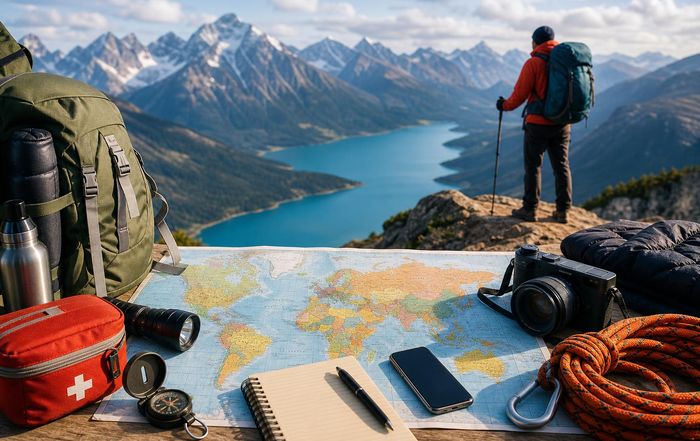
How to Plan a Safe Adventure Trip Anywhere in the World
Adventure travel promises big landscapes, big emotions, and big stories. It also comes with real risk. Whether you are eyeing a trek in Patagonia, a climbing trip in Thailand, a surf camp in Morocco, or a ski tour in the Alps, the difference between a life-affirming expedition and a crisis often comes down to planning.
This exciting yet sensible guide walks through how to design a safe, responsible adventure trip anywhere in the world: how to choose destinations and operators, understand risk, prepare physically and mentally, manage gear and insurance, and make good decisions on the ground.
Along the way, you'll find links to further resources, from avalanche and weather services to travel health and insurance guidance, so you can go deeper where you need it.
Start with the right kind of adventure for you
Before looking at maps or booking flights, it helps to define what "adventure" means for your current experience level, fitness, and risk tolerance. Many accidents stem from people choosing objectives that are a step too far.
A useful starting point is to list the activities you're considering-such as trekking, mountaineering, trail running, scuba diving, surfing, backcountry skiing, white-water rafting, or paragliding-and categorize them by technicality and consequence. For example, a guided day hike on a marked trail is low-technical and low-consequence; a high-altitude unguided mountaineering ascent is high-technical and high-consequence. Organizations like the UIAA (International Climbing and Mountaineering Federation) outline mountain difficulty and risk concepts that can help frame this thinking.
It is also worth being honest about your motivations. Are you seeking skills progression, a physical challenge, immersive landscapes, or social connection? A skills-focused climbing course, an endurance-oriented trail running camp, or a culturally rich trekking itinerary will each carry different demands and risks. Aligning your goals with your current capabilities is one of the most powerful safety decisions you can make before you ever leave home.
For readers who are still exploring options, browsing structured categories such as sports, adventure, and destination content can help clarify which experiences actually appeal, beyond the social-media highlight reel.
Research destinations through a safety lens, not just a bucket list
Once you have a sense of the kind of trip you want, the next step is to evaluate potential destinations for both opportunity and risk. Many travelers focus on scenery and price first; for adventure travel, safety-critical factors deserve at least equal weight.
Government travel advisories are a key starting point. Services such as the U.S. Department of State's Travel Advisories, the UK Foreign, Commonwealth & Development Office's foreign travel advice, and Government of Canada's Travel Advice and Advisories provide up-to-date information on security, crime, civil unrest, and natural hazards. While these advisories are broad and sometimes conservative, they help you spot red flags or regions where extra precautions are warranted.
For outdoor-specific hazards, look at local environment and seasonality. In mountain regions, national meteorological and avalanche services-such as Météo-France's avalanche bulletins or the Colorado Avalanche Information Center's forecasts-give insight into snow stability and weather patterns. In tropical destinations, check cyclone or hurricane seasons via agencies like the National Hurricane Center's tropical outlooks. For wildfire-prone areas, regional fire authorities often provide daily risk maps and restrictions.
It is also worth researching infrastructure: proximity and quality of hospitals, availability of search and rescue, and whether there is a functioning emergency response system. In many popular adventure destinations in South America, Africa, and parts of Asia, rescue may depend on local guides, volunteer teams, or private operators rather than a centralized public service. Local tourism boards and reputable guide services can usually explain what happens in an emergency and what that means for your planning.
Vet guides, operators, and courses carefully
If your adventure involves technical terrain, unfamiliar environments, or high-consequence activities, traveling with qualified guides or reputable operators significantly improves safety. However, "guided" does not automatically mean "safe." A structured vetting process helps you separate serious professionals from casual providers.
Look for internationally recognized qualifications where they exist. For mountain and ski guiding, the IFMGA/UIAGM/IVBV badge indicates a high standard of training across multiple disciplines and is widely recognized in Europe and beyond. For rock climbing instruction and guiding in North America, qualifications from the American Mountain Guides Association (AMGA) are a strong benchmark. In rafting and white-water, many countries require operator licensing and guide certifications that align with standards from bodies like the International Rafting Federation (IRF).
Beyond certificates, ask specific questions: guide-to-client ratios, experience on your intended route or river, recent incident history, emergency protocols, and whether they carry communication devices and first-aid and rescue equipment. Professional operators should be transparent about risk, not dismissive of it, and should be willing to decline or modify objectives based on conditions or group capacity.
Reviews can be useful, but prioritize detailed accounts on independent platforms over short, purely emotional ratings. Look for patterns-multiple mentions of good safety briefings, conservative decision-making, or, conversely, pressure to take unnecessary risks. When in doubt, consider paying more for an operator with demonstrably stronger safety culture rather than choosing the cheapest option.
Understand the specific risks of your chosen activity
Every adventure discipline carries its own risk profile and mitigation strategies. A generic "be careful" mindset is not enough; safety comes from understanding what typically goes wrong and how to avoid those failure points.
For high-altitude trekking and mountaineering, the primary medical risks are altitude illness, hypothermia, falls, and weather exposure. Resources from the International Society for Mountain Medicine (ISMM) and the UIAA Medical Commission's advice sheets outline evidence-based guidelines for acclimatization schedules, ascent rates, and recognition of acute mountain sickness, HAPE, and HACE. A safe itinerary will build in conservative elevation gains, rest days, and contingency time for weather.
For water-based adventures such as scuba diving, freediving, or surf trips, risks shift to drowning, barotrauma, decompression sickness, and marine hazards. Organizations like Divers Alert Network (DAN) provide extensive safety recommendations, incident analyses, and emergency hotlines. Choosing dive centers accredited by bodies such as PADI, SSI, or CMAS, and verifying equipment maintenance records, adds another layer of assurance.
Cycling, trail running, and multi-day bikepacking or fast-packing raise issues of overuse injury, road or trail accidents, and navigation errors. Understanding local traffic norms, trail marking standards, and the availability of maps or apps with offline navigation is crucial. For backcountry skiing and splitboarding, avalanche education-through providers aligned with standards like AIARE or national avalanche courses-is non-negotiable if you are traveling without a guide.
By identifying the main risk vectors for your chosen activity, you can shape your training, gear, insurance, and on-the-ground decisions around the hazards that actually matter.
Train your body and mind for the demands of the trip
Adventure safety is not just about avoiding disasters; it is also about maintaining enough physical and mental margin that normal challenges do not escalate into crises. Under-prepared travelers are more likely to make poor decisions when fatigued, misjudge terrain, or push on when they should turn back.
Physical preparation should mirror the demands of your trip as closely as possible. For a multi-day trek with a pack, that means progressive hiking with weight, elevation gain, and back-to-back days. For technical climbing or mountaineering, specific strength and movement training, plus time on similar rock or snow, is essential. For endurance-heavy trips like cycle tours or long trail runs, gradually building weekly volume and back-to-back long days helps your body adapt. Performance-focused resources-such as those covered in performance and sports sections-can be useful when designing a training plan.
Mental preparation is equally important. Practicing navigation, decision-making under mild stress, and communication within a group can reduce cognitive overload when conditions deteriorate. If you are leading friends or family, being comfortable saying "no" or changing plans despite sunk costs is a critical safety skill. Pre-trip conversations about risk tolerance, turnaround times, and group dynamics help avoid conflict when it matters most.
Finally, consider taking a wilderness-oriented first-aid course, such as Wilderness First Aid (WFA) or Wilderness First Responder (WFR) from recognized providers like NOLS (NOLS Wilderness Medicine). These courses teach how to assess and manage injuries and illnesses when professional help may be hours or days away, and they significantly expand your ability to respond effectively in the field.
Build a gear system around safety, not just style
Gear lists for adventure trips are everywhere, but many emphasize comfort and aesthetics over safety-critical systems. A better approach is to think in layers: navigation, shelter, thermal regulation, injury management, communication, and activity-specific protection.
For navigation, rely on at least two independent tools, such as a paper topographic map and compass plus a GPS device or smartphone with offline maps. Apps like Gaia GPS, Komoot, and AllTrails are widely used, but they are only as good as their data and your ability to interpret it. Batteries die, phones break, and routes may be user-generated and inaccurate; map and compass skills remain essential.
In terms of clothing and shelter, prioritize moisture management and insulation appropriate to the worst realistic conditions, not the average forecast. In mountains or remote regions, a lightweight emergency bivy or shelter can be life-saving if you are delayed or injured. Safety-oriented packing lists from national mountaineering councils and outdoor organizations often provide a more conservative baseline than minimalist packing blogs.
Activity-specific gear-helmets, harnesses, personal flotation devices, avalanche transceivers, probes, shovels, or climbing protection-should meet relevant standards (such as UIAA or CE certifications) and be used within their design parameters. Second-hand safety gear is risky unless you know its full history. For many sports, manufacturer guidance and technical notes-available on official brand websites-explain inspection, retirement, and usage limits in detail.
Communication devices deserve special attention. In remote areas or countries with patchy cellular coverage, satellite messengers like Garmin inReach or SPOT allow two-way messaging, location sharing, and SOS triggering. Understanding how your device connects to local rescue services, and testing it before departure, is crucial. In some destinations, radios on specific frequencies may be standard within the guiding community; your operator can advise on this.
Plan logistics with safety margins, not just efficiency
Logistics can quietly erode safety by compressing schedules, encouraging risky shortcuts, or leaving you stranded without options. A well-designed itinerary builds in margin for weather, illness, transport delays, and acclimatization while still feeling like a holiday.
Avoid stacking long-haul flights, tight transfers, and immediate high-effort days. Jet lag, dehydration, and sleep loss impair judgment and coordination, increasing the risk of accidents. If your trip involves altitude, build in at least a day or two at intermediate elevations before major ascents, following conservative guidelines such as those from the CDC's high-altitude travel advice (CDC Yellow Book).
Transport choices matter too. In many countries, road accidents are among the biggest risks travelers face, often outweighing the dangers of the adventure activity itself. When booking transfers, prioritize reputable companies, vehicles with seatbelts, and daytime travel where possible. If you are driving yourself, research local road rules, conditions, and norms-driving at night, for example, is significantly riskier in many low- and middle-income countries.
Accommodation near your activity base should balance convenience with safety. Being a short walk from the trailhead or dive center reduces early-morning travel stress and the temptation to speed. In urban areas, consider neighborhood safety, secure storage for gear, and evacuation routes in case of fire or natural disaster. For those interested in the broader implications of tourism and infrastructure, coverage in world and business sections often explores how destinations manage growth, safety, and sustainability.
Take health, vaccinations, and travel medicine seriously
Medical issues are among the most common reasons adventure trips are cut short, and many are preventable with basic preparation. Start with a travel health consultation, ideally 6-8 weeks before departure, especially for trips to tropical or remote regions.
Authoritative resources such as the World Health Organization's International Travel and Health and the CDC Travelers' Health portal (CDC Travelers' Health) outline recommended and required vaccinations, malaria risk maps, food and water safety advice, and guidance on insect-borne diseases. A travel medicine clinic can then tailor advice to your itinerary, activities, and medical history.
For adventure travel, consider how your activity might interact with medical risks. Open-water swimming or canyoning in areas with poor sanitation may increase exposure to leptospirosis or other water-borne illnesses. Caving and wildlife encounters can raise rabies concerns. High-altitude trips require not only acclimatization planning but also access to medications such as acetazolamide when appropriate, under medical guidance.
A well-designed personal medical kit should be activity- and destination-specific. In addition to basics like dressings, blister care, and pain relief, consider items such as high-SPF sunscreen, oral rehydration salts, anti-diarrheals, antihistamines, and any prescription medications you require, carried in original packaging with copies of prescriptions. If you are leading or traveling in remote groups, a more advanced kit aligned with your training (for example, WFA/WFR) is appropriate.
Choose insurance that actually covers your adventure
Many travelers assume that standard travel insurance automatically covers adventure activities, only to discover exclusions after an accident. For safety planning, insurance is not just a financial detail; it shapes what kind of rescue and medical care is realistically available.
When evaluating policies, read the sections on "hazardous activities," "sports and adventure," and "exclusions" carefully. Look for explicit coverage of your planned activities at your intended altitudes, depths, or grades. High-altitude trekking, mountaineering above certain elevations, off-piste or backcountry skiing, technical climbing, scuba diving beyond specific depths, and motorbike riding are often excluded or require special add-ons.
Evacuation and rescue coverage are especially critical for remote adventures. Confirm whether your policy covers helicopter or specialized rescue, whether it pays providers directly or reimburses you, and whether there are geographic exclusions. Some mountaineering and ski regions in Europe, for example, recommend or require specific rescue insurance or membership in organizations like the Austrian Alpine Club or Swiss Alpine Club, which include rescue benefits.
For divers, organizations like DAN offer tailored insurance that covers decompression sickness treatment and evacuation, complementing or replacing general travel policies. For multi-sport trips, specialist adventure insurers may provide more coherent coverage than generic budget policies. The key is alignment: your insurance should match your actual risk profile, not an idealized version of your itinerary.
Build a robust risk and communication plan
A written risk and communication plan may sound formal, but it can be simple and still highly effective. The goal is to ensure that if something goes wrong, you and others know what to do, who to contact, and how to make decisions under pressure.
At minimum, your plan should include key details of your itinerary, contact information for local operators and accommodations, emergency numbers for the country or region, and the location of nearest medical facilities capable of handling serious injuries. Many countries use 112 or 911-style numbers, but some have separate lines for police, fire, and ambulance; verify these through official government or tourism sites before departure.
Share this plan with a trusted contact at home and, if appropriate, with your operator or guide. Agree on check-in times and what your contact should do if you miss a check-in-who they should call, how long to wait, and what information they should provide. If you are carrying a satellite messenger, ensure your contact knows how to interpret location data and what an SOS activation implies.
Within your group, discuss decision-making structures before you are tired or stressed. Clarify who has final say in turning back, how you will respond to deteriorating weather or injury, and how you will handle dissent. In guided settings, understand the guide's authority and your own responsibilities. For independent trips, adopting conservative heuristics-such as mandatory turnaround times, objective criteria for changing plans, and the principle that anyone can veto a decision without needing to justify it-helps counteract summit fever and groupthink.
Respect local culture, environment, and ethics
Safety is not only about personal risk; it also involves how your presence affects local communities and environments. Ethical travel practices reduce conflict, protect fragile ecosystems, and often improve your access to local knowledge and support when you need it most.
Cultural research before departure-learning basic phrases, understanding local customs around dress, gender roles, photography, and religious sites-reduces misunderstandings. In remote mountain or rural communities, asking permission before entering homes or taking photos, and using local guides or porters where appropriate, supports livelihoods and builds goodwill. For more on the intersection of adventure, culture, and responsibility, coverage in culture and ethics sections can offer deeper perspectives.
Environmentally, follow principles such as Leave No Trace (LNT Center for Outdoor Ethics) or local equivalents. This includes minimizing trail erosion, disposing of human waste properly, avoiding wildlife disturbance, and reducing plastic use. In sensitive alpine or desert ecosystems, staying on established paths and campsites is often crucial to prevent long-term damage.
Ethical considerations extend to labor and safety standards for local staff. Investigate whether trekking or expedition companies provide fair wages, appropriate equipment, and insurance for porters, guides, and support crews. Organizations like the International Porter Protection Group (IPPG) and Porters' Progress have long highlighted abuses in some trekking regions and provide guidance on choosing responsible operators.
Make conservative decisions on the ground
Even with excellent planning, conditions on the ground will sometimes diverge from expectations. Weather shifts, trails wash out, equipment fails, and people get sick or scared. The final layer of safety lies in the decisions you make in real time.
A conservative mindset does not mean avoiding challenge; it means recognizing that you can always return for another attempt, but you cannot reverse a serious accident. Pay attention to early warning signs: deteriorating weather, slower-than-planned pace, minor navigation errors, or fraying group communication. These are signals to reassess, not to push harder to "stay on schedule."
Frameworks from avalanche education-such as identifying "red flags" and avoiding terrain traps when multiple red flags are present-translate well to other adventure contexts. If several risk factors are stacking up (e.g., late start, incoming storm, fatigue, unfamiliar terrain), reducing objectives or turning back is usually the wise choice.
Listening to local knowledge is also critical. If experienced guides, rangers, or residents advise against a route or activity due to current conditions, take that seriously, even if online forums or past trip reports suggest otherwise. Conditions in mountains, rivers, and oceans can change dramatically from week to week, and local professionals often see patterns that visitors miss.
Finally, debrief each day, even informally. Discuss what went well, what felt risky, and what you might adjust tomorrow. This continuous learning loop improves safety over the course of a single trip and builds skills you carry into future adventures.
Bringing it all together
Planning a safe adventure trip anywhere in the world is less about eliminating risk and more about managing it intelligently. It involves aligning the ambition of your objective with your skills and fitness; choosing destinations and operators with a clear view of safety, infrastructure, and ethics; investing in training, gear, and insurance that match your actual activities; and building communication and decision-making frameworks that hold up when reality diverges from the plan.
Done well, this kind of preparation does not make travel feel constrained; it makes it more expansive. When you trust your systems, understand your environment, and respect the people and places you visit, you can focus on what drew you to adventure in the first place: moving through wild landscapes, testing your limits, and returning home with stories worth telling.
For more sensible ideas on where to take your next journey, and how adventure intersects with travel, lifestyle, innovation, and safety, explore the top content across this awesome site and start planning your next trip with both excitement and intention.