

Innovation in Adventure Gear and Travel Safety: How Technology Is Redefining Risk and Reward
The New Frontier of Adventure and Security
In 2026, the global appetite for adventure has never been stronger, and yet the tolerance for unmanaged risk has never been lower. From alpine expeditions in the Swiss Alps to surf trips along the Australian coast and urban exploration in cities such as New York, London, and Singapore, travelers now expect experiences that are both exhilarating and intelligently protected. On xdzee.com, where audiences follow the latest developments in sports, adventure, travel, performance, safety, and innovation, this convergence of excitement and security has become a defining theme.
The evolution of adventure gear and travel safety is no longer a niche concern for mountaineers and extreme athletes; it is a mainstream business, technology, and lifestyle story. As global travel rebounds and diversifies, new solutions in equipment design, digital services, and data-driven risk management are transforming how individuals and organizations plan, execute, and evaluate every journey. This transformation is particularly relevant to markets across North America, Europe, and Asia-Pacific, where adventure tourism and active lifestyles are deeply embedded in culture and consumer behavior.
From Heavy Hardware to Smart, Connected Gear
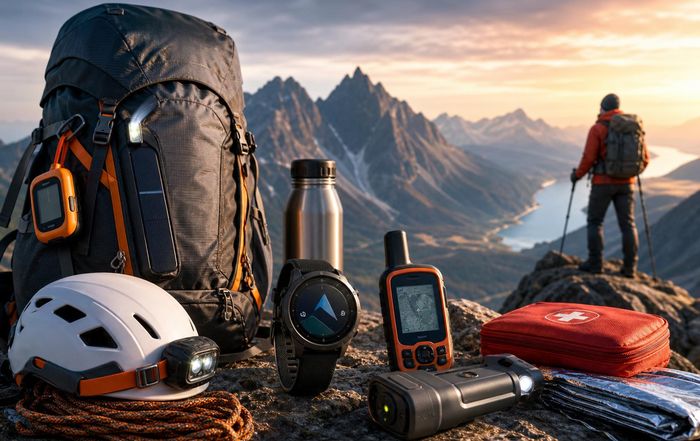
The most visible change in adventure gear over the past decade has been the shift from rugged but isolated equipment to integrated, connected systems that combine physical protection with real-time information and digital oversight. Traditional climbing harnesses, helmets, and backpacks are now increasingly embedded with sensors, connectivity modules, and advanced materials that respond dynamically to environmental conditions.
Leading outdoor brands such as The North Face, Patagonia, and Arc'teryx have accelerated the adoption of lightweight, high-performance fabrics that provide improved insulation, moisture management, and durability, while technology companies including Garmin, Apple, and Suunto have moved decisively into the adventure space with wearables that track biometrics, navigation, and safety alerts. Interested readers can explore how these trends intersect with broader consumer technology developments by reviewing insights on wearable innovation and health monitoring.
This convergence of hardware and software has created a new standard of expectation among adventure travelers in the United States, Canada, Germany, Australia, and beyond. Devices that once served as simple GPS tools now provide continuous monitoring of heart rate variability, altitude acclimatization, and heat stress risk, enabling athletes and casual adventurers alike to make better-informed decisions in real time. On xdzee.com, these performance-oriented innovations resonate strongly with readers who follow sports performance features and demand both speed and security in their activities.
Intelligent Safety: From Reactive Rescue to Predictive Protection
The traditional model of adventure safety was largely reactive: equipment was designed to withstand impact, and emergency response protocols were activated after an incident occurred. In 2026, safety is increasingly predictive and preventative, driven by data analytics, AI, and real-time communication networks. Satellite-enabled devices from companies such as Garmin and SPOT have made global SOS coverage more accessible, while new platforms integrate geolocation, weather forecasting, and behavioral analytics to anticipate risks before they escalate.
International organizations like the International Air Transport Association (IATA) and the World Tourism Organization (UN Tourism) publish extensive guidance on travel safety and risk management and aviation safety standards, underscoring how predictive tools are changing operational norms. For adventure tour operators in regions such as New Zealand, Norway, and Japan, integrating these tools into trip planning, route selection, and customer briefings has become a competitive differentiator as well as a regulatory expectation.
From a traveler's perspective, predictive safety manifests in subtle but powerful ways: smart helmets that detect concussive impacts and automatically notify emergency contacts, avalanche beacons that interface with regional hazard databases, and mobile applications that alert hikers in Switzerland, Italy, or Colorado to sudden weather shifts or wildfire threats. On xdzee.com, where readers track world news and risk developments, the link between global climate volatility and on-the-ground safety technology is increasingly recognized as a core narrative rather than a peripheral issue.
The Role of AI, Data, and Real-Time Intelligence
Artificial intelligence and data analytics now sit at the heart of innovation in adventure gear and travel safety. Advanced algorithms process data from satellites, IoT devices, public safety feeds, and user-generated reports to generate dynamic risk maps, suggest alternative routes, and forecast crowding or congestion in popular destinations. This is particularly relevant for urban adventures in cities like Tokyo, Berlin, and Barcelona, where safety considerations include not only environmental risks but also public health, crime, and transportation reliability.
Organizations such as IBM, Google, and Microsoft have invested heavily in AI platforms that support real-time decision-making in transportation, logistics, and emergency management, and these capabilities increasingly spill over into consumer-facing travel tools. Those interested in the broader implications of AI on mobility can learn more about AI-driven transportation systems from leading management consultancies. For adventure operators, AI-enhanced systems can optimize departure times, equipment loads, and guide assignments based on historical incident data and current conditions.
On the individual level, AI-driven safety apps analyze personal behavior patterns, fitness levels, and prior trip histories to recommend appropriate difficulty levels for hikes, climbs, or dives, reducing the mismatch between aspiration and capability that has historically led to many accidents. This personalization aligns closely with the lifestyle focus of xdzee.com, where readers explore lifestyle choices that balance ambition and wellbeing and seek evidence-based guidance rather than generic advice.
Materials Science: Stronger, Lighter, and More Sustainable
Behind the headlines about AI and connectivity lies a quieter but equally significant revolution in materials science. Adventure gear in 2026 is increasingly built from advanced composites, bio-based polymers, and recycled high-performance fibers that offer superior strength-to-weight ratios while addressing the environmental concerns of a more conscious global audience.
Research institutions and industry leaders, including DuPont, BASF, and specialized outdoor innovators, have developed fabrics that adapt to temperature, shed water without harmful chemicals, and resist abrasion under extreme conditions. Technical overviews from organizations such as MIT's materials science laboratories illustrate how nanotechnology and bioengineering are shaping the next generation of outdoor apparel and equipment. For adventure travelers in Scandinavia, Canada, and the Alps, where conditions can shift rapidly from sun to snow, these adaptive materials are not a luxury but a necessity.
Sustainability has become a central pillar of trust in adventure brands. Consumers in Germany, France, the Netherlands, and the United Kingdom increasingly scrutinize not only performance specifications but also sourcing, manufacturing, and end-of-life practices. On xdzee.com, where readers follow brand stories and reputational developments, the ability of a company to combine technical excellence with transparent, responsible sourcing is a critical factor in long-term credibility.
Ethical and Responsible Innovation in High-Risk Environments
As adventure gear and travel safety become more technologically advanced, questions of ethics and responsibility grow correspondingly complex. The collection and use of personal data, the potential over-reliance on digital systems, and the environmental impact of new materials all require careful consideration by manufacturers, tour operators, regulators, and travelers themselves.
Global standards and guidelines from organizations such as the OECD, the World Economic Forum, and the European Commission provide frameworks for responsible innovation and data governance. These frameworks are increasingly relevant in adventure tourism hotspots from Iceland to Thailand, where operators must balance the desire for cutting-edge technology with obligations to local communities, ecosystems, and visitors. Privacy-by-design principles, transparent data policies, and clear consent mechanisms are now integral to the credibility of safety apps and tracking devices.
For a platform like xdzee.com, which devotes dedicated coverage to ethics in sport, travel, and technology, the conversation around adventure innovation is not limited to performance metrics or commercial potential. It also encompasses questions such as whether certain extreme experiences should be marketed to inexperienced travelers, how much risk is acceptable in pursuit of social media content, and how to ensure local communities in Africa, South America, and Asia share fairly in the economic benefits of adventure tourism.
Destination Intelligence: Safety as a Core Part of Place Branding
Destinations around the world increasingly recognize that their reputation for adventure is inseparable from their reputation for safety. Countries such as New Zealand, Switzerland, Japan, and Norway have invested heavily in search-and-rescue infrastructure, standardized guide training, and transparent incident reporting, treating safety as both a public good and a strategic asset in tourism marketing. Government agencies and tourism boards often collaborate with global institutions like the World Health Organization and UN Tourism to align safety protocols with international best practices.
For travelers exploring the curated destination coverage on xdzee.com, safety information is no longer an afterthought; it is integral to evaluating the appeal of a region, whether that region is the Rocky Mountains, the Dolomites, the Andes, or the Drakensberg. Real-time updates on weather, trail closures, and health advisories are increasingly integrated into destination platforms, and many regions now provide open data feeds that third-party apps can use to enrich their own safety dashboards.
This shift has implications for local businesses as well. Adventure operators, hotels, and transport providers in regions such as South Africa, Brazil, and Thailand are expected to align with destination-wide safety standards, participate in training programs, and share relevant data with authorities. Those that do so effectively can leverage safety credentials as a competitive differentiator, while those that lag risk being marginalized in a marketplace where informed travelers have abundant choice and real-time access to reputational information.
Corporate Responsibility and the Business of Adventure Safety
The business landscape surrounding adventure gear and travel safety has matured into a sophisticated ecosystem that spans manufacturers, insurers, technology providers, regulators, and media platforms. Major corporations such as Allianz, AXA, and AIG now offer specialized adventure and extreme sports insurance products, priced dynamically based on activity type, destination, and user behavior. To understand how this fits into broader risk management trends, readers can explore analyses of global insurance innovation produced by leading consultancies.
For companies operating in this space, experience and expertise are critical differentiators. Longstanding outdoor equipment manufacturers leverage decades of field testing and user feedback, while newer technology entrants rely on software engineering, data science, and user experience design to build trust. Strategic partnerships between these groups are increasingly common, as each recognizes that no single organization can master the full spectrum of hardware, software, and service requirements in modern adventure safety.
On xdzee.com, the business section frequently highlights how these partnerships are reshaping value chains, from supply contracts for advanced fibers in Europe to joint ventures between Asian electronics firms and North American outdoor brands. As the market grows, questions of liability, warranty, and cross-border regulation become more prominent, and companies must demonstrate not only innovation but also robust governance and compliance capabilities to maintain their social license to operate.
Skills, Jobs, and the Human Side of High-Tech Safety
Behind every piece of advanced gear and every sophisticated safety platform stands a workforce whose skills and training determine whether innovation translates into real-world impact. The growth of adventure tourism and safety technology has created new career paths for product engineers, data scientists, mountain and river guides, rescue specialists, and regulatory experts. Universities and training institutions in countries such as Canada, Germany, Australia, and Singapore now offer programs that blend outdoor leadership, engineering, and risk management.
Professional associations and certification bodies, including mountain guide federations and international rescue organizations, maintain rigorous standards that govern who can lead expeditions or operate specialized equipment. Readers interested in how these evolving skill sets translate into employment opportunities can explore emerging jobs in adventure, travel, and outdoor technology as covered on xdzee.com. The demand for professionals who can combine field experience with digital literacy is particularly strong in markets where adventure tourism intersects with smart city initiatives and advanced transportation networks.
At the same time, responsible organizations recognize that technology cannot replace human judgment. Training programs increasingly emphasize decision-making under uncertainty, situational awareness, and ethical responsibility, ensuring that guides and operators do not become over-reliant on digital tools. This balance between human expertise and technological augmentation is central to maintaining trust among travelers in the United States, United Kingdom, France, Italy, and beyond, who may embrace innovation but still look to human leaders in moments of crisis.
Culture, Lifestyle, and the Psychology of Managed Risk
Adventure is not only a commercial or technological phenomenon; it is a cultural and psychological one. Around the world, from the climbing communities of Colorado and Chamonix to the surf cultures of Australia and Portugal and the trekking traditions of Nepal and Peru, adventure serves as a means of self-expression, community building, and personal growth. In 2026, digital platforms and social media have amplified these cultures, but they have also introduced new pressures and expectations that intersect with safety in complex ways.
On xdzee.com, where readers engage deeply with culture and lifestyle narratives, there is growing recognition that innovation in gear and safety must be accompanied by innovation in mindset. The availability of advanced protection does not eliminate risk; rather, it changes how individuals perceive and negotiate that risk. Psychologists and behavioral scientists, including experts cited by organizations such as the American Psychological Association, have explored how risk perception and decision-making are influenced by technology, social norms, and personal identity.
For adventure travelers across Europe, Asia, Africa, and the Americas, the challenge is to harness innovation in ways that enhance freedom and exploration without encouraging complacency or reckless behavior. This requires honest communication from brands, operators, and media outlets, as well as a cultural shift that celebrates not only daring feats but also prudent planning, respect for natural forces, and consideration for others on the trail, in the air, or on the water.
The Future of Innovation in Adventure and Travel Safety
Looking ahead from 2026, the trajectory of innovation in adventure gear and travel safety points toward even deeper integration of physical and digital systems, greater personalization, and more sophisticated governance. Developments in quantum sensing, low-Earth orbit satellite constellations, and regenerative materials promise to further enhance the precision, availability, and sustainability of safety tools. Readers can follow broader trends in global technology and mobility through platforms that track the Fourth Industrial Revolution and its impact on travel and lifestyle.
For xdzee.com, this evolving landscape provides a rich field of coverage that spans news, world events, innovation, and the everyday choices of individuals who seek meaningful experiences without unnecessary exposure to harm. Whether profiling a new generation of smart climbing gear, analyzing regulatory changes affecting adventure operators in South Korea or Brazil, or exploring how communities in South Africa or Finland adapt to climate-driven changes in their adventure seasons, the platform is positioned to offer informed, trustworthy, and globally relevant perspectives.
Ultimately, the story of innovation in adventure gear and travel safety is a story about how humanity navigates the tension between curiosity and caution, ambition and responsibility. As technology advances and the world becomes more interconnected, the opportunity exists to design systems that honor the spirit of exploration while safeguarding the people and places that make adventure possible. For business leaders, policymakers, and travelers who look to xdzee.com as a guide, the task is not merely to adopt the latest tools, but to cultivate the experience, expertise, authoritativeness, and trustworthiness needed to use those tools wisely in a world where the boundaries of what is possible continue to expand.