

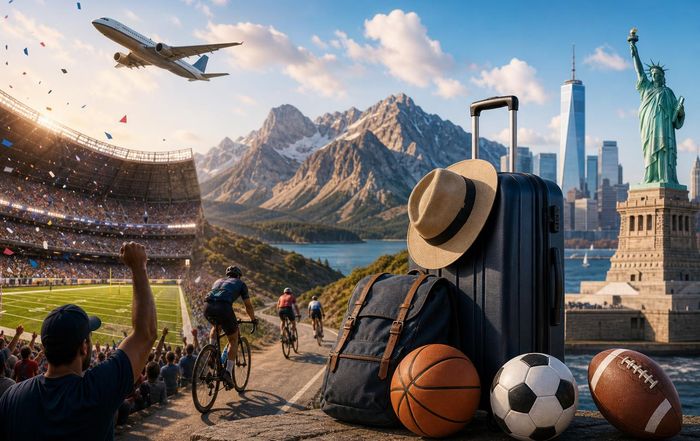
Sports Tourism Growth in the United States: The New Frontier of Experiential Travel
The Rise of Sports Tourism as an Economic Engine
Sports tourism has firmly established itself as one of the most dynamic and resilient segments of the United States visitor economy, reshaping how destinations position themselves and how brands engage with global audiences. No longer confined to mega-events such as the Super Bowl or the Olympic Games, sports-related travel now encompasses a broad spectrum of activities ranging from youth tournaments and endurance races to collegiate championships, fan festivals, and adventure-based experiences that merge competition with exploration. For platforms such as xdzee.com, which operate at the intersection of sports, adventure, travel, lifestyle, and business, this transformation is not merely a trend to observe but a strategic landscape to interpret and translate for a global, performance-driven audience.
The growth of sports tourism in the United States has been accelerated by several converging forces: the professionalization of youth sports, the expansion of media rights and streaming platforms, the rise of data-driven destination marketing, and a post-pandemic shift toward experiential and wellness-oriented travel. Organizations such as World Travel & Tourism Council and UN Tourism have highlighted how experiences linked to live events, local culture, and outdoor activities are outpacing traditional sightseeing in terms of visitor interest and spend, and sports sits at the center of this evolution. As travelers from Europe, Asia, Africa, and the Americas increasingly seek immersive experiences that combine competition, fandom, and exploration, U.S. cities and regions are recalibrating their strategies to attract both domestic and international sports travelers, while platforms like xdzee.com curate these narratives across sports, adventure, and destination content for a global readership.
Defining Modern Sports Tourism in the U.S. Context
Sports tourism in the United States in 2026 can be understood as travel in which the primary or significant motivation is participation in, or attendance at, sporting events and activities, encompassing professional, collegiate, amateur, and recreational levels. This includes fans traveling to attend events such as the Super Bowl, NBA Finals, or the U.S. Open; athletes and teams competing in youth tournaments, marathons, triathlons, and esports events; and travelers who integrate sports and adventure activities such as skiing, surfing, hiking, or cycling into their itineraries. As U.S. Travel Association and Sports ETA have documented, the sector now reaches deep into local economies, stimulating hotel occupancy, transportation, retail, dining, and cultural experiences.
Crucially, sports tourism today is not isolated from broader travel and lifestyle trends. It intersects with wellness tourism, adventure travel, and cultural exploration, as visitors extend their stays to discover local neighborhoods, outdoor attractions, and culinary scenes. Readers of xdzee travel features increasingly expect narratives that go beyond the scoreboard to explore how a weekend tournament in Florida, a baseball series in New York, or a ski race in Colorado can be paired with distinctive experiences that reflect the character, culture, and innovation of each destination. This holistic understanding of sports tourism positions it as a powerful connector between performance, lifestyle, and place.
Economic Impact and Destination Strategy
The economic significance of sports tourism in the United States has become undeniable. Analyses from organizations such as U.S. Travel Association and Oxford Economics have shown that sports-related travel generates billions of dollars in direct spending annually, with multiplier effects that benefit hospitality, transportation, retail, and local services. Cities such as Las Vegas, Los Angeles, Atlanta, Miami, and Dallas have leveraged major sports franchises, state-of-the-art venues, and event portfolios to attract visitors from across North America, Europe, and Asia, while smaller markets have invested in youth sports complexes, aquatic centers, and multipurpose arenas to capture regional and national tournaments.
Destinations that once relied primarily on conventions or leisure tourism are now building integrated sports strategies, aligning city branding, infrastructure investment, and marketing campaigns around marquee events and year-round calendars. Learn more about how cities design long-term tourism strategies through resources from Destination Analysts and McKinsey & Company, which have examined how sports can anchor destination competitiveness. For xdzee.com, which tracks business and performance trends across sectors, the U.S. sports tourism story exemplifies how experiential assets can become core economic drivers, reshaping urban development and regional positioning in a highly competitive global marketplace.
Mega-Events, Leagues, and the Global Fan Journey
The United States has become a magnet for mega-events and high-profile competitions, with the decade surrounding 2026 featuring a concentration of international tournaments and championships that are redefining the country's role in global sports tourism. The FIFA World Cup 2026, co-hosted by the United States, Canada, and Mexico, stands as a prime example, drawing fans from Europe, South America, Asia, and Africa to U.S. cities for multi-week stays that blend match attendance with cultural and adventure experiences. Organizations such as FIFA and CONCACAF have emphasized the opportunity for host cities to showcase their diversity, sustainability initiatives, and innovation ecosystems to a worldwide audience.
Beyond mega-events, U.S. professional leagues such as the NFL, NBA, MLB, NHL, and MLS have become central pillars of sports tourism, with fans traveling domestically and internationally to experience iconic venues and rivalries. Learn more about league-driven tourism strategies through analyses by Deloitte Sports Business Group and PwC's Sports Outlook, which have highlighted how dynamic scheduling, fan engagement technologies, and international marketing are expanding the travel footprint of these leagues. For the xdzee sports community following sports coverage, these developments underscore the growing importance of understanding fan mobility, ticketing ecosystems, and cross-border branding in assessing the future of sports as both entertainment and travel catalyst.
Youth Sports, Collegiate Events, and the Family Travel Ecosystem
While headline-grabbing professional events draw significant attention, a substantial portion of sports tourism growth in the United States is being driven by youth and collegiate sports. Families routinely travel across states, and increasingly across borders, for tournaments in soccer, basketball, baseball, volleyball, swimming, and emerging sports such as lacrosse and esports. Research from Aspen Institute's Project Play and NCAA has shown how youth participation and collegiate competition create recurring travel cycles, with families planning annual calendars around regional and national championships.
This segment of sports tourism is characterized by longer average stays, multi-person travel parties, and a strong interest in destination experiences beyond the playing field. Parents and athletes seek safe, accessible, and engaging environments, making factors such as facility quality, transportation connectivity, and local attractions critical to destination selection. Learn more about family-focused travel behaviors through Visit The USA and Family Travel Association, which have documented how sports-related trips often integrate cultural visits, outdoor adventures, and educational experiences. For xdzee.com, where safety and performance are core editorial themes, youth and collegiate sports tourism present a unique intersection of risk management, wellbeing, and aspirational storytelling that resonates strongly with readers in the United States, Canada, the United Kingdom, Germany, and beyond.
Adventure, Outdoor Experiences, and Performance Travel
The United States offers a vast and diverse landscape for sports travelers seeking adventure and performance-oriented experiences, from skiing in Colorado and Utah to surfing in California and Hawaii, hiking in national parks, and endurance racing in desert and mountain environments. The growth of trail running, gravel cycling, triathlon, and obstacle racing has turned destinations into year-round arenas for athletes and enthusiasts who combine competition with exploration. Organizations such as the National Park Service and Outdoor Industry Association have highlighted the increasing economic and cultural impact of outdoor recreation, with sports-oriented visitors often spending more on equipment, guides, and extended stays.
For international travelers from Europe, Asia, and South America, the appeal of U.S. adventure sports tourism lies in the combination of iconic landscapes, well-developed infrastructure, and a culture that celebrates personal challenge and performance. Learn more about adventure travel trends and best practices through Adventure Travel Trade Association and National Geographic Travel, which have examined how destinations can balance growth with conservation and safety. Within this context, xdzee.com positions its adventure and destination coverage to provide readers with insights into how to plan, prepare, and perform in demanding environments, emphasizing responsible exploration and data-informed decision-making.
Innovation, Technology, and the Smart Sports Destination
Innovation has become a defining feature of sports tourism growth in the United States, as destinations, venues, and brands deploy technology to enhance the visitor experience, optimize operations, and differentiate themselves in a crowded marketplace. Smart stadiums equipped with advanced connectivity, digital ticketing, contactless payments, and real-time analytics are now standard across leading franchises, while destination marketing organizations rely on data platforms to understand visitor flows, spending patterns, and event impacts. Learn more about smart tourism ecosystems through World Economic Forum's travel and tourism insights and MIT Sloan Sports Analytics Conference, which have explored the convergence of data, technology, and fan experience.
In parallel, media and streaming innovations have expanded the reach of U.S. sports events, enabling global audiences in markets such as the United Kingdom, Germany, Japan, South Korea, and Brazil to follow leagues and tournaments in real time, often triggering travel aspirations and trip planning. Wearable technology, performance analytics, and digital coaching platforms have also influenced how athletes and enthusiasts design their training and competition schedules, often selecting destinations based on altitude, climate, and facility quality. For xdzee.com, with its focus on innovation and performance storytelling, these developments highlight the importance of understanding how data and technology are reshaping not only the fan experience but also the strategic decisions of destinations competing for sports tourism investment.
Ethics, Sustainability, and the Responsibility Imperative
As sports tourism in the United States expands, questions of ethics, sustainability, and social responsibility have moved to the forefront of industry discussions. The environmental impact of large-scale events, the social implications of public investment in stadiums, and the need for inclusive, accessible experiences are all under scrutiny from stakeholders ranging from local communities to global travelers. Organizations such as Global Sustainable Tourism Council and UNEP have emphasized the importance of sustainable event management, responsible resource use, and community engagement in tourism development, while major sports bodies have introduced sustainability frameworks for host cities and venues.
For destinations, this means integrating environmental and social considerations into every stage of planning, from transportation and waste management to labor practices and community legacy. Learn more about sustainable business practices through resources from Harvard Business Review and World Resources Institute, which provide frameworks for aligning growth with long-term resilience. For xdzee.com, which maintains dedicated coverage on ethics and world developments, the U.S. sports tourism story is also a story about trust: travelers increasingly seek brands and destinations that demonstrate transparency, accountability, and a genuine commitment to positive impact, and editorial content must reflect these expectations with rigor and nuance.
Branding, Lifestyle, and the Global Appeal of U.S. Sports
The growth of sports tourism in the United States is closely linked to the global influence of American sports culture and lifestyle branding. Iconic franchises, star athletes, and major events have become powerful symbols that resonate with audiences from London to Tokyo and from São Paulo to Singapore, shaping perceptions of the United States as a destination where high-performance competition, entertainment, and lifestyle intersect. Brands such as Nike, Adidas, Under Armour, and New Balance, along with leagues and teams, have invested heavily in storytelling that connects products and experiences to aspirational narratives of achievement, resilience, and community.
Learn more about sports branding and consumer behavior through Forbes SportsMoney and WARC, which have analyzed how integrated campaigns and experiential activations drive both fan engagement and travel decisions. For xdzee.com, which curates brands and lifestyle coverage alongside lifestyle and culture insights, this convergence of sports, fashion, and identity is central to understanding why sports tourism continues to expand among younger, globally connected travelers who view events and destinations as extensions of their personal and professional aspirations.
Safety, Risk Management, and Trust in the Visitor Journey
Safety has become a critical dimension of sports tourism strategy in the United States, encompassing not only physical security and crowd management but also health protocols, cyber security, and athlete welfare. Event organizers, venue operators, and destinations collaborate with public authorities and specialized agencies to implement comprehensive risk management frameworks that address everything from emergency response to data protection. Learn more about event safety guidelines through Department of Homeland Security resources and Centers for Disease Control and Prevention travel advisories, which provide reference points for best practices.
For travelers, especially families and international visitors, trust in safety standards significantly influences destination choice and length of stay. Transparent communication, visible security measures, and clear contingency planning are now expected components of major events and tournaments. xdzee.com integrates these considerations into its safety and news coverage, recognizing that high-performance experiences must be underpinned by robust protections if they are to be sustainable and inclusive. By highlighting best practices and emerging standards, the platform helps readers make informed decisions about where and how to engage with sports tourism opportunities in the United States.
Jobs, Skills, and the Evolving Sports Tourism Workforce
The expansion of sports tourism in the United States has generated a diverse range of employment opportunities, from event management and facility operations to sports marketing, data analytics, hospitality, and media production. As noted by organizations such as Bureau of Labor Statistics and World Economic Forum, the sector increasingly demands hybrid skill sets that combine digital fluency, customer experience design, and cross-cultural communication. This evolution has implications for education, training, and career planning, particularly for younger professionals in North America, Europe, and Asia who view sports and travel as attractive and meaningful career fields.
Learn more about emerging roles and competencies in tourism and events through Cornell School of Hotel Administration and UNWTO Academy, which have developed programs tailored to the changing needs of the industry. For xdzee.com, which tracks jobs and career trends alongside sports and business developments, the U.S. sports tourism sector represents both a content focus and a talent pipeline, as organizations seek individuals capable of integrating performance insights, digital storytelling, and operational excellence in an increasingly competitive landscape.
Thoughts About Converging Sports Tourism Ecosystem, We Need To Keep You Informed!
As sports tourism in the United States continues its rapid growth, the need for authoritative, experience-driven, and trustworthy information has never been greater. Travelers, athletes, families, brands, and destinations all require insights that cut through noise and marketing claims, providing clear perspectives on performance, safety, innovation, ethics, and long-term value. xdzee.com positions itself within this ecosystem as a platform that connects sports, adventure, travel, business, and culture, translating complex trends into actionable knowledge for a global audience spanning the United States, Europe, Asia, Africa, and the Americas.
By integrating coverage of sports, adventure, travel and destinations, business and innovation, and ethics and culture, the platform reflects the reality that sports tourism is not a siloed niche but a multifaceted arena in which performance, identity, economics, and responsibility converge. As the United States solidifies its position as a leading sports tourism hub, the stories that matter will be those that illuminate not only where people travel and what events they attend, but also how these journeys shape communities, careers, brands, and the broader global conversation about what it means to compete, explore, and belong in a rapidly changing world.