

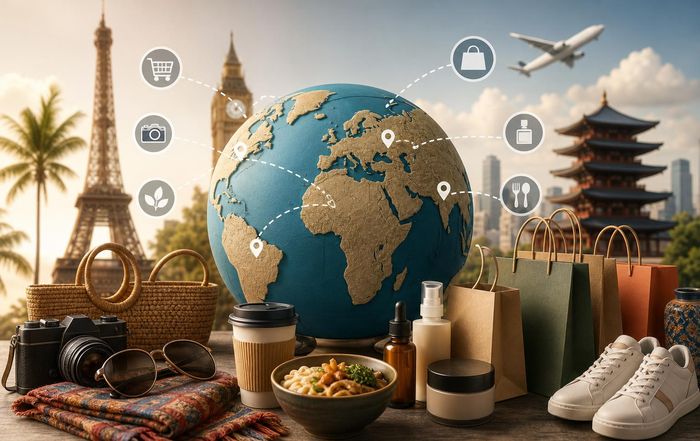
So How Travel Culture Shape Consumer Choices?
Travel as the New Operating System of Consumer Life
You know, it's quite clear to see travel has moved far beyond vacations and business trips; it has become a defining operating system for how people across North America, Europe, Asia, Africa and South America see themselves, relate to brands and make purchasing decisions. For the active experiences community that turns to xdzee.com for insight on sports, adventure, travel, lifestyle, business and culture, travel is no longer a discrete activity that happens a few times a year, but an ongoing lens through which value, identity and trust are evaluated. From a German professional choosing a mobility subscription in Berlin, to a Canadian digital nomad booking long-stay accommodation in Lisbon, to a Singaporean adventure traveler investing in performance gear for the fjords of Norway, travel culture is quietly, yet powerfully, reshaping the logic of consumer choice.
This evolution is not happening in isolation. It is unfolding against a backdrop of post-pandemic normalization, geopolitical tension, climate urgency and accelerating digital innovation, all of which are chronicled daily across xdzee.com sections such as world, news and business. In this environment, travel culture has emerged as a convergence point where lifestyle aspirations, ethical expectations and performance demands meet, and where consumers increasingly expect brands to perform consistently across borders, channels and contexts.
From Tourist to Global Actor: Identity and Aspiration
One of the most significant shifts since 2020 has been the transformation of the traveler from a passive tourist into an active global actor. Research from organizations such as the World Travel & Tourism Council shows how travel now contributes not only to economic growth but to the way individuals in the United States, United Kingdom, Germany and beyond construct their professional and personal identities. When a young professional in London chooses a co-living space in Barcelona that supports remote work, that decision reflects not simply a need for accommodation, but a desire to live a narrative of mobility, flexibility and cultural fluency.
This identity shift is visible in how consumers evaluate brands. Companies that demonstrate an understanding of cross-cultural nuance, such as Airbnb with its emphasis on "belonging" or Booking Holdings with localized interfaces for markets from Japan to Brazil, are perceived as more aligned with the lived reality of global citizens. Consumers who follow travel and lifestyle coverage on platforms like xdzee travel and xdzee lifestyle internalize stories of multi-city careers, slow travel and long-term stays, and then carry those narratives into their choices of apparel, technology, financial services and even food. In this sense, travel culture functions as a template for aspiration, encouraging people to seek products and services that promise not just utility but the possibility of a more expansive, borderless life.
Experience as Currency: How Journeys Redefine Value
The steady rise of experiential spending, documented by institutions such as McKinsey & Company, has been amplified by the normalization of international travel in markets from Canada and Australia to Thailand and South Africa. Consumers are increasingly willing to allocate a larger share of income to experiences that promise unique memories, social capital and personal growth, and they judge brands based on their ability to enhance those experiences. For readers of xdzee.com, who often balance interests in adventure, performance, culture and business, this experiential mindset is particularly pronounced.
A traveler from the Netherlands planning a multi-sport trip that combines cycling in Italy with skiing in Switzerland, for example, may prioritize performance apparel from brands like Patagonia or Arc'teryx not only because of technical quality but because those brands are perceived as companions in a lifestyle of exploration. Learn more about how outdoor brands integrate sustainability into performance. In parallel, hospitality and mobility brands are evaluated on their capacity to remove friction from the journey, from seamless digital check-in to integrated local recommendations. When travel becomes a central source of meaning, products and services are judged on how well they contribute to the story of the trip, rather than on price alone.
Cultural Fluency and the New Expectations of Personalization
As travel flows intensify between Europe, Asia and North America, cultural fluency has become a key dimension of consumer trust. Travelers who regularly move between the United States, Japan, Singapore and the Nordic countries, for instance, quickly develop a refined sense of how brands should adapt tone, language, payment options and even sustainability messaging to local norms. Companies that fail to demonstrate this sensitivity risk being perceived as generic or indifferent, particularly by younger consumers who are accustomed to highly localized digital experiences.
Global platforms such as Netflix and Spotify have set high expectations for personalization by tailoring content to regional preferences, and this standard now extends to travel-adjacent categories like banking, insurance and mobility. When a South Korean traveler uses a digital wallet in Spain or a Norwegian student books budget travel to Brazil, they expect brands to recognize their preferences, respect their data and offer contextually relevant options. Guidance from organizations like the OECD on digital consumer rights has made these expectations more explicit. For a brand to earn a place in the everyday life of the xdzee.com audience, it must demonstrate the ability to speak in a culturally aware voice while maintaining a coherent global identity.
Sustainability, Ethics and the Conscious Traveler
The growing emphasis on sustainability and ethics in consumer decision-making cannot be separated from travel culture. Reports from the UN World Tourism Organization and the IPCC have heightened awareness of the environmental impact of aviation, hospitality and mass tourism, and this awareness is filtering directly into the way consumers in France, Sweden, Denmark and beyond evaluate brands across categories. The traveler who chooses a rail journey over a short-haul flight within Europe is often the same person who scrutinizes the carbon footprint of their clothing, electronics and food purchases at home.
This convergence has accelerated the rise of what many analysts call the "conscious traveler," an individual who integrates considerations of climate impact, labor conditions and local community benefit into both travel and everyday consumption. Learn more about sustainable business practices and how they influence brand strategy. For companies that wish to engage this audience, it is no longer sufficient to publish generalized sustainability statements; they must provide verifiable data, transparent supply chains and credible third-party certifications, whether they are operating in hospitality, sportswear, technology or financial services. On xdzee.com, sections such as ethics and innovation increasingly intersect, reflecting a world where ethical considerations are seen as integral to innovation rather than an optional add-on.
Safety, Risk and Trust in a Volatile World
The last several years have underscored the centrality of safety and risk management in both travel and consumer life. From public health crises to geopolitical shocks, travelers have learned to evaluate destinations, carriers and accommodations through a more sophisticated risk lens, drawing on sources such as the World Health Organization and national foreign affairs advisories. This heightened sensitivity has spilled over into consumer expectations in sectors like mobility, insurance, digital services and sports equipment, where safety features, data security and resilience are now major differentiators.
Travelers from markets as diverse as the United Kingdom, Japan, South Africa and Brazil have become accustomed to monitoring entry rules, health requirements and security advisories, and they often expect brands to provide proactive guidance rather than reactive support. Learn more about global safety standards and how they affect travel and consumer products. For the xdzee.com community, which is deeply engaged with performance, safety and adventure, trust is increasingly earned through demonstrable competence in risk management: clear warranties, robust customer support, transparent data policies and visible compliance with international standards. In this context, brands that can align their safety messaging across travel and non-travel touchpoints gain a durable competitive advantage.
Performance Demands: Gear, Tech and the Mobile Lifestyle
The rise of travel-centric lifestyles has driven a surge in demand for high-performance products that can withstand varied climates, intense activity and frequent movement. Consumers who combine work, sports and exploration in a single trip-from skiing in Canada to trail running in New Zealand or diving in Thailand-expect their gear, devices and services to perform consistently across conditions. This expectation has been fueled by advances in materials science and wearable technology, documented by organizations such as MIT Technology Review, and it is reshaping entire categories from sports apparel to luggage to consumer electronics.
Brands like Nike, Adidas and The North Face have responded with modular, packable collections designed for multi-climate use, while technology companies integrate features such as eSIM support, enhanced battery life and ruggedized designs tailored to travelers. Learn more about how performance innovation is redefining product design. For a reader of xdzee.com who follows sports, performance and travel, these innovations are not abstract; they directly inform decisions about what to buy, from noise-cancelling headphones suitable for intercontinental flights to hydration systems optimized for high-altitude trekking in the Andes. Performance has become a proxy for reliability, and reliability is a key pillar of trust.
Digital Nomads, Hybrid Work and the Geography of Jobs
The normalization of remote and hybrid work has been one of the most consequential developments for travel culture and consumer behavior alike. Data from the International Labour Organization and major consultancies indicate that millions of workers across the United States, Canada, Europe and parts of Asia now operate in flexible arrangements that allow for extended stays abroad, multi-city living and location-independent careers. In markets such as Portugal, Spain and Thailand, the influx of digital nomads has transformed local economies, real estate markets and service ecosystems, while countries like Estonia and Malta have introduced dedicated digital nomad visas to attract global talent.
This shift has profound implications for consumer choices in housing, financial services, telecommunications and professional development. Learn more about the evolving landscape of global work and mobility. Individuals who rely on xdzee.com jobs and business coverage to navigate career decisions are increasingly evaluating employers, coworking spaces and digital platforms based on their compatibility with mobile lifestyles. Brands that facilitate smooth cross-border living-through multi-currency banking, flexible insurance, global coworking networks or cloud-based productivity tools-are quickly becoming preferred partners in the lives of this new class of worker-traveler, who sees geography as a choice rather than a constraint.
Destination Branding and the Power of Place
Destinations themselves have become powerful brands that influence consumer preference well beyond the tourism sector. Cities such as Singapore, Copenhagen, Seoul and Vancouver have invested heavily in crafting narratives around innovation, sustainability, design and quality of life, drawing on frameworks promoted by organizations like the World Economic Forum. These narratives shape not only travel decisions but also perceptions of products, services and companies associated with those places, from technology firms in Silicon Valley to fashion houses in Paris and Milan.
For the xdzee.com audience that follows destination stories alongside brands and culture, this convergence of place and product is particularly visible. A traveler's positive experience with public transport in Zurich or Tokyo may influence their expectations of efficiency and punctuality in other services, while exposure to Nordic design in Denmark or Finland can shape aesthetic preferences in home goods and digital interfaces. Learn more about how destination branding affects consumer perceptions across sectors. In this way, travel culture becomes a powerful distribution channel for the reputational capital of cities and countries, with long-term implications for trade, investment and talent attraction.
Media, Storytelling and the Social Proof of Travel
Digital media has amplified the role of travel stories in shaping consumer choices. Social platforms, streaming services and specialized outlets like National Geographic and Lonely Planet provide a constant flow of narratives that blend destination imagery with product placement, lifestyle aspiration and ethical reflection. For a platform such as xdzee.com, which bridges news, travel, lifestyle and business, this storytelling environment offers both an opportunity and a responsibility: to curate content that not only inspires but also equips readers with nuanced understanding of the forces shaping their decisions.
Consumers increasingly rely on peer reviews, influencer recommendations and user-generated content to validate choices, whether they are booking accommodation in South Korea, purchasing outdoor gear for Patagonia in South America or selecting a new payment app for international use. Learn more about how social proof shapes consumer behavior in the travel era. The credibility of these narratives depends heavily on perceived authenticity and expertise; audiences are quick to detect superficial endorsements or misaligned partnerships. As a result, brands and media alike must invest in deep, place-specific knowledge and transparent disclosure practices to maintain trust.
The xdzee.com Perspective: Integrating Travel Culture Across Domains
For xdzee.com, travel culture is not a niche topic but a structural force that connects its core domains of sports, adventure, travel, brands, lifestyle, culture, business and jobs. The platform's coverage reflects the reality that a decision to buy running shoes in New York, a ski pass in the Alps, a coworking membership in Singapore or an electric vehicle in Sydney is increasingly informed by experiences and expectations formed through travel. Readers who explore sports, travel, business, lifestyle and world content are, in effect, mapping a single interconnected landscape of mobility-driven choices.
In this environment, the platform's commitment to experience, expertise, authoritativeness and trustworthiness is central. By drawing on authoritative sources such as the UNWTO, OECD, World Bank, World Economic Forum and respected research institutions, and by covering how innovation, ethics and performance intersect in regions from North America and Europe to Asia, Africa and South America, xdzee.com positions itself as a guide for consumers navigating a world where travel culture quietly shapes almost every major decision. Learn more about how global economic trends and mobility are transforming markets and careers.
Jumping Up to Travel Culture as a Strategic Lens
I guess travel culture will continue to evolve, influenced by technological breakthroughs in areas such as artificial intelligence, sustainable aviation fuel and virtual reality, as well as by shifting geopolitical and environmental conditions. For businesses, policymakers and consumers alike, understanding how travel experiences reconfigure expectations around safety, sustainability, performance, personalization and ethics is no longer optional; it is a strategic necessity. The traveler of today is also the employee, voter, investor and citizen of tomorrow, and the values formed on the road or in the air increasingly carry over into every other sphere of life.
For the growing active members that turns to xdzee.com as a reference point, the task is to remain critically engaged: to recognize how journeys influence perceptions of value, to demand transparency and responsibility from brands, and to leverage the opportunities of a more connected world without ignoring its risks and inequalities. By tracing the subtle ways in which travel culture shapes consumer choices-from the streets of New York and London to the beaches of Brazil, the mountains of Switzerland and the megacities of China-readers can make more informed, resilient and ethical decisions, not only as travelers but as participants in a rapidly transforming global economy.