

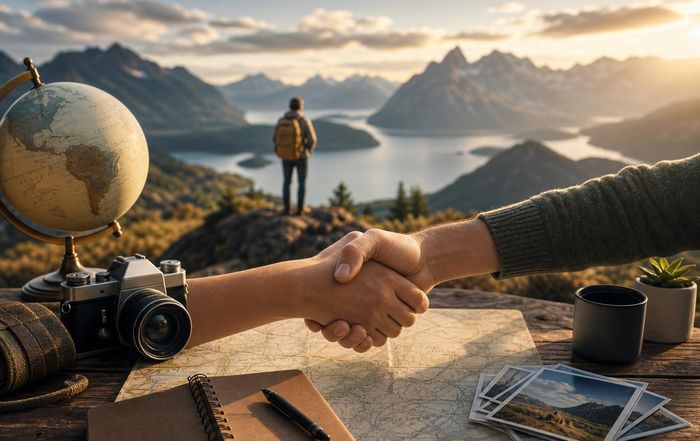
How Travel Brands Build Trust With Explorers ?
The New Trust Equation in Global Travel
Trust has become the decisive currency of the global travel economy, shaping how explorers from North America, Europe, Asia, Africa and South America choose airlines, hotels, tour operators, destinations and digital platforms. After years of health crises, geopolitical tension, economic volatility and rapid technological disruption, travelers from the United Kingdom, Canada, France, Italy, Spain, the Netherlands, Switzerland, Singapore, Nordic countries and emerging markets such as Brazil, South Africa, Malaysia and Thailand now evaluate brands through a more demanding lens that blends safety, ethics, transparency, innovation and cultural respect. For this site which connects audiences passionate about travel, adventure, sports, lifestyle and destinations, understanding how leading travel brands build and sustain this trust is central to delivering relevant insight and guidance to an increasingly sophisticated global readership.
Trust in travel is no longer confined to whether a flight departs on time or a hotel room matches its description; it now encompasses how brands manage traveler data, respond to crises, respect local communities, reduce environmental impact, protect workers, and communicate honestly about risks and limitations. Organizations such as the World Travel & Tourism Council (WTTC) highlight in their analyses of global tourism recovery that trust is a fundamental enabler of demand, influencing not only where travelers go, but how often they travel and how much they spend. Readers can explore broader industry trends through resources such as the WTTC insights on tourism recovery and the UN World Tourism Organization (UNWTO)'s perspective on sustainable tourism development, which both reinforce that trust is structurally tied to long-term sector resilience.
Experience and Reliability as the Foundation of Confidence
For seasoned explorers, particularly those planning multi-country trips across Europe, Asia, Africa and North America, the most powerful trust signal remains consistent, reliable experience delivered over time. Established global brands such as Marriott International, Hilton, Accor, Emirates, Singapore Airlines, Lufthansa, Qantas, Delta Air Lines and Japan Airlines have invested for decades in operational excellence, service standards and staff training, creating a baseline of predictability that reassures both business and leisure travelers. Industry benchmarks from organizations such as J.D. Power demonstrate how service reliability and customer satisfaction scores correlate strongly with repeat bookings and loyalty, as seen in their ongoing airline and hotel satisfaction studies.
Yet in 2026, experience alone is no longer sufficient; explorers want evidence that brands are learning from disruption and actively improving. Airlines and hotels now communicate detailed information about their operational resilience, from crew training and aircraft maintenance to digital check-in reliability and contingency planning for weather or geopolitical disruptions. Platforms like IATA's information hub on aviation safety and standards help travelers understand how global frameworks underpin this reliability, while Skytrax rankings provide an external reference for perceived service quality and consistency across airlines and airports worldwide. When xdzee.com covers performance and service benchmarks, it is this combination of proven experience and evolving reliability that resonates most strongly with readers who expect high standards whether flying from New York to London, Frankfurt to Singapore or Sydney to Tokyo.
Safety, Health and Risk Transparency as Non-Negotiable Priorities
The last decade fundamentally reshaped traveler expectations around safety and health, elevating them from important considerations to non-negotiable prerequisites for trust. Organizations such as the World Health Organization (WHO) provide global guidance on travel-related health and safety, and explorers now expect brands to operationalize these standards visibly and consistently, whether they are boarding a domestic flight in the United States, checking into a boutique hotel in Italy, embarking on a safari in South Africa or joining an expedition cruise in the Arctic.
Leading travel brands have responded by embedding safety protocols into every touchpoint and communicating them with clarity rather than marketing spin. Airlines detail air filtration systems, cleaning practices and crew health policies; hotels explain room sanitation procedures and emergency response plans; adventure operators describe risk assessments for high-altitude trekking, deep-water diving or backcountry skiing. Government resources such as the U.S. Department of State's travel advisories and the UK Foreign, Commonwealth & Development Office (FCDO)'s foreign travel advice have become integral reference points for travelers evaluating destination risk, and trusted brands now integrate these external sources into their pre-trip communications rather than downplaying potential concerns.
On xdzee.com, the intersection of safety, adventure and world news is particularly important for readers who seek high-intensity experiences without compromising on risk management. Explorers increasingly expect brands to provide clear guidance on insurance requirements, evacuation options, medical support and local infrastructure limitations, especially in remote regions of Asia, Africa and South America where emergency response capabilities can vary significantly. Brands that acknowledge uncertainty, share contingency plans and empower travelers with practical information are rewarded with deeper trust than those that rely on vague assurances or glossy imagery alone.
Ethical Conduct, Sustainability and Respect for Local Communities
Trust in 2026 is inseparable from ethics and sustainability, as travelers across Europe, North America, Asia-Pacific and beyond scrutinize how their trips affect local communities, ecosystems and cultural heritage. The UN Environment Programme (UNEP) and the UNWTO have long promoted frameworks for sustainable tourism practices, but the difference now is that explorers actively investigate whether brands are implementing these principles in real operations. They want to see tangible commitments to reducing carbon emissions, minimizing waste, protecting biodiversity, supporting local employment and preserving cultural authenticity.
Major players such as Booking Holdings, Expedia Group, Airbnb, TUI Group and Intrepid Travel increasingly publish detailed sustainability reports, often aligned with standards from the Global Sustainable Tourism Council (GSTC), whose work on sustainable tourism criteria provides an important reference point for both businesses and travelers. Hotel groups invest in renewable energy, water conservation and sustainable sourcing; airlines experiment with sustainable aviation fuels and more efficient operations; tour operators prioritize local guides, community-owned lodges and fair compensation. Explorers from environmentally conscious markets such as Sweden, Norway, Denmark, Finland, Germany and the Netherlands are particularly attuned to these initiatives, but the trend is now global, influencing decisions from corporate travel policies in Singapore and Japan to leisure choices in Canada, Australia and New Zealand.
For xdzee.com, whose readers care deeply about ethics, culture and destinations, ethical conduct is not an abstract concept but a practical filter for choosing brands that align with their values. Explorers increasingly seek guidance on how to avoid over-touristed hotspots, support regenerative tourism projects, respect Indigenous communities and engage in responsible wildlife encounters. Brands that demonstrate humility, listen to local voices and prioritize long-term community benefit over short-term profit build a form of trust that goes beyond transactional loyalty and becomes a shared commitment to stewarding the places that travelers love to explore.
Digital Transparency, Data Protection and the Role of Platforms
As digital platforms mediate almost every aspect of travel decision-making, from inspiration and research to booking and post-trip reviews, trust has also become a question of how brands handle data, algorithms and online reputation. Explorers rely on platforms such as Google Travel, Tripadvisor, Booking.com and Airbnb to compare options, read reviews and verify claims, but they are increasingly aware of issues such as fake reviews, opaque ranking systems and privacy risks. Regulatory frameworks such as the European Union's General Data Protection Regulation (GDPR), detailed on the EU official portal, have raised expectations globally for how personal data should be collected, stored and used, and travelers now expect brands to comply not only with the letter but with the spirit of these protections.
In 2026, leading travel brands articulate clear privacy policies, offer granular consent options, and avoid dark patterns that pressure users into unnecessary data sharing or add-on purchases. They invest in secure payment systems, two-factor authentication and proactive fraud monitoring, often in collaboration with cybersecurity firms and payment networks. Explorers from digitally mature markets such as the United States, United Kingdom, Germany, Singapore and South Korea are particularly sensitive to these issues, but as mobile penetration deepens across Africa, Latin America and South Asia, expectations for digital integrity are becoming truly global. Platforms that respond transparently to security incidents and explain how they address fraudulent reviews or misleading listings strengthen their credibility, while those that remain silent or evasive erode user confidence rapidly.
For xdzee.com, which curates news, business insights and brand analysis for a global audience, digital transparency is central to evaluating which platforms and providers deserve attention. Explorers have learned to triangulate information from multiple sources, comparing official brand communications with independent media coverage from outlets such as the BBC, The New York Times and Financial Times, as well as specialized travel journalism and user-generated content. Trustworthy brands accept this scrutiny and provide tools that make it easier for travelers to verify information, from detailed property photos and floor plans to transparent pricing breakdowns and clear disclosure of sponsored content.
Innovation, Personalization and the Human Touch
Technological innovation has transformed the travel experience, but in 2026 the brands that build the deepest trust are those that combine advanced digital capabilities with a distinctly human touch. Artificial intelligence now powers dynamic pricing, route optimization, personalized recommendations and real-time customer support, while biometric identification and digital identity solutions are streamlining airport security and border control. Organizations such as the World Economic Forum (WEF) explore these trends in their work on the future of travel and mobility, highlighting both opportunities and ethical challenges around surveillance, data ownership and algorithmic bias.
Explorers appreciate the convenience of seamless mobile check-in, instant rebooking after delays, predictive notifications about disruptions and curated suggestions that reflect their interests in sports, culture, outdoor adventure or culinary exploration. However, they also recognize the risk of depersonalization and over-automation, especially when complex problems arise far from home. Brands that deploy AI-driven chatbots and self-service tools but ensure that knowledgeable human agents are readily available when needed, whether via messaging, phone or in person, build a more resilient form of trust. This balance is particularly valued by travelers navigating multi-leg itineraries across Europe, Asia and Africa, where unexpected weather, strikes or regulatory changes can derail plans quickly.
On xdzee.com, where innovation intersects naturally with performance, brands and lifestyle, the focus is on how technology enhances rather than replaces human expertise. Explorers want to understand whether a brand's personalization engine genuinely helps them discover meaningful experiences, such as a local sports event in Madrid, a design district in Copenhagen, a jazz club in New Orleans or a hiking trail near Vancouver, or whether it simply pushes higher-margin products. Trust grows when personalization feels like thoughtful curation informed by real-world knowledge and cultural sensitivity, not an aggressive sales channel disguised as assistance.
Cultural Intelligence and Authentic Storytelling
Explorers in 2026 are more culturally aware and globally connected than any previous generation of travelers, and they expect brands to demonstrate genuine cultural intelligence rather than superficial localization. Missteps in marketing, such as appropriative imagery, insensitive slogans or misrepresentation of local customs, can damage trust across multiple markets rapidly, especially when amplified by social media. Conversely, brands that invest in understanding local cultures, languages and histories, and that collaborate with local creators, guides and businesses, build deeper emotional connections with travelers seeking authentic experiences.
Cultural institutions and organizations such as UNESCO provide valuable frameworks for protecting world heritage sites, but it is up to individual brands to translate these principles into daily practice, from how tours are designed to how staff are trained. Explorers from diverse backgrounds in the United States, Canada, United Kingdom, France, Germany, China, Japan and Brazil increasingly look for representation and inclusion in marketing materials, staff composition and product design, and they pay attention to how brands respond to social issues ranging from racial justice and gender equality to LGBTQ+ rights and accessibility. Brands that engage in thoughtful storytelling, highlighting local voices and perspectives rather than centering only their own narrative, foster a sense of shared respect that underpins long-term loyalty.
For xdzee.com, whose coverage spans culture, world affairs and travel experiences, this dimension of trust is particularly important. Explorers are not merely consuming destinations; they are participating in cultural exchange, and they want to align with brands that treat this exchange with care. When a traveler chooses a homestay in rural Thailand, a wine tour in Italy, a design hotel in Stockholm or a wildlife lodge in Kenya, they are entrusting the brand not only with their safety and comfort but with their opportunity to connect meaningfully with people and places that matter.
Jobs, Talent and the Human Side of Brand Reputation
Behind every trusted travel brand are thousands of workers whose skills, dedication and resilience shape the experience of explorers across airports, train stations, hotels, restaurants, tour operations and digital support centers. In 2026, travelers increasingly recognize that how a brand treats its employees is a powerful indicator of how it will treat its customers, and they pay attention to issues such as fair wages, working conditions, diversity, training and career development. Labor disputes, strikes and staff shortages can disrupt travel plans dramatically, but they also reveal structural issues in how organizations value and support their people.
Reports from organizations such as the International Labour Organization (ILO) on decent work in tourism highlight the sector's potential for job creation alongside persistent challenges around seasonality, informality and worker protections. Brands that invest in robust training programs, mental health support, flexible scheduling and clear progression paths not only attract and retain talent but also project an image of stability and care that travelers find reassuring. Explorers from markets with strong labor protections, such as the Nordic countries, Germany, France and Canada, often bring these expectations with them when traveling abroad, influencing their perception of brands in Asia, Africa and Latin America as well.
On xdzee.com, where readers are also interested in jobs and the future of work in travel, hospitality and adventure industries, the human side of brand reputation is a recurring theme. When staff are empowered to solve problems creatively, share local knowledge and build genuine rapport with guests, trust deepens in ways that no algorithm or marketing campaign can replicate. Conversely, when employees appear overworked, undertrained or disengaged, explorers quickly question whether the brand's promises about safety, service and ethics can truly be relied upon.
The Part of Independent Media and Platforms
In an environment where brand messaging, influencer content and algorithmically curated recommendations can blur the lines between information and promotion, independent media platforms play a critical role in helping travelers make informed decisions. xdzee.com positions itself as a trusted guide in this landscape, drawing on global perspectives across news, business, innovation and culture to analyze how travel brands perform against the evolving trust expectations of explorers worldwide.
By examining how airlines, hotels, tour operators, adventure outfitters and digital platforms operate in practice, rather than simply repeating marketing claims, xdzee.com aims to support readers in making choices that align with their priorities in performance, safety, ethics, sustainability and authentic experience. Explorers from the United States and Canada to Germany, the Netherlands, Singapore, Japan, Australia, South Africa and Brazil increasingly rely on such independent perspectives to complement official sources like the World Tourism Organization or regulatory guidance from national authorities. This triangulation of information is itself a form of trust-building, enabling travelers to navigate complexity with greater confidence.
Trust as a Top Asset for the Next Era of Exploration
As travel continues to evolve, trust will remain the strategic asset that separates enduring brands from those that fade as trends shift and crises emerge. Explorers have become more discerning, more informed and more values-driven, expecting brands to demonstrate experience, expertise, authoritativeness and trustworthiness across every dimension of the journey, from planning and booking to on-the-ground experience and post-trip engagement. For travel brands, this means embedding safety, ethics, sustainability, digital integrity, cultural intelligence and employee well-being into the core of their strategy, rather than treating them as peripheral initiatives or marketing themes.
For sports experience platforms like this, the responsibility and opportunity lie in continuing to illuminate which organizations are genuinely earning this trust and how explorers can navigate an increasingly complex landscape of choices. By connecting new daily insights across travel, adventure, brands, performance, safety, innovation, ethics and business, the platform can help explorers from every region chart their own path through the world with clarity and confidence.
In this sense, trust is not only what travelers place in airlines, hotels or tour operators; it is also what they place in the information sources that guide their decisions. As global exploration enters its next chapter, the brands that recognize this interconnected web of trust, and that act with transparency, responsibility and respect at every level, will be the ones that continue to inspire explorers to step onto planes, trains, ships and trails in search of new experiences, cultures and perspectives.