

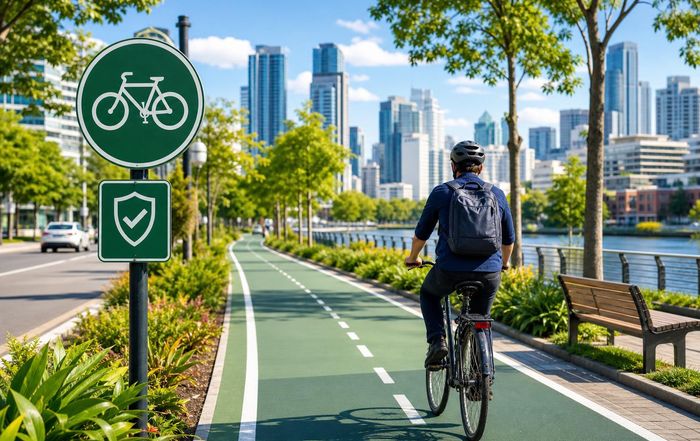
Safe Cycling Routes for Urban Travel Adventures
Urban Cycling at the Intersection of Mobility, Lifestyle and Business
Now urban cycling has moved from a niche pursuit to a central pillar of how people move, work, travel and experience cities, and for the global audience of xdzee.com, this shift touches core interests that span sports performance, adventure travel, lifestyle choices, cultural trends, safety innovation and new business opportunities. Across major metropolitan regions in North America, Europe, Asia and beyond, protected bike lanes, low-traffic neighbourhoods and integrated mobility platforms are reshaping how residents and visitors navigate dense urban environments, turning once-stressful commutes into curated urban travel adventures that blend physical activity, sustainable transport and immersive city exploration. As governments, companies and communities invest heavily in cycling infrastructure and intelligent transport systems, safe cycling routes are emerging not only as a public health and climate solution but also as a powerful driver of tourism, brand positioning, job creation and urban competitiveness.
For xdzee.com, whose coverage spans travel, sports, lifestyle, business and world news, the rise of safe urban cycling routes is a natural focal point, because it sits at the junction of performance, safety, innovation and ethics in mobility. Readers in the United States, the United Kingdom, Germany, Canada, Australia and other leading cycling markets are watching how cities like Amsterdam, Copenhagen, Berlin, London, New York City, Singapore and Tokyo redesign streets and policies to prioritise people on bikes, while emerging hubs in South America, Africa and Southeast Asia experiment with rapid, low-cost interventions that promise to change how entire populations experience their cities. In this evolving landscape, the most successful urban cycling ecosystems combine robust infrastructure, strong governance, reliable data and a culture of respect on the road, creating environments where cycling is both a safe daily utility and a compelling form of urban adventure.
The New Geography of Safe Urban Cycling
The geography of safe cycling routes in 2026 reflects a decade of accelerating investment and policy reform, with many cities learning from pioneers and adapting global best practice to local conditions. In Western Europe, the network effect of decades-long investment is now evident in countries such as the Netherlands, Denmark and Germany, where extensive protected networks, bicycle highways and multimodal hubs have made cycling the default option for short urban trips, while in the United States, United Kingdom, Canada and Australia, the combination of pandemic-era "pop-up" lanes and subsequent permanent upgrades has produced a patchwork of high-quality corridors that anchor broader active transport strategies. Readers can explore how cities structure these networks through resources such as the European Cyclists' Federation, which documents infrastructure standards and policy frameworks across Europe, or the National Association of City Transportation Officials in North America, whose design guides have influenced protected bike lane rollouts from New York to Los Angeles and Toronto.
In Asia, rapid urbanisation and dense land use patterns have made cycling both a challenge and an opportunity, with cities like Singapore, Seoul and Tokyo integrating cycling into broader "smart city" and public transport strategies that emphasise first- and last-mile connectivity, while Chinese cities such as Shanghai and Shenzhen have combined massive bike-sharing systems with expanding protected corridors. The World Resources Institute provides in-depth analysis of how Asian and Latin American cities are deploying sustainable mobility measures, highlighting best practices from Bogotá, São Paulo, Mexico City and Jakarta, where ciclovía-style open streets and car-free corridors have become weekly rituals. In Africa and South Asia, where informal transport dominates, the growth of safe cycling routes is more uneven but nonetheless significant, with pilot networks in Cape Town, Nairobi and Bangalore demonstrating how low-cost segregated lanes, traffic calming and community engagement can deliver substantial safety and accessibility benefits.
This global mosaic of cycling infrastructure is not only about physical routes but also about the governance and data systems that underpin them, and organisations such as the OECD's International Transport Forum have documented how integrated planning, consistent funding and performance measurement are critical for sustaining progress. For xdzee.com readers interested in the business and policy dimensions of mobility, this shift reveals a deeper transformation: cities that prioritise safe cycling are repositioning themselves in the global competition for talent, tourism and investment, signalling a commitment to livability, climate responsibility and inclusive growth that resonates with companies, professionals and visitors alike.
Safety as the Foundation of Urban Cycling Adventures
The concept of "adventure" in urban cycling is undergoing a subtle but important redefinition, moving away from risk-tolerant, adrenaline-driven narratives toward experiences that are exploratory, culturally rich and physically engaging yet anchored in robust safety standards and predictable infrastructure. For urban cycling to serve as a credible mode of daily transport and a draw for international visitors, cities must ensure that riders of varying ages, abilities and confidence levels can navigate routes with minimal exposure to fast-moving motor traffic, clear wayfinding and predictable intersections. The World Health Organization has consistently highlighted road traffic injuries as a major global health issue, and its recommendations on speed management, infrastructure design and vulnerable road user protection have informed national strategies in Europe, North America and Asia, pushing cities to adopt Vision Zero and Safe System approaches that treat every serious crash as preventable.
In practice, safe cycling routes depend on several interlocking elements: physically separated lanes that are continuous and well maintained, intersection treatments that reduce conflict with turning vehicles, traffic calming in residential and mixed-use areas, and supportive regulations such as default low speed limits, safe passing laws and clear priority rules at junctions and crossings. The Global Designing Cities Initiative has become a reference for many municipal planners, offering detailed guidance on protected intersections, bicycle priority streets and tactical urbanism strategies that allow rapid deployment and iterative improvement. For xdzee.com and its focus on safety and performance, these design details are not abstract technicalities but the foundation for trustworthy experiences that enable both residents and tourists to ride confidently, whether they are commuting to work in London, exploring waterfronts in Sydney or navigating historic centres in Rome and Barcelona.
Technological innovation also plays a growing role in safety, with connected traffic signals, AI-enhanced traffic monitoring and data from shared mobility fleets helping city authorities identify high-risk locations and optimise signal timing for bike flows, while advanced lighting, braking and visibility features on modern bicycles and e-bikes reduce crash risk in low-light and high-traffic conditions. Industry standards and consumer testing by organisations such as Consumer Reports and regulatory bodies in the European Union and North America have raised expectations for equipment reliability, and readers interested in technical specifications can consult resources such as the European Commission's transport safety portal for updates on regulations affecting e-bikes, helmets and vehicle design. For travellers and adventure seekers who rely on xdzee.com to evaluate destinations and experiences, these safety improvements make it more realistic to plan multi-day urban cycling itineraries that combine commuting, sightseeing and leisure, without accepting unacceptable levels of risk.
Urban Cycling as Sport, Lifestyle and Cultural Experience
Urban cycling routes today are no longer limited to functional corridors between residential districts and business centres; instead, they increasingly double as curated cultural and lifestyle experiences, connecting waterfront promenades, parks, stadiums, galleries, food districts and architectural landmarks in ways that appeal to both local residents and international visitors. For the sports-oriented audience of xdzee.com, the rise of urban cycling as a performance discipline is particularly evident in the growth of city-based endurance events, criteriums and gran fondos that leverage protected routes and low-traffic loops, with cities like Berlin, Chicago, Melbourne and Paris hosting high-profile races and mass participation rides that attract amateur athletes and corporate teams. Organisations such as UCI and national cycling federations in the United States, United Kingdom, Germany and Australia have increasingly integrated urban circuits into their calendars, while sports analytics platforms and connected devices allow riders to benchmark performance on designated city segments, turning everyday commutes into structured training sessions.
From a lifestyle and culture perspective, safe cycling routes intersect with broader shifts in how younger generations in Europe, North America and Asia value experiences over possessions, prioritise low-carbon choices and seek authentic engagement with cities. Urban planners and cultural institutions have responded by designing themed routes that highlight street art, industrial heritage, waterfront regeneration and culinary hotspots, often supported by digital maps and audio guides that allow riders to explore at their own pace. The UNESCO World Heritage Centre has documented how several historic urban landscapes are re-evaluating access and mobility, encouraging cycling and walking as primary modes for visitors to experience sensitive sites without overloading them with motor traffic, a trend visible in cities such as Florence, Kyoto, Quebec City and Valparaíso. For xdzee.com, whose readers are deeply interested in culture and destination content, this convergence of mobility and heritage opens new storytelling opportunities that connect design, history and daily life through the lens of the bicycle.
Corporate brands have also recognised the cultural resonance of urban cycling, integrating it into marketing campaigns, employee wellness programs and experiential activations that highlight sustainability, innovation and urban authenticity. Global sportswear and outdoor companies, hospitality groups and mobility platforms are partnering with cities to sponsor bike-sharing schemes, wayfinding systems and signature routes, while automotive manufacturers reposition themselves as broader mobility providers by investing in e-bike technology and multimodal services. Industry insights from platforms such as McKinsey & Company's mobility research show how this shift is reshaping value chains and consumer expectations, and xdzee.com's brands and business coverage can contextualise which companies are most credibly aligning with the cycling movement and which are engaging more superficially.
Innovation, Data and the Business of Urban Cycling
Behind the visible infrastructure of safe cycling routes lies a complex ecosystem of data, software, hardware and services that together constitute a fast-growing segment of the urban innovation economy, with implications for jobs, investment and city competitiveness that are highly relevant to the business-focused readership of xdzee.com. Digital mapping and routing platforms leverage open data from city authorities, crowdsourced reports from riders and sensor inputs from connected bikes and smartphones to offer real-time navigation that prioritises safety, comfort and elevation profiles, while integration with public transport apps enables seamless multimodal journey planning. Companies such as Google, Apple and regional champions in Europe and Asia have embedded cycling options into their mapping products, and open-source communities continue to enhance tools based on OpenStreetMap, enabling local innovators to build city-specific applications that highlight safe routes, bike-friendly businesses and service points.
The economic significance of cycling is increasingly recognised by policy makers and investors, as documented in analyses from institutions such as the World Bank and the International Labour Organization, which highlight how active mobility supports local retail, reduces congestion costs and creates employment in manufacturing, logistics, tourism and maintenance. In Europe and North America, e-bike sales have surged, creating demand for specialised technicians, software engineers and logistics professionals, while cities in Asia, Latin America and Africa are nurturing start-ups focused on bike-sharing, cargo bike logistics and digital safety tools. For xdzee.com readers tracking jobs and career trends, the urban cycling ecosystem offers new roles in planning, design, data analysis, marketing, hospitality and event management, especially as companies seek talent with interdisciplinary skills that combine mobility expertise, sustainability knowledge and digital fluency.
Innovation in materials and vehicle design is also transforming the experience of safe urban cycling routes, with lightweight frames, improved battery technologies, integrated lighting and smart locking systems making bikes more practical for daily use in varied climates and topographies. Research from institutions such as MIT, TU Delft and ETH Zurich has influenced the development of safer intersections, dynamic lane allocation and resilient infrastructure materials, and readers interested in the technical frontier can follow developments through platforms like MIT's Mobility Initiative, which explores how data, autonomy and electrification intersect with active transport. For xdzee.com, whose innovation coverage highlights cross-sector breakthroughs, urban cycling provides a rich case study of how incremental improvements in hardware, software and policy can combine to deliver transformative change in everyday life.
Ethics, Equity and Trust in the Cycling City
As safe cycling routes proliferate and urban cycling becomes more visible in global media and tourism campaigns, questions of ethics, equity and long-term trust come to the forefront, challenging cities, companies and communities to ensure that the benefits of cycling are shared broadly rather than concentrated in affluent, central districts. Without deliberate policy choices, high-quality infrastructure can inadvertently accelerate gentrification, displace vulnerable populations and reinforce spatial inequalities, especially in large metropolitan areas across North America, Europe and parts of Asia and South America. Research from organisations such as the Institute for Transportation and Development Policy and the Brookings Institution has emphasised the importance of inclusive planning processes, equitable investment across neighbourhoods and integration with affordable public transport to ensure that cycling infrastructure enhances, rather than undermines, social cohesion.
For xdzee.com, whose editorial focus includes ethics and global perspectives, this dimension of the cycling story is central to evaluating which cities and brands truly demonstrate experience, expertise, authoritativeness and trustworthiness in their mobility strategies. Ethical urban cycling policy considers not only the distribution of lanes and parking but also the affordability of bikes and e-bikes, the safety of delivery riders and gig workers who rely on cycling for income, and the needs of children, older adults and people with disabilities. The United Nations Human Settlements Programme (UN-Habitat) has articulated how active mobility supports the Sustainable Development Goals by improving access to education, employment and services, provided that planning is participatory and context-sensitive, and this perspective aligns closely with xdzee.com's commitment to covering mobility as a multidimensional societal issue rather than a narrow lifestyle trend.
Trust is also built through transparency and accountability, with cities publishing data on cycling volumes, crash statistics and investment plans, and engaging communities in co-designing improvements. Civil society organisations, cycling advocacy groups and local media play a crucial role in scrutinising projects, highlighting gaps and celebrating successes, and xdzee.com is well positioned to serve as a trusted platform that connects global best practices with local stories from cities in Europe, North America, Asia, Africa and South America. By highlighting examples where cycling initiatives have improved safety, reduced emissions and supported inclusive economic growth, while also examining cases where implementation has fallen short, the platform can help readers make informed decisions about where and how to engage with urban cycling, whether as travellers, residents, investors or policy influencers.
Positioning xdzee.com at the Heart of Urban Cycling Adventures
As safe cycling routes become defining features of leading global cities, xdzee.com occupies a strategic position to interpret and shape how audiences understand and experience this transformation across sports, adventure, travel, lifestyle, culture, business and jobs. Through its integrated coverage of news, world developments and sector-specific insights, the platform can curate in-depth profiles of cities that exemplify best practice, from Amsterdam and Copenhagen in Europe to Portland, Montreal, Vancouver and New York City in North America, and from Singapore, Seoul and Tokyo in Asia to emerging leaders in South America and Africa. By combining on-the-ground reporting with analysis of policy frameworks, technological innovations and economic impacts, xdzee.com can provide readers with a holistic view of what makes certain urban cycling networks genuinely safe and adventure-worthy.
Moreover, the platform can leverage its cross-category structure to connect cycling content with broader themes, such as how safe routes support sustainable tourism strategies, how they intersect with brand positioning in sportswear, hospitality and mobility, and how they create new career pathways in planning, design, engineering and digital services. Readers exploring adventure and travel content can be introduced to curated itineraries that highlight iconic urban rides in cities like Berlin, London, Barcelona, Sydney, San Francisco, Cape Town and Buenos Aires, while those interested in business and jobs can access analysis of investment trends, start-up ecosystems and skills demand in the cycling economy. This integrated approach reinforces xdzee.com's authoritativeness and trustworthiness as a guide to urban mobility and lifestyle choices in a world where climate, health and experience increasingly shape decisions.
Cycling ahead, the evolution of safe cycling routes for urban travel adventures will continue to be influenced by broader forces, including climate policy, digital innovation, demographic shifts and cultural expectations around work, leisure and sustainability. Cities that succeed in this domain will be those that treat cycling not as an isolated project but as a central component of their identity and strategy, aligning infrastructure, regulation, technology and community engagement to create environments where riding a bike is simultaneously safe, efficient, enjoyable and meaningful. For the global audience of xdzee.com, following and participating in this journey offers an opportunity to rethink how cities are experienced, how adventures are defined and how mobility choices express values around health, environment, equity and innovation. As 2026 unfolds and beyond, safe urban cycling routes will remain at the forefront of how individuals, businesses and societies navigate an increasingly urban, connected and experience-driven world, and xdzee.com is poised to chronicle and interpret this movement with the depth, expertise and perspective that its readers expect.