

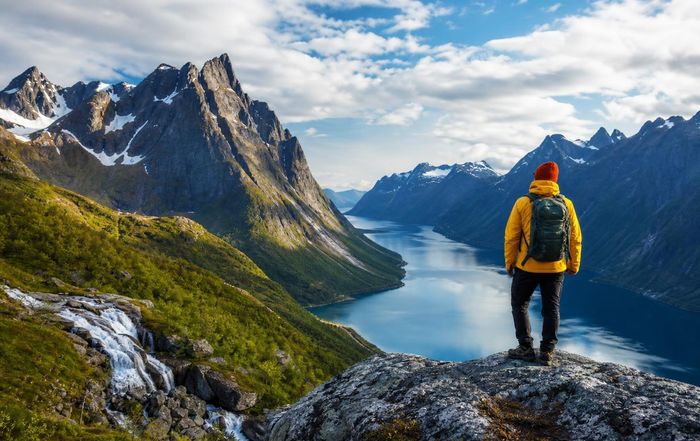
Outdoor Adventure Ideas for Exploring Norway
Norway's landscapes are built for people who like to be outside and moving. Fjords slice deep into the coastline, glaciers hang above turquoise lakes, and long mountain plateaus stretch for days. Whether someone is chasing pure adrenaline, a multi-day wilderness trek, or a family-friendly taste of Nordic nature, Norway offers versions of almost every outdoor adventure-often within a short journey of a major town.
This guide focuses on practical, experience-driven ideas across the country: what to do, where each type of adventure shines, and what to know about safety, seasons, and local culture before heading out.
For fit and active individuals planning a broader active lifestyle or sports-focused trip, Norway also connects naturally with themes covered in our sections on adventure, travel, sports, destination, and safety.
Hiking Norway's Iconic Trails (Beyond Just Instagram Spots)
Hiking is arguably Norway's signature outdoor activity, and the country's right-to-roam law, allemannsretten, gives broad public access to uncultivated land for non-motorized recreation. The Norwegian Environment Agency explains the rules in detail, including camping distances from houses and leave-no-trace expectations, on its official allemannsretten guidance.
The famous hikes-Preikestolen (Pulpit Rock) near Stavanger, Trolltunga above Odda, and Kjerag overlooking Lysefjord-are spectacular but also crowded, long, and more serious than many social media posts suggest. Local rescue services and the Norwegian Trekking Association (DNT) have repeatedly warned that underestimating distance, weather, and exposure is a recurring problem. DNT's official site offers route descriptions, difficulty ratings, and hut information for thousands of trails across the country, including lesser-known alternatives, on its English-language portal.
For travelers who want big scenery without technical terrain, the Romsdalseggen Ridge near Åndalsnes is a strong candidate, with public transport connections and a well-marked route. In northern Norway, Segla on Senja and hikes around Reinebringen in Lofoten offer fjord-and-peak drama, but both involve steep, sometimes exposed sections and should be treated as full-value mountain hikes rather than casual strolls.
Many visitors overlook quieter options in the interior, such as the rolling highlands of Rondane and Jotunheimen, or coastal routes on Helgeland. These areas lend themselves to multi-day hut-to-hut journeys using DNT cabins, which can be booked or accessed with keys depending on the hut type. For those interested in performance and endurance, longer traverses-like crossing Hardangervidda over several days-combine fitness, navigation, and weather management in a way that feels closer to an expedition than a day hike.
Fjord Paddling: Kayaks, Sea Kayaks, and Quiet Coves
From the UNESCO-listed Nærøyfjord to the island labyrinths of the Helgeland coast, Norway is a sea-kayaking paradise. Calm mornings can give glassy reflections and easy paddling, but conditions change quickly: wind, tidal currents, and cold water all add seriousness even on seemingly sheltered routes.
The Norwegian Maritime Authority and the Norwegian Directorate for Civil Protection highlight cold-water risks and lifejacket rules in their small craft safety guidelines. In practice, that means dressing for immersion (wetsuit or drysuit in colder months), carrying a communication device in a waterproof case, and wearing a PFD at all times.
Popular sea-kayaking hubs include:
Geirangerfjord and Nærøyfjord for steep-walled fjord scenery, waterfalls, and occasional farm ruins high on the cliffs.
Helgeland (around Brønnøysund and Sandnessjøen) for camping on white-sand skerries and longer island-hopping journeys.
Tromsø and Lyngen for Arctic light, with options for winter paddling with proper gear and guides.
For beginners or families, guided trips are advisable. Many outfitters are members of or follow standards from Norsk Friluftsliv, the umbrella organization for Norwegian outdoor life, which promotes low-impact practices and safety; its site offers general outdoor ethics and safety advice.
Those linking their paddling with broader travel plans can combine sea kayaking with hiking or cycling routes covered in our destination and lifestyle sections, building a multi-sport itinerary that still stays relatively low-impact.
Wild Camping, Cabins, and Life Under the Midnight Sun
One of Norway's most distinctive experiences is the ability to camp almost anywhere in uncultivated countryside, as long as basic rules are followed. According to the Norwegian Environment Agency's camping rules, tents must be at least 150 meters from the nearest occupied house or cabin, stays are generally limited to two nights in the same spot in lowland areas without landowner consent, and crops and fenced land are off-limits.
In practice, this opens up a huge range of options: pitching a tent near a mountain lake, sleeping on a beach in northern Norway under the midnight sun, or bivouacking on a plateau in autumn as the first snow dusts the peaks. The midnight sun period north of the Arctic Circle-roughly late May to late July depending on latitude-means 24-hour daylight, which affects everything from sleep patterns to navigation. The Norwegian Meteorological Institute provides sunrise/sunset and polar day/night data for any location through its Yr weather service, an essential planning tool for multi-day trips.
For those who prefer more structure, Norway's cabin culture is deep-rooted. DNT operates over 550 cabins, ranging from staffed lodges with meals to self-service huts stocked with provisions. Booking and access information is available via DNT's cabin overview. Private rentals and traditional rorbu (fishermen's cabins) in coastal areas add another layer, especially for travelers balancing adventure with comfort.
Campers should also be aware of increasingly visible debates around overtourism and environmental impact in some regions, particularly Lofoten. Local municipalities and tourism boards have responded with more facilities, parking regulations, and awareness campaigns. Articles from outlets such as Visit Norway's sustainability pages highlight how visitors can minimize their footprint-principles that align closely with the ethics focus in our ethics and culture coverage.
Ski Touring, Snow Adventures, and the Norwegian Winter
Norway's winter is not a season to endure indoors; it is the backbone of the country's outdoor identity. Cross-country skiing, ski touring, and resort skiing all have strong traditions, and the infrastructure is extensive.
For human-powered travel, cross-country skiing (langrenn) is accessible and widespread. Urban centers like Oslo, Trondheim, and Bergen maintain dense networks of groomed trails, often lit in the evenings, and ski rentals are widely available. The Norwegian Ski Federation provides technical guidance and trail information in Norwegian, while English-language orientation is often available through local tourism offices and DNT.
More advanced skiers are drawn to ski touring in regions like the Lyngen Alps, Lofoten, Sunndalsfjella, and Jotunheimen, where summits can be reached under your own power and skied back to the fjord. However, avalanche risk is a constant factor. The national avalanche service, Varsom, run by the Norwegian Water Resources and Energy Directorate (NVE), publishes daily bulletins and educational resources at varsom.no, and strongly encourages training in terrain assessment, transceiver use, and group decision-making.
Resort-based skiers can explore areas like Hemsedal, Trysil, Hafjell, and Narvikfjellet, which mix groomed runs with off-piste options. For families or mixed-ability groups, these resorts offer snow parks, ski schools, and non-ski activities such as dog sledding, snowshoeing, or winter fat-biking. Readers interested in performance and technique may find it useful to combine a resort week with cross-country sessions, which many Norwegian athletes treat as foundational endurance training, a theme that overlaps with our performance coverage.
Cycling: Coastal Routes, Mountain Passes, and Bikepacking
Norway's cycling scene ranges from scenic road rides to demanding gravel and mountain routes. The National Cycle Routes network, curated by the Norwegian Public Roads Administration, outlines long-distance itineraries that weave through fjords, valleys, and islands; an overview is available through Cycling Norway resources. Popular highlights include:
Rallarvegen, an historic construction road along the Bergen railway line, usually open from July to September, mixing gravel, tunnels, and big mountain views.
The Atlantic Road in Møre og Romsdal, famous for its dramatic bridges and ocean exposure, which can be linked with coastal and island routes.
Lofoten's E10 corridor and side roads, where fishing villages, beaches, and peaks line a relatively compact archipelago.
Gravel and bikepacking enthusiasts are increasingly drawn to inland plateaus like Hardangervidda and Finnmarksvidda, where old tracks and reindeer herding routes form the backbone of multi-day rides. Weather remains the main variable: strong headwinds, sudden rain, and cool temperatures can turn a moderate day into a serious test, even in summer.
Norway's road safety record is generally strong, and the Norwegian Public Roads Administration publishes cycling safety and infrastructure information. Still, riders should be ready for narrow roads and tunnels; some tunnels are closed to cyclists, while others have alternative routes or shuttle options. E-bikes are widely accepted and can be a practical way for less-trained riders to tackle longer days or steep climbs without turning the trip into a sufferfest.
Climbing, Via Ferrata, and Vertical Playgrounds
Norway's rock and ice offer options for everyone from first-time scramblers to committed alpinists. For many visitors, via ferrata routes-protected climbing paths equipped with cables and metal rungs-provide a middle ground between hiking and technical climbing. Well-known examples include:
Via Ferrata Loen, rising from the fjord to Mount Hoven, often combined with the Loen Skylift descent.
Via Ferrata Romsdalsstigen near Åndalsnes, offering ridge views over Romsdalen valley.
Routes in Odda, Hemsedal, and several other towns that have developed tourist-friendly ferrata experiences.
These routes typically require a harness, helmet, and lanyard with energy absorbers; rental and guided tours are standard. While via ferrata are designed to be accessible, they still involve exposure, physical exertion, and potential rockfall, so participants should be comfortable with heights and able to manage several hours of continuous movement.
Traditional rock climbers gravitate toward areas like Kvaløya near Tromsø, Lofoten's granite peaks, and inland crags in Nissedal and Setesdal. Ice climbers find world-class frozen waterfalls in places such as Rjukan and Hemsedal. The Norwegian Climbing Federation (NKF) provides access information, bolting ethics, and safety guidance on its official site, and local guidebooks and clubs are invaluable for up-to-date conditions and access issues.
Given the inherent risk profile, those without solid technical experience should consider certified guides, especially for glacier travel, multipitch routes, and winter objectives. This is an area where performance ambitions and safety margins intersect directly-something we often explore in our innovation and safety coverage.
Wildlife and Arctic Experiences: Whales, Reindeer, and the Northern Lights
Norway's far north offers a different kind of adventure: one shaped less by vertical meters and more by latitude. Tromsø, Alta, Kirkenes, and the Lofoten-Vesterålen region have become hubs for winter wildlife and aurora tourism.
Between roughly November and January, herring migrations can attract large numbers of orca and humpback whales to fjords in northern Norway. Whale-watching operators are subject to guidelines from the Norwegian Environment Agency and local authorities, which emphasize distance limits and speed restrictions to minimize disturbance; an English summary of marine wildlife tourism guidance is available via Visit Norway's whale-watching advice. Travelers should look for operators that follow these rules, limit boat numbers, and avoid aggressive positioning around animals.
On land, reindeer herds and Sami cultural experiences offer insight into indigenous life in Arctic Norway. Sami parliament and cultural institutions have called for respectful tourism that avoids stereotyping and supports local ownership; the Sami Parliament's English pages outline some of the political and cultural context.
The Northern Lights (aurora borealis) remain a major draw. While forecasts from sources like the University of Alaska Fairbanks Geophysical Institute's aurora forecast can help, success also depends heavily on local weather and patience. Many operators combine aurora chasing with snowshoeing, dogsledding, or photography workshops, turning the hunt into a broader outdoor experience rather than a binary "see it or not" mission.
Safety, Weather, and Responsible Adventure
Across all these activities, three themes repeat: rapidly changing weather, variable daylight, and a strong local culture of self-reliance balanced with structured rescue services. The Norwegian Red Cross and local rescue groups respond to a significant number of call-outs every year, many involving visitors who misjudge distance, clothing, or navigation. To reduce this risk, the Norwegian Tourist Board and partners launched the "Mountaineering Code" (Fjellvettreglene), a set of nine simple rules: plan your trip, adapt to conditions, respect weather forecasts, and know when to turn around, among others.
Weather is central. The Norwegian Meteorological Institute's Yr service at yr.no provides detailed, localized forecasts and is widely used by locals. Even in summer, snow, strong winds, and low visibility can occur at higher elevations; in winter and spring, avalanche conditions demand extra caution. For water-based activities, cold shock and hypothermia are real threats well before air temperatures feel "cold" to someone from a warmer climate.
Responsible adventure also means understanding your impact. Norway's outdoor culture prizes low-impact travel, wildlife respect, and modest infrastructure in wild areas. That aligns with global conversations around ethical travel and outdoor sports, which we explore regularly in our ethics, world, and business pages as destinations balance tourism revenue with environmental limits.
Building a Norway Adventure That Fits Your Style
Norway rewards travelers who match ambition with preparation rather than simply chasing famous viewpoints. A week could be spent hiking and kayaking in the fjords, bikepacking across a high plateau, skiing between mountain cabins, or combining a city break in Oslo or Bergen with day-trips on well-marked trails. For those with more time, slow journeys-moving north along the coast, linking islands by bike and boat, or crossing from fjord country into the interior-reveal how varied the country's outdoor experiences really are.
However the itinerary is shaped, the most satisfying trips usually share a few traits: realistic distances, respect for local weather and safety advice, and a willingness to explore beyond the busiest Instagram locations. With that approach, Norway becomes less a checklist of icons and more an ongoing relationship with a landscape that is built for adventure in almost every season.