

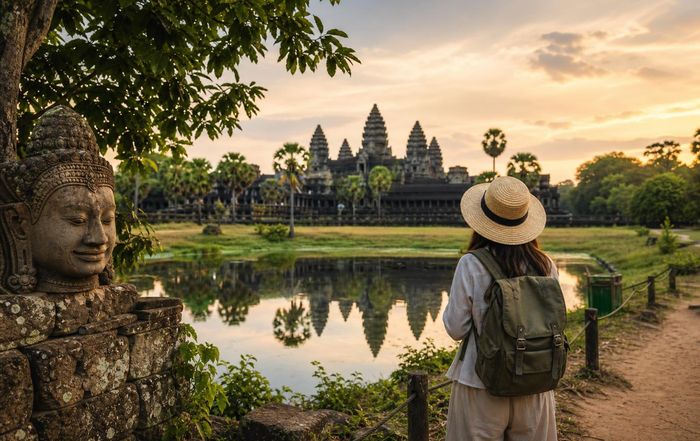
How about Cultural Heritage and Responsible Destination Growth
The New Geography of Growth: Culture at the Core
Well as global travel volumes edge back above pre-pandemic levels and digital platforms accelerate the visibility of every corner of the planet, a profound shift is underway in how destinations are imagined, managed, and experienced. Around the world-from the historic districts of Paris and Rome to the coastal communities of Thailand, the national parks of United States and Canada, and the emerging creative quarters of South Africa and Brazil-policy makers, business leaders, and local communities are confronting a single strategic question: how can destinations grow without eroding the very cultural heritage that makes them distinctive and desirable in the first place.
For xdzee, which engages experiential seeking members across sports, adventure, travel, lifestyle, culture, performance, and business, this question is not abstract. It sits at the intersection of everything the platform covers, from travel narratives and adventure experiences to brand strategy, innovation, and ethics. The story of cultural heritage and responsible destination growth is increasingly the story of how organizations, governments, and travelers define value, measure impact, and build long-term trust in a world where every destination is both local and global at the same time.
Understanding Cultural Heritage as Strategic Capital
Cultural heritage has long been treated as a matter for ministries of culture, museum curators, and historians, but in 2026 leading institutions now frame it as strategic capital that underpins competitiveness, resilience, and social cohesion. The UNESCO World Heritage Centre has expanded its guidance on how cities and regions can integrate cultural assets into broader development strategies, while the OECD has documented how heritage-rich regions in Europe, Asia, and North America generate outsized value in creative industries, tourism, and knowledge-based services when they protect and activate their cultural resources. Readers can explore how heritage is increasingly viewed as an economic and social asset in OECD work on culture and local development.
This reframing is especially visible in destinations that have historically relied on mass tourism. Cities such as Barcelona, Venice, and Amsterdam have discovered that unmanaged growth can lead to resident pushback, infrastructure strain, and reputational damage, outcomes that hurt not only tourism but also the broader business climate and talent attraction. As a result, municipal governments, in collaboration with organizations like the World Bank, are turning to integrated urban strategies that place heritage, housing, mobility, and public space on equal footing, an approach illustrated in the World Bank's resources on sustainable cities and cultural heritage. Cultural heritage, in this context, is no longer a static backdrop to growth; it is a living system that must be nurtured, governed, and invested in like any other critical asset.
From Overtourism to Managed Experience
The term "overtourism" entered mainstream discourse in the late 2010s, but in 2026 it has matured into a set of operational and policy responses that many destinations now treat as standard practice. The World Travel & Tourism Council (WTTC) has been explicit that long-term industry growth depends on aligning visitor flows with community well-being, environmental limits, and cultural integrity, a perspective reflected in its evolving frameworks on sustainable travel and tourism. Authorities in countries such as Italy, Spain, Japan, and Thailand have moved from reactive crowd management to proactive visitor dispersion, dynamic pricing, and digital reservation systems that balance access with preservation.
This managed experience approach has profound implications for how adventure and sports tourism are designed and marketed. Trail networks in Switzerland, Norway, and New Zealand now rely on real-time data to redirect hikers and bikers away from overused routes, while national park services in the United States and Canada blend mobile apps with on-the-ground interpretation to educate visitors about indigenous histories and fragile ecosystems. For platforms like xdzee.com, which regularly highlights sports, adventure, and destination content, this evolution underscores a central message: performance and thrill must be balanced with safety, respect, and long-term stewardship.
The Business Case for Responsible Destination Growth
Beyond policy debates, there is now robust evidence that responsible destination growth is not a philanthropic add-on but a core driver of business value. The World Economic Forum has repeatedly emphasized in its Travel & Tourism Development Index that destinations which invest in sustainability, cultural preservation, and community engagement tend to attract higher-value visitors, more resilient investment, and stronger international reputations, a pattern discussed in WEF analysis on the future of travel and tourism. Investors, including large asset managers and sovereign wealth funds, increasingly apply environmental, social, and governance (ESG) criteria to tourism infrastructure, hospitality brands, and cultural projects, rewarding those that demonstrate credible long-term strategies and transparent reporting.
In parallel, consumer expectations have shifted. Research from organizations such as Booking Holdings and Airbnb shows that travelers from the United States, United Kingdom, Germany, Australia, and Singapore increasingly seek experiences that are authentic, locally grounded, and demonstrably beneficial to host communities. According to surveys highlighted by the World Tourism Organization (UNWTO), a growing share of global travelers express willingness to pay premiums for sustainable options and to avoid destinations perceived as exploitative or culturally insensitive, trends further explored in UNWTO's work on sustainable tourism development. For brands operating in hospitality, sports events, adventure gear, and lifestyle sectors, this means that cultural literacy and ethical positioning are now central elements of competitive differentiation rather than peripheral marketing themes.
Innovation at the Intersection of Culture and Technology
Responsible growth does not imply a retreat from innovation; rather, it requires a more nuanced understanding of how technology can support, rather than displace, cultural heritage. In 2026, some of the most compelling developments sit at the intersection of digital tools and local narratives. Museums in France, Japan, and South Korea deploy augmented reality to layer historical context onto physical spaces, allowing visitors to experience past and present simultaneously without overloading fragile sites. Start-ups across Europe, Asia, and Africa use geospatial analytics to monitor visitor flows, predict erosion risks, and trigger pre-emptive conservation measures, building on open standards and data resources championed by organizations such as Esri and UN-Habitat, whose work on urban data and resilience has influenced city planning globally.
Meanwhile, the rise of immersive storytelling and extended reality has created new ways to engage audiences who may never travel physically to a site. Virtual reconstructions of heritage districts in China, Italy, and Egypt enable remote visitors to explore architecture, rituals, and local crafts without adding physical pressure on the locations themselves. At the same time, these tools can serve local communities by preserving languages, oral histories, and intangible practices that might otherwise fade. For a digital platform like xdzee.com, which emphasizes innovation, culture, and world news, showcasing such initiatives demonstrates how technology can deepen, rather than dilute, the sense of place.
Ethics, Inclusion, and the Politics of Representation
Responsible destination growth inevitably raises questions of ethics and power: who tells the story of a place, who benefits from its popularity, and who bears the costs of its transformation. Organizations like Amnesty International and Human Rights Watch have documented cases where tourism development has led to displacement of local communities, erosion of labor rights, or suppression of cultural expressions that do not align with state narratives. These critiques have pushed multilateral bodies, including the International Labour Organization (ILO), to strengthen guidance on decent work in tourism, which can be explored through ILO resources on fair jobs in the services sector.
In many destinations across Africa, South America, and parts of Asia, indigenous and minority communities are asserting greater control over how their heritage is portrayed and monetized. Co-management models, where local councils share authority with government agencies and private investors, are becoming more common in protected areas and heritage towns. Certification systems for community-based tourism, developed in collaboration with NGOs and academic institutions, attempt to ensure that a fair share of revenue flows to local households and that cultural performances are voluntary, consensual, and respectful. For readers of xdzee.com interested in ethics, business, and jobs, these models illustrate how governance innovations can align commercial success with social justice and cultural dignity.
Performance, Safety, and the Responsible Adventure Economy
The global appetite for adventure sports and outdoor experiences continues to rise, particularly among younger travelers from Germany, Netherlands, Sweden, Norway, Canada, and New Zealand, who combine high expectations for performance with strong environmental and safety concerns. This creates both opportunities and responsibilities for destinations that promote activities such as mountain biking, skiing, surfing, climbing, and endurance events. Governing bodies like the International Mountaineering and Climbing Federation (UIAA) and the International Ski Federation (FIS) have strengthened safety protocols and sustainability standards, advising operators on how to design routes, manage risk, and protect mountain ecosystems, guidance that resonates with the kind of performance and safety coverage that xdzee.com provides.
At the same time, climate change is reshaping risk landscapes. Warmer winters in Switzerland, Austria, and Japan force ski resorts to diversify into year-round activities, while wildfire seasons in California, Australia, and Mediterranean Europe require new evacuation plans and visitor communication systems. Agencies such as the Intergovernmental Panel on Climate Change (IPCC) and the United Nations Environment Programme (UNEP) have warned that unmanaged tourism in vulnerable regions can accelerate environmental degradation and heighten disaster risks, insights that can be explored further in UNEP's work on sustainable tourism and climate. Responsible destination growth therefore means not only preserving culture but also embedding robust safety, climate adaptation, and emergency response capabilities into every stage of planning and operations.
Brands, Storytelling, and the New Cultural Contract
Global and regional brands play a pivotal role in shaping how destinations are perceived and experienced. Hospitality groups, airlines, sportswear companies, and digital platforms increasingly position themselves as custodians of culture, sponsoring festivals, restoring historic buildings, or promoting local artisans in their marketing campaigns. While these initiatives can deliver tangible benefits, they also raise questions about authenticity and power imbalances. The Harvard Business Review and other leading business publications have analyzed how purpose-driven branding, when not backed by substantive commitments, can quickly be dismissed as "heritage-washing" or "greenwashing," as discussed in their coverage of authentic corporate purpose.
For brands that appear on xdzee.com or collaborate with it on content, the emerging cultural contract is clear: audiences expect transparency about how partnerships are structured, how local communities are involved, and how benefits are shared. This is particularly true in markets such as the United Kingdom, Switzerland, Denmark, and Finland, where consumer watchdogs and media outlets scrutinize corporate claims with increasing rigor. Companies that succeed in this environment typically embed cultural due diligence into their expansion strategies, consult local experts, and treat storytelling as a two-way dialogue rather than a one-directional broadcast. They recognize that long-term brand equity is built not only on aesthetics and performance but also on trust, respect, and evidence of positive impact.
Jobs, Skills, and the Future Workforce of Global Destinations
The future of cultural heritage and destination growth is also the future of work. Tourism, leisure, and creative industries collectively employ hundreds of millions of people worldwide, from guides, chefs, and hotel staff to digital marketers, event managers, and conservation specialists. As automation, artificial intelligence, and data analytics transform service industries, the skills profile of destination economies is changing rapidly. Institutions like the World Bank, the International Finance Corporation (IFC), and the European Commission have emphasized that successful destinations will be those that invest in human capital, providing training not only in hospitality basics but also in cultural mediation, digital literacy, and sustainable business practices, topics covered in European Commission initiatives on skills for tourism and culture.
For young professionals in United States, India, South Korea, Singapore, and beyond, this shift presents new career paths that blend local knowledge with global competencies. Roles such as heritage interpreter, sustainability officer, experience designer, and community liaison are gaining prominence, and they require a blend of empathy, analytical ability, and cross-cultural fluency. Platforms like xdzee.com, through its jobs and business coverage, can help readers navigate these emerging opportunities, highlighting organizations that prioritize fair wages, inclusive recruitment, and continuous learning. In doing so, they also reinforce a key principle: responsible growth is ultimately delivered by people, not policies alone.
Global Governance and the Role of Standards
While destinations and businesses act locally, the frameworks that shape responsible growth are increasingly global. The UNWTO, UNESCO, WTTC, and World Bank collaborate with national tourism boards and city governments to develop guidelines on sustainable tourism, visitor management, and heritage protection, aligning them with broader global agendas such as the UN 2030 Agenda for Sustainable Development. The International Organization for Standardization (ISO) has developed standards related to sustainable tourism and event management, which help operators in Europe, Asia, Africa, and the Americas benchmark their practices and communicate them credibly to partners and guests, as outlined in ISO's portfolio on sustainable tourism standards.
Financial institutions and rating agencies also play a role by integrating cultural and social indicators into risk assessment. Projects that threaten heritage sites or lack community consent increasingly face higher financing costs or reputational penalties. In parallel, philanthropic foundations and impact investors are channeling capital into cultural districts, creative hubs, and community-owned tourism enterprises, recognizing that inclusive cultural economies can drive regeneration and social cohesion. For a growing an engaged audience following world and news coverage on xdzee.com, these governance trends illustrate how local decisions about heritage and tourism are embedded in a dense web of international norms, incentives, and expectations.
A Personal Lens for xdzee.com: Curating Responsible Discovery
Against this backdrop, the role of xdzee.com is both distinctive and increasingly consequential. As a platform that curates stories and insights across travel, sports, adventure, lifestyle, brands, and culture, it sits at the point where travelers, businesses, and communities meet. Its editorial choices-what destinations to highlight, which brands to showcase, which innovations to examine, and which ethical dilemmas to surface-shape how its global readership understands the relationship between cultural heritage and growth. By foregrounding destinations that prioritize community participation, safety, and environmental stewardship, and by critically examining projects that fall short of these standards, the platform can help normalize responsible expectations among its audience.
This responsibility extends to how xdzee.com frames performance and positive aspiration. In covering elite sports, high-risk adventures, or luxury travel, the platform can emphasize preparation, respect for local rules, and long-term sustainability, rather than glorifying unchecked consumption or risk-taking. In its lifestyle and culture reporting, it can amplify local voices, support diverse narratives, and highlight how heritage evolves through contemporary creativity rather than being frozen in time. In its business and jobs sections, it can profile leaders and organizations that demonstrate credible commitments to cultural preservation, ethical supply chains, and inclusive hiring, thereby offering readers concrete models of what responsible success looks like in 2026 and beyond.
Wandering Forward From Extraction to Reciprocity
The evolution of cultural heritage and destination growth over the past decade suggests that a deeper shift is underway, from an extractive model of tourism and place-branding to one based on reciprocity. In the extractive model, destinations are treated as products to be consumed, their cultures reduced to visual backdrops or commodified performances, and their communities positioned primarily as service providers. In the reciprocal model, visitors, investors, and brands enter into relationships with places that recognize mutual obligations: to learn as well as to enjoy, to contribute as well as to benefit, and to leave behind more than they take.
Achieving this shift at scale will require continued innovation, rigorous governance, and sustained dialogue among stakeholders. It will depend on the willingness of travelers in North America, Europe, Asia, Africa, and South America to align their choices with their values, on the capacity of local institutions to defend cultural integrity while embracing change, and on the courage of businesses to prioritize long-term trust over short-term gains. In this landscape, premium digital websites like xdzee.com can act as both mirror and catalyst, reflecting emerging best practices while actively promoting the ideas, stories, and partnerships that move the world closer to a more responsible, culturally grounded form of growth.
As time unfolds, the destinations that thrive will be those that understand culture not as a fragile relic to be shielded from the future, nor as a mere marketing asset to be exploited, but as a living, evolving foundation on which resilient, inclusive, and inspiring futures can be built.