

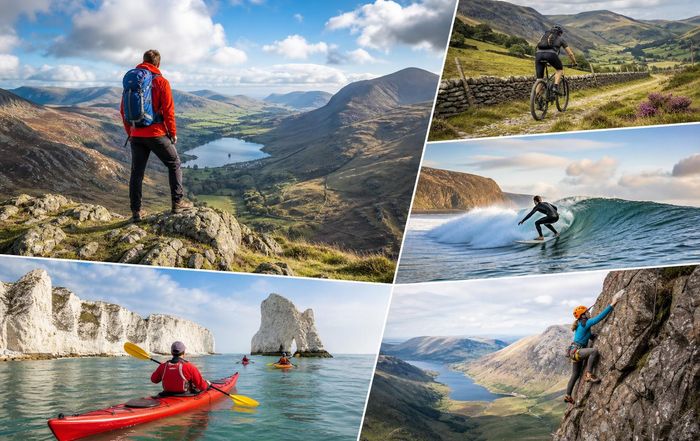
Outdoor Sports Experiences Across the United Kingdom
From wind-battered sea cliffs to quiet highland lochs and urban rivers reborn for recreation, the United Kingdom packs an unusual variety of outdoor sports into a relatively compact set of islands. For many people the draw is not just performance or training; it is the mix of landscape, culture, and weather that makes a day outside in Britain feel distinct from almost anywhere else.
This overview explores some of the most compelling outdoor sports experiences across England, Scotland, Wales, and Northern Ireland, with an emphasis on adventure, safety, and how these activities fit into a changing climate and culture of the outdoors.
Why the UK is such a rich outdoor playground
The UK's geography lends itself to a wide spectrum of outdoor sport. Within a few hours' travel, it is possible to move from surf beaches to mountain ridges, quiet canals to serious whitewater, or urban bike parks to remote moorland trails. The Lake District, Snowdonia (Eryri), the Scottish Highlands, and the Causeway Coast are just a few of the regions that have become shorthand for particular types of adventure.
A relatively dense transport network and extensive public rights of way mean that many of these landscapes are accessible without a car, especially for visitors based in major cities. The national parks of England and Wales are overseen by dedicated park authorities, while NatureScot, Natural Resources Wales, and Nature Northern Ireland (within the wider DAERA framework) support conservation and access policies in their respective nations. The Countryside and Rights of Way Act in England and Wales and Scotland's broader right of responsible access give walkers, runners, and riders a legal framework for exploring much of the countryside.
At the same time, growing participation in outdoor sport brings pressure on fragile environments. Organizations such as the National Trust, Mountaineering Scotland, and Surfers Against Sewage have highlighted erosion, litter, and water quality issues, and are pushing for more sustainable participation. That tension between access and protection sits in the background of almost every sport discussed here.
For active visitors particularly focused on performance and conditioning, many of these activities connect naturally to endurance, strength, and skills training covered in more depth in the performance section of Xdzee's coverage.
Hiking and long-distance walking: from weekend wanders to thru-hikes
Walking remains the UK's most popular outdoor activity, and it is the foundation for many other sports. The country's network of public footpaths, bridleways, and national trails offers options from casual day walks to multi-week journeys.
In England and Wales, flagship routes such as the Pennine Way, South West Coast Path, and Offa's Dyke Path are designated National Trails, supported by government and local authorities. Scotland's equivalent long-distance routes, including the West Highland Way and the Great Glen Way, are promoted as Scotland's Great Trails by NatureScot. Northern Ireland adds its own classics such as the Causeway Coast Way and the Mourne Way.
These routes are more than lines on a map. They connect coastal villages, historic market towns, and sometimes major cities, tying outdoor sport directly into local culture and small-scale tourism. Many walkers combine sections of trail with visits to heritage sites or local festivals, blending adventure with the kind of lifestyle and cultural experiences highlighted in the destination and lifestyle pages.
Safety is generally manageable for prepared walkers, but the UK's changeable weather and sometimes serious terrain are often underestimated. The Mountain Rescue England and Wales and Scottish Mountain Rescue teams repeatedly stress the basics: carry a map and compass, check the Met Office mountain weather forecasts, plan escape routes, and be realistic about fitness and daylight. In the Highlands, hypothermia and navigation errors remain common call-out causes even in late spring.
Trail running and fell running: speed on rough ground
Trail running has grown quickly across Europe and the UK, but fell running-the older, rougher cousin that grew out of local hill races in northern England-gives the sport a distinct British flavor. Events sanctioned by the Fell Runners Association typically involve steep climbs, minimal waymarking, and a strong culture of self-reliance. The classic Bob Graham Round, a 66-mile circuit over 42 Lake District peaks, has become an endurance benchmark for elite runners.
Across the UK, city-based runners increasingly use national parks and upland areas for weekend training camps, often combining running with camping or bothy stays. Races such as the UTMB World Series' Ultra-Trail Snowdonia, Cape Wrath Ultra, and Ring of Steall Skyrace have helped put British terrain on the global ultra-running map.
The boom in participation has raised safety and environmental questions. Race organizers and bodies like British Athletics emphasize mandatory kit lists, navigational competence, and respect for private land. In fragile upland areas, runners are encouraged to stick to existing paths where possible to reduce erosion-an issue that also affects hikers and mountain bikers and is increasingly discussed in outdoor ethics circles.
Climbing and mountaineering: from gritstone edges to Scottish winter
The UK lacks ultra-high peaks, but it compensates with variety and tradition. Rock climbing has deep roots in areas such as the Peak District gritstone, the Lake District crags, the sea cliffs of Pembrokeshire and Gogarth, and the volcanic rock of the Scottish Highlands. Many of these venues are documented in detail in guidebooks and online databases curated by the British Mountaineering Council (BMC), Mountaineering Scotland, and the Mountaineering Ireland community.
Indoor climbing walls have exploded in number over the past decade, and climbing's inclusion in the Olympic Games has accelerated interest. The BMC has reported significant growth in participation, particularly among younger urban climbers who often use indoor bouldering as a fitness and social activity. A growing proportion of these climbers are now transitioning outside, sometimes without formal instruction, which has prompted renewed emphasis on outdoor skills and environmental awareness.
Winter mountaineering in Scotland remains one of the UK's most serious outdoor pursuits. Routes on Ben Nevis, the Cairngorms, and Torridon can involve avalanche risk, severe weather, and complex navigation. The Scottish Avalanche Information Service (SAIS) provides daily avalanche forecasts for key mountain areas, and winter skills courses are strongly recommended for visitors who lack experience with ice axe and crampons. Even in England and Wales, winter conditions in the Lakes or Snowdonia occasionally turn benign hill walks into mountaineering days.
For those drawn to the performance side of climbing, indoor training, competition circuits, and strength conditioning are increasingly intertwined with outdoor goals, reflecting the broader trend toward cross-training and performance optimization highlighted in Xdzee's performance section.
Mountain biking and gravel riding: pedaling the wilder edges
Mountain biking has matured from a fringe activity to a mainstream sport across the UK, supported by trail centers, bike parks, and an expanding network of bridleways and permissive paths. Wales in particular has positioned itself as a destination for off-road riding, with purpose-built centers such as BikePark Wales, Coed y Brenin, and Afan Forest Park offering graded trails, uplift services, and coaching.
In Scotland, the 7stanes trail centers, spread across the south of the country, have been supported by Forestry and Land Scotland as part of a broader strategy to promote recreation in managed forests. These facilities have helped make the UK a regular stop on international race calendars and a training base for elite riders.
Alongside purpose-built trails, gravel riding and bikepacking have surged on quieter lanes, forest tracks, and towpaths. Routes such as the King Alfred's Way, Badger Divide, and Wild About Argyll link historical sites, small communities, and remote landscapes. The growth of e-MTBs and e-gravel bikes is making longer and hillier routes accessible to a wider range of riders, with ongoing debate about trail access and impact.
Safety guidance from organizations like British Cycling and Cycling UK emphasizes helmet use, appropriate bike maintenance, and understanding of rights of way. In England and Wales, not all paths are legally open to cyclists; bridleways, byways, and some permissive paths are key, whereas most public footpaths are not. Scotland's access laws are more permissive, but riders are still expected to follow the Scottish Outdoor Access Code, yielding to walkers and minimizing damage.
For readers interested in gear, training, and injury prevention in cycling, our sports and safety sections often explore these topics in more technical depth.
Paddlesports: sea kayaking, canoe touring, and urban SUP
With thousands of kilometers of coastline and an intricate network of rivers and canals, the UK is well suited to paddlesports. Sea kayaking along the coasts of Scotland, Anglesey, Cornwall, and the Causeway Coast offers encounters with wildlife, sea caves, and tidal races that can be as committing as any mountain route. Inland, canoe touring on rivers like the Wye, Spey, and Thames combines multi-day travel with camping or stays in riverside towns.
The British Canoeing governing body has played a major role in promoting access and safety, publishing guidance on paddling responsibly and negotiating river access in England and Wales, where legal rights remain complex and sometimes contested. In Scotland, the wider right of responsible access simplifies matters but still requires awareness of fishing activity, conservation zones, and nesting birds.
Stand-up paddleboarding (SUP) has grown especially fast, driven by relatively low equipment costs and the appeal of accessible urban and coastal locations. However, this growth has been accompanied by a spike in incidents, particularly on tidal estuaries, weirs, and windy open water. The Royal National Lifeboat Institution (RNLI) and HM Coastguard have issued repeated safety advisories for paddleboarders, stressing leashes appropriate to conditions, buoyancy aids, and checking tides and forecasts.
Water quality is an increasingly prominent concern. Campaign groups such as Surfers Against Sewage and The Rivers Trust have highlighted sewage discharges and pollution in rivers and coastal waters, leading many paddlers and swimmers to check real-time water quality maps before heading out. This intersection of sport, environmental activism, and public health is likely to remain a major theme in UK watersports.
Surfing, kitesurfing, and coastal adventure
Surf culture in the UK centers on regions such as Cornwall, Devon, South Wales, the north-east of England, and pockets of Scotland's north and west coasts. Breaks like Fistral Beach, Croyde, and Thurso East are recognized internationally, and the British surf scene has produced athletes competing on the global stage. The British Surfing federation oversees elite pathways and Olympic aspirations, while local surf schools provide entry-level coaching.
Kitesurfing and windsurfing thrive in windy coastal spots such as Poole Harbour, Hayling Island, Rhosneigr, and various Scottish lochs. These sports often share beaches with swimmers, surfers, and dog walkers, so local etiquette and zoning are important. The Royal Yachting Association (RYA) offers safety and training standards for affiliated centers, and many kiters rely on local clubs for site-specific knowledge about tides, submerged hazards, and restricted zones.
Coasteering-traversing rocky shorelines on foot, swimming, and jumping into the sea-originated in Wales and has spread to other coastal regions as a guided adventure activity. Professional operators generally follow strict risk assessments and use helmets, buoyancy aids, and appropriate wetsuits. The Adventure Activities Licensing Authority (AALA) in Great Britain regulates providers working with under-18s, and families are encouraged to book with licensed operators rather than attempting coasteering informally.
As with paddlesports, coastal adventure intersects with broader concerns about erosion, wildlife disturbance, and marine pollution, top topics that are increasingly explored not just in specialist outdoor media but also in mainstream news and world coverage.
Open-water swimming and "wild" dips
Open-water swimming has seen remarkable growth in the UK, accelerated by the closure of pools during the COVID-19 pandemic and by social media communities promoting the physical and mental benefits of cold water. From London's Hampstead Ponds and Serpentine Lido to Scottish sea lochs and Welsh mountain lakes, swimmers now meet year-round for everything from gentle dips to marathon-distance challenges.
Organizations such as Swim England and Outdoor Swimmer magazine provide guidance on safe outdoor swimming, focusing on cold-water shock, currents, and water quality. The RNLI has emphasized that sudden immersion in cold water can trigger an involuntary gasp and loss of control; the recommended response is to "float to live" for at least 60-90 seconds before attempting to swim or self-rescue.
Water quality concerns mirror those affecting paddlers and surfers. Campaigns for cleaner rivers and seas have made terms like "CSO discharges" (combined sewer overflows) and "bathing water designation" more familiar to swimmers. The UK Environment Agency and Scottish Environment Protection Agency (SEPA) publish bathing water quality data for designated sites, though campaigners argue that monitoring needs to be broader and more frequent.
For many participants, open-water swimming is as much about community and mental health as it is about sport, aligning with a wider lifestyle trend toward nature-based wellbeing that often overlaps with other outdoor pursuits.
Adventure racing, multi-sport, and endurance challenges
The UK's varied terrain lends itself to multi-sport events that combine running, cycling, paddling, and navigation. Adventure races such as Itera, Questars, and various local events blend elements of orienteering with trail running and mountain biking, sometimes over several days. These races attract both domestic participants and international teams, positioning the UK as a testing ground for expedition-style competition.
Endurance challenges-often informal or self-organized-are equally woven into UK outdoor culture. Besides the Bob Graham Round, there are equivalents such as the Paddy Buckley Round in Wales, the Charlie Ramsay Round in Scotland, and long-distance cycling time trials on routes like Land's End to John o' Groats. Bikepacking "ultra" events such as the Highland Trail 550 have gained attention in global endurance circles.
These pursuits raise complex safety and ethical questions. They often rely on voluntary mountain rescue services, cross sensitive habitats, and sometimes operate in a grey area between personal challenge and organized event. Responsible organizers typically work closely with land managers, rescue teams, and environmental bodies, while participants are encouraged to adopt robust risk management and leave-no-trace principles-topics that connect directly with the team focus on safety and ethics.
Urban outdoor sport: parks, canals, and city edges
Not every UK outdoor experience requires a trip to a national park. Urban and peri-urban spaces are increasingly important for daily activity. City runners and cyclists use canal towpaths, riverfronts, and green corridors as training routes; climbers frequent outdoor boulders in parks or small quarries near metropolitan areas; and paddleboarders and kayakers explore docklands and city rivers.
Projects like the National Cycle Network, coordinated by charity Sustrans, and local greenway initiatives have made it easier to link urban centers with countryside trails. In London, the Thames Path, Capital Ring, and London Loop form walking circuits that combine heritage, parkland, and suburban edges. Similar initiatives exist around cities such as Manchester, Bristol, Glasgow, and Birmingham, where canal-based routes and urban parks support year-round activity.
These spaces raise their own safety considerations, from traffic interactions to personal security and waterway hazards. Local councils and charities often publish route maps and safety advice, and many clubs orient their training around these accessible environments, using trips to wilder areas as occasional highlights rather than weekly routines.
Climate, seasons, and changing risk profiles
The UK's maritime climate has always been a defining feature of its outdoor sports, but climate change is altering risk profiles and seasonality. The UK Met Office has documented rising average temperatures and more frequent extreme weather events, including heavier rainfall and more intense heatwaves. For outdoor athletes, this means greater exposure to flash flooding, storm damage, heat stress, and unpredictable winter conditions.
In the mountains, shorter and less reliable snow seasons are already affecting Scottish winter climbing and skiing, with more frequent freeze-thaw cycles increasing avalanche risk in some conditions. On rivers, heavier rainfall can quickly turn gentle runs into dangerous flood conditions. Along the coast, sea-level rise and storm surges are accelerating erosion in some areas and changing the nature of surf breaks and coastal access.
Outdoor organizations are responding by updating guidance, promoting flexible planning, and encouraging athletes to build weather literacy into their decision-making. Checking multiple forecasts, understanding river and sea state data, and having conservative backup plans are increasingly presented as core skills rather than optional extras.
This shift also intersects with broader conversations about sustainability, travel choices, and the carbon footprint of adventure sports, topics that connect naturally to innovation, business, and world reporting where gear design, transport policy, and tourism economics come into play.
Access, inclusion, and the future of UK outdoor sport
Historically, UK outdoor culture has often been dominated by relatively narrow demographics in terms of class, ethnicity, and geography. In recent years, grassroots groups such as Black Girls Hike, Muslim Hikers, Steppers UK, and various LGBTQ+ outdoor clubs have worked to broaden participation and challenge assumptions about who "belongs" in the countryside.
Governing bodies and charities, including Sport England and Ramblers, have published strategies and research on barriers to outdoor participation, highlighting issues such as cost, transport, cultural representation, and experiences of discrimination. Addressing these barriers is increasingly seen as essential not just for fairness but also for building political support for access rights and environmental protection.
At the same time, the outdoor sector is an important part of regional economies, particularly in rural areas where adventure tourism supports jobs in guiding, accommodation, retail, and transport. Balancing economic opportunity with environmental limits and community needs is a recurring theme in local planning debates, and one that often surfaces in business and world articles as well as specialist outdoor media.
Looking ahead, the UK's outdoor sports scene is likely to remain shaped by three overlapping forces: technological change (from e-bikes to advanced weather apps), environmental pressure (climate impacts and biodiversity loss), and social shifts (who participates, and how welcome they feel). For those willing to engage with these complexities, the reward is access to a remarkably diverse set of experiences-whether that means a sunrise run on a Lakeland ridge, a winter paddle on a Scottish sea loch, or an evening ride along a city canal after work.
For anyone planning to explore these landscapes, combining ambition with preparation is key: study local guidance, respect access and conservation rules, and treat safety and environmental impact as integral parts of the adventure rather than afterthoughts.