

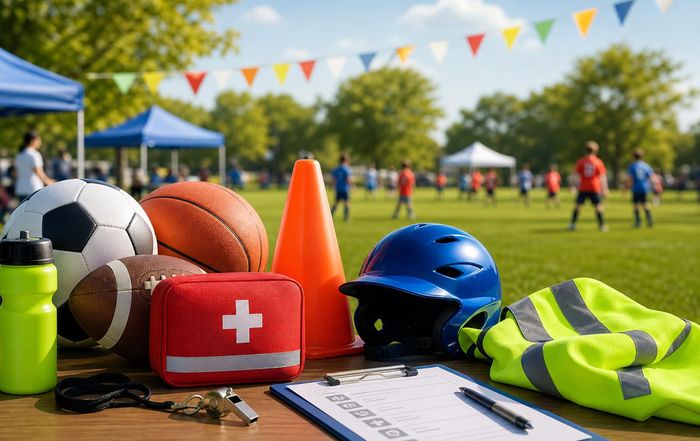
Sports Safety Practices for Community Events
The New Landscape of Community Sports Safety
Now community sports events have evolved from informal neighborhood gatherings into complex, semi-professional experiences that mirror the standards once reserved for elite competitions, and as participation has expanded across North America, Europe, Asia, Africa and South America, expectations around safety, ethics and performance have risen accordingly. In this context, xdzee positions itself as a new and original guide for organizers, volunteers, brands and local authorities seeking to design sports experiences that are not only exciting and inclusive but also demonstrably safe, data-informed and aligned with global best practices.
Community races, youth leagues, charity tournaments, adventure challenges and destination events now intersect with broader conversations about public health, urban planning, technology, climate resilience and corporate responsibility. Organizations such as the World Health Organization highlight how physical activity is essential for population health, yet they also stress that poorly managed events can increase the risk of injuries and emergencies; readers can explore how global guidelines frame these issues by visiting the WHO physical activity resources. For updated top platforms like this, which cover sports, adventure and travel, the challenge is to translate high-level recommendations into practical, locally adaptable safety practices that work for community organizers in the United States, the United Kingdom, Germany, Canada, Australia, Singapore, South Africa, Brazil and beyond.
Risk Assessment as the Foundation of Safe Events
Effective sports safety begins long before the first whistle or starting gun, with a structured risk assessment that accounts for venue characteristics, participant profiles, environmental conditions and logistical constraints. Organizations like the U.S. Centers for Disease Control and Prevention provide detailed frameworks for preventing sports-related injuries, which can be adapted to community-level events; organizers can review sports injury prevention guidance to understand common risk factors and evidence-based mitigation strategies. In Europe, event planners increasingly align with standards from bodies such as UK Sport and national governing organizations that emphasize duty of care, safeguarding and emergency preparedness.
For xdzee.com, which covers safety and performance as core themes, risk assessment is not presented as a bureaucratic hurdle but as an enabler of better experiences. When community organizers in cities such as London, Berlin, Toronto or Sydney perform systematic venue inspections, map crowd flows, identify heat or cold exposure risks, and analyze historical incident data, they are able to design event layouts, schedules and staffing models that reduce accidents while supporting athlete performance. Resources from the International Olympic Committee on safeguarding athletes and managing event environments offer a high benchmark that can be scaled down thoughtfully for local contexts.
In Asia, where rapid urbanization and dense cityscapes in places like Singapore, Seoul, Tokyo and Bangkok create unique crowd management challenges, municipal authorities frequently publish safety codes and event guidelines that complement global standards. The Singapore Sports Hub and similar complexes around the world demonstrate how integrated design, clear signage and controlled access points can dramatically reduce safety incidents, and community organizers can learn from these large-scale examples when planning smaller races, football tournaments or multi-sport festivals.
Medical Preparedness and Emergency Response
A defining characteristic of mature community sports safety practices in 2026 is the integration of professional-level medical planning into local events. Guidelines from the American College of Sports Medicine and the National Athletic Trainers' Association emphasize pre-event medical risk stratification, on-site clinical capabilities and post-event follow-up, and interested readers can explore how these organizations frame sports medicine standards for different levels of competition. For community events, this translates into having clearly designated medical zones, trained first responders, automated external defibrillators (AEDs), and protocols for managing concussions, cardiac events, heat exhaustion and musculoskeletal injuries.
In countries such as the United States, Canada and Australia, collaboration between local health services, volunteer paramedics and sports clubs has become more structured, supported by digital communication tools that allow rapid escalation to hospitals when needed. In Europe, cross-border knowledge sharing, particularly through entities like UEFA for football safety and World Rugby for contact sports, has raised awareness of concussion protocols, return-to-play criteria and emergency action plans; those interested in head injury management can review the concussion guidelines from World Rugby. For community organizers in rugby-playing nations such as the UK, France, Italy, South Africa and New Zealand, adopting these standards at the grassroots level is increasingly viewed as an ethical obligation rather than a discretionary option.
Asia and South America are also advancing in this domain, with major cities in Japan, Brazil and Argentina embedding sports events into broader disaster preparedness frameworks, recognizing that mass gatherings can be affected by extreme weather, infrastructure failures or public health crises. The International Federation of Red Cross and Red Crescent Societies provides valuable resources on first aid and emergency response in mass gatherings, which community organizers can adapt for local 5K runs, cycling events or beach volleyball tournaments. For xdzee.com, which reports on world and news developments, showcasing real case studies where robust medical preparedness prevented fatalities or minimized long-term harm reinforces the importance of investment in this area.
Technology, Data and Innovation in Safety Management
By 2026, innovation in wearable technology, geolocation, biometrics and event management software has transformed how community sports events are planned and monitored. Platforms inspired by elite events such as the Boston Marathon and the London Marathon have trickled down to local races, enabling real-time participant tracking, heat maps of crowd density and automated alerts when environmental thresholds are exceeded. For organizers and sponsors, this convergence of performance and safety aligns with broader trends in sports technology, which are frequently discussed by entities like MIT Sloan Sports Analytics Conference and technology sections of outlets such as ESPN's sports science coverage.
In Europe and North America, it is increasingly common for community endurance events to use mobile apps that integrate weather forecasts, air quality indices and personalized health data, allowing participants with asthma, cardiovascular risk or previous injuries to receive tailored recommendations or warnings. Public data from agencies such as the European Environment Agency and the U.S. Environmental Protection Agency, which offer air quality and climate information, are being integrated into event dashboards so that organizers can make informed decisions about start times, hydration stations and shade structures. For xdzee.com, which dedicates coverage to innovation, these developments illustrate how digital tools are moving safety from reactive to predictive, aligning with broader shifts toward smart cities and data-informed public policy.
In Asia, particularly in technology-forward countries like South Korea, Japan and Singapore, community sports events are piloting AI-driven crowd analytics and computer vision systems that detect unusual movements, congestion or potential conflicts in real time. Collaborations between local governments, universities and private technology firms have produced scalable solutions that can be deployed at neighborhood festivals or regional tournaments, not only at major international competitions. These innovations raise important questions about privacy, data governance and ethical use of surveillance, areas that xdzee.com explores through its dedicated ethics coverage.
Governance, Liability and Ethical Responsibility
The governance of community sports safety in 2026 sits at the intersection of legal liability, ethical responsibility and public expectation. Across the United States, the United Kingdom, Germany, Canada and Australia, case law and insurance frameworks increasingly recognize that event organizers, sponsors and facility owners owe a clear duty of care to participants, volunteers and spectators. Legal resources and risk management guidance from organizations such as Allianz, Marsh McLennan and national bar associations emphasize the importance of documented safety plans, informed consent, waivers and incident reporting, and those seeking to understand how insurers view event risk can review general risk advisory content.
Ethically, there is a growing consensus that community sports should not prioritize spectacle or brand exposure over participant welfare. Global campaigns led by bodies such as UNESCO, which promotes sport as a driver of education and inclusion, and the Centre for Sport and Human Rights have elevated discussions about safeguarding children, preventing abuse and ensuring that marginalized groups are not exposed to disproportionate risk. For xdzee.com, which covers culture and lifestyle, this translates into stories that examine how local organizers in cities like Amsterdam, Zurich, Stockholm, Oslo and Copenhagen are implementing child protection policies, gender-inclusive facilities and anti-harassment protocols as standard practice.
In emerging markets across Africa, Asia and South America, where regulatory frameworks may be less mature, international federations and NGOs are playing a critical role in capacity building and knowledge transfer. The International Labour Organization and various regional sports councils emphasize safe working conditions for event staff, fair pay for temporary workers and protections for volunteers, recognizing that safety is not limited to athletes but encompasses the entire ecosystem. As xdzee.com expands its business and jobs coverage, it increasingly highlights how community sports can create responsible employment opportunities while maintaining high safety standards.
Integrating Safety into Event Design and Participant Experience
One of the most significant shifts by 2026 is the integration of safety into the core design of community events, rather than treating it as an afterthought or separate operational layer. Event architects, urban designers and sports marketers now collaborate from the earliest planning phases to ensure that routes, seating, signage, lighting, sound systems and accessibility features all contribute to a safer environment. Guidance from bodies such as ISO and CEN on crowd safety, structural integrity and accessibility informs these practices, and professionals frequently consult architectural case studies from organizations like the Royal Institute of British Architects, whose design resources underscore the importance of human-centered environments.
In destination events that combine sports, travel and culture, such as trail races in the Alps, cycling tours in Spain, surf competitions in Australia or marathons in Thailand, safety considerations extend to transportation, accommodation, food hygiene and local medical infrastructure. Tourism boards in countries like France, Italy, Japan and New Zealand increasingly collaborate with event organizers to promote responsible travel behavior, emergency contact awareness and insurance coverage; readers interested in how tourism and safety intersect can explore the World Travel & Tourism Council's insights on safe and seamless travel. For xdzee.com, whose destination and travel sections spotlight global sports tourism, the emphasis is on helping participants understand that a memorable experience is inseparable from a well-managed risk environment.
At the participant level, safety is now framed as a shared responsibility rather than a one-sided obligation of the organizer. Pre-event education on hydration, warm-up routines, equipment checks and heat or cold exposure is increasingly disseminated through digital channels, often supported by brands and health organizations. Resources from the Mayo Clinic and the Cleveland Clinic on safe exercise practices and injury prevention are frequently adapted into easy-to-understand guides that can be localized for different languages and cultural contexts. For xdzee.com, which engages audiences interested in sports, performance and lifestyle, presenting this information in a way that respects local traditions while promoting global best practice is a core editorial priority.
Brands, Sponsorship and the Business of Safe Events
The business dimension of community sports safety has become impossible to ignore. Global and regional brands in apparel, footwear, nutrition, technology and insurance now view safety as an integral part of their reputation and value proposition. Companies like Nike, Adidas, Puma, Under Armour, Asics, Decathlon and emerging sustainable brands are increasingly investing in safer footwear, protective gear and smart apparel that monitor vital signs or impact forces, while also supporting community initiatives that promote inclusive and safe participation. Industry analysis from organizations such as McKinsey & Company and Deloitte on the sports and activewear market highlights how consumer expectations around safety and sustainability now shape purchasing decisions.
For sponsors, aligning with events that have robust safety credentials reduces reputational risk and opens opportunities for deeper storytelling around innovation, ethics and community impact. Insurers and financial services companies, including AXA, Allianz and Swiss Re, are increasingly visible in grassroots events, offering risk education, personal accident cover and digital tools that encourage safer behavior. As xdzee.com develops its brands and business sections, it documents how these partnerships are reshaping the economics of community sports, moving sponsorship beyond logo placement toward collaborative safety initiatives, co-branded training content and shared data projects.
In markets across Europe, Asia-Pacific and the Americas, destination marketing organizations and city authorities recognize that safe, well-managed sports events enhance their global reputation, attract repeat visitors and stimulate local economies. Reports from the OECD and the World Bank on the economic value of sports and tourism underscore how safety performance influences long-term viability. For xdzee.com, which operates at the intersection of world, news and business reporting, this economic lens provides an additional rationale for sustained investment in safety practices.
Jobs, Skills and Professional Pathways in Sports Safety
The professionalization of community sports safety has also created new jobs and career pathways across regions. Event safety coordinators, risk analysts, sports medics, crowd managers, data scientists, safeguarding officers and sustainability specialists are increasingly in demand, not only for major international competitions but also for regional leagues, charity events and adventure festivals. Universities in the United States, the United Kingdom, Germany, the Netherlands, Sweden, Norway and other countries now offer specialized degrees and certifications in sports management, event safety and sport science, often in partnership with national governing bodies and professional associations.
Organizations such as ISPE and the Event Safety Alliance provide continuing education and best practice resources, while global platforms like LinkedIn and specialized recruitment agencies connect professionals with opportunities in clubs, federations, municipalities and private event companies. For readers exploring career transitions or new roles in this evolving sector, xdzee.com uses its jobs coverage to highlight emerging skill sets, regional demand trends and success stories from professionals working in cities as diverse as New York, London, Berlin, Toronto, Singapore, Tokyo, Cape Town and São Paulo.
Technical skills in risk modeling, medical protocols, data analytics and facility design are complemented by softer competencies such as stakeholder communication, cross-cultural awareness and ethical decision-making. As safety roles become more central to organizational strategy, senior leadership positions focused on integrity, safeguarding and resilience are emerging within federations, brands and event agencies. This shift aligns with broader corporate governance trends, where environmental, social and governance (ESG) metrics increasingly influence investor decisions and public trust, and where sports organizations are expected to demonstrate transparency and accountability in how they manage human risk.
Toward a Culture of Safety-Centered Community Sport
Across continents and cultures, a unifying theme in 2026 is the gradual emergence of a genuine culture of safety-centered community sport. This does not mean eliminating risk altogether, since adventure, challenge and uncertainty are integral to the appeal of sports, particularly in disciplines such as trail running, climbing, mountain biking, surfing and winter sports. Instead, it means that risk is understood, communicated, managed and shared in a way that respects human dignity, protects vulnerable groups and supports long-term participation.
For our digital magazine which brings together new stories from sports, adventure, travel, culture and world perspectives, the mission is to help communities, brands and policymakers see safety not as a constraint but as a foundation for creativity, inclusivity and sustainable growth. As climate change alters weather patterns, as urban populations grow, and as digital technologies reshape how people move, train and connect, the importance of robust sports safety practices for community events will only increase.
By amplifying best practices from cities in North America, Europe, Asia, Africa and South America, by highlighting innovations from leading organizations and by framing safety within broader conversations about ethics, business and lifestyle, xdzee.com aims to contribute to a global ecosystem where every local game, race or festival is designed with care, expertise and foresight. In this emerging landscape, community sports can remain a powerful force for health, connection and joy, grounded in a shared commitment to keeping participants and communities safe, wherever in the world they choose to play.