

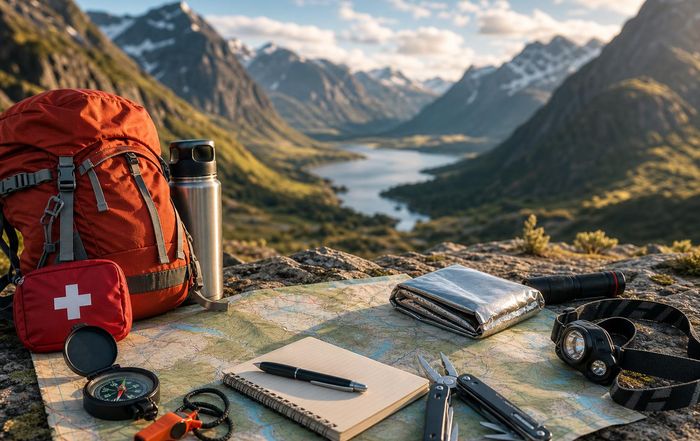
Essential Travel Safety Skills for Remote Destinations
Venturing far from cities and tourist hubs can be one of the most rewarding ways to travel. It can also expose gaps in skills that rarely matter on a city break but become critical when the nearest help is hours or days away. For adventure travelers, outdoor athletes, and anyone drawn to wild or less-developed regions, building a core set of safety skills is as important as buying the right gear.
This page focuses on practical, learnable abilities: what to know before you go, what to practice, and how to react when things go wrong. It applies whether you are trekking in Patagonia, overlanding across Central Asia, paddling remote rivers in Canada, or exploring island trails in Southeast Asia.
Throughout, it assumes you already have a basic plan for your trip. The aim here is to make that plan safer, more resilient, and more respectful of the places and people you visit.
Understanding "remote" and why it changes the risk
In remote destinations, the usual safety nets-fast emergency services, reliable mobile coverage, dense road networks, nearby clinics-may not exist or may be severely limited. The World Health Organization notes that rural and remote regions worldwide often face long response times and limited emergency care, even in high-income countries. In many parts of the world, there may be no formal rescue infrastructure at all.
Remote travel typically increases risk in several ways:
Medical help may be many hours or days away.
Communication can fail; phones and even satellite devices may be unreliable in canyons, dense forests, or severe weather.
Navigation is more complex, with fewer obvious landmarks, trails, or signs.
Environmental hazards-altitude, cold, heat, wildlife, rivers, storms-are less predictable and harder to escape.
Local support (guides, villagers, other travelers) may be sparse or absent.
These realities don't make remote trips reckless; they simply change the skill set you need. The more self-sufficient you are, the more you can enjoy the adventure without relying on luck.
For readers planning demanding expeditions or performance-focused adventures, it is worth pairing these skills with broader preparation around sports and endurance training, destination research, and safety planning.
Planning and risk assessment before you leave
Remote safety starts long before your flight or drive. A structured risk assessment-formal or informal-can dramatically reduce the chance that you ever face a true emergency.
A good starting point is to map out the route and environment in detail. For trekking, paddling, or bikepacking, that means knowing distances between water sources, villages, and potential evacuation points, as well as elevation gain and typical weather patterns. Topographic maps from national mapping agencies (such as the USGS topographic map service) or apps like Gaia GPS and FATMAP are useful, but they should be cross-checked with recent trip reports and local advice. In developing regions, official maps may be outdated, so speaking with experienced guides or local outdoor clubs can be more reliable.
Next, identify the main categories of risk: environmental (storms, heat, cold, altitude, rivers), health (disease, injuries, allergies), security (crime, conflict, checkpoints), and logistical (transport reliability, fuel, border crossings). The UK Foreign, Commonwealth & Development Office and the US Department of State both maintain regularly updated travel advisories that highlight security and infrastructure issues country by country. For disease and vaccination guidance, consult resources like the CDC's Travelers' Health pages for the United States or similar national public health agencies, which provide destination-specific health advice.
Once the risks are clear, build mitigation into your plan. That might mean traveling outside peak storm or monsoon seasons, adding extra acclimatization days, avoiding night driving where roads are dangerous, or choosing a route with more frequent exit options. It also means defining "turnaround" criteria: objective conditions (weather, time, group fatigue, water levels) that will trigger a decision to retreat, even if it disappoints your ambitions.
Finally, leave a detailed itinerary with a trusted contact at home and, where appropriate, with your accommodation or local operator. Include route maps, expected check-in times, emergency contacts, and what they should do if they don't hear from you. This kind of trip plan is standard in many adventure sports and significantly improves the odds of targeted rescue if something goes wrong.
Navigation skills when technology fails
Modern navigation tools-smartphone apps, satellite messengers, GPS watches-are powerful, but none is infallible. Batteries die quickly in cold, devices fail when wet or dropped, satellite signals can be blocked, and digital maps can be wrong. In remote terrain, relying solely on electronics is a common and avoidable mistake.
At minimum, travelers should be comfortable with paper maps and a compass. That means more than carrying them at the bottom of a pack. It involves knowing how to orient a map using terrain and compass, how to identify handrails (ridges, rivers, roads) and catching features (cliffs, valleys, major bends) that keep you from drifting off course, and how to estimate travel time based on distance and elevation. Organizations like Mountain Training UK & Ireland and the American Hiking Society publish clear introductions to map and compass navigation that are worth studying and practicing at home.
Route-finding in featureless terrain-desert, snowfields, dense forest-requires additional caution. In these environments, taking frequent bearings, noting back bearings (so you can reverse your route), and using waypoints (rock cairns, GPS points, distinctive trees) is crucial. In winter or alpine conditions, avalanche risk adds another layer of complexity; the American Institute for Avalanche Research and Education (AIARE) and European counterparts provide avalanche education frameworks that can be life-saving for ski touring and mountaineering.
For overland and vehicle-based travelers, navigation also includes understanding fuel range, road conditions, river crossings, and seasonal closures. Official road authority sites, local 4x4 clubs, and recent satellite imagery can help verify whether a "shortcut" is actually usable. In many countries, unpaved roads on mapping apps may be impassable in the rainy season or blocked by landslides.
A practical rule: if you would not be comfortable completing your route with only a paper map and compass, you are not yet ready to trust your life to a phone screen.
Medical self-reliance and first aid in the field
In remote destinations, you are often your own first responder. Basic urban first aid is a good foundation, but wilderness and remote environments change the priorities. Evacuation may be delayed for many hours, so the focus shifts from "treat until ambulance arrives" to "stabilize, monitor, and manage over time."
Wilderness medicine organizations such as NOLS Wilderness Medicine and Wilderness Medical Associates offer Wilderness First Aid (WFA) and Wilderness First Responder (WFR) courses that emphasize improvised care, long-term patient management, and decision-making about evacuation versus continued travel. Even a short WFA course can significantly improve your ability to handle fractures, severe bleeding, shock, burns, allergic reactions, and heat or cold injuries.
A remote-ready first aid kit should be tailored to your destination and group. At a minimum, it typically includes wound care supplies (sterile dressings, adhesive bandages, tape, antiseptic), blister treatment, pain relief, antihistamines, rehydration salts, and any personal medications. For longer or more technical trips, add items such as a SAM splint, triangular bandages, trauma dressings, and prescription medications recommended by a travel medicine specialist. The International Association for Medical Assistance to Travellers (IAMAT) and national health services provide guidance on travel health kits and medications.
Just as important as contents is knowing how to use them. Practice applying bandages with one hand, improvising slings, and recognizing early signs of serious conditions like hypothermia, heatstroke, high-altitude cerebral edema (HACE), or anaphylaxis. In remote regions, early recognition and decisive action-cooling a heat-stressed companion, descending with someone showing ataxia or confusion at altitude-often matter more than sophisticated equipment.
For adventure travelers focused on performance, it is also wise to consider how training load, fatigue, and nutrition interact with medical risk. Overreaching on a big summit day or long paddle can turn minor issues into emergencies. Linking your safety planning with your performance strategy helps keep ambition in balance with capacity.
Communication and emergency signaling
When things go wrong far from help, your ability to communicate can determine the outcome. In many remote regions, there is no reliable mobile coverage. Travelers should therefore think in layers: local networks, satellite devices, and non-electronic signaling.
Before departure, research mobile coverage maps from local providers and ask recent visitors or guides about real-world reception. In some countries, purchasing a local SIM card offers better coverage than international roaming. Apps that allow offline messaging via Bluetooth or mesh networks can be useful within a group but do not replace true long-distance communication.
For serious remote travel, a satellite messenger or phone is strongly recommended. Devices like Garmin inReach, Zoleo, or SPOT use satellite constellations (Iridium, Globalstar) to send SOS signals and short messages even where there is no cell service. Many connect to global emergency coordination centers such as the International Emergency Response Coordination Center (IERCC), which can liaise with local search and rescue. When choosing a device, consider coverage maps, battery life, subscription costs, and whether two-way messaging is supported. Reputable reviews from organizations like OutdoorGearLab or Backpacker can help compare models, while manufacturers publish coverage details that should be checked against your route.
Non-electronic signaling remains essential if batteries fail or weather blocks satellites. A whistle, signal mirror, and high-visibility clothing or panel can make you much easier to locate from the air or across valleys. Knowledge of basic distress signals-such as six whistle blasts or flashes repeated at regular intervals, or large contrasting ground markers in open areas-aligns with international search and rescue practices described by organizations like the International Aeronautical and Maritime Search and Rescue Manual (IAMSAR).
Finally, make sure you understand how to describe your location clearly. That might involve using GPS coordinates, local place names, or reference to known landmarks. Practicing with coordinate formats (degrees-minutes-seconds, decimal degrees, UTM) and ensuring your group uses the same convention avoids confusion during an emergency.
Environmental awareness: weather, terrain, and wildlife
Remote destinations often mean more exposure to the raw elements. Weather systems can change faster and more violently, terrain can be more committing, and wildlife encounters more likely. Understanding these factors is central to safe adventure.
Weather is the most dynamic variable. Mountain and coastal forecasts from specialized services such as the National Weather Service in the United States, the UK Met Office, or regional avalanche centers provide more relevant detail than general city forecasts. Sites like Mountain Weather Information Service in the UK or MeteoSwiss in Switzerland offer mountain-specific forecasts that include wind speeds, freezing levels, and storm risk. In many parts of the world, however, high-resolution forecasts are limited. Learning to read clouds, wind shifts, and pressure changes, and to recognize local patterns (afternoon thunderstorms in the tropics, katabatic winds in glaciated areas) helps you anticipate trouble.
Terrain hazards vary widely: loose scree, steep snowfields, crevasses, fast rivers, slot canyons, or unstable cliffs. Skills such as safe river crossing techniques, basic rope work, or glacier travel are specialized and should be learned from qualified instructors or guides rather than improvised. The American Alpine Club and similar organizations publish accident reports and analyses that highlight common decision errors in mountaineering and climbing; these are sobering but valuable reading for aspiring alpinists.
Wildlife risk is highly location-specific. In North America and parts of Europe, large carnivores like bears and wolves may be a concern; in Africa and parts of Asia, hippos, elephants, snakes, and insects can pose greater risks. National park services and conservation organizations such as Parks Canada offer detailed guidelines on bear safety and food storage. In tropical regions, mosquito-borne diseases (malaria, dengue, Zika) and other vector-borne illnesses require preventive measures like repellents, treated clothing, and in some cases prophylactic medications, as advised by travel medicine clinics and public health agencies.
A recurring theme across environments is respect. Many incidents occur when travelers hurry, ignore local advice, or push through deteriorating conditions to meet a schedule. Building flexibility into your travel plans and accepting that some objectives may need to be abandoned is a core safety skill, not a concession.
Self-rescue, improvisation, and survival basics
In the most remote settings, you may need to stabilize a situation yourself before outside help can reach you. Self-rescue and improvised survival skills do not mean trying to out-perform professional rescuers; they mean keeping yourself and your group alive and as comfortable as possible until help arrives or you can safely move toward it.
Core skills include building effective emergency shelters from tarps, bivy sacks, or natural materials; starting and maintaining a fire in damp or windy conditions; sourcing and treating water; and rationing food and energy. Instruction from reputable survival schools or manuals by organizations like the British Mountaineering Council (BMC) can provide structured approaches to mountain safety and survival.
Shelter is usually the first priority in cold or wet conditions. Even a lightweight tarp, emergency bivy, or both can dramatically reduce heat loss when set up correctly. Fire-lighting skills require both appropriate tools (waterproof matches, lighters, fire starters) and practice. Water is next: understanding how to find and purify it using filters, chemical treatments, or boiling is crucial, especially in hot or arid climates where dehydration can become life-threatening within a day.
Self-rescue also includes movement decisions. In some situations, staying put in a safe, visible location is wiser than attempting to walk out, particularly if injured, exhausted, or unsure of direction. In others-such as when you are certain of a short route to a road or settlement-moving may be appropriate. Wilderness medicine and survival training emphasize structured decision-making frameworks to avoid panic-driven choices.
For climbers, paddlers, and backcountry skiers, technical self-rescue skills (escaping a belay, crevasse rescue, boat recovery) are discipline-specific and best learned in controlled environments before you are forced to use them in anger. Integrating this training with your broader sports and adventure practice helps embed good habits.
Cultural, ethical, and security awareness
Remote does not always mean uninhabited. Many wild-feeling regions are home to Indigenous communities, small villages, or nomadic groups whose presence may not be obvious at first glance. Safety in these contexts is as much about relationships and ethics as it is about gear and skills.
Cultural awareness begins with research. Reputable guidebooks, anthropological summaries, and local NGOs can help you understand land rights, sacred sites, and social norms. In many countries, trekking routes, climbing areas, or rivers cross Indigenous territories where access is conditional on permits, fees, or community agreements. Ignoring these frameworks can create conflict, jeopardize future access, and, in some areas, expose you to legal or security risks.
Security risk in remote regions can include banditry, armed groups, or tension around resource extraction, borders, or political disputes. International organizations such as the International Crisis Group and major news outlets provide context on conflict-affected regions, while official government travel advisories flag areas where foreign travelers have been targeted. However, conditions may vary significantly within a country, and local operators often have the most nuanced, up-to-date understanding.
Ethical travel also involves minimizing environmental impact. The Leave No Trace Center for Outdoor Ethics outlines seven principles that are widely adopted in outdoor communities worldwide: plan ahead, travel and camp on durable surfaces, dispose of waste properly, leave what you find, minimize campfire impacts, respect wildlife, and be considerate of others. In fragile ecosystems-from alpine tundra to coral islands-these practices are not just aesthetic preferences; they help keep environments resilient and reduce conflict with local communities who depend on them.
For readers interested in the intersection of ethics, culture, and adventure travel, reflecting on who benefits from your trip, how local guides and porters are treated, and whether your presence supports or undermines community priorities is part of a broader safety mindset: one that sees well-being as collective, not just individual.
Building your personal safety toolkit
No two remote trips are identical, but certain skills and tools recur across most of them. Rather than treating safety as a checklist to tick off once, it is more useful to see it as a toolkit you refine over time.
Practically, that means:
Taking at least one recognized wilderness first aid course and refreshing it periodically.
Practicing navigation without electronics on local hikes or rides until it feels natural.
Learning basic survival and self-rescue techniques appropriate to your chosen activities.
Investing in reliable communication tools and understanding their limitations.
Integrating safety considerations into your training, gear selection, and trip planning.
Staying curious about the cultures, environments, and communities you travel through.
Remote destinations reward this effort. They offer solitude, challenge, and perspective that are hard to find elsewhere. With the right preparation and skills, those rewards do not have to come at the expense of unnecessary risk.
For those planning their next expedition or simply looking to push beyond familiar routes, combining solid safety skills with thoughtful travel, adventure, and lifestyle choices can turn remote journeys into sustainable, repeatable experiences rather than one-off gambles.