

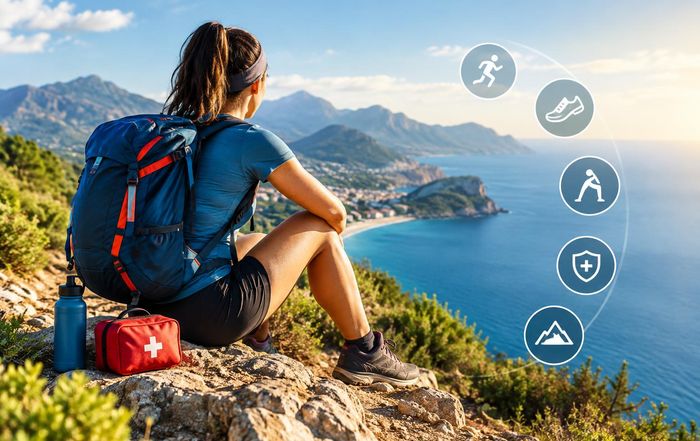
How to Reduce Injury Risk During Active Holidays
Active holidays promise more than a change of scenery. Whether it is a week of trail running in the Alps, a surf camp in Portugal, or a cycling tour across Japan, the draw is the same: movement, challenge, and stories to bring home. Yet the same factors that make these trips memorable-unfamiliar terrain, ambitious itineraries, and a break from routine-also raise the risk of getting hurt.
Minimizing that risk is less about being cautious to the point of boredom and more about planning with the same intent you bring to your sport. With a few structured decisions before and during your trip, it is possible to push your limits, explore new destinations, and still return home in one piece.
This doc looks at how injuries happen on active holidays, what you can do before you leave, and the decisions that matter most once you arrive.
Why Active Holidays Carry Different Risks
Injury patterns on active trips are shaped by a mix of sport, destination, and behavior. Research from organizations such as the World Health Organization and national tourism agencies consistently shows that travelers are more likely to engage in higher-risk activities than at home, often with less preparation.
On ski and snowboard holidays, for example, knee ligament injuries, wrist fractures, and shoulder dislocations are common, especially among intermediate participants who are confident enough to go faster but may not have fully developed technical control. Studies from the International Society for Skiing Safety indicate that rental equipment that is poorly adjusted and fatigue late in the day are major contributors.
In warm-weather destinations, cycling, hiking, surfing, and diving bring a different profile: overuse injuries from sudden spikes in volume, ankle sprains on uneven trails, shoulder strains from paddling or swimming, and barotrauma or ear issues in scuba diving. According to the Divers Alert Network (DAN), many diving accidents are linked not to dramatic equipment failure but to poor planning, inadequate rest, and ignoring early warning signs like ear discomfort or breathlessness.
Layered on top of sport-specific risks are travel-related factors: jet lag, dehydration from long flights, changes in altitude, unfamiliar traffic rules, and sometimes limited access to high-quality medical care. These amplify small mistakes into serious problems. Understanding this context is the starting point for smarter planning.
For broader background on sports-related risk and performance, readers may also find the coverage in Xdzee's sports and performance sections useful.
Plan the Trip Around Your Body, Not the Other Way Around
The most effective injury-prevention strategy is to design the holiday to match your current capacity instead of your aspirational self. That means being honest about fitness, experience, and any medical issues long before you book.
If you are planning a multi-day trek, bikepacking route, or surf camp, start by mapping your recent training. A hiker who usually covers 10-12 km on weekend trails with modest elevation should not plan a five-day itinerary of 25 km and 1,500 m of climbing each day without a build-up phase. Sports medicine research, including guidance from the American College of Sports Medicine (ACSM), suggests that abrupt increases of more than about 10% per week in training load are associated with higher injury rates. Use that as a rough planning benchmark when you design your daily distances and elevation gain.
Next, consider your injury history. Recurrent ankle sprains, lower-back pain, or knee problems are more likely to return under load, especially when you are tired or navigating unfamiliar terrain. A pre-trip consultation with a physiotherapist or sports physician can help identify specific weaknesses and provide targeted exercises or braces. The Chartered Society of Physiotherapy in the UK and similar national bodies maintain directories of qualified practitioners, and many now offer remote consultations.
Finally, check that the destination infrastructure matches your risk tolerance. In remote adventure destinations, access to advanced medical care may be delayed by hours or days. Government travel advisories, such as those from the U.S. Department of State or the UK Foreign, Commonwealth & Development Office, often include information on local healthcare quality. If your trip skews toward high-risk activities or remote areas, that should influence how aggressively you push your limits.
For travelers balancing ambition with safety, Xdzee's adventure and destination pages often highlight how local conditions shape risk.
Build a Pre-Trip Conditioning Block
Many active holiday injuries are not freak accidents but the predictable result of asking unprepared tissue to do too much, too soon, on unfamiliar surfaces. A focused block of conditioning in the six to eight weeks before departure can significantly reduce that mismatch.
The first pillar is sport-specific endurance. If you are heading on a cycling tour, that means gradually extending your longest weekly ride and adding back-to-back days to simulate the cumulative fatigue of the trip. For hikers, this might involve weekend back-to-back hikes with a loaded pack, increasing distance and elevation progressively. Runners planning destination races should blend long runs with terrain-specific sessions-such as hill repeats or trail work-rather than relying solely on flat road mileage.
The second pillar is strength and stability. Evidence from the American Orthopaedic Society for Sports Medicine and other groups indicates that targeted strength training can reduce the risk of common injuries such as anterior cruciate ligament (ACL) tears and ankle sprains, particularly in cutting and landing sports. For most travelers, two short weekly sessions focusing on hips, core, and lower-leg strength are enough to provide meaningful protection. Balance exercises, single-leg squats, calf raises, and hip abductor work can be done at home without equipment.
The third pillar is movement preparation. If your holiday involves sports you do not usually practice-like skiing, snowboarding, surfing, or climbing-consider at least a few introductory sessions or dry-land drills before the trip. Ski resorts and national ski associations, such as Snow Sports England and U.S. Ski & Snowboard, publish pre-season conditioning guides that translate well for travelers preparing for their first week on snow.
This kind of preparation is not about becoming elite; it is about ensuring your body recognizes the demands before you load them for several consecutive days.
Choose Operators, Guides, and Gear With Safety in Mind
The choice of tour operator, guide, and equipment can change your risk profile more than any single training session. Good providers build safety into their business model; poor ones outsource it to luck.
When evaluating an operator or camp, look for recognized certifications and affiliations. For mountain sports, organizations such as the International Federation of Mountain Guides Associations (IFMGA) set training and safety standards for professional guides. In diving, reputable centers are typically affiliated with agencies like PADI, SSI, or CMAS, which require adherence to training and safety protocols; DAN also provides a dive operator checklist that travelers can use.
Ask specific questions rather than accepting generic assurances. What is the guide-to-participant ratio? How are routes or conditions adjusted for changing weather? What is the procedure for medical emergencies, and where is the nearest facility equipped to handle trauma or altitude illness? Clear, detailed answers are usually a good sign; evasive or vague responses are not.
Equipment matters just as much. For snow sports, poorly adjusted bindings and ill-fitting boots are a major cause of injuries, especially knee and lower-leg fractures. The International Society for Skiing Safety notes that having bindings set by trained technicians, with release values based on weight, height, age, and ability level, significantly reduces injury risk. For cycling, ensure your bike is correctly sized and that contact points-saddle height, reach, and cleat position-are adjusted to avoid overuse issues.
Travelers can find more gear and innovation context in Xdzee's innovation and brands coverage, which often highlights how design choices influence both performance and safety.
Respect Environment, Altitude, and Weather
Active holidays often take place in environments that differ dramatically from home, and the body does not adapt instantly. Altitude, heat, cold, and terrain each introduce specific risks that can be managed with planning.
At higher elevations, even moderate exertion can feel unexpectedly hard. The Centers for Disease Control and Prevention (CDC) recommends gradual ascent where possible, limiting sleeping altitude increases to about 300-500 meters per day above 2,500 meters and including rest days. Symptoms such as headache, nausea, dizziness, or unusual fatigue may signal acute mountain sickness; ignoring them and continuing to climb increases the risk of more serious conditions like high-altitude pulmonary or cerebral edema. Any itinerary that jumps quickly from low altitude to high exertion-such as flying into a high-altitude city and trekking the next day-should be reconsidered.
Heat and humidity, common in tropical and desert destinations, increase the risk of dehydration, heat exhaustion, and heatstroke. Guidance from World Athletics and sports medicine bodies emphasizes acclimatization: start with shorter sessions, avoid the hottest part of the day, and increase duration or intensity only as your body adapts. Hydration should include both water and electrolytes, especially for multi-hour activities. Alcohol and heavy meals immediately before or after intense sessions can compound strain on the cardiovascular system.
Cold environments bring their own challenges. Frostbite and hypothermia are real risks in winter sports, especially when wind, wet clothing, and fatigue are involved. The International Ski Federation (FIS) and national alpine associations offer practical cold-weather safety advice, including layering principles, the importance of windproof outer shells, and recognizing early signs of hypothermia such as shivering, confusion, and slurred speech.
Terrain adds another layer: loose scree, wet roots, coral reefs, or strong currents can turn ordinary movements into high-consequence mistakes. Local guides and up-to-date route descriptions are invaluable here; platforms like national park services or official tourism boards often publish current trail, avalanche, or surf conditions that should be checked daily.
For travelers integrating environmental risk into broader planning-especially where climate and local culture intersect-the world and lifestyle sections offer additional perspective.
Manage Daily Load, Fatigue, and Recovery
The temptation on active holidays is to compress as much activity as possible into each day. That can be rewarding, but it is also when fatigue quietly erodes coordination, decision-making, and reaction time.
Sports injury data, including analyses published by the British Journal of Sports Medicine, consistently show higher injury rates later in games, training sessions, or ski days, when muscles are tired and attention is reduced. On a holiday, this effect is multiplied over consecutive days without adequate recovery.
A practical approach is to treat your itinerary like a training plan rather than a checklist. Alternate harder days with easier ones, especially if you are not used to daily exercise. For a week-long cycling trip, that might mean two moderate days, one harder day, a lighter recovery ride or rest, then another moderate-hard sequence. For a surf camp, consider skipping at least one dawn or sunset session to allow your shoulders and back to adapt.
Sleep is a protective factor that is often neglected. Jet lag, late dinners, and early departures can combine to reduce sleep to five or six hours per night, which research from groups such as the National Sleep Foundation associates with increased injury risk in athletes. Where possible, avoid booking very early starts on the first days after long-haul travel, and treat the first night's sleep as part of your safety plan rather than optional recovery.
Nutrition and hydration underpin recovery as well. Long days in the mountains, at sea, or on the bike typically burn more energy than office-based routines, and under-fueling can intensify fatigue and slow healing of micro-damage in muscles and connective tissue. Aim to eat a carbohydrate-rich meal within a couple of hours of major efforts and maintain regular protein intake across the day. While it is natural to enjoy local food and drink, stacking heavy alcohol intake on top of high physical load is a common way to impair coordination and increase fall risk the next day.
Use Technique, Warm-Up, and Protective Gear
On an active holiday, small technical habits can make the difference between a minor stumble and a serious injury. Warm-ups, movement quality, and protective equipment are three areas where relatively small investments yield large safety returns.
A structured warm-up is not just for elite athletes. The FIFA 11+ program, developed by FIFA's medical research center and widely adopted in football, has shown that simple, progressive warm-up routines combining jogging, dynamic stretching, and neuromuscular exercises can reduce lower-limb injuries. Similar principles apply to running, skiing, and court sports: five to ten minutes of light movement, followed by dynamic drills and a gradual ramp-up of intensity, prepares joints and muscles for load more effectively than static stretching alone.
Technique coaching, even in small doses, can be especially valuable when trying a new sport or environment. A half-day lesson with a qualified ski instructor, surf coach, or climbing guide early in the trip can correct risky habits before they are reinforced over multiple days. Many national governing bodies, such as British Cycling or Surfing Australia, emphasize that novice and intermediate participants benefit most from structured technique input, both for performance and safety.
Protective gear should be matched to the activity and used consistently rather than selectively. Helmets are an obvious example: their effectiveness in reducing head injury risk in cycling, skiing, and snowboarding is well documented by organizations like the Canadian Paediatric Society and Helmet Safety Institute. For mountain biking and technical skiing, additional protection such as back protectors and padded shorts can mitigate the consequences of falls. In climbing and via ferrata, proper harnesses, lanyards with energy absorbers, and certified carabiners are non-negotiable.
Footwear deserves particular attention. Trail-appropriate shoes with adequate grip and support can drastically reduce slips and ankle sprains on wet or uneven ground. For water sports, reef-safe booties or shoes protect against cuts and stings while also giving better traction on slippery rocks or boards.
Readers interested in how equipment choices intersect with ethics and environmental impact can explore the ethics and safety sections, where gear decisions are often discussed in a wider context.
Understand Insurance, Legal, and Local Safety Frameworks
Even with meticulous preparation, accidents can happen. Having the right administrative framework in place does not prevent injury, but it can significantly shape the outcome.
Travel insurance is the first line of defense. Standard policies often exclude higher-risk activities such as off-piste skiing without a guide, technical mountaineering, scuba diving beyond certain depths, or motorbike riding without a local license. Before purchasing, read the fine print or talk directly with the insurer to confirm coverage for each planned activity, including search and rescue and medical evacuation if you will be in remote areas. Organizations like Consumer Reports and national insurance regulators provide guidance on evaluating policy terms and common exclusions.
Local laws and liability frameworks also matter. In some countries, participants are expected to assume a higher level of personal risk; in others, operators may have stricter legal obligations. For example, European ski resorts often follow FIS rules of conduct, which assign responsibilities to both skiers and snowboarders regarding speed, overtaking, and stopping on slopes. Violating these norms can affect both safety and legal responsibility in the event of a collision.
Emergency numbers and procedures vary by country. In much of Europe, 112 is the central emergency number; in the United States and Canada, it is 911; in many Asian countries, there may be separate numbers for police, fire, and medical emergencies. Before starting an activity, note how to contact local rescue services and whether mobile coverage is reliable along your route. In remote areas, satellite communication devices or locator beacons may be worth considering.
For those combining adventure with work or extended stays, Xdzee's business and jobs pages occasionally explore how insurance, liability, and remote work intersect with travel lifestyles.
Make Decisions in Real Time: When to Back Off
The final layer of injury prevention is psychological: the ability to adjust plans mid-trip when conditions or your body change. Many serious incidents occur not because travelers do not know what they should do, but because they feel social or financial pressure to continue regardless.
Recognizing early warning signs is crucial. Persistent pain that worsens with movement, a sense of unusual clumsiness, dizziness, or shortness of breath out of proportion to the effort are all reasons to stop and reassess rather than push on. In high-consequence environments-steep terrain, heavy surf, or technical cycling descents-this may mean turning back or choosing an easier route.
Group dynamics can complicate these decisions. Travelers who have paid for a guided experience may be reluctant to speak up about fatigue or discomfort, especially if others appear stronger. Good guides will actively solicit feedback and normalize route changes; if that is not happening, participants can still advocate for themselves. It is better to skip the last run, dive, or summit bid than to risk an accident that affects the entire group.
Financial sunk costs-non-refundable lift passes, pre-paid excursions, or scarce vacation days-can also cloud judgment. Reframing the goal of the trip from "doing everything" to "coming home healthy with good memories" can help counter that bias. Keeping one or two days in the itinerary as flexible buffers, rather than scheduling every hour, provides room to rest or adjust without feeling like you are losing value.
Bringing It All Together
Reducing injury risk on active holidays does not mean diluting the adventure. It means aligning your preparation, choices, and on-the-day decisions with the realities of your body and the environment you are entering.
Thoughtful trip design, a modest block of pre-trip conditioning, careful selection of operators and equipment, respect for local conditions, and a willingness to adapt plans in real time form a practical safety framework. Within that framework, there is ample room for ambitious goals, new sports, and challenging destinations.
For those planning their next active escape, exploring the updated travel, adventure, and destination pages can help translate these principles into specific routes and experiences-so the stories you bring home are about the views, the culture, and the effort, not the hospital.