

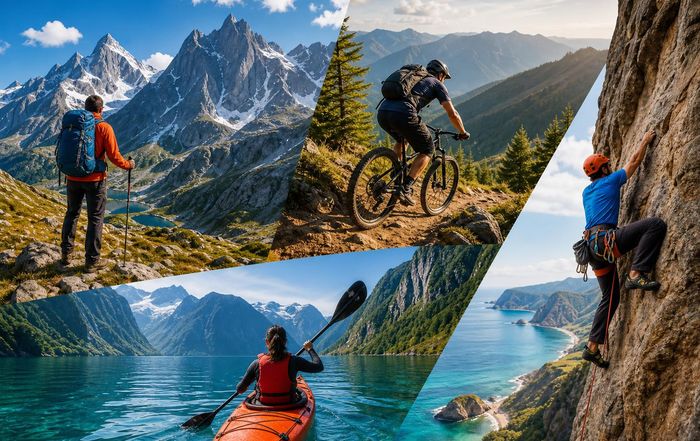
Top Outdoor Sports for Exploring New Landscapes
For many people, sport is not just about competition or fitness; it is a way to see the world differently. Certain outdoor disciplines are almost designed for exploration, taking participants deep into mountains, across oceans, along remote trails, and into cultures they might otherwise never encounter. The most rewarding activities balance immersion in the landscape with safety, skill, and respect for the places visited.
This guide looks at some of the most compelling outdoor sports for discovering new terrain and perspectives, how they differ, what skills and gear they demand, and how to choose the right experience for your ambitions and comfort level.
Trekking and Long-Distance Hiking: Slow Travel on Foot
Trekking remains one of the most accessible and transformative ways to explore unfamiliar terrain. From classic routes like the Camino de Santiago in Spain to Nepal's Annapurna Circuit and thru-hikes such as the Pacific Crest Trail in the United States, long-distance walking lets people experience landscapes as continuous stories rather than isolated viewpoints. Because progress is relatively slow, hikers notice details-changing geology, microclimates, local farming practices, village life-that are easy to miss when traveling by vehicle.
Organized routes are increasingly well supported. The Appalachian Trail Conservancy offers detailed planning resources for the 3,500-kilometre trail along the U.S. East Coast, while many European routes are overseen by national hiking associations that maintain waymarking and mountain huts. For those drawn to more remote regions, organizations like the International Mountain Explorers Connection provide guidance on responsible trekking in the Himalaya, including porter welfare and environmental impact. These networks make it easier to plan multi-day journeys while still preserving the sense of adventure.
Safety and preparation are critical. Weather can change quickly in mountains and high plateaus, and incidents of hypothermia, dehydration, and altitude sickness remain common. Agencies such as the U.S. National Park Service publish detailed advice on backcountry safety and trip planning, which is broadly applicable to many regions. Lightweight gear, proper footwear, navigation tools, and realistic daily distance goals all matter more as the days stretch into weeks. For readers interested in performance and endurance, long-distance hiking also offers a natural bridge into broader training and recovery topics, from nutrition to load management.
Trail Running: Cover More Ground, Stay Close to Nature
Trail running compresses the exploratory potential of hiking into shorter time windows, allowing runners to experience varied landscapes in a single outing. Popular events such as the UTMB Mont-Blanc in France and the Western States Endurance Run in California showcase how mountain paths, forest singletrack, and alpine passes can be woven into demanding but spectacular courses. Outside of races, many runners use local trail networks to discover lesser-known viewpoints, ridgelines, and valleys near home or while traveling.
The sport has grown rapidly over the past decade, with the International Trail Running Association (ITRA) working to standardize race classification and promote safety. Their guidance on trail difficulty and mandatory equipment helps participants understand what they are committing to before signing up for an event. For those new to the discipline, starting with shorter, well-marked routes and gradually adding elevation and technical terrain is usually wiser than jumping directly into ultramarathons.
Because trail running often pushes people into remote areas with fewer passersby, self-reliance becomes more important. Carrying basic first-aid, emergency layers, and enough water or filtration capacity is essential, especially in hotter climates. Runners also need to be aware of environmental impact. Organizations like Leave No Trace provide specific recommendations for trail users, from staying on established paths to minimizing erosion and respecting wildlife. For those who already follow road running plans, adapting training to uneven terrain and descents can help prevent overuse injuries while opening up a new way to experience outdoor sport and lifestyle.
Mountain Biking and Bikepacking: Traversing Terrain at Human Speed
Mountain biking offers a dynamic, technical way to explore landscapes, from dense forests to desert slickrock. Well-known destinations such as Whistler in Canada, Finale Ligure in Italy, and Moab in the United States have built extensive trail networks that cater to a range of abilities, blending flow trails, technical descents, and scenic cross-country routes. For many riders, the appeal lies in covering significant distance while still engaging closely with the terrain's contours, surfaces, and obstacles.
In recent years, bikepacking-multi-day, self-supported travel by mountain or gravel bike-has expanded what is possible. Routes like Scotland's Highland Trail 550, the Colorado Trail, and South Africa's Freedom Challenge combine off-road riding with minimalist camping or stays in local lodgings. The route database maintained by Bikepacking.com has become an influential reference, offering detailed guides to international bikepacking routes and advice on gear and logistics. These journeys often pass through remote communities, creating opportunities for cultural exchange alongside physical challenge.
However, mountain biking's growth has raised questions about trail conflict and environmental impact. The International Mountain Bicycling Association (IMBA) promotes guidelines for sustainable trail use and construction, emphasizing right-of-way, erosion control, and collaboration with hikers, equestrians, and land managers. Riders planning ambitious routes should also consider personal safety and risk management. Wearing appropriate protective gear, understanding local wildlife and weather patterns, and sharing route plans with a trusted contact are basic but crucial steps. Those interested in the business side of outdoor gear and bike brands can find broader context in industry and innovation coverage and sports-focused reporting.
Sea Kayaking and Coastal Expeditions: Landscapes from the Waterline
Sea kayaking provides an intimate perspective on coastlines, fjords, archipelagos, and even urban waterfronts. Paddlers can slip into sea caves, land on small islands, and watch marine life at close range, all while moving quietly enough to feel part of the environment rather than an intrusion. Regions like Norway's fjords, British Columbia's Inside Passage, New Zealand's Abel Tasman coast, and parts of Thailand's limestone bays have become iconic for multi-day sea kayaking journeys.
The sport demands respect for weather and water conditions. Sudden wind shifts, swell, and tidal currents can turn a pleasant paddle into a serious situation, especially in cold or remote waters. Organizations such as British Canoeing and the American Canoe Association (ACA) maintain extensive resources on sea kayaking safety and training, including recommended rescue skills and minimum equipment. Many coastal areas also have local sea kayak clubs that share route information and organize group trips, lowering the barrier to entry for newer paddlers.
Environmental considerations are central to responsible sea kayaking. Paddlers often move through sensitive habitats used by seals, seabirds, and intertidal species. The National Oceanic and Atmospheric Administration (NOAA) in the United States, for example, issues marine wildlife viewing guidelines that are relevant to paddlers worldwide, emphasizing minimum approach distances and the importance of avoiding disturbance during breeding seasons. For readers who see adventure as part of a broader travel experience, combining sea kayaking with coastal hiking or cultural visits can be a compelling way to build a multi-activity itinerary, complemented by destination-focused ideas from travel and destination coverage.
Ski Touring and Splitboarding: Earning Turns in Winter Landscapes
For those drawn to snow-covered mountains, ski touring and splitboarding open landscapes far from ski lifts and groomed pistes. Using climbing skins and specialized bindings, participants ascend under their own power before skiing or riding down untouched slopes. Classic regions include the European Alps, the Rockies, Japan's Hokkaido, and Scandinavian ranges, where winter transforms familiar scenery into something entirely new.
However, this freedom comes with serious risk. Avalanches are a primary hazard, and even experienced resort skiers can underestimate the complexity of snowpack assessment and terrain management. Avalanche safety centers around the world, such as Avalanche.org in the United States and Avalanche Canada, publish daily avalanche bulletins and educational material. Many countries now treat basic avalanche training-covering beacon, shovel, and probe use, as well as route planning and rescue scenarios-as a minimum requirement for backcountry travel.
Climate change is also reshaping the context for ski touring. Shorter winters, rain-on-snow events, and unstable freeze-thaw cycles are altering snowpack behavior and making historical patterns less reliable. Studies compiled by the Intergovernmental Panel on Climate Change (IPCC) and regional research institutions highlight projected declines in snow reliability in many mid-latitude mountain regions, which has implications not only for recreation but also for local economies built around winter tourism. For those interested in performance, uphill efficiency, layering systems, and nutrition in cold environments link naturally to broader performance and safety themes.
Climbing and Alpinism: Vertical Perspectives on Wild Places
Rock climbing and alpinism offer a distinctly vertical way of engaging with landscapes. Single-pitch sport crags near cities can be gateways to the discipline, while long traditional routes, big walls, and high-altitude alpine climbs take participants into remote, committing environments. Regions like Yosemite, the Dolomites, Patagonia's Fitz Roy massif, and the Himalaya are as much cultural touchstones as they are physical locations, shaping climbing ethics and storytelling worldwide.
Modern climbing is supported by a dense network of guidebooks, digital topos, and community platforms such as TheCrag and Mountain Project, which catalog routes and access information. At the same time, climbing organizations emphasize that not every piece of information should be taken at face value. Bodies like the American Alpine Club and the UIAA (International Climbing and Mountaineering Federation) publish safety standards and accident analyses that highlight recurring mistakes, from anchor failures to poor decision-making under pressure. Training with qualified instructors, learning to build reliable protection, and practicing rescue techniques can significantly reduce risk.
Ethics and environmental impact are increasingly central to climbing discussions. Bolting policies, fixed gear, and the cleaning of routes intersect with conservation concerns, particularly in protected areas. Some national parks now require permits or restrict new route development to protect nesting birds, rare plants, or cultural heritage sites. Understanding and respecting local regulations is part of being a responsible visitor, and readers interested in the intersection of adventure, ethics, and policy can find related themes in ethics and world news coverage.
Surfing and Kitesurfing: Reading Coasts Through Wind and Waves
Surfing and kitesurfing reveal another dimension of coastal landscapes, one shaped by swell direction, wind patterns, reefs, and sandbars. Iconic surf destinations such as Hawaii's North Shore, Australia's Gold Coast, and Portugal's Peniche draw traveling surfers who time their visits around seasonal wave windows. Kitesurfers, meanwhile, often target windy lagoons and open beaches in places like Brazil's Ceará coast, South Africa's Western Cape, and parts of Southeast Asia, where consistent trade winds create ideal conditions.
Forecasting has become a central part of these sports. Platforms like Surfline and Windy aggregate swell models, wind data, and tide charts, enabling participants to analyze conditions well before they reach the beach. Understanding local hazards-rip currents, shallow reefs, boat traffic, and marine life-is equally important. National lifeguard organizations, such as the Royal National Lifeboat Institution (RNLI) in the UK, publish guides to beach safety and rip currents, which remain relevant regardless of country.
The environmental footprint of surf tourism has drawn increasing scrutiny. Frequent flights, crowded lineups, and coastal development around once-quiet breaks raise questions about sustainability and social impact. Groups like Surfrider Foundation advocate for coastal protection and water quality, encouraging surfers to engage with local environmental campaigns wherever they travel. For readers interested in lifestyle and culture, surf communities often blend sport with music, art, and local food, making them rich places to explore beyond the water, in line with broader culture and lifestyle coverage.
Paragliding and Speed Flying: Aerial Views of New Terrain
Paragliding and its more extreme cousin, speed flying, offer aerial perspectives on mountains, coasts, and valleys that are impossible to replicate from the ground. Launching from high points and using thermals or ridge lift, pilots can soar for hours, traversing significant distances while reading the invisible structure of the air around them. Destinations like Annecy in France, Interlaken in Switzerland, and Pokhara in Nepal have become hubs for paragliding tourism, combining dramatic scenery with relatively predictable flying conditions.
Despite the apparent simplicity of the equipment, paragliding is technically demanding. Accident statistics highlight that most serious incidents result from pilot error rather than equipment failure. National associations such as the British Hang Gliding and Paragliding Association (BHPA) and the United States Hang Gliding and Paragliding Association (USHPA) offer structured training programs and safety guidelines, emphasizing site assessment, weather interpretation, and decision-making. Beginners are generally advised to train with certified schools rather than relying on informal instruction.
Because paragliding often uses shared airspace, pilots must be aware of aviation regulations, restricted zones, and local agreements with landowners. Some popular sites are subject to seasonal closures to protect wildlife or reduce disturbance to residents. As with other adventure sports, the balance between tourism revenue and local impact can be delicate, making it important for visiting pilots to follow local codes of conduct and engage with regional clubs.
Scuba Diving and Freediving: Exploring Underwater Landscapes
While not always thought of as "sports" in the same way as running or biking, scuba diving and freediving open an entirely different category of landscape: coral reefs, kelp forests, underwater caves, and shipwrecks. Destinations like the Great Barrier Reef, Indonesia's Raja Ampat, Egypt's Red Sea coast, and Mexico's cenotes attract divers seeking biodiversity and geological formations that are otherwise inaccessible.
Training and certification are non-negotiable for safety. Agencies such as PADI and SSI provide internationally recognized scuba certification pathways, while freediving organizations like AIDA International emphasize breath-hold safety and rescue skills. Divers must learn to manage buoyancy, gas consumption, and decompression risk, while freedivers focus on relaxation, technique, and avoiding shallow-water blackout. In both cases, conservative decision-making and diving within one's limits are central to long-term participation.
Underwater environments are among the most vulnerable to human impact. Coral bleaching, overfishing, and pollution have significantly degraded many dive sites. The UN Environment Programme and conservation groups like Reef Check track global reef health and citizen science programs, encouraging divers to contribute data and advocate for marine protection. Responsible dive operations increasingly avoid touching or feeding marine life, anchor only on moorings, and limit group sizes to reduce stress on ecosystems.
Balancing Exploration, Safety, and Responsibility
Across all these sports, a few themes recur. The first is preparation: understanding local conditions, realistic self-assessment of skills, and appropriate gear choices are the foundation of safe exploration. The second is respect-for landowners, local communities, and the natural systems that make these experiences possible. The third is adaptability, as climate change, regulation, and evolving ethics reshape what responsible adventure looks like.
For those looking to integrate outdoor sport more deeply into their lives, it can be useful to think in terms of progression. Starting with guided trips or well-established routes, gradually taking on more planning and decision-making, and building technical skills over time allows exploration to expand without unnecessary risk. Along the way, readers can draw on a wide range of resources, from adventure-focused coverage and safety insights to innovation and gear developments and broader world and travel reporting.
Ultimately, the "top" outdoor sport for exploring new landscapes is the one that matches a person's curiosity, physical capacity, and appetite for risk. Whether moving slowly on foot, gliding over snow, paddling along a remote coastline, or hovering above a valley under a wing, the common thread is a willingness to engage with the world in three dimensions-and to come home with a deeper understanding of the places visited.