

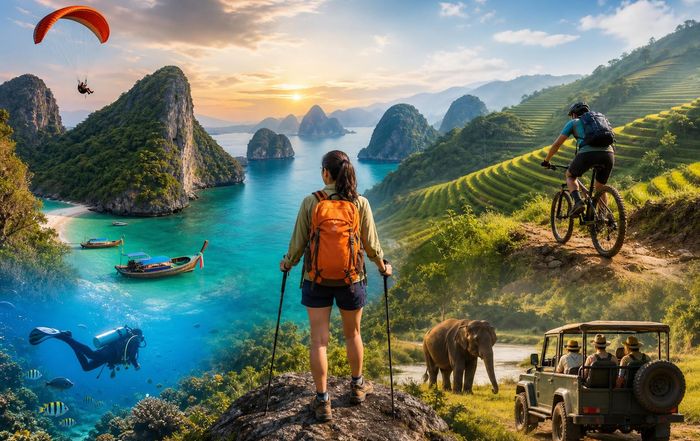
Adventure Travel Trends Across Asia Pacific - Risk, Reward, and Responsible Growth
Asia Pacific as the New Epicentre of Adventure
The Asia Pacific region has firmly established itself as the most dynamic frontier for adventure travel, drawing visitors from the United States, United Kingdom, Germany, Canada, Australia, France, Italy, Spain, the Netherlands, and well beyond. From the Himalayas to the Pacific archipelagos, from the rainforests of Southeast Asia to the deserts of Central Asia, the region is redefining how travellers understand risk, resilience, and reward. For the audience of xdzee.com, whose interests span sports, adventure, travel, lifestyle, performance, safety, innovation, ethics, business, and global culture, Asia Pacific has become both a playground and a proving ground for a new generation of explorers and enterprises.
The transformation of adventure travel across Asia Pacific has not happened in isolation. It reflects broader shifts in consumer expectations, digital connectivity, sustainability imperatives, and geopolitical realities. Organisations such as the World Travel & Tourism Council (WTTC) have highlighted how Asia Pacific is leading long-term tourism growth, while platforms like the United Nations World Tourism Organization (UNWTO) offer data that underscores the region's resilience and diversification following the disruptions of the early 2020s. As travellers increasingly seek experiences that combine physical challenge, cultural depth, and ethical integrity, destinations from Thailand to New Zealand and from Singapore to South Korea are recalibrating their offerings, policies, and infrastructure.
For xdzee, whose daily updated editorial lens cuts across travel, adventure, sports, lifestyle, and world coverage, this evolving landscape is not just a topic of interest but a strategic focus. The platform's audience is increasingly composed of globally mobile professionals, athletes, founders, and creators who want to understand not only where to go, but how to travel with purpose, how to evaluate risk and safety, and how to align personal journeys with professional ambitions and ethical values.
Redefining Adventure: From Extreme Tourism to Purposeful Exploration
In 2026, adventure travel across Asia Pacific is no longer narrowly defined by extreme sports or high-risk expeditions. While mountaineering in Nepal, surfing in Indonesia, and backcountry skiing in Japan remain central attractions, the definition of adventure has broadened to include experiences that challenge mental, cultural, and ethical comfort zones as much as physical limits. Travellers are seeking longer, more immersive journeys that combine outdoor pursuits with local culture, wellness, and skills-based learning, often blending remote work with exploration in what has become a mature phase of the "work from anywhere" movement.
Research from organisations like McKinsey & Company and Deloitte has documented how younger cohorts, particularly in North America and Europe, increasingly value experiences over possessions and are willing to invest in transformative travel that supports local communities and ecosystems. Learn more about sustainable business practices and their impact on tourism through resources from Harvard Business Review and the World Economic Forum, which have both highlighted how climate, technology, and consumer activism are reshaping the travel value chain. In this context, adventure travel in Asia Pacific is evolving from a niche leisure category into a complex ecosystem that touches on infrastructure investment, digital innovation, conservation, job creation, and cross-border collaboration.
On xdzee, this fresh and original redefinition of adventure is reflected in how stories connect destination insights with performance, safety, innovation, and ethics, recognising that the modern adventurer is as interested in the supply chain behind their gear, the labour conditions in host communities, and the carbon footprint of their itinerary as they are in the summit photo or the dive log. The line between adventure, lifestyle, and professional development has blurred, with more travellers using expeditions as platforms for leadership training, team building, and creative retreats.
Key Adventure Hotspots and Emerging Frontiers
Asia Pacific's adventure map in 2026 is strikingly diverse, encompassing established icons and rapidly emerging frontiers. The Himalayas continue to attract climbers and trekkers from around the world, with Nepal, India, and Bhutan refining their permitting systems and safety standards, often in collaboration with international bodies and insurers. Coastal and island nations such as Indonesia, Philippines, Thailand, and Fiji have become hubs for diving, surfing, and marine conservation experiences, where visitors can combine reef restoration projects with high-performance water sports. In the north, Japan and South Korea are leveraging their robust infrastructure and safety cultures to promote backcountry skiing, cycling, and trail running, supported by advanced real-time weather and avalanche monitoring systems.
At the same time, lesser-known regions are stepping into the spotlight. Parts of Central Asia, including Kazakhstan and Kyrgyzstan, are positioning themselves as trekking and skiing destinations for European and North American travellers seeking less crowded alternatives to the Alps. In Southeast Asia, cross-border river expeditions and jungle trails that span Laos, Vietnam, and Cambodia are being developed with an eye toward both ecological sensitivity and regional cooperation. Organisations like Conservation International and WWF have been working with local governments to balance the economic promise of adventure tourism with the imperative to protect fragile ecosystems, from mangroves and coral reefs to high-altitude wetlands.
For positive minded readers of xdzee.com, who often plan multi-country itineraries that combine adventure, culture, and business meetings, the rise of such corridors means new opportunities to design journeys that move seamlessly from boardrooms in Singapore to trekking routes in Malaysia, or from tech hubs in Sydney to surf breaks in New Zealand. As air connectivity and high-speed rail networks expand, particularly in East and Southeast Asia, the logistical barriers to complex trips are diminishing, even as travellers must navigate evolving visa regimes, digital entry systems, and varying safety standards.
The Digital Backbone: Data, Platforms, and Personalisation
The adventure travel boom in Asia Pacific is underpinned by a rapidly maturing digital infrastructure that spans booking platforms, safety monitoring, payments, and content. By 2026, travellers expect real-time information about weather, trail conditions, health advisories, and geopolitical developments, delivered through a combination of global services and local start-ups. Companies such as Booking Holdings and Airbnb have expanded their experience offerings to include guided treks, sailing expeditions, and cultural immersions, while regional platforms in India, China, and Southeast Asia compete on localisation, language support, and integration with domestic payment systems.
The rise of adventure-focused apps and wearables has further changed how travellers plan and execute trips. Fitness and navigation platforms like Strava and AllTrails have become integral to route planning and performance tracking, while satellite communication devices, emergency beacons, and AI-enhanced mapping tools have made remote expeditions more accessible and safer, provided users understand their limitations and the importance of redundancy. Learn more about outdoor safety standards and best practices through resources from the International Climbing and Mountaineering Federation (UIAA) and organisations such as Outward Bound, which continue to set benchmarks for risk management and experiential education.
For xdzee.com, the digitalisation of adventure travel is not only a subject of reporting but also a driver of how the platform engages its community. Readers increasingly expect interactive destination guides, integrated maps, and performance analytics that complement long-form storytelling. The convergence of content, community, and commerce is particularly visible in segments like sports and adventure gear, where brand decisions are informed by user reviews, influencer narratives, and independent testing. As xdzee.com deepens its coverage of brands and business trends, the platform is well positioned to evaluate which technologies genuinely enhance safety and experience, and which are marketing-driven distractions.
Safety, Risk Management, and Regulatory Evolution
As participation in adventure travel grows, so does the complexity of managing risk across widely varying terrains, climates, and regulatory environments. Governments in Asia Pacific have responded with a mix of stricter licensing regimes for guides and operators, mandatory insurance requirements, and enhanced emergency response capabilities. Countries like New Zealand and Australia have long been recognised for robust outdoor safety cultures, with clear signage, well-maintained trails, and transparent incident reporting. Other nations are now learning from these models, often in collaboration with international partners and NGOs.
The International Air Transport Association (IATA) and global insurers have contributed to improved standards around air safety and medical evacuation, while organisations such as the Red Cross and Doctors Without Borders have supported training and preparedness in remote regions. Learn more about global health and emergency response frameworks through the World Health Organization (WHO), which has emphasised the importance of integrating tourism planning with health system resilience, particularly in light of lessons from the COVID-19 era. In mountain regions, avalanche forecasting centres, weather services, and local rescue teams are increasingly networked, allowing for faster response times and more accurate risk communication.
For the audience of xdzee.com, many of whom pursue high-intensity sports and expeditions, safety is not only a personal concern but also a performance variable and an ethical consideration. The platform's safety and performance coverage can help readers understand how to evaluate operators, what questions to ask about equipment and training, and how to interpret risk ratings in different jurisdictions. The rise of digital waivers, dynamic pricing based on risk profiles, and tiered insurance packages has created a more sophisticated marketplace, but it also demands higher levels of literacy from travellers who must navigate exclusions, pre-existing condition clauses, and the fine print around adventure sports coverage.
Sustainability, Ethics, and Community Impact
Sustainability and ethics have moved from the margins to the centre of adventure travel discourse in Asia Pacific. The visible impacts of climate change, from glacier retreat in the Himalayas to coral bleaching in the Great Barrier Reef, have made it impossible for responsible operators and travellers to ignore the environmental footprint of their activities. At the same time, communities that host adventure tourism-from Sherpa villages in Nepal to island communities in Indonesia and mountain towns in Japan-are increasingly vocal about fair compensation, cultural respect, and long-term resilience.
Reports from the Intergovernmental Panel on Climate Change (IPCC) and analyses from organisations like The Nature Conservancy have underscored the vulnerability of many iconic adventure destinations to climate-related hazards, including extreme weather, sea-level rise, and biodiversity loss. Learn more about climate impacts on tourism through research from UNEP and academic institutions such as Stanford University, which have explored scenarios for adaptation and mitigation in travel-intensive sectors. In response, some destinations have introduced visitor caps, dynamic pricing to manage peak seasons, and incentives for low-impact travel modes, such as rail and electric mobility where infrastructure permits.
Ethical considerations extend beyond environmental stewardship to labour rights, cultural preservation, and equitable value distribution. There is increasing scrutiny of how porters, guides, and seasonal workers are treated, particularly in high-risk environments like high-altitude expeditions and remote marine operations. Platforms like Fair Trade Tourism and initiatives supported by the International Labour Organization (ILO) are helping travellers and businesses identify best practices and certification schemes that go beyond surface-level "eco" branding. For xdzee.com, whose readers care deeply about ethics and culture, this is an opportunity to spotlight models where adventure tourism strengthens, rather than erodes, local identity and autonomy.
Adventure as a Business and Career Ecosystem
Adventure travel across Asia Pacific is no longer a peripheral leisure industry; it has become a significant contributor to GDP, employment, and innovation in many countries. The World Bank and Asian Development Bank (ADB) have both highlighted tourism and outdoor recreation as engines for regional development, particularly in rural and coastal areas where traditional industries are under pressure. Investment is flowing into infrastructure such as airports, roads, trails, marinas, and digital connectivity, often with public-private partnerships that aim to balance growth with resilience.
For professionals in Europe, North America, and Asia, this expansion has opened new career pathways that blend passion and profession. Guiding, outdoor education, expedition logistics, sustainable hospitality, gear design, and digital platform development are all growth areas, while established sectors like insurance, finance, and legal services are developing specialisations around adventure and outdoor risk. Learn more about evolving skills and job trends through resources from LinkedIn's Economic Graph and the OECD, which have both tracked how tourism and sports-adjacent roles are evolving in the context of automation and remote work.
Within this landscape, xdzee.com is increasingly a reference point for readers exploring jobs and entrepreneurial opportunities in adventure and travel. The platform's business coverage can help founders understand market dynamics in key Asia Pacific hubs, from adventure tech start-ups in Singapore and Hong Kong to eco-lodges in Bali and mountain resorts in Japan. The convergence of adventure, wellness, and corporate offsites has created demand for operators who can design high-trust, high-impact experiences for executive teams, remote workforces, and creative collectives, with a premium on risk management, facilitation skills, and measurable outcomes.
Innovation at the Intersection of Adventure and Technology
Innovation has become a defining feature of Asia Pacific's adventure travel sector. From advanced materials in outdoor gear to AI-enhanced route planning and immersive storytelling, the region is both a testbed and a marketplace for new solutions. Companies like Patagonia, The North Face, and Arc'teryx continue to push the boundaries of performance and sustainability in apparel and equipment, often drawing on research from universities and institutes in Japan, South Korea, and China. At the same time, local brands in India, Thailand, and Vietnam are emerging with products tailored to regional climates, body types, and cultural preferences.
Digital innovation is particularly visible in navigation, language support, and safety. AI-driven translation tools, such as those developed by Google and Microsoft, are making it easier for travellers to navigate remote communities where English or other major languages are not widely spoken, while augmented reality overlays can provide real-time information about terrain, heritage sites, and ecological features. Learn more about these broader technology trends through resources from MIT Technology Review and Gartner, which have chronicled how AI, IoT, and extended reality are reshaping consumer experiences across sectors, including travel and sports.
For xdzee.com, innovation is not only a topic of coverage but a lens through which to evaluate the future of adventure, sports, and lifestyle. The platform can help its audience distinguish between technologies that genuinely enhance safety, inclusivity, and environmental responsibility, and those that primarily serve as marketing differentiators. As biometric data, location tracking, and personalised recommendations become more pervasive, questions of privacy, data governance, and algorithmic bias will increasingly intersect with the practical realities of planning and executing trips in remote environments.
Media, Storytelling, and the Power of Narrative
The way adventure travel is portrayed in media has profound implications for destinations, communities, and travellers' expectations. In 2026, Asia Pacific adventures are documented not only through traditional print and broadcast outlets but also via streaming platforms, social media, and immersive formats such as virtual and mixed reality. High-profile expeditions sponsored by brands and documented by filmmakers can rapidly transform previously quiet regions into global hotspots, sometimes outpacing local capacity to manage visitor flows and environmental impact.
Organisations like National Geographic and BBC Studios continue to produce in-depth documentaries that combine scientific insight with compelling storytelling, while independent creators on platforms like YouTube and Instagram shape perceptions of what is desirable, achievable, and responsible. Learn more about media's influence on travel behaviour through research from Pew Research Center and academic work published by institutions such as Oxford University, which have examined how digital narratives influence risk perception, destination choice, and cultural expectations.
Within this landscape, we occupy a distinctive position as a digital premium website that speaks to a global, performance-oriented audience with a strong interest in news, world events, and cross-cultural understanding. By foregrounding nuanced, context-rich coverage of Asia Pacific adventure trends, the platform can counteract simplistic or sensationalist narratives that either romanticise risk or reduce complex communities to backdrops for personal achievement. The emphasis on Experience, Expertise, Authoritativeness, and Trustworthiness aligns with a broader shift toward more informed, reflective travel media.
Running and Jumping Ahead Towards Responsible Growth
As Asia Pacific's adventure travel sector continues to expand, the central challenge for the next decade will be how to balance accessibility, economic opportunity, and environmental and cultural integrity. Climate volatility, geopolitical tensions, and economic inequality will all shape the contours of what is possible and responsible, while technological advances will continue to blur boundaries between physical and digital exploration. Destinations that succeed will likely be those that invest in resilient infrastructure, transparent governance, community participation, and diversified offerings that appeal to both international and domestic travellers.
For the growing member and visiting community that comes to xdzee for new insight into travel, adventure, business, and lifestyle, Asia Pacific's evolution offers both inspiration and responsibility. The platform's role is not only to highlight spectacular destinations and high-performance achievements, but also to equip readers with the knowledge and frameworks needed to make informed, ethical decisions as travellers, investors, employers, and citizens. By connecting stories from Europe, North America, Asia, Africa, and South America, and by foregrounding voices from host communities as well as visiting adventurers, xdzee.com can help shape a more balanced, resilient, and inclusive adventure ecosystem.
Adventure travel across Asia Pacific is no longer a trend at the margins of global tourism; it is a central arena where questions of risk, reward, identity, and responsibility are being negotiated in real time. As athletes, entrepreneurs, policymakers, and storytellers converge on the region's mountains, oceans, deserts, and cities, the need for rigorous, useful analysis has never been greater. Positioned at the intersection of performance, safety, innovation, and ethics, xdzee.com is uniquely placed to chronicle this evolution and to guide its audience toward adventures that are not only exhilarating, but also sustainable, equitable, and deeply informed.